
A little plaid can change the whole mood of a Christmas tree. Red tartan makes gold ornaments feel warmer. Navy-and-green checks give the branches a quieter, richer look. Even a simple cream bauble feels different beside a soft velvet tie.
These Ralph Lauren inspired Christmas tree ideas draw on a traditional mix of plaid, deep color, warm light, and layered textures. They are independent styling ideas you can recreate with unbranded ribbon, familiar decorations, and the ornaments your family already loves.
Choose the look that fits your tree and your room. You can build a complete theme or borrow one detail—a topper, a patterned skirt, a few small bows—and see where it takes you.
1. Classic Red Tartan With Aged Gold
Red tartan and softer gold make a welcoming starting point. The checks bring color and structure; a mix of matte and reflective ornaments keeps the gold from reading as one shiny surface.

Build the look: Choose a red-based plaid that includes a little green or navy. Place a few ribbon folds or bows across the tree, then distribute gold baubles between them. Add plain red ornaments where you want to repeat the ribbon’s strongest color.
Keep the different finishes visible rather than placing every shiny ornament together. If you already own bright gold baubles, mix them with matte red pieces and let some green branches show. You do not need to replace the gold collection to soften its effect.
A plain red skirt gives the base a connection to the branches while leaving the tartan as the main pattern.
2. Black Watch Plaid With Navy and Forest Green
Dark navy-and-green Black Watch style tartan offers a different route to a plaid Christmas. It suits a tree you want to feel understated, particularly in a room with warm wood or leather.

Build the look: Combine dark checked ribbon with navy baubles, green ornaments, and a few brass-colored accents. Turn the ribbon’s patterned face toward the room, then place a lighter ornament near folds that disappear into the foliage.
Check the arrangement in daylight and with the tree lights on. Very dark ribbon can lose its detail at night; small warm metallic accents give the eye something to find between the checks. If buying another color feels unnecessary, keep your existing gold ornaments and use navy only in the ribbon.
Choose a dark plaid you can actually distinguish against the tree. The sample on the roll may look brighter than it does among green branches.
3. Ivory and Green With Small Plaid Accents
For a brighter room, let ivory ornaments carry most of the decoration and use plaid in smaller doses. The result still feels traditional, with more greenery and light showing between the details.
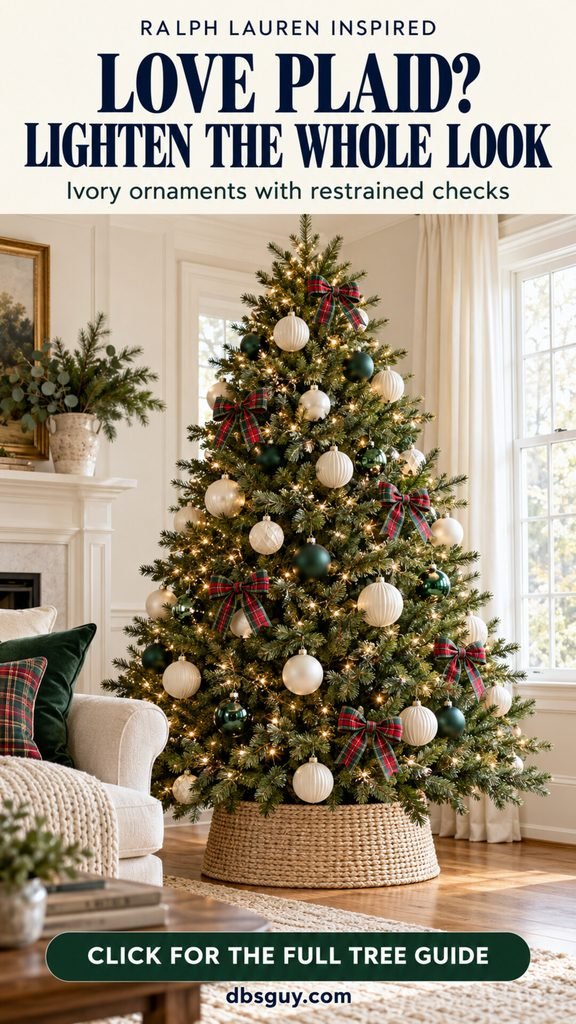
Build the look: Spread matte cream baubles through the visible sides, add a few deep green pieces, and finish with small red-and-green plaid bows. Ribbed or lightly textured ivory ornaments bring variation without adding another color.
Keep most bows smaller than the largest nearby baubles. If the plaid starts to dominate, remove a few bows before adding more ivory ornaments. A pale woven collar or a simple cream skirt continues the lighter look at the base.
This is an easy way to use an existing white-and-gold collection: keep the pieces you like, then introduce plaid as a finishing detail.
4. A Statement Tartan Topper on a Quiet Tree
A single large plaid bow can provide all the pattern a tree needs. It is a good choice when your ornaments are already in place and you want one clear finishing detail.

Build the look: Choose wired tartan that holds rounded loops, then make or use a bow whose width sits comfortably within the upper branches. Let two tails fall into open spaces rather than directly over a favorite ornament.
Keep nearby ornaments relatively small and simple. Ivory and gold allow the pattern above them to remain the focal point. Secure the bow’s center to sturdy upper branches; a heavier topper may need support at two points, following the tree manufacturer’s guidance.
Hold the bow against the tree before committing to its size. If it looks too wide, shorten the loops rather than trying to disguise the proportions with more ornaments.
5. Plaid Ribbon Paired With Solid Velvet
Plaid supplies the pattern; velvet adds a softer surface. Together, they give the tree more texture while allowing you to stay within a familiar red, green, and gold palette.

Build the look: Pair a wider checked ribbon with a narrower solid velvet ribbon that matches one color in the checks. Let the plaid remain visible along both sides. You can layer selected folds or alternate the fabrics in nearby areas.
Work on one small section first. If the pair feels too thick, use velvet only in a few ties or bow centers. The two ribbons do not have to travel together through every branch.
Keep most ornaments around the layered sections plain. This makes the fabric contrast easier to appreciate and gives patterned ornaments elsewhere a little more breathing room.
6. Equestrian Details With Navy and Saddle Brown
Small horse or stirrup-shaped ornaments introduce a sporting detail to a traditional tree. Navy plaid and saddle-brown ties give those shapes a simple, warm backdrop.

Build the look: Select lightweight, ornament-sized equestrian pieces and hang each from its own secure loop. Add narrow brown fabric or faux-leather ties, navy-and-green checked ribbon, and a few cream baubles.
Use the horse shapes as accents rather than filling every branch with them. A small brass-colored piece is easier to notice when it has open greenery around it. If you have only one special equestrian ornament, position it on the side seen from your main seat and let the ribbon carry the theme elsewhere.
Choose decorative versions designed for hanging; their size and weight matter more here than how closely they resemble full-size riding equipment.
7. Woodland Lodge Plaid With Pinecones and Wood
Pinecones, simple wood ornaments, and warm checked ribbon give the tree a relaxed lodge feeling. Muted bronze accents add a little shine without taking attention away from the natural textures.

Build the look: Start with pinecone ornaments and unpainted wooden shapes, then add red-and-brown plaid in a few visible folds. Place each pinecone on a branch that supports its weight, leaving the wood stars easy to see.
Use bronze or soft gold baubles sparingly among the textured pieces. If the tree begins to look too brown, repeat the plaid’s red in a few plain ornaments. That small color connection can brighten the arrangement without changing its character.
A woven base or a plain brown skirt continues the material story. Keep the ribbon folds loose enough that the checks remain visible.
8. A Collected Tree for a Library Corner
A Christmas tree beside books and a leather chair can make an everyday corner feel inviting. Let the furniture provide the setting, then keep the tree’s colors connected to the room.

Build the look: Use red tartan, brass-colored ornaments, and a few red glass or glass-look pieces against green branches. A simple cream throw on the nearby chair adds softness without introducing another strong pattern.
Style the sides you see from the chair and the doorway first. Check that the bookcase doors, drawers, and walkway remain usable. The tree should sit on its own stable base, with enough space around it for access to cords or a real tree’s water stand.
If the corner feels dark, add a handful of cream ornaments near the front rather than filling every gap with reflective pieces.
9. Crystal-Look Drops and Silver With Dark Tartan
Clear drops and silver ornaments give dark plaid a more formal finish. Their different surfaces make the ribbon feel substantial while allowing small points of light to stand out.

Build the look: Place a few clear faceted drop ornaments among silver baubles and navy-and-green tartan. Leave space beneath each drop so its shape remains visible. Spread the reflective pieces across the tree instead of concentrating them in one glittering patch.
Lightweight acrylic drops can create a similar visual effect if glass feels too heavy for your branches. Let the ribbon provide most of the color; a second bright pattern would compete with the clear shapes.
Check reflections with the lights on. If a section feels too sparkly, replace one reflective ornament with a matte navy bauble before removing all the silver.
10. Cable-Knit Texture With Traditional Checks
Cream knit-covered ornaments add a soft, homespun detail to plaid. They are particularly useful when you want warmth from texture rather than from adding more red.

Build the look: Combine a small group of knit-covered baubles with red tartan bows and a few plain gold ornaments. Leave space around the knitted pieces so their stitch pattern is easy to see.
Ready-made knitted ornaments keep this detail easy to add. If you already own cream felt or fabric baubles, try those first; you may get enough softness without buying another set. Keep the fabric-covered pieces toward the visible sides, where their texture can be appreciated.
Keep nearby ribbon folds small. Large loops of thick fabric can hide the knit texture you added in the first place.
11. Family Keepsakes Tied Together With Plaid
A traditional tree can make room for the wooden sled, handmade star, and colorful ornament that comes out every year. Repeating one plaid gives a mixed collection a little continuity.

Build the look: Place your most meaningful pieces where you can see them from the room. Repeat small matching tartan bows between them, then use plain baubles to connect the colors that appear several times in the collection.
You do not have to hide an ornament because it falls outside the palette. Give it a little space and, if you like, repeat one of its colors elsewhere. A small amount of variation is part of a tree with personal history.
Use each ornament’s existing secure hanger. Add decorative ties beside it rather than making a soft bow carry the weight of a fragile keepsake.
12. A Light Brass Bell Garland With Tartan
A string of small bells creates a repeating detail between plaid accents. Shallow curves keep the garland light in appearance and leave the ornaments below it visible.

Build the look: Choose a lightweight decorative bell garland and support its cord at several branch points. Begin with one short section, adjust its curves, and add more only where the tree needs the same detail.
Keep the surrounding baubles simple—plain red and soft gold work well here. If the garland pulls a branch down, shorten the section or use smaller bells. The cord should rest on branches, with the bells hanging freely below it.
Small loops of tartan can sit above or between the scallops. Avoid placing a large bow directly over a bell cluster, where the separate details become harder to read.
13. Plaid Baubles With Plain Ribbon
Moving the plaid onto the ornaments changes how the pattern appears. Fabric-covered baubles provide small pockets of checks, while plain ribbon gives the tree a quieter background.

Build the look: Pair checked ornaments with plain ivory ribbon and a few solid red baubles. Repeat the patterned pieces at different heights rather than gathering all of them into one section.
Choose a check small enough to stay recognizable around the curved surface. You can begin with a handful of patterned ornaments among an existing solid-color collection. Face the clearest part of each check toward the room, and leave a little plain greenery between the patterned pieces.
If a bold roll of plaid ribbon overwhelms your tree, this smaller-scale approach can be a better fit. Let the ornaments be the main patterned element before deciding whether the base needs another print.
14. A Slim Plaid Tree for a Small Room
A slim tree can carry the same traditional palette as a full one. The difference is scale: narrow ribbon, smaller ornaments, and a topper that fits the tree’s upper outline.

Build the look: Try a checked ribbon about 1–1½ inches wide (2.5–4 cm) as a starting point, then hold a fold against the branches before cutting more. Add small gold baubles and a modest plaid bow at the top.
Keep most decoration close to the foliage so it does not widen the tree into a walkway. Style the visible front and sides first; a corner tree may not need equal decoration on its hidden back.
Measure the full stand before choosing a compact collar. A neat-looking base still needs to fit the stand comfortably and allow access to the cords or water reservoir.
15. A Tabletop Tree With a Plaid Base
A small tabletop tree gives you room for a classic plaid detail without committing to a floor-size display. A patterned base can carry most of the theme while the branches stay simple.
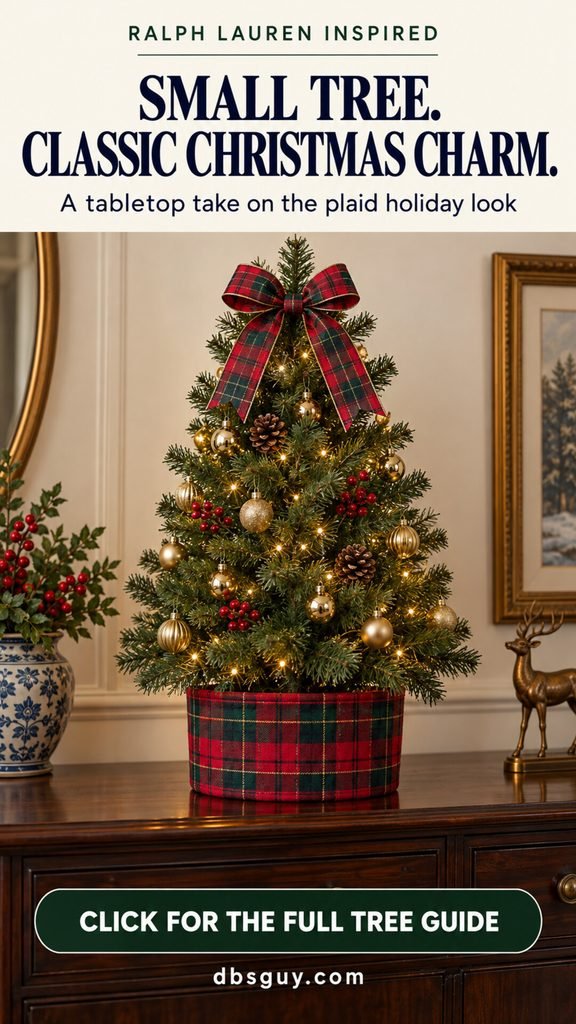
Build the look: Add miniature gold ornaments and a modest plaid bow to a small tree. Place its original stable base inside a decorative container that fits comfortably, then use plaid fabric around the outside of that container.
Keep the tree well back from the table’s edge. The decorative container is a cover, not a replacement for a proper support. For a small live or cut tree, keep its water or drainage needs accessible and protect the furniture underneath.
A short roll of ribbon or a fabric remnant can be enough for this scale. Hold the bow against the tree first; a full-size topper will usually overwhelm the smaller branches.
16. A Plaid Tree Skirt as the Main Pattern
If you prefer plain ornaments, place the checks at the base. A broad tartan skirt makes a strong connection between the tree and the room while leaving the branches uncluttered.

Build the look: Use plain red and aged gold ornaments above a red-based plaid skirt. Keep most ribbon solid, or leave ribbon off the branches entirely. Neutral wrapping paper around nearby gifts lets the skirt remain visible.
Measure the stand and the floor space available before choosing the skirt. It should cover the hardware comfortably without spreading into the walkway. Smooth the fabric so the checks are easy to see, and leave a real tree’s watering point accessible.
Keep plugs and electrical connections clear of the fabric. If your tree already has a strong patterned ribbon, try the skirt on its own before deciding to keep both.
17. Lightweight Paper Keepsakes With Plaid
Paper ornaments add a handmade detail that feels at home with traditional checks. A few plaid stars and simple cream shapes can be especially charming among decorations with personal meaning.

Build the look: Choose lightweight paper ornaments in one plaid and one solid color. Hang each from a narrow ribbon loop, spreading the patterned shapes across the tree and placing plain ones between them.
For an easy homemade version, cut familiar shapes from cardstock and add a hanging hole with enough paper around it to resist tearing. More elaborate folded stars are optional. A small handwritten keepsake on the back can make a plain ornament feel personal.
Let the paper lie or hang freely rather than pressing it against a ribbon fold. Store the finished pieces flat or lightly separated so the edges stay neat for another Christmas.
18. Tall Finial Ornaments Among Plaid Accents
Changing ornament shapes can refresh a familiar palette. Long finials give the tree a vertical detail between round baubles, while a few tartan accents keep the traditional theme connected.

Build the look: Mix elongated red or gold ornaments with smaller round navy, cream, or gold pieces. Hang the longer shapes where there is clear space underneath. Keep the patterned ribbon modest so both the checks and the silhouettes remain easy to see.
Start with a small group of finials and distribute them across the visible sides. If one touches the branch below, move it to a more open gap or shorten its hanger. Use sturdy branches for heavier glass pieces and lightweight alternatives on flexible tips.
There is no need for every ornament to match. Repeating a few long shapes among existing round baubles can supply the change you wanted.
19. Connect the Tree With One Plaid Room Accent
The tree can feel more settled in the room when one nearby textile echoes its plaid. A cushion or throw is enough to make that connection without decorating every surface.

Build the look: Repeat the tree ribbon’s strongest colors in one cushion, throw, or set of wrapped gifts. Surround that patterned piece with plain fabrics so the checks remain distinct.
The patterns do not need to be identical. A red-based plaid cushion can relate to the tree through red and green, even if its checks are a different size. Look at both pieces together from the doorway before adding a third pattern.
Keep the tree’s ornaments fairly simple if the room already has a bold plaid textile. Sometimes the best finishing adjustment is removing one competing pattern so the connection you chose is easier to notice.
Build Your Plaid Christmas Tree With What You Already Own
Start with your ornament box. You may already have most of a workable theme: gold baubles for the red-tartan look, white ornaments for the ivory version, or a mixed collection that needs one repeating ribbon.
- Choose one plaid to lead. Hold a sample beside several existing ornaments. Look for a color connection you like in the lighting where the tree will stand.
- Decide where the pattern belongs. Ribbon, ornaments, the topper, and the skirt are all options. Begin with one main patterned element and assess the tree before adding another.
- Pick a simple supporting finish. Matte cream, soft gold, silver, wood, or a deep solid color can connect the patterned pieces. Use the finish that already appears in your collection.
- Make one small arrangement. Try a ribbon fold with two or three ornaments on neighboring branches. Adjust the scale and colors there before repeating the combination.
- Add meaningful pieces last. Give favorite ornaments visible positions, then step back and check the overall spacing from the doorway and your usual seat.
If you want to add something new, choose the missing detail that makes the biggest difference to your chosen look. That might be one roll of plaid ribbon, a plain skirt, or a few lightweight accent ornaments. A coordinated tree does not require replacing an entire collection.
Keep the Pattern, Texture, and Spacing in Balance
A plaid tree feels easier to read when some surfaces stay plain. If you use checked ribbon and checked ornaments together, separate them with visible greenery or solid baubles. If the tree already has a patterned skirt, keep the decorations above it relatively simple while you assess the result.
For ribbon, check the pattern at the scale you will actually use. A broad check may work beautifully in a topper yet become hard to recognize in a tiny bow. Wired ribbon is useful for sculpted folds; soft ribbon works well for small ties and relaxed tails.
Use ornament weight as well as appearance to guide placement. Sturdy inner branches can support heavier pieces, while lighter ornaments suit more flexible outer tips. Try different depths instead of hanging every decoration on the tree’s outer surface.
Keep favorite ornaments visible between ribbon folds. If the arrangement looks crowded, remove one fold or move one bauble before buying more filler. When two strong details touch, a little space between them often makes both easier to appreciate.
Finish With Warm Light and a Base That Fits
Warm white lights work well with these traditional palettes because they let the plaid and ornaments supply most of the color. Check the whole tree after dark as well as during the day; dark ribbon and reflective baubles can look quite different between the two.
Set up and check the lights before adding broad ribbon folds. Distribute decorations around the existing light points, keeping fasteners away from cords and plugs. For an unlit tree, follow the light manufacturer’s installation and connection instructions.
A skirt should comfortably cover the stand and fit the floor space. A collar needs enough internal width and height for the actual stand, not just a size label that matches your tree’s height. Keep a real tree’s water reservoir easy to reach.
Place the tree at least 3 feet (about 0.9 m) from heat sources and keep exits clear. Never use lit candles on the tree. Replace damaged light strings, follow the manufacturer’s connection limits, and turn tree lights off before leaving home or going to bed. Check and replenish a real tree’s water daily.
Ralph Lauren Inspired Christmas Tree Questions
Do I need Ralph Lauren products to create this look?
No. The ideas here use plaid, traditional colors, varied textures, and thoughtful placement as styling cues. You can use generic ribbon and ornaments you already own. Choose pieces for their color, scale, and finish rather than for a label.
Does a plaid Christmas tree have to use red?
No. Navy-and-green tartan can create a darker look, while ivory ornaments with a little checked ribbon offer a lighter one. Choose a plaid that connects with the decorations you want to keep, then repeat one or two of its colors elsewhere.
Can this style work on a flocked Christmas tree?
Yes. Dark plaid has clear contrast against snowy branches. Start with small bows or a few ribbon folds, then add restrained ornaments so the flocking stays visible. Ivory decorations can blend into a heavily flocked tree; use darker accents if you want more definition.
How much plaid ribbon should I buy?
Measure the ribbon used in one finished sample bow or folded section, then multiply by the number you plan to place. Allow extra for trimming and adjustments. A topper-only tree needs a different amount from one covered in ribbon, so tree height alone is not a reliable buying guide.
How do I keep dark plaid from disappearing into the branches?
Turn the patterned face outward and keep some folds near the visible edge. Place a lighter bauble or small metallic accent nearby, then check the effect with the lights on. If the pattern still disappears, use it in a larger topper or at the base where its checks have more room to show.
Let One Plaid Detail Lead the Way
Choose the element that makes you want to decorate: a familiar red tartan, a quieter navy-and-green ribbon, a knitted ornament, or a skirt that suits the room. Try it beside the pieces you already love, then repeat the colors and textures that work together.
A cozy plaid Christmas tree can still look like your family’s tree. Leave room for the handmade star and the ornament with a story. Give those pieces a thoughtful backdrop, adjust the spacing, and enjoy the way one small pattern can bring the whole arrangement together.