You pull out the ornament boxes, switch on the lights, and wait for that little Christmas feeling. Sometimes it arrives immediately. Sometimes the tree looks almost right, but you cannot quite put your finger on what it needs.
These Christmas tree decorating ideas give you 26 different starting points, from familiar red and gold to paper stars, coastal blue, and a tree filled with family keepsakes. Each look includes a palette, a few key pieces, and a practical way to bring it together.
Start with the decorations you already love. Pick one look that suits your room, borrow the details that work, and let the tree feel like it belongs in your home.
Before you decorate: give the tree a good starting point
Before buying anything, measure the tree’s full width and height, including the stand and the topper you want to use. Then look through your ornament boxes and pull together the colors and materials that already repeat.
A main color, a supporting color, and a small accent is a useful starting point, but it is a styling choice rather than a rule. Keep a favorite ornament even if it does not match perfectly.
A decorating order that makes the layers easier
- Shape an artificial tree’s branches according to its instructions, working outward so the inner gaps are easier to see.
- Check the lights, then arrange them before the decorations. Look at the glow from several places in the room.
- Add ribbon or garland, then the larger ornaments, followed by smaller pieces and finishing details.
- Step back between layers. Adjust a heavy cluster before adding more decorations.
A quick tree-care check
Choose the tree’s position before decorating: keep it at least 3 feet from heat sources and do not block an exit. For a cut real tree, check the water every day and keep the trunk base submerged. Use lights suitable for the intended setting, replace damaged sets, and follow the manufacturer’s connection limits. Never put lit candles on the tree. Switch the lights off before leaving home or going to bed.
26 Christmas tree decorating ideas to make your own
Pick one complete look, or borrow a small detail. The tips below help you translate each look into your own space.
1. Classic red and gold
Red and gold has that familiar Christmas-morning feeling, especially when the tree glows against a cream wall. The detail that keeps it looking thoughtful is the finish: try matte red ornaments alongside softly brushed gold, then repeat the same gold in your ribbon and topper.

- Palette: Deep red, brushed gold, and natural green.
- Key pieces: Red baubles, a few textured gold ornaments, gold wired ribbon, and a simple star.
- How to pull it together: Let the ribbon travel in loose tucked loops. Spread the red ornaments through the top, middle, and bottom before filling the spaces between them with gold.
Make it work at home: If your existing ornaments are glossy, keep them. A softer fabric skirt and a little matte ribbon can change the overall mood without replacing the whole collection.
2. Burgundy velvet and antique gold
A burgundy tree feels especially lovely at night, when velvet bows look rich against the needles and the gold catches the lights. It is a good choice if bright red feels too strong beside your sofa or wall color.
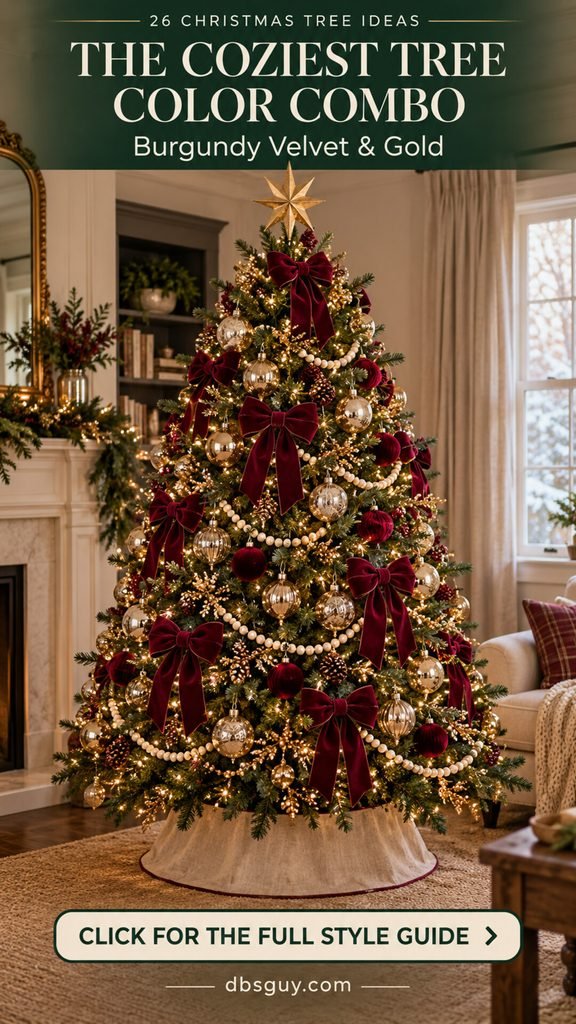
- Palette: Burgundy, antique gold, and small touches of ivory.
- Key pieces: Velvet ribbon bows, antique gold baubles, and an ivory bead garland.
- How to pull it together: Make the bows the main feature. Set several at different heights, let their tails hang freely, and use the gold ornaments to connect those focal points.
Make it work at home: Keep the ribbon lengths a little varied. If every tail ends on exactly the same horizontal line, the arrangement can feel stiff. A simple linen skirt gives the darker colors room to shine.
3. Tartan, navy, and collected brass
This look has the warmth of a library at Christmas: tartan ribbon, deep blue ornaments, and bells that seem collected over time. It suits wood furniture beautifully, but a single tartan ribbon can also bring the feeling to a plain apartment living room.

- Palette: Navy, traditional tartan red and green, and brass.
- Key pieces: Tartan wired ribbon, navy baubles, brass-colored bells, and a dark fabric skirt.
- How to pull it together: Choose one plaid pattern and repeat it. Use solid navy ornaments around the busier ribbon so the pattern remains easy to see.
Make it work at home: You can recreate the mood with ornaments you already own. Add plaid in one place, repeat a metallic finish, and resist the urge to introduce a second competing check.
4. Woodland copper and cream
Copper gives a woodland tree a gentle glow, while cream fabric ornaments keep it soft. Pinecones and little bird shapes add interest without turning the whole tree into a themed display.
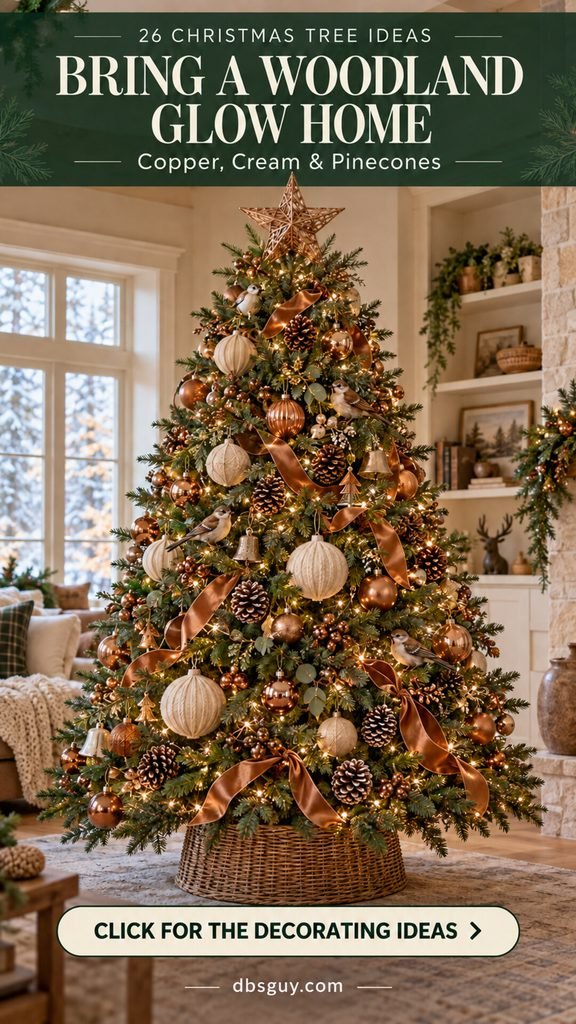
- Palette: Copper, cream, warm brown, and green.
- Key pieces: Pinecones, copper baubles, cream fabric ornaments, and a woven collar.
- How to pull it together: Place the copper pieces where they can catch light, then distribute the softer cream ornaments between them. Use the pinecones to bring a different shape into the mix.
Make it work at home: A woven collar helps the tree connect with rattan, oak, or linen already in the room. If your tree has a watering stand, choose a collar that leaves access to the reservoir.
5. Scandinavian paper stars and wood
An airy tree can feel just as special as a heavily decorated one. White paper stars, pale wooden beads, and straw ornaments let the branch shape become part of the design.
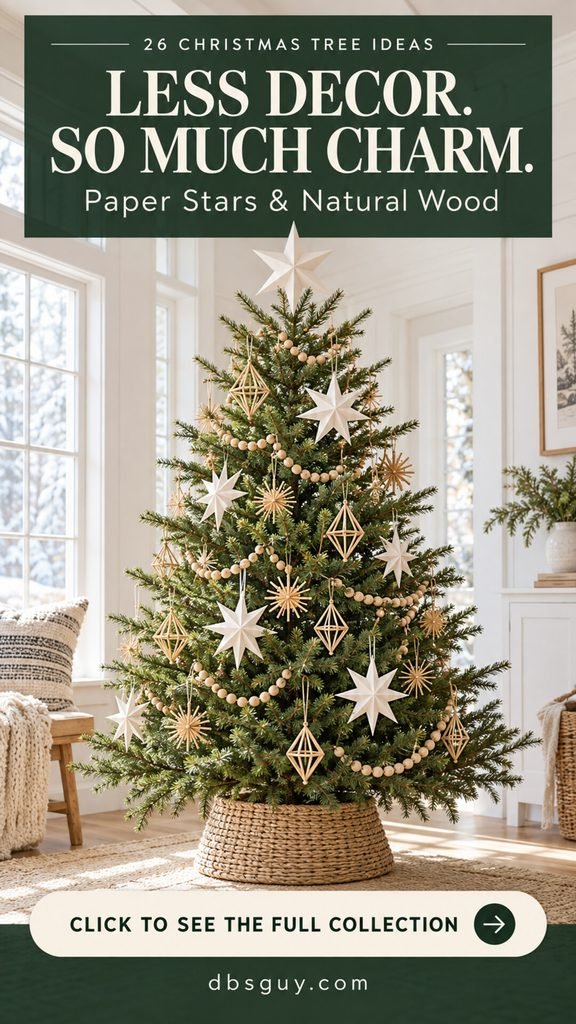
- Palette: Warm white, blond wood, straw, and green.
- Key pieces: Folded paper stars, lightweight wood ornaments, straw shapes, and a restrained bead strand.
- How to pull it together: Hang a few larger stars first, then fill the spaces with smaller shapes. Leave visible green around each star so its outline reads clearly.
Make it work at home: If your tree is very full, keep the decorations lighter and more widely spaced. The calm comes from a repeated set of materials and room to see them, rather than from buying a particular tree.
6. Blush pink and champagne
This is the tree for a room with soft fabrics, pale walls, and a little sparkle. Blush ornaments and champagne metallics create a warm glow that works beautifully with cream upholstery.
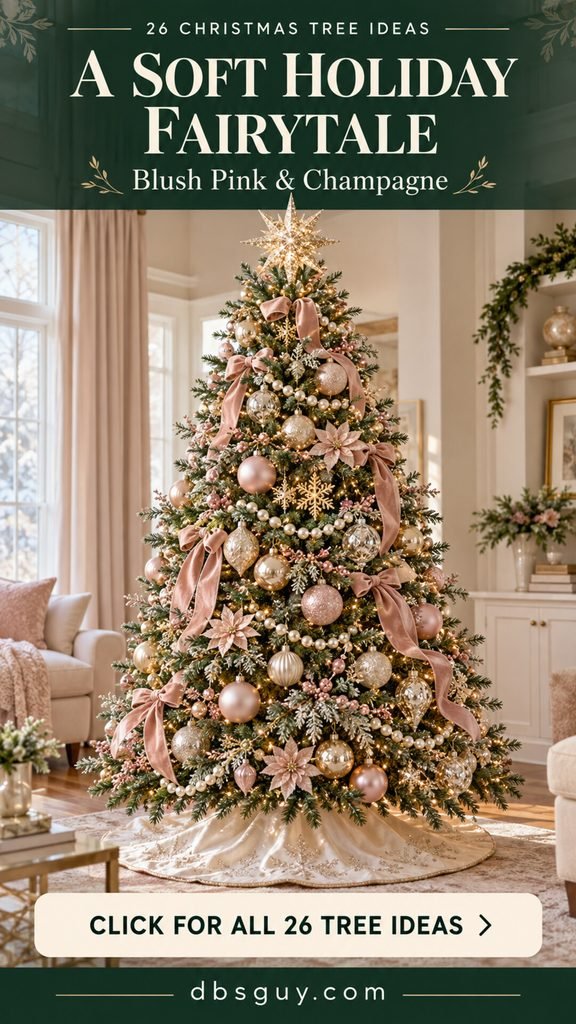
- Palette: Blush pink, champagne, and ivory.
- Key pieces: Pink baubles, champagne ornaments, soft ribbon, and a small amount of pearl-like garland.
- How to pull it together: Repeat the pink across the tree before adding metallic pieces. Use a mix of rounded baubles and longer drops to keep the outline lively.
Make it work at home: If the tree starts to look too sweet, add a little dusty rose or a textured neutral skirt. Those quieter details give the pastel color more depth.
7. Icy blue and white
Pale blue and white can make a corner of the living room feel like a winter scene. Snowflake ornaments and clear icicles are enough to suggest the idea; you do not need to cover every branch in glitter.
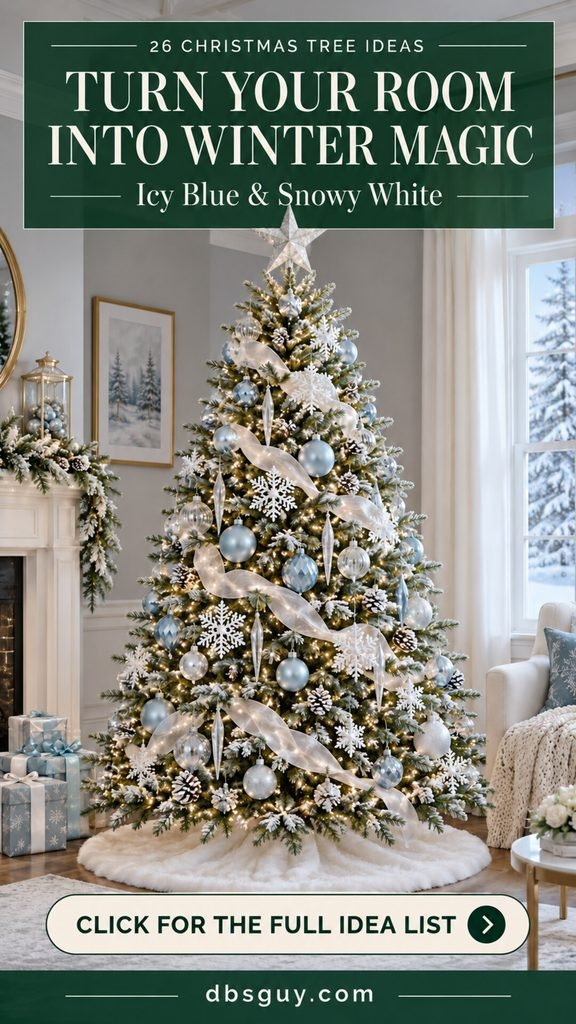
- Palette: Icy blue, white, clear glass, and touches of silver.
- Key pieces: White snowflakes, pale blue baubles, clear drops, and light white ribbon.
- How to pull it together: Use the white shapes to establish the theme, then hang blue ornaments at different depths. Clear pieces near the lights add a subtle sparkle.
Make it work at home: On a flocked tree, choose some ornaments with a smooth or glossy surface. They stay visually distinct from the powdery-looking branches.
8. Midnight navy and silver
Navy and silver feels a little dressier, especially in a room with gray upholstery or darker blue accents. The glossy navy ornaments almost disappear into the tree until the lights pick up their curved edges.

- Palette: Navy, silver, and green.
- Key pieces: Navy baubles, brushed silver ornaments, silver ribbon, and a modest star.
- How to pull it together: Mix silver finishes so the tree has both shine and softer texture. Give the navy pieces enough space that their shape remains visible.
Make it work at home: Try the lights you already own before buying a different color temperature. Warm white can soften the palette; cooler white can make it feel icier. The effect also depends on your room lighting.
9. Cocoa brown and soft gold
Brown ornaments can look surprisingly festive when their texture changes from piece to piece. Chocolate velvet, caramel glass, and gold ribbing bring movement to a neutral tree.
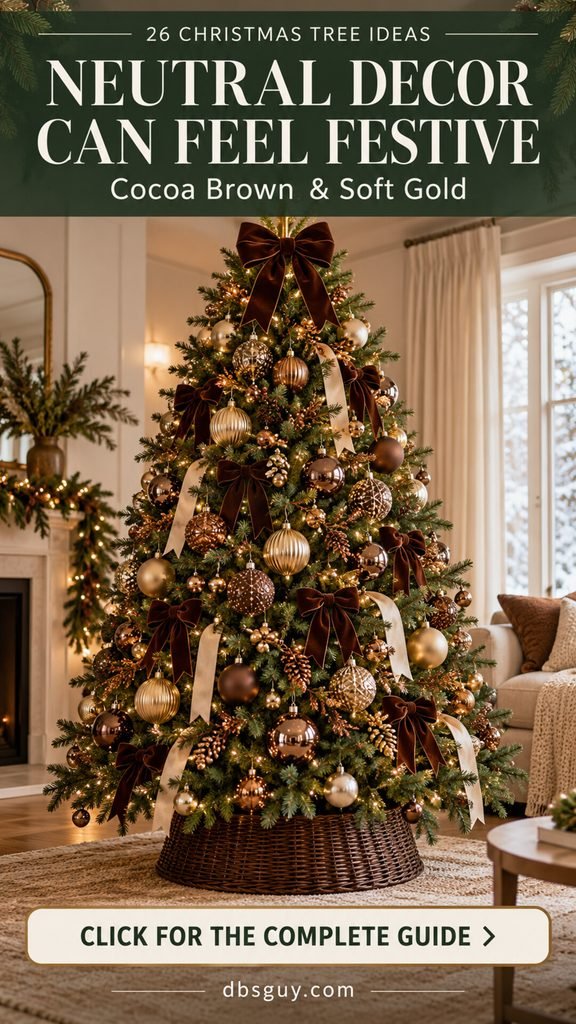
- Palette: Cocoa, caramel, bronze, and muted gold.
- Key pieces: Brown bows, warm metallic baubles, and a cream ribbon accent.
- How to pull it together: Use several shades of brown rather than one flat tone. Let the lighter gold ornaments break up the darker areas, especially through the center.
Make it work at home: A woven base works well with this palette. If your room already has brown wood furniture, include a little cream in the ribbon or skirt to keep the whole corner from feeling heavy.
10. Emerald green and gold
Green ornaments on a green tree create a layered jewel-box effect. The key is choosing finishes and shades that remain visible against the needles.
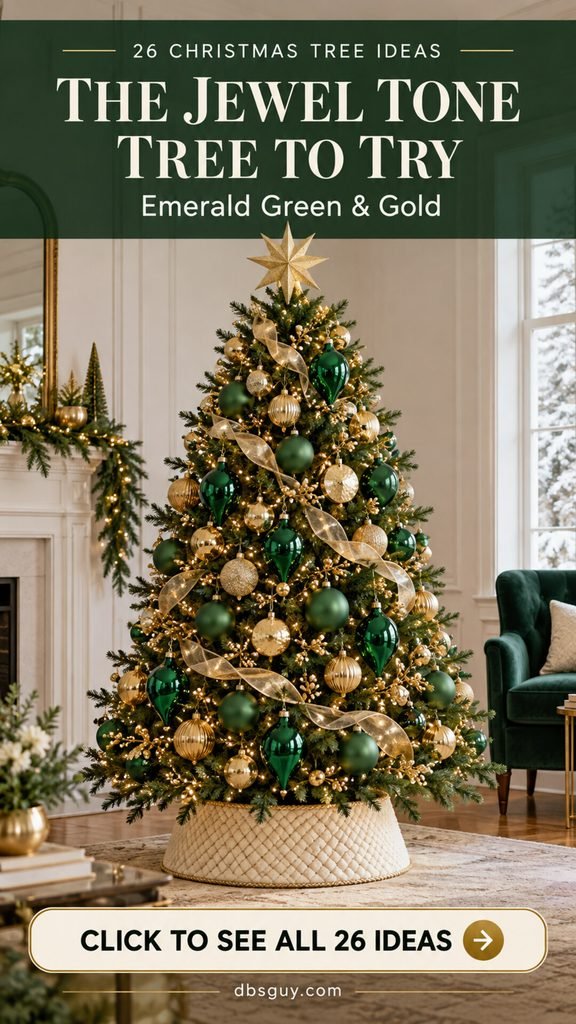
- Palette: Emerald, lighter green, and gold.
- Key pieces: Glossy green drops, matte green baubles, textured gold pieces, and narrow gold ribbon.
- How to pull it together: Use shiny emerald ornaments as focal points and lighter green pieces as supporting color. Small gold accents help the eye move from one green shade to the next.
Make it work at home: Check the tree in daylight as well as after dark. If one green ornament seems to disappear completely, move it outward or place a lighter decoration nearby.
11. Black, white, and sculptural stars
A monochrome tree can be playful as well as modern. Big white stars and striped ribbon give it a clear shape, while black bows add contrast.
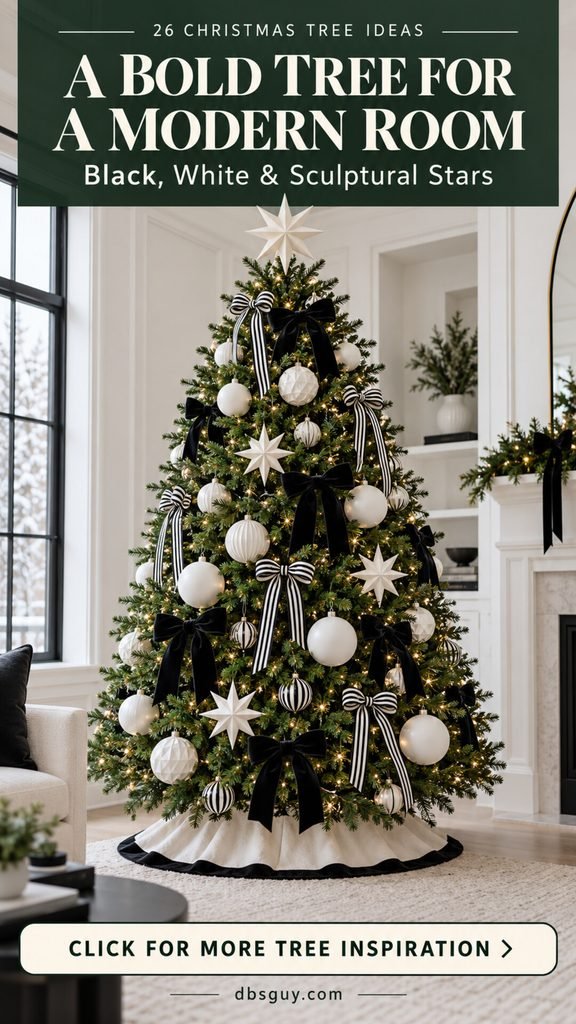
- Palette: Black, warm white, and green.
- Key pieces: White baubles, geometric stars, black velvet bows, and one striped ribbon.
- How to pull it together: Keep the pattern consistent and let the white shapes do most of the visual work. Space the black bows so they feel like punctuation rather than a solid dark band.
Make it work at home: On a smaller tree, scale down either the stars or the bows. Several large focal pieces can compete for the same branch space.
12. A tree covered in red velvet bows
Sometimes a repeated detail gives a tree all the personality it needs. Red velvet bows look beautiful against green branches, with gold ornaments adding a gentle background glow.

- Palette: Deep red, green, and a little gold.
- Key pieces: Matching velvet bows, a few supporting ornaments, and a generous top bow.
- How to pull it together: Tie the bows in a similar shape, then vary their placement. Let some tails fall down the outside of the tree and tuck others lightly into the greenery.
Make it work at home: Start with fewer bows and step back. Add more only where the tree needs another point of color. The ribbon should feel intentional from across the room, not just in a close-up.
13. A gingerbread bakery tree
Gingerbread-shaped ornaments turn the tree into a little storybook scene. Brown felt hearts, tiny houses, and icing-like white details make the theme feel homemade even when the ornaments are store-bought.
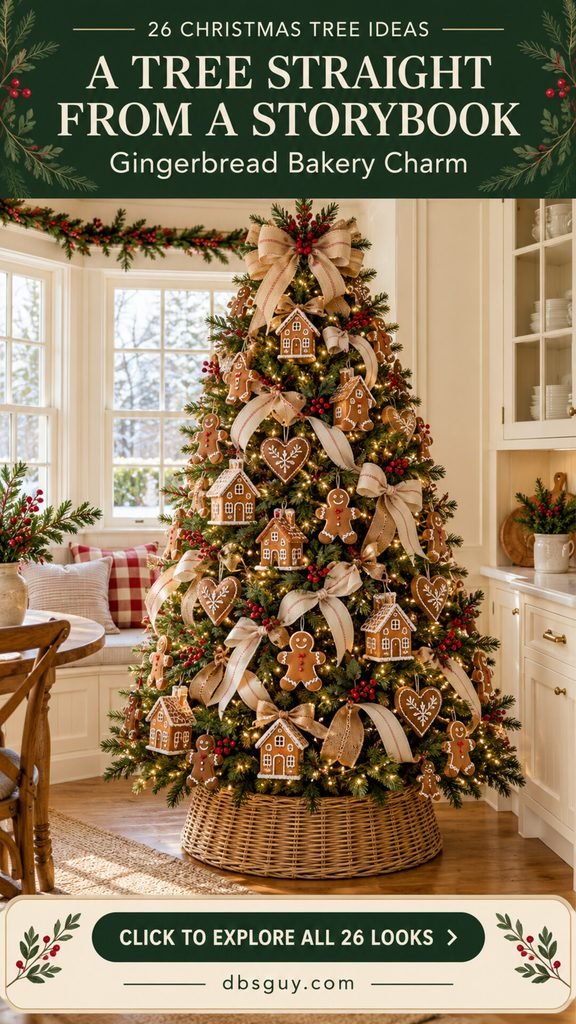
- Palette: Gingerbread brown, cream, and tiny red accents.
- Key pieces: Gingerbread ornaments, soft cream ribbon, felt shapes, and a woven base.
- How to pull it together: Repeat the brown and cream first, then place the house and character ornaments where you can actually see their details.
Make it work at home: Use decorative faux gingerbread if you want the look without hanging food. A few candy-colored touches are plenty; keeping the larger pieces in the bakery palette makes the theme easier to pull together.
14. Candy cane red and white
This tree feels cheerful the moment you walk into the room. Stripes bring the candy-cane idea into focus, while solid red and white ornaments give the pattern breathing room.

- Palette: Red, white, and green.
- Key pieces: Striped ribbon, solid baubles, candy-cane-shaped ornaments, and a white topper.
- How to pull it together: Set out the solid ornaments first and use the striped pieces as accents. That makes it easier to see whether the pattern is balanced.
Make it work at home: For a family room, choose lightweight, durable decorations for the lower branches. Keep fragile pieces and anything with small detachable parts out of young children’s reach.
15. Vintage glass and multicolored lights
A vintage tree does not have to match perfectly. Reflector ornaments, little glass shapes, and multicolored lights can bring back the feeling of a familiar family tree.
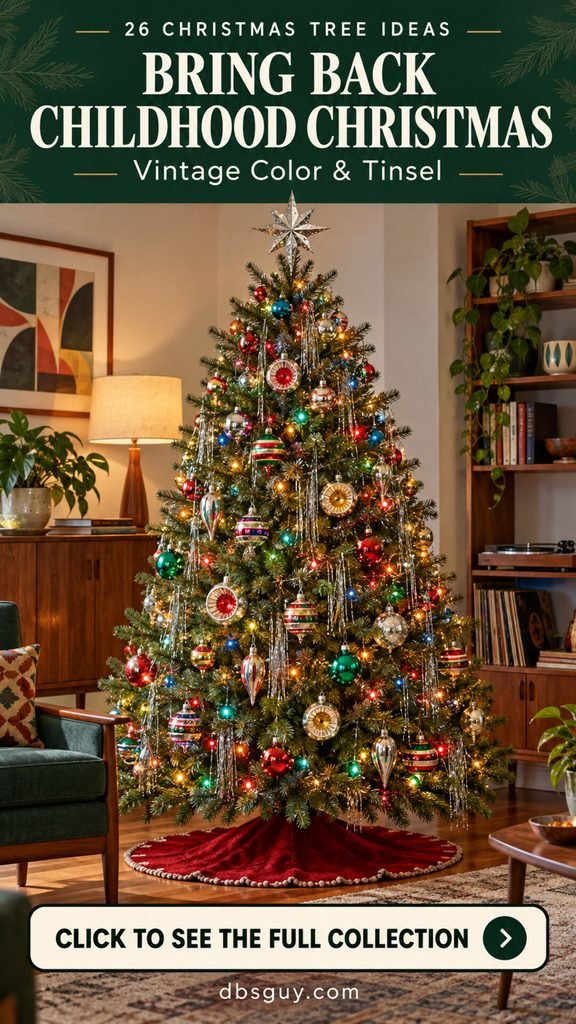
- Palette: Mixed jewel colors, silver, and classic red.
- Key pieces: Retro-style ornaments, multicolored LED lights, and a small amount of tinsel.
- How to pull it together: Spread the strongest ornament colors across the tree, then add the smaller keepsakes. Use tinsel lightly so the ornament shapes remain visible.
Make it work at home: Skip loose tinsel if it does not suit your household, especially if pets might chew it. Reflective ornaments can provide the nostalgic sparkle on their own.
16. Coastal blue, linen, and shell accents
A coastal tree can feel seasonal without giving up the light, relaxed character of the room. Soft blue, linen, and shell shapes connect it with an airy space.

- Palette: Sea blue, off-white, linen, and pale wood.
- Key pieces: Blue baubles, lightweight shell-shaped ornaments, linen bows, and a woven collar.
- How to pull it together: Use the shell shapes sparingly, then repeat the linen bows around them. A little natural wood keeps the blue from feeling too icy.
Make it work at home: If you are decorating in a warm climate, this palette still feels like Christmas through the greenery, lights, and tree shape. The room can keep its everyday colors.
17. Cabin plaid and woodland animals
A cabin-style tree is all about cozy texture: plaid ribbon, pinecones, little animal ornaments, and a wool-looking base. The colors are familiar, but the natural shapes give them a different character.

- Palette: Warm red, black, wood brown, and green.
- Key pieces: Buffalo-plaid ribbon, woodland animal ornaments, pinecones, and small bells.
- How to pull it together: Let the ribbon create the main color pattern. Place the carved-looking animals toward the outside so their silhouettes are easy to spot.
Make it work at home: Choose either a plaid skirt or plenty of plaid ribbon, then keep the other element quieter if the corner feels busy. You can bring in the same texture with a throw nearby.
18. Farmhouse gingham and cream ornaments
Gingham brings a gentler kind of pattern than a big tartan ribbon. Paired with cream stars, little houses, and metal-looking bells, it feels comfortable and collected.
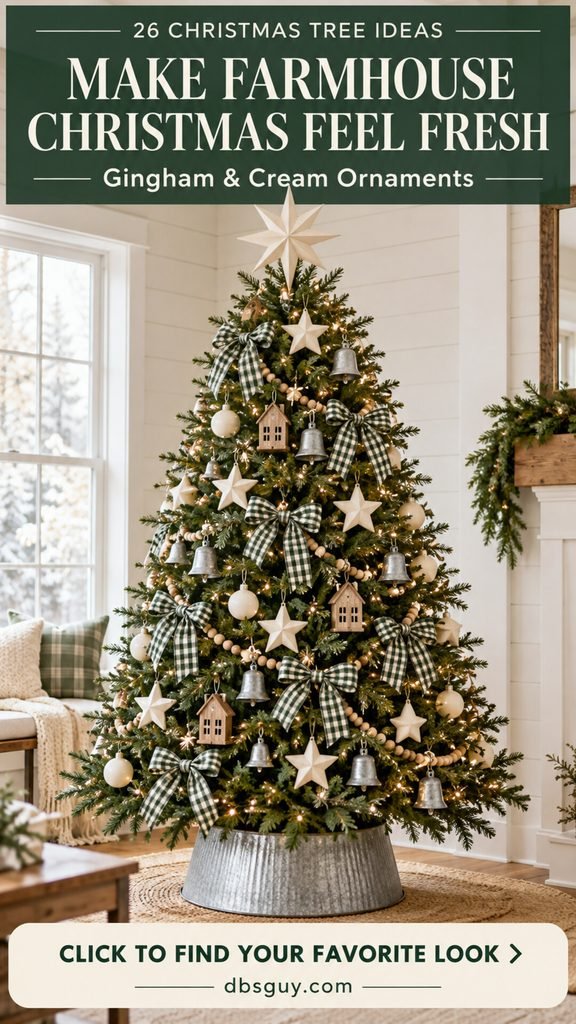
- Palette: Cream, sage or deep green, pale wood, and muted metal.
- Key pieces: Gingham bows, ceramic-look stars, wooden houses, and a simple collar.
- How to pull it together: Repeat the bows at several heights and leave small spaces around the house ornaments so their shapes do not get lost.
Make it work at home: Use light versions of decorative houses and bells where branches are flexible. A decorative material can look substantial without needing to be heavy.
19. A tree filled with handmade paper ornaments
Paper ornaments are a lovely way to give the tree a shared visual language. Stars, rosettes, folded houses, and honeycomb shapes can all belong together when the paper colors repeat.
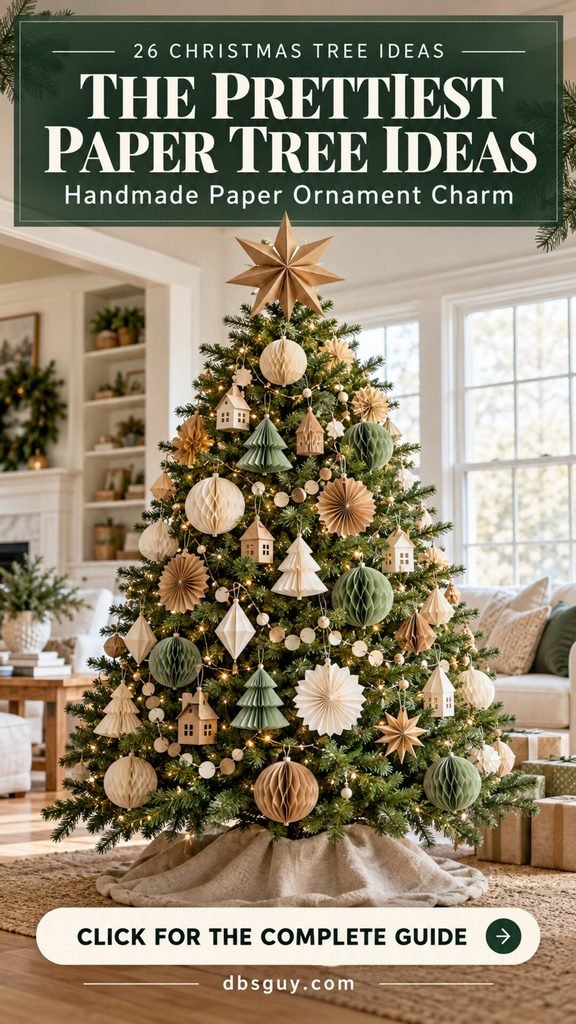
- Palette: Warm white, kraft brown, and muted sage.
- Key pieces: Folded stars, paper rosettes, lightweight hanging shapes, and plain ribbon or twine.
- How to pull it together: Choose a small paper palette and make a few larger pieces to set the scale. Then add smaller ornaments that use the same papers.
Make it work at home: Test the hanging loop before placing an ornament on the tree. Keep paper decorations clear of heat sources and do not let them cover bulbs or light connections.
20. Dried orange, cinnamon, and pinecones
Dried orange slices look especially pretty when a little light passes through them. Pinecones and small cinnamon bundles add shape and texture to the same natural palette.
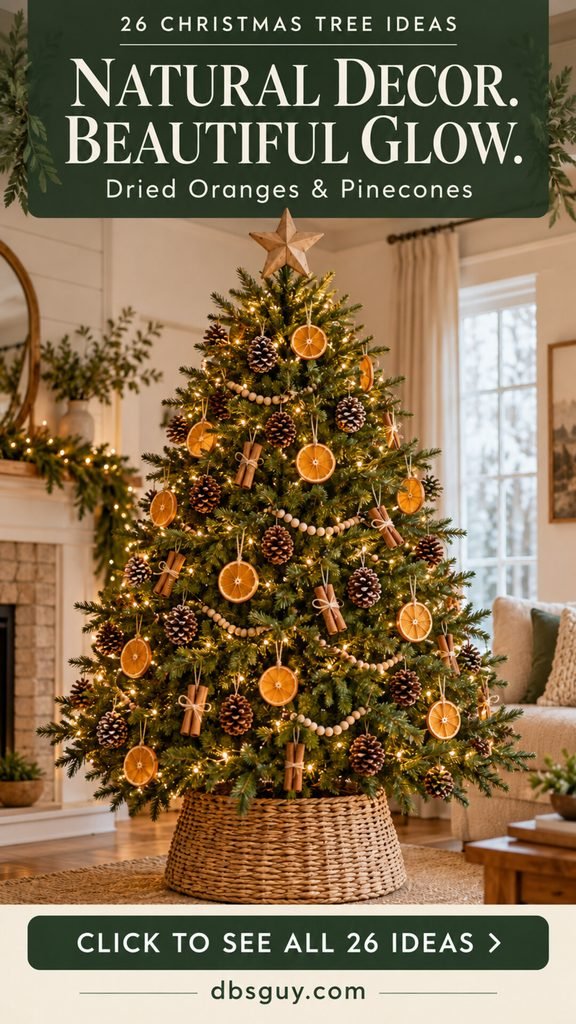
- Palette: Orange, warm brown, blond wood, and green.
- Key pieces: Fully dried orange slices, pinecones, small cinnamon bundles, and twine.
- How to pull it together: Hang the orange slices near the outer branches, where their round outline is visible. Add pinecones between them rather than creating one heavy cluster.
Make it work at home: Let homemade fruit ornaments dry completely before hanging or storing them, and check them for spoilage. Place natural pieces clear of bulbs and heat sources; the warm look comes from the color, not from heat.
21. A snowy tree with jewel ornaments
A flocked tree gives rich colors a bright backdrop. Raspberry, sapphire, emerald, and amethyst ornaments stand out beautifully when the snowy-looking branches remain part of the picture.
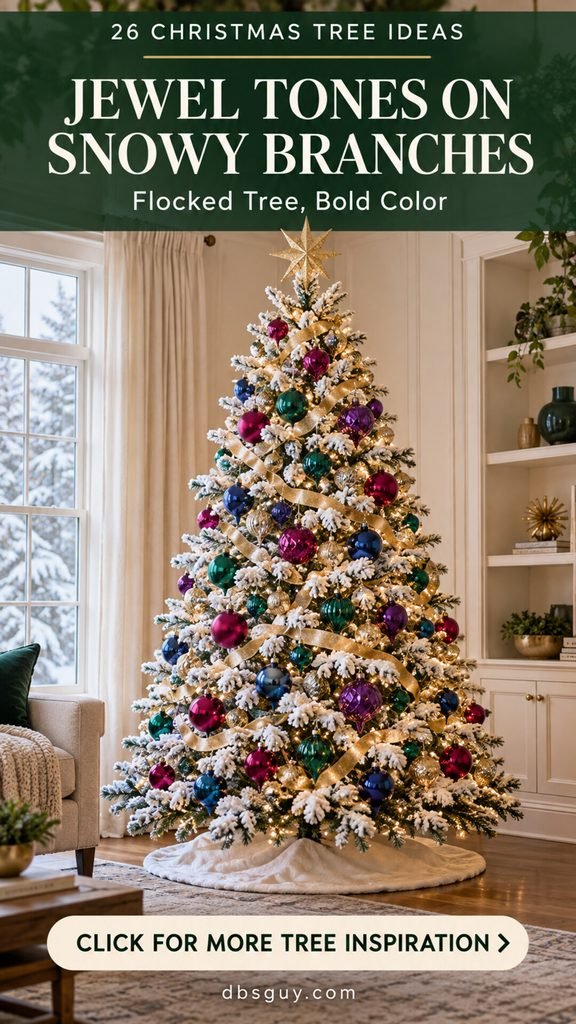
- Palette: Rich jewel colors, white, and a little gold.
- Key pieces: Jewel-tone baubles, narrow ribbon, and a simple metallic topper.
- How to pull it together: Repeat each chosen color around the tree and leave open pockets of white. You can begin with two jewel colors, then add a third if the tree needs it.
Make it work at home: If every branch disappears behind ornaments, remove a few before adding anything else. A flocked tree already contributes an important texture to the design.
22. A small tabletop tree with personality
A tabletop tree can make a small living room feel festive while leaving the floor free. Tiny lights and scaled ornaments give it detail without turning the console into a crowded display.

- Palette: Cranberry, brass, cream, and green.
- Key pieces: A compact tree, miniature ornaments, a small topper, and a stable base.
- How to pull it together: Choose the table first, then check that the tree and stand fit comfortably with room around them. Keep gifts and accessories low so the tree remains the focal point.
Make it work at home: For a real miniature tree, use its proper water-holding stand and protect the table surface. Keep the base stable and the cords out of walking paths.
23. A slim apartment corner tree
A slim tree gives you height without taking the same floor space as a wide tree. The decorations work best when they follow that narrower shape.
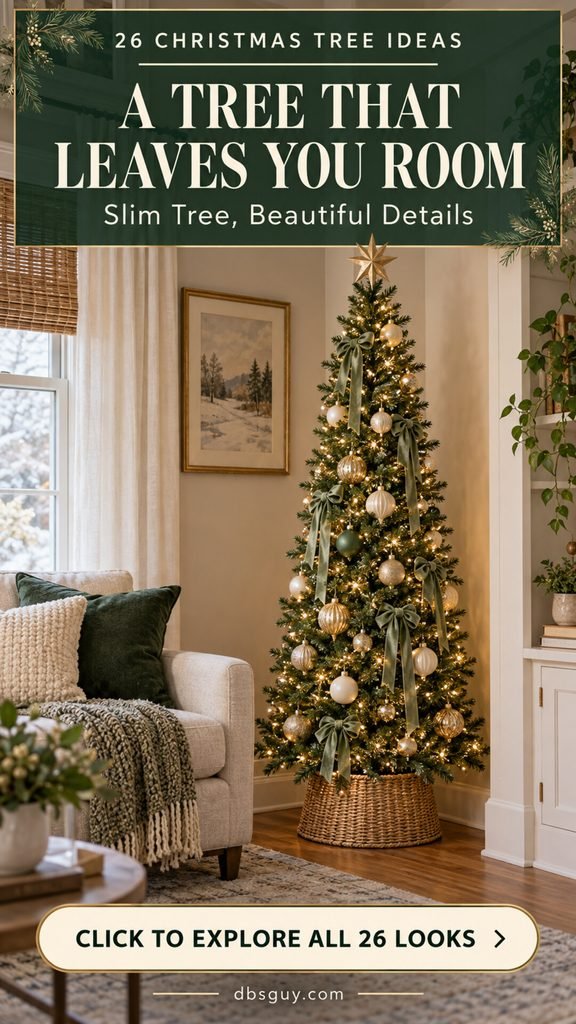
- Palette: Cream, soft gold, sage, and green.
- Key pieces: Small and medium ornaments, narrow ribbon, a compact topper, and a slim collar.
- How to pull it together: Use shorter ribbon loops and scale the bow or star to the tree. Spread the brighter ornaments along its height so the center does not become one crowded column.
Make it work at home: Measure the widest branches, not just the stand. Leave comfortable access to nearby furniture and keep doorways clear. A corner beside the sofa can work when it remains an easy space to move through.
24. A family keepsake tree
The school craft, the ornament from a trip, the little house someone gave you: these are the pieces that make a tree feel like yours. A repeated ribbon or small set of simple baubles can connect them without hiding their differences.
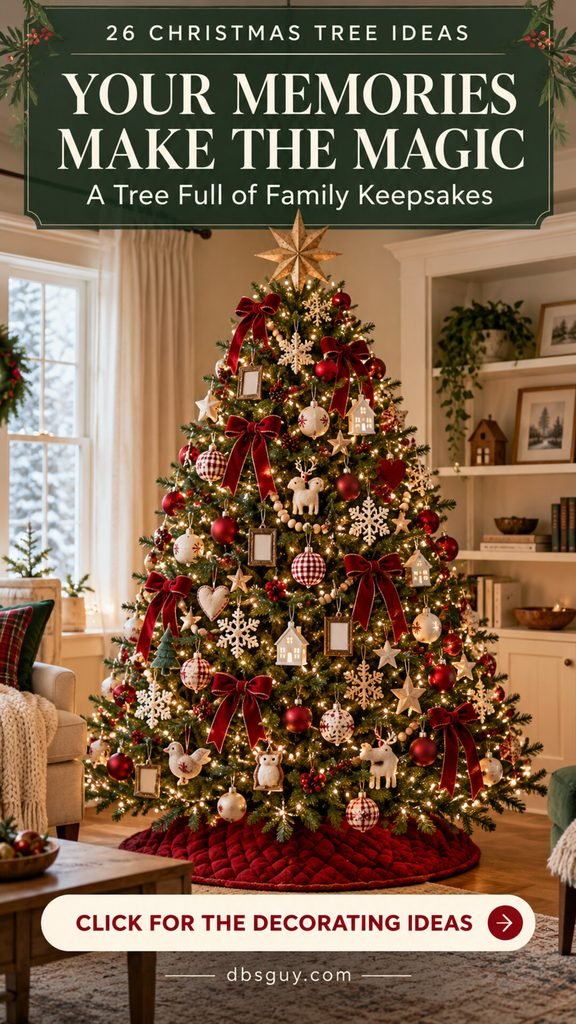
- Palette: Colors already in your keepsakes, with one repeated supporting accent.
- Key pieces: Family ornaments, handmade pieces, simple baubles, and matching ribbon bows.
- How to pull it together: Give the most meaningful ornaments the visible spots first. Use the repeated supporting pieces in the gaps around them.
Make it work at home: Mixing old and new is welcome here. Aim for a tree that is easy to enjoy and talk about, with enough space to notice the small details that have a story.
25. Warm lights and clear glass
This look lets the evening glow become the main decoration. Clear glass baubles and transparent drops catch the light while the branch shape stays visible.

- Palette: Green, warm light, clear glass, and a tiny gold accent.
- Key pieces: Warm-white LED lights, clear ornaments, and a delicate topper.
- How to pull it together: Arrange the lights before the ornaments and look at the tree from the places where you usually sit. Use clear pieces to catch that glow rather than filling every gap.
Make it work at home: Keep the base quiet with a plain skirt. A few neatly wrapped gifts are enough. For the lighting setup, follow the product instructions and switch the lights off when leaving home or going to bed.
26. A colorful maximalist tree
This is the tree for anyone who enjoys a room with personality. Bright baubles, lively stripes, and a big bow can look deliberate when the colors and shapes repeat.
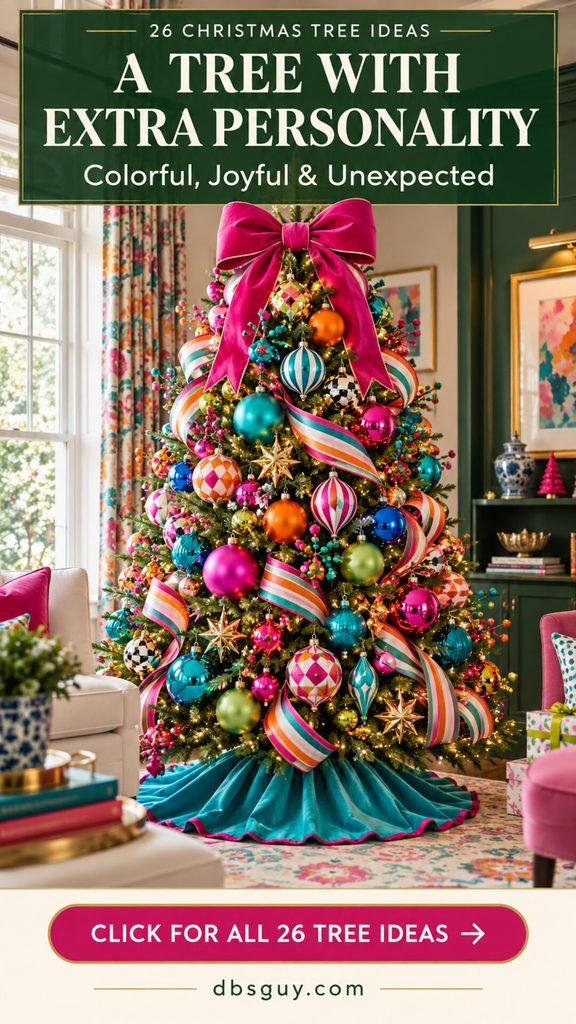
- Palette: Pink, turquoise, orange, cobalt, and a small lime accent.
- Key pieces: Colorful baubles, one striped ribbon, playful shapes, and a statement bow.
- How to pull it together: Repeat a core set of colors throughout the tree before adding the unusual pieces. Keep the same stripe pattern so there is a clear thread through the variety.
Make it work at home: A bold tree can still have a few quiet spaces. Step back, check for heavy clusters, and move ornaments until the color feels spread through the whole shape.
Refresh your Christmas tree without replacing everything
Choose one upgrade. If the ornaments still make you happy, change the ribbon, the topper, or the base first. One repeated new detail can give the whole collection a fresh direction.
Shop your own room. A plain throw can suggest a skirt color; wrapping paper can repeat your palette; a wood or woven texture elsewhere in the room can guide the collar.
Keep the sentimental pieces. Use your simpler decorations around them so there is a rhythm to the tree, rather than trying to make every ornament match.
Pause before buying fillers. Shape the branches and redistribute what you have first. Buy only the shapes, colors, or sizes that would solve a specific gap.
Christmas tree decorating FAQs
What order should I decorate a Christmas tree in?
For an artificial tree, shape the branches first. Check and arrange the lights, add ribbon or garland, then place ornaments and finishing details. A collar that needs to be assembled around the stand may have to go on earlier; check its instructions before starting.
How many ornaments do I need for a 7.5-foot Christmas tree?
There is no single count that works for every 7.5-foot tree. Width, branch density, ornament size, ribbon, and your preferred fullness all affect it. Start with the collection you have, distribute the larger pieces, and check the gaps before buying a set based only on height.
Should ribbon go on before or after ornaments?
Ribbon is usually easier to arrange before ornaments because you can reach the branches and adjust the loops. If you are adding just a few small bows, place them after the main ornaments where they provide the most useful color or texture.
How can I make an inexpensive Christmas tree look better?
Spend time shaping the branches, repeat a clear palette, and mix ornament sizes. Try changing one visible detail, such as the ribbon or the base. If the tree is sparse, check where ornaments sit at different depths before adding more to the outside.
Can I mix family ornaments with a decorating theme?
Yes. Start with the ornaments that matter most, then repeat a ribbon, a color, or a simple bauble shape around them. The supporting pieces can connect the collection while keeping the keepsakes easy to notice.
What should I add to real Christmas tree water?
Use clean water without additives. Keep the cut trunk base submerged and check the reservoir daily. Position the tree away from heat sources, watch for drying needles, and remove it when it becomes dry.
Leave a little room for your own Christmas story
The tree that makes your room feel magical may be the one with a simple paper star, a box of old ornaments, or a color you have never tried before. Choose the look that makes you want to switch on the lights, then make enough room in it for your own Christmas memories.