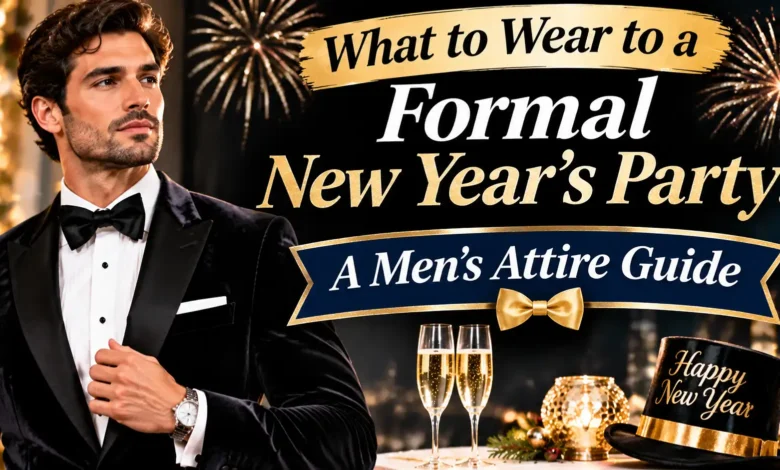
For a black-tie New Year’s party, wear a tuxedo, a white formal shirt, a black bow tie and black formal shoes. If the invitation says black-tie optional, a dark matching suit with a white dress shirt and a conservative necktie also works. If it only says “formal,” ask the host whether a dark suit is welcome before choosing.
That one check makes the rest easier. You can build an outfit from pieces you own, rent what the dress code requires, or add a velvet dinner jacket when the invitation allows more freedom. Start with the level of dress; choose the celebration detail afterward.
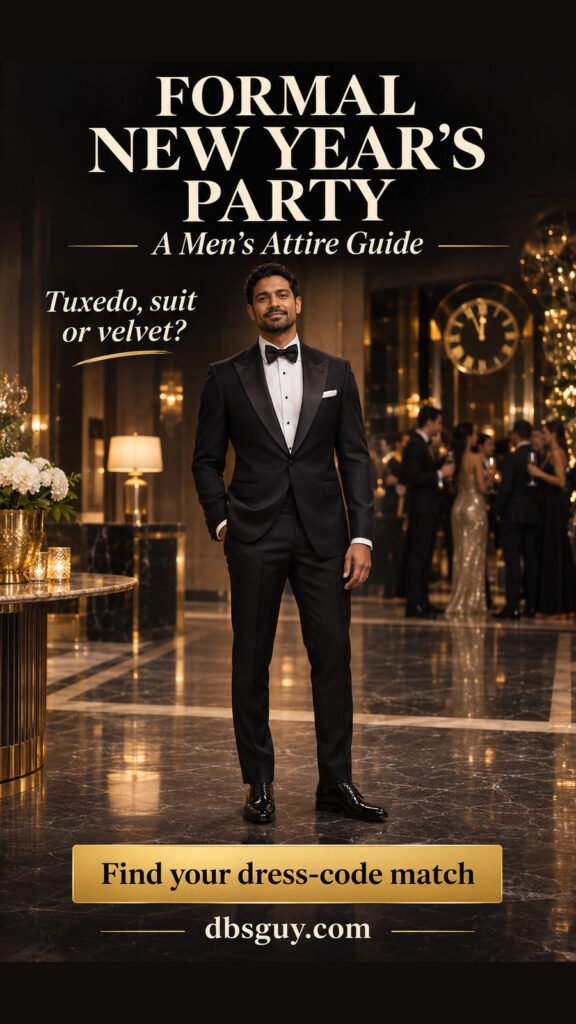
The visuals are AI-generated styling concepts for dbsguy.com. They illustrate outfit combinations and fit details, rather than specific products or firsthand wear testing.
Read the Invitation Before Choosing a Suit
The phrase “formal New Year’s party” can describe several different expectations. The wording on your invitation matters more than the venue’s photos or how dressed up the event looks on social media.
- Black tie: Choose a tuxedo and its formal accessories. A black business suit with a bow tie does not become a tuxedo.
- Black-tie optional: A tuxedo is welcome, and a dark suit with a white shirt and conservative tie is an accepted alternative.
- Creative black tie: Keep the eveningwear foundation, with room for a deliberate color or texture, such as the velvet dinner jacket below.
- Cocktail, semi-formal or festive: These allow different choices from black tie. A dark suit can be a useful starting point, but read any extra instructions from the host.
Emily Post’s attire guide distinguishes these dress codes, including festive attire as cocktail dressing with a holiday touch. “Festive” by itself does not mean a tuxedo is required.
If the invitation is vague, send a specific question: “Are you expecting tuxedos, or is a dark suit and tie appropriate?” That gets a more useful answer than asking whether the party is fancy. If the invitation says white tie, confirm the separate full-evening-dress requirements with the host and a formalwear specialist.
The Classic Tuxedo for a Black-Tie Party
For a traditional gala or ballroom celebration with a black-tie dress code, build one complete tuxedo outfit. Black is straightforward; a deep midnight-blue tuxedo is another established eveningwear option. Choose a dinner jacket with silk-faced peak or shawl lapels and formal trousers designed to go with it.
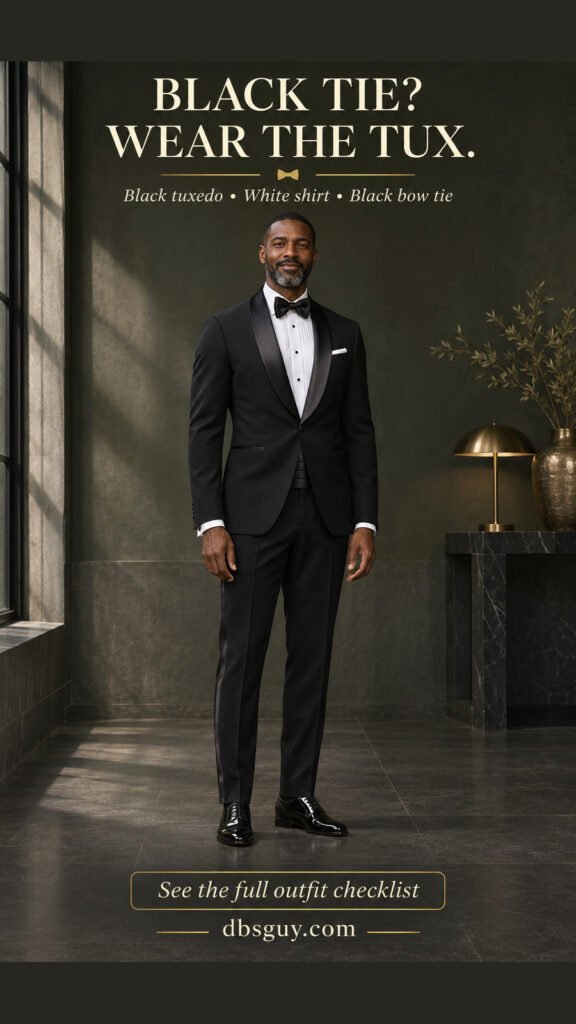
The outfit: A black tuxedo, white formal shirt, black silk bow tie, black cummerbund or low-cut evening waistcoat, black dress socks and patent or highly polished black leather shoes. A small white pocket square finishes it without adding another color.
The shirt deserves a check before you leave the store. A pleated or piqué front suits this combination; a covered front can also give a clean finish. Use cufflinks with French cuffs, and choose studs only when the shirt is designed to take them. A turndown collar is an easy choice around a black bow tie.
For the traditional single-breasted outfit shown here, a cummerbund covers the transition between shirt and trousers. An appropriate evening waistcoat is an alternative; choose one waist covering. Tuxedo trousers with side adjusters or suitable suspenders keep the waist free of a visible belt.
When renting, describe the complete combination rather than asking only for “a black tux.” Confirm the shirt, bow tie, waist covering and shoes, and check which accessories are actually included. A missing shirt or mismatched trousers can leave you rebuilding the outfit at the last minute.
The Dark Suit for Black-Tie Optional
If the invitation permits a dark suit, start with the best-fitting navy, charcoal or black suit you already own. Keep the jacket and trousers a matching set. A black blazer paired with unrelated black pants can look close in a dim room while revealing different fabrics and shades in photos.
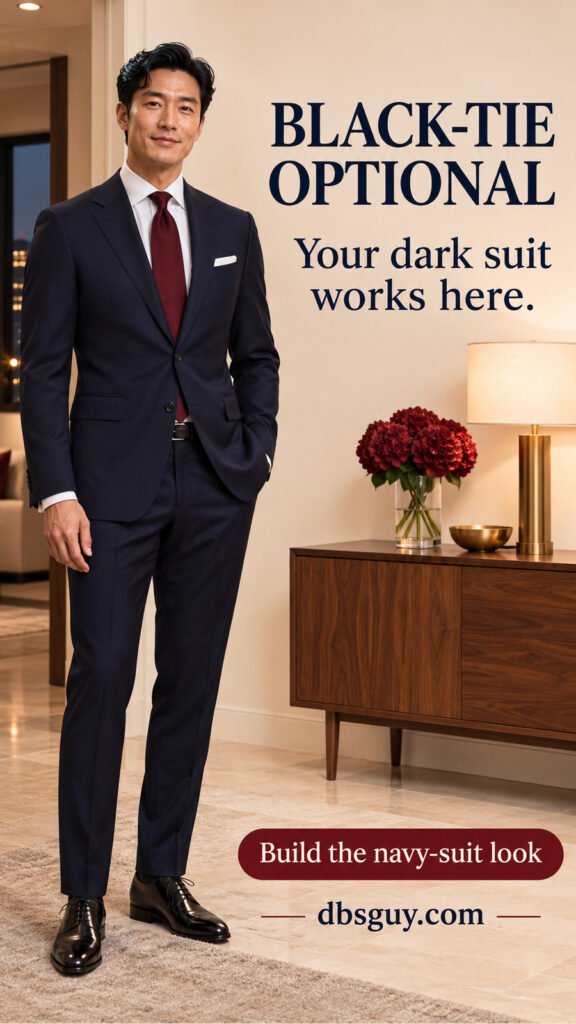
Try this combination: A dark navy two-piece suit, white spread-collar dress shirt, deep burgundy silk necktie, white linen pocket square and polished black Oxford shoes. The burgundy tie gives the outfit a small seasonal detail while the rest stays restrained.
Use a regular dress shirt with your suit rather than borrowing the tuxedo shirt’s studs and pleated bib. If the trousers need a belt, choose a simple black leather one with an understated buckle. The tie should finish around the waistband instead of leaving a strip of shirt above it.
Before buying a party jacket, try this complete outfit in the mirror. You may get more from a clean shirt, polished shoes and a properly adjusted hem than from replacing a suit that already fits. A dark suit is useful for black-tie optional; for an invitation that simply says “formal,” confirm that the host intends to allow one.
The Velvet Dinner Jacket for Creative Black Tie
When the invitation says creative black tie, an emerald velvet dinner jacket gives you a clear point of interest. Choose a jacket with eveningwear details, such as the black satin shawl lapels shown here, and keep the supporting pieces simple.
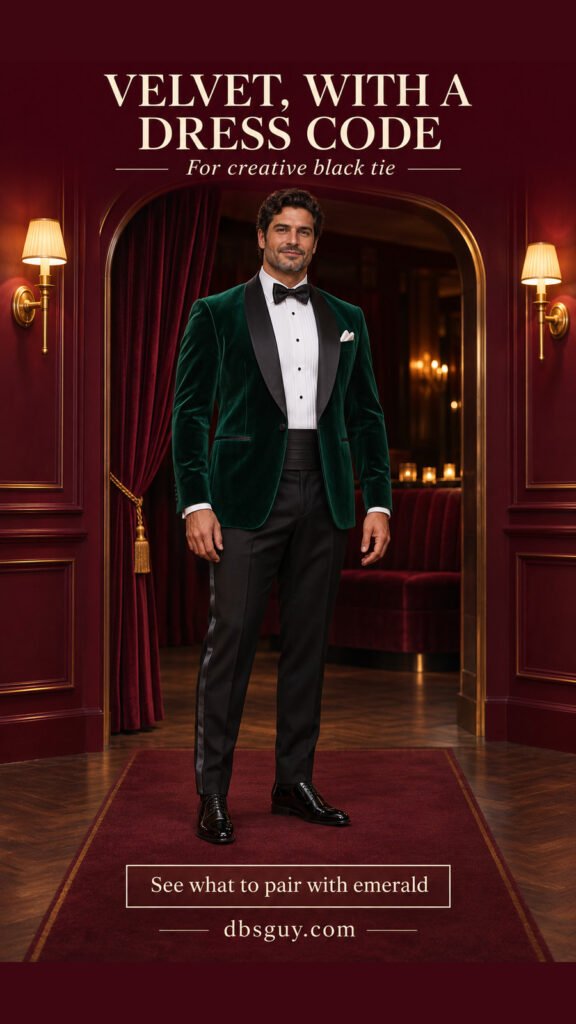
The outfit: An emerald velvet dinner jacket, white formal shirt, black bow tie, black cummerbund, black tuxedo trousers and polished black shoes. The contrast between velvet, satin and the matte trousers provides enough variation without a patterned shirt or glittery shoes.
A velvet blazer with ordinary buttons and casual pockets may be better suited to a cocktail event. Check the jacket’s construction as well as its fabric. For a conservative black-tie invitation, the complete classic tuxedo above is the simpler choice unless the host has encouraged alternatives.
Try the velvet jacket on with the actual trousers. Look at both fabrics under the same light, then sit with the jacket unbuttoned to see how the front falls. There is no need to match your tie to someone else’s dress exactly; a shared accent color is enough if you want the outfits to relate.
Choose Shoes, Neckwear and Accessories Together
Lay the small pieces beside your outfit before party night. This catches practical problems: a shirt cuff that needs cufflinks, a bow tie that will not adjust to your collar, or shoes that look polished but feel uncomfortable after a short walk.
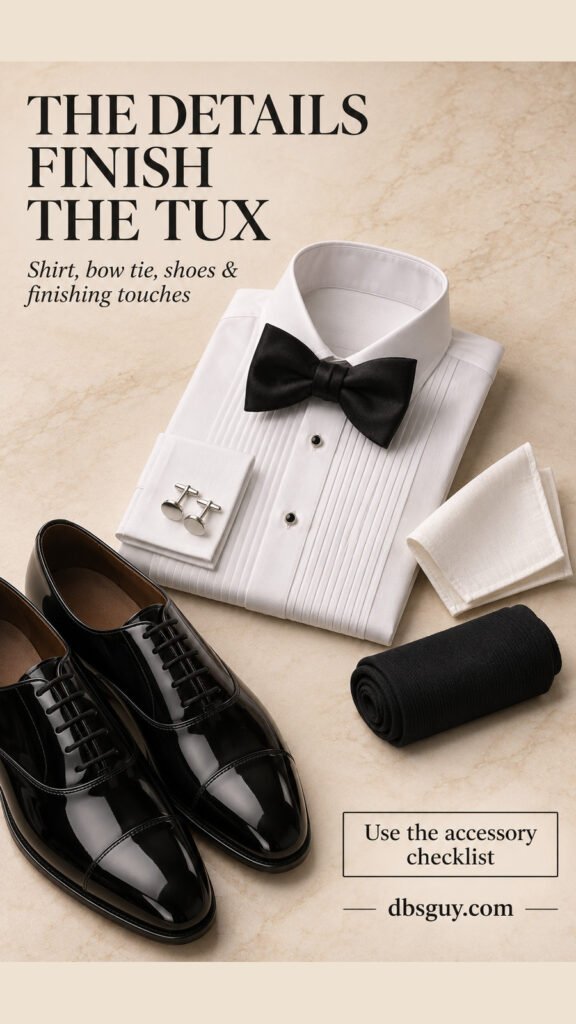
Shoes and Socks
For a tuxedo, black patent Oxfords or sleek, highly polished black leather dress shoes are dependable choices. With the dark suit, polished black leather Oxfords keep the outfit cohesive. Heavy broguing and chunky soles draw the look toward daytime footwear.
Use dark dress socks long enough to keep your leg covered when you sit. Try the shoes with those socks and walk, turn and stand for a few minutes. If your feet need a different shoe shape, extra width or orthotic support, make that part of the selection; the point is a dress shoe you can actually wear through dinner and the countdown.
Neckwear and the Smaller Finishes
Keep a black bow tie with the classic tuxedo and a conservative long necktie with the navy suit. Practice tying and adjusting it with your shirt buttoned. Do this before party night so the finished knot sits comfortably against the collar.
A white pocket square and discreet cufflinks are plenty beside a tuxedo. With velvet, let the jacket carry the color. Choose the watch or jewelry you want to keep, then remove anything that competes with it. Carrying a slim wallet or cardholder also helps the jacket and trouser pockets sit more smoothly.
Check the Fit While Standing, Sitting and Moving
Try on the full outfit with the shirt and shoes you intend to wear. A jacket can look acceptable over a T-shirt and sit differently once the correct collar, cuffs and waistband are underneath it.
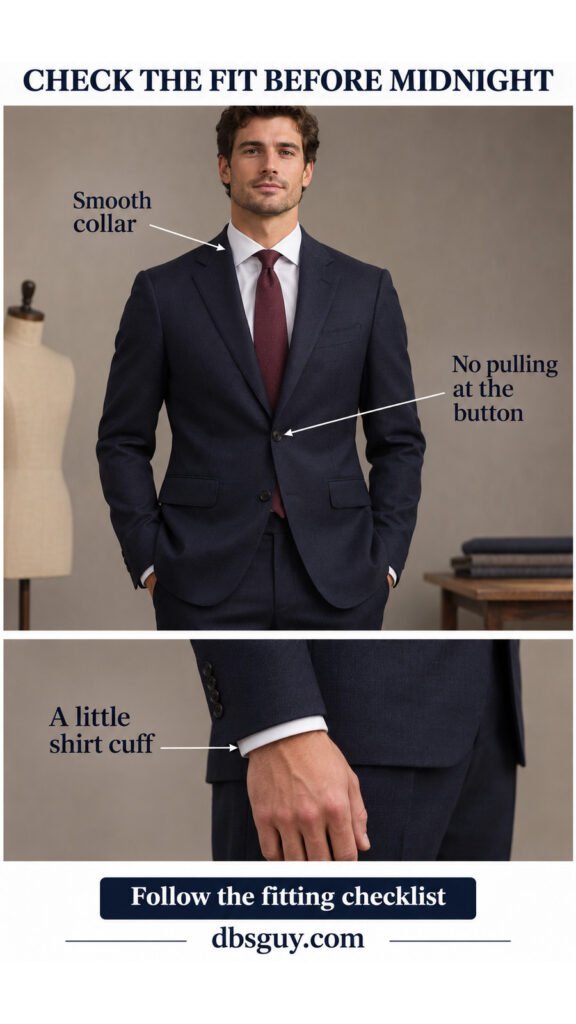
- Collar and shoulders: The jacket collar should rest against the shirt collar without a noticeable gap. The shoulders should follow your shape without overhang or tightness.
- Chest and button: Fasten the appropriate standing button. The lapels should lie smoothly, without a strained X across the front.
- Sleeves: With your arms relaxed, a little shirt cuff should show beyond the jacket. Around ¼–½ inch is a useful visual starting point, adjusted for your proportions and shirt.
- Trousers: Check the waistband seated as well as standing. Choose a hem that falls cleanly over your shoes; avoid a pile of fabric around the ankles.
Then sit as you would at dinner, reach forward and take a few steps. If the waistband cuts in or the jacket restricts ordinary movement, show the problem to the fitter rather than accepting it because the front looks neat in a photo. For a conventional two-button suit, leave the lower button undone and unbutton the jacket when seated.
At an alteration appointment, point to the issue: “The collar lifts when I stand naturally,” or “These trousers pull across my thighs when I sit.” Ask what can realistically be changed before committing to the garment. If several areas need major work, try another size or cut first.
Plan the Winter Arrival as Part of the Outfit
A charcoal or black overcoat works easily over the dark outfits in this guide. Try it on over your actual jacket, with the scarf you plan to wear. It should cover the jacket hem and close without compressing the layers across your shoulders.
The concept above pairs a charcoal coat with an ivory scarf and black gloves. The tuxedo and evening waistcoat underneath remain a complete indoor outfit once those outdoor layers come off. Choose the scarf’s thickness for the weather and check that it sits comfortably around your collar.
Plan for the time you will actually spend outside, including a line at the entrance and the trip home. For snow, ice or heavy rain, use weather-appropriate outerwear and footwear for the journey and change into dress shoes at the venue if needed. The polished shoes shown here are an indoor styling choice, not a recommendation for slippery pavement.
Decide What to Rent, Reuse or Buy
Start with the invitation and an inventory of what fits now. If a tuxedo is required and you do not own one, compare a complete rental with buying the pieces you are missing. Ask about the fitting, alteration options, pickup, return deadline and every included accessory before comparing totals.
If a dark suit is allowed, put it on before shopping. Reuse the pieces that work and spend on the gap you can identify: a suitable shirt, a comfortable dress shoe or an alteration. If the entire outfit is uncomfortable, a new tie will not solve it.
For any purchase or rental, work backward from December 31 using the provider’s actual availability and deadlines. Leave room to try everything together and resolve mistakes. Delivery dates, sizes and rental stock vary, so confirm them directly rather than relying on a general holiday timeline.
Questions About Men’s Formal New Year’s Attire
Can I wear a black suit instead of a tuxedo?
Yes for black-tie optional, and for other events where the host permits a dark suit. A black suit is not the same garment as a tuxedo: it usually lacks the silk-faced lapels and formal trouser trim. For a stated black-tie event, arrange a tuxedo or discuss an exception with the host.
Can I wear a black shirt or a turtleneck?
Keep the white formal shirt for the classic black-tie outfit in this guide. A black shirt or fine knit may suit a creative or cocktail invitation when the host allows it, but changing the shirt does not automatically preserve the original level of formality.
Do I need to wear sequins for New Year’s Eve?
No. A well-fitted dark suit, a silk tie or the texture of velvet can supply the occasion detail. Choose one finish you enjoy instead of adding shine simply because it is December 31.
A Final Check Before You Leave
- Confirm the dress code and put on the complete outfit.
- Check the shirt, neckwear, cufflinks and waist covering if needed.
- Sit, walk and check the trouser hem with your chosen shoes.
- Remove lint and check the front and back in good light.
- Put essentials in your pockets and check that they do not distort the fit.
- Set out the coat, weather layers and any shoes you will change into.
Once those decisions are made, you can leave the outfit alone and enjoy the evening.
Also Read
For women’s looks across different levels of dress, see 18 New Year Outfit Ideas for Casual Gatherings and Dressy Celebrations.
If you are planning the celebration as well as your outfit, read New Year Party Planning Guide: Themes, Food, Games, and a Countdown.