Sensitive skin and anti-aging care are often talked about as if you have to pick one or the other — either you chase visible results and accept the irritation, or you keep your skin calm and give up on firmness and fine lines. You do not have to choose. That is the starting point of this guide, and it is a useful one: the goal is a routine that addresses the signs of aging while keeping reactive skin happy at the same time.
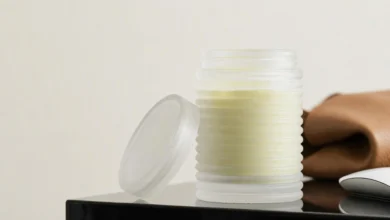
Byrdie’s original guide, written by Natalie Spears and sponsored by Clinique, builds the routine around a single featured product, the Clinique Smart Clinical Repair Collagen + PDRN Cream, with the thinking behind it explained by dermatologist Dr. Kunal Malik. What follows is that same guide, rewritten in my own words: what actually happens to skin as it ages, which gentler ingredients are worth your attention, what separates a truly gentle formula from a harsh one, and how to bring a new product into your routine without upsetting your skin.
Meet the Expert
The expert behind this routine is Dr. Kunal Malik, MD, a board-certified cosmetic and medical dermatologist at Spring Street Dermatology and an assistant professor of dermatology at Mount Sinai, who is also a Clinique partner. His framing is the thread that runs through the whole guide: dermatologists are increasingly moving away from quick-fix treatments and toward gradual, long-term skin health and visible regeneration, and that slower approach is exactly what sensitive skin needs.
What Happens to the Skin As We Age?
According to Dr. Malik, the changes start earlier than most people expect. Beginning in our mid-twenties, collagen production declines by roughly one percent a year, the fibroblasts that build collagen slow down, the dermis thins, and the skin’s hyaluronic acid content drops. Sun exposure speeds all of it up. The visible result is skin that loses firmness, develops deeper lines, and no longer springs back the way it used to.
That is why the guide treats aging as a slow, structural process rather than a surface problem to be scrubbed away. If the skin’s own repair machinery is slowing down, the sensible response is to support it — not to attack it with the strongest product on the shelf.
Which Anti-Aging Ingredients Are Best for Sensitive Skin?
Dr. Malik’s advice here is to choose ingredients that support the skin’s natural repair, hydration, firmness, and elasticity, rather than reaching for the strongest actives first. A peptide moisturizer or a PDRN moisturizer makes a much gentler entry point than a retinoid or an acid exfoliant, and that matters most when skin is reactive.
The two ingredients at the centre of this routine, collagen and PDRN, work in complementary ways, Dr. Malik explains. PDRN supports the skin’s own machinery — the repair processes that slow down with age — while hydrolyzed collagen supports the skin’s natural building blocks, so the two together aim at skin that looks and feels more youthful. The stronger options most people know — retinol and other retinoids, AHAs, salicylic acid, glycolic acid, and vitamin C — are the comparison point here, not the recommendation for sensitive skin.
One detail worth knowing: the PDRN in the featured cream is not the traditional salmon-derived kind. Clinique uses a biotech-derived PDRN sourced from the cica plant instead, which fits the gentler positioning of the whole routine.
What Makes a Formula Gentle on Sensitive Skin?
For Dr. Malik, the first rule is that less is more. A gentle formula avoids drying alcohols, and if your skin is reactive, fragrance-free is the safer choice. He also advises looking for products that carry allergist-tested, dermatologist-tested, and safe-for-sensitive-skin credentials — those labels are a practical filter when you are standing in front of a shelf full of promises.
Texture matters just as much as the ingredient list. Lightweight, fast-absorbing formulas are preferable for reactive skin, because heavy, occlusive creams can aggravate it. And the ingredients around the headline actives do real work: hydrating and barrier-supporting ingredients such as hyaluronic acid, glycerin, ceramides, niacinamide, squalane, and panthenol help the skin tolerate the routine and hold on to moisture.
The featured cream is presented as that idea in a single step. It combines PDRN, hydrolyzed collagen, a multi-peptide complex, hyaluronic acid, and glycerin in one lightweight formula, addressing collagen decline, surface hydration, and barrier support together, rather than asking sensitive skin to cope with several strong products at once.
How Should You Introduce Anti-Aging Products Safely?
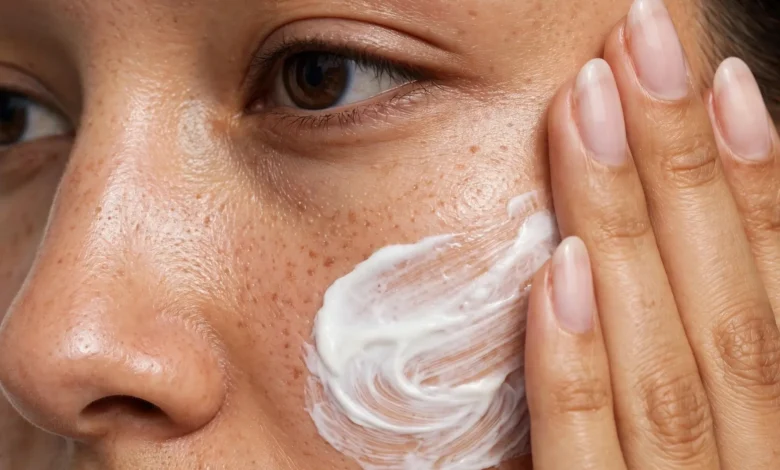
This is the most practical part of the guide, and Dr. Malik lays it out as five steps. First, introduce one product at a time — do not overhaul your whole routine in one go, or you will never know what helped and what irritated you. Second, choose gentle formats, such as a cream, rather than a harsh delivery system. Third, patch-test first: try the product on the inside of your forearm for several days before it goes anywhere near your face. Fourth, simplify everything else while you test it — just a cleanser, the new product, and SPF. And fifth, once the new product has settled in, reintroduce your other products one at a time.
It is a deliberately slow process, and that is the point. Sensitive skin rewards patience, and a routine built one careful step at a time is far more likely to last than one assembled in a single shopping trip.
The Verdict
Protecting sensitive skin does not mean giving up on visible anti-aging results. Dr. Malik’s verdict is that gentle, supportive formulas, used consistently, can deliver them — and that PDRN and collagen are worth introducing gradually, in a lightweight formula your skin can actually tolerate.
The article backs that up with the testing behind the featured cream: in clinical testing cited in the guide, 35 women used the cream twice daily for four weeks, after which their skin looked plumper and felt firmer and bouncier. It is a modest, specific claim — four weeks, one cream, twice a day — and it matches the guide’s overall message: steady, gentle support beats aggressive treatment, especially when your skin is sensitive.