
If you are stuck on things to get for Christmas, start with one part of everyday life you would like to make better: reading, making things, getting comfortable, or spending time with someone. A useful small gift can belong on the same wishlist as a bigger purchase you are saving toward.
These 33 ideas work for building your own Christmas wishlist or choosing a present for somebody else. They cover babies, kids, teens, adults, and grandparents, with buying details to help you turn a broad idea into a good match.
About the budgets and pictures: Dollar amounts below are suggested U.S. shopping budgets, not live prices or confirmed deals. Tax, delivery, brand, and required accessories can change the total. These are editorial suggestions, not hands-on product reviews. The images are AI-generated styling concepts; they do not show specific retail products or guaranteed bundle contents.

Find a starting point for your Christmas list
- A small budget: Start with a board book, reading light, socks, coffee, tea, or a jigsaw puzzle. Basic versions may fit a shopping target around $10–$25.
- A gift for a child: Choose from ideas 1–8, then check the exact item’s age guidance and ask the caregiver what fits the household.
- A teen’s wishlist: Look at ideas 9–15, or choose a hobby supply or gift card that leaves room for personal taste.
- Something useful for an adult: Ideas 16–26 cover daily routines, home essentials, and hobbies.
- Something personal or flexible: Ideas 27–33 include photos, favorite books, classes, and time together. An outing can cost nothing.
For toys, use the manufacturer’s age and safety information rather than judging from the picture alone. The CPSC’s toy-buying guidance also explains why small parts should be kept away from children under three. Your knowledge of the individual child still matters.
1. Board books for a baby’s first little library
Best fit: Babies and the adults who read with them. Suggested budget: $8–$25.

A book with a picture you can point to gives this gift a lovely purpose: a few minutes together. Try an animal book, everyday objects, or a short bedtime story rather than buying a large set just for matching covers.
Look for sturdy board pages and a format a caregiver can hold comfortably. Ask which titles the family already owns. A note inside the cover can make an inexpensive book personal; skip added ribbons or decorations the baby could pull off.
2. A chunky puzzle for a toddler’s current stage
Best fit: Toddlers who enjoy matching and fitting pieces. Suggested budget: $10–$25.

A simple inset puzzle can be more inviting than a complicated one that needs constant rescue. Look for a few clearly different shapes, easy-to-grasp pieces, and a subject the child recognizes, such as farm animals.
The package’s age guidance matters more than how big a piece looks in a photograph. Check construction and warnings, and ask the caregiver whether the challenge suits the child. In a home with younger siblings, discuss where the pieces will be stored.
3. Washable art supplies for a child who loves color
Best fit: Children who like painting and making pictures. Suggested budget: $10–$30.

Put together a focused painting gift: age-appropriate washable paints, broad brushes, and paper suited to paint. A usable supply of paper is often more welcome than another assortment of tiny accessories.
Check the age label and cleanup directions; washable does not mean every surface is protected. Ask a parent about space and whether an apron would help. The pictured easel is an optional larger addition, not something the child needs to begin.
4. A building set with the right kind of challenge
Best fit: Children who enjoy constructing and taking things apart. Suggested budget: $15–$60.

Some builders want pieces for their own inventions; others want instructions leading to a finished model. Find out which kind of play the child enjoys before choosing between an open-ended set and a detailed build.
Match the exact set’s age guidance to the child and check compatibility with pieces already at home. Large-piece and small-piece systems are different purchases. Keep small parts away from children under three, including younger siblings sharing the room.
5. A pretend-play kit built around their favorite story
Best fit: Preschoolers who enjoy make-believe. Suggested budget: $15–$50.

A toy grocery set, pretend café supplies, or a dress-up accessory can extend a game the child already plays. A shopping tote and a few age-appropriate pretend foods can work without buying the whole market stall pictured here.
Ask what is already in the play area and how much room the family has. Look for pieces the child can manage and put away. One useful addition to an existing play kitchen may fit better than a large unrelated set.
6. A ball for the sport they actually play
Best fit: Active kids and young teens. Suggested budget: $10–$35.

A soccer ball, basketball, or other ball makes sense when it matches the recipient’s game. Ask about their team or casual play before ordering; the right size can depend on age and the league’s rules.
Check whether the ball arrives inflated and whether the household has the pump and needle it needs. Consider the playing surface too. A specific invitation to practice together adds more meaning than equipment for a sport they have never mentioned.
7. A cooperative game for the people at their table
Best fit: School-age children, teens, and families who enjoy games. Suggested budget: $15–$45.

A cooperative game gives players a shared goal, which may suit a family that prefers teaming up. Check the player range and typical game length. A four-player favorite is a poor match for someone who usually has one person available to play.
Look at reading demands and whether the youngest player can participate meaningfully. For a mixed-age group, ask about games they already enjoy. Offer to learn the rules and play the first round together.
8. A science kit matched to their curiosity
Best fit: School-age children who like investigating how things work. Suggested budget: $15–$50.

Start with the question they keep asking. A magnifying-glass observation set suits an interest in leaves and textures; a kit about light suits someone fascinated by color. A narrow topic can offer a clearer beginning than a giant mixed experiment box.
Read age and supervision requirements, then check which household supplies the activities need. Ask the caregiver before choosing chemicals, heat, or tools. The observation-themed picture illustrates a direction; actual kits contain different materials.
For a more detailed age breakdown, explore our Christmas gifts for kids by age.
9. A sketchbook and pencils for their kind of drawing
Best fit: Teens and adults who like to draw. Suggested budget: $10–$30.

A compact sketchbook, a few graphite pencils, and an eraser make a focused gift for someone who sketches on paper. Look at their work first. Markers and watercolor may call for different paper than pencil drawing.
Ask about size and whether they prefer spiral binding or a book that opens flat. For an established artist, replacing a favorite supply may be more useful than guessing at a large beginner set. Add a note naming something you admire about their art.
10. Headphones chosen around their listening routine
Best fit: Teens, students, and adult music or podcast listeners. Suggested budget: $30–$150+.

Ask whether they want headphones for music, calls, games, or commuting. Those uses do not lead to the same purchase. A gaming setup may need a particular microphone connection, while a commuter might prioritize a case and comfortable earcups.
Check device compatibility, controls, fit, and return options for the exact model. If you are making your own wishlist, name the model or connections you need. That detail helps a gift-giver avoid spending money on a near match.
11. A reading light for one more chapter
Best fit: Teen and adult readers who prefer paper books. Suggested budget: $10–$25.

A clip-on reading light has a specific job: lighting the page where they read. Choose a clamp that fits their usual books and a flexible neck that points toward the page without hovering in the way.
Look at weight, brightness controls, and charging or battery requirements. A reader carrying paperbacks may prefer a smaller light than someone reading hardcovers at home. Check whether the required cable or batteries come in the box.
12. A beginner crochet kit with one achievable project
Best fit: Teens and adults who have asked to learn crochet. Suggested budget: $15–$40.
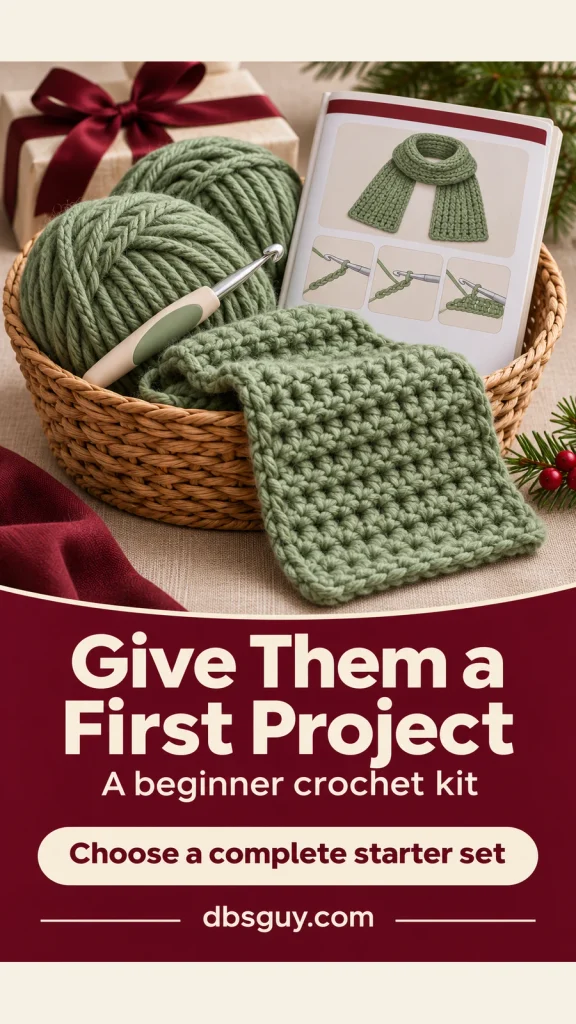
Give a starting point rather than a new collection to organize. A kit for a small practice square or another clearly explained first project works when the yarn, hook, and instructions are chosen to go together.
Read the contents carefully: some kits assume the maker owns basic tools or can follow a video. Check that the instructions suit the recipient. Avoid a complicated project just because the finished sample looks impressive; experienced crocheters may prefer choosing their own yarn.
13. A lamp that fits their room and available outlet
Best fit: Teens, college students, and adults refreshing a small space. Suggested budget: $20–$60.

A bedside or desk lamp can change how a corner is used without adding much clutter. Ask whether they need light for reading, work, or a softer evening atmosphere. That answer should guide the shade and light direction.
Measure the surface, check cord length, and find out whether a suitable bulb is included or replaceable. For a dorm, confirm housing rules. A straightforward switch may suit the person better than an app or another account to manage.
14. An instant camera with room in the budget for film
Best fit: Teens and adults who want physical snapshots. Suggested budget: $70–$160+.

An instant camera suits someone who enjoys taking a picture and keeping the print. Ask whether that ritual is part of the appeal or whether they really want a small digital camera. These are different experiences.
Price a starter pack of the exact film required and check the ongoing cost per picture. Confirm batteries or charging accessories and print size. Including some film makes the first afternoon more enjoyable, provided it fits your total budget.
15. An e-reader that works with their book sources
Best fit: Frequent teen and adult readers who want digital books. Suggested budget: $100–$250+.

If this is on your own wishlist, say where you buy or borrow ebooks before naming a device. Store compatibility, supported formats, and your library’s options may matter more than a long list of display features.
For somebody else, check those details with them first. Compare the controls and screen settings they want, plus the cost of a cover. Let the recipient use their own account; a device need not arrive signed in to feel complete.
Shopping for a teenager with a very specific taste? Our Christmas gifts for teens guide offers more ways to narrow the choice.
16. An insulated tumbler that goes where they go
Best fit: Students, commuters, and adults with a daily drink routine. Suggested budget: $15–$45.

Choose capacity around what they drink, rather than the biggest cup available. A desk tumbler, a cup for the car, and a bottle carried inside a bag have different priorities. Ask how they plan to use it.
Compare dimensions, lid operation, and cleaning instructions. For a bag, check the maker’s specific leakproof description for the closed lid; do not assume a straw lid contains spills. Easy everyday use is what makes this gift earn its place.
17. Cozy socks that fit their shoes and laundry habits
Best fit: Teens and adults who would enjoy a useful small gift. Suggested budget: $8–$25.

Choose a pair for a reason: warmer feet at home, a replacement for worn favorites, or a pattern the person would wear. Check the size range and fiber blend rather than buying by packaging alone.
Thickness matters. A bulky pair may be comfortable at home but awkward inside fitted shoes. Read care directions and avoid unfamiliar fibers if the person knows they irritate their skin. One suitable pair is enough; it does not need a basket of extras.
18. Pajamas in a fabric and cut they already like
Best fit: Teens and adults whose clothing preferences you know. Suggested budget: $25–$80.

Think about what they wear on an ordinary night: long sleeves, a loose T-shirt, shorts, or a matching set. Pajamas are more useful when they fit that preference than when they only look festive in a photograph.
Use the seller’s measurements and check exchange terms. If size or cut is uncertain, ask for a wishlist link. Save personalization for a purchase you are confident they will keep, and include a gift receipt for clothing that can be exchanged.
19. A throw blanket for their favorite chair
Best fit: Teens, adults, and older relatives who enjoy a cozy seat. Suggested budget: $20–$65.

A throw is an easy home gift when you know where it will live. Pick a color that works with the room, and check dimensions so it covers the space the person wants covered.
Read the fiber and washing instructions. Someone sharing a couch with a pet may value easy cleaning over delicate texture. This suggestion is for teens and adults; the chair image is not a baby sleep setup. A manageable washable blanket can be more useful than a heavy oversized one.
20. A compact toolkit for a first apartment
Best fit: Adult students, new renters, and people missing household basics. Suggested budget: $25–$60.

Someone moving out may appreciate finally having a screwdriver and tape measure in one place. Choose an organized kit built around everyday basics, such as useful screwdriver bits, pliers, hex keys, and a tape measure.
Ask what they own, then check the actual contents rather than comparing piece counts. A huge case full of duplicates takes up room. This gift suits minor household tasks; it need not include power tools or equipment for projects outside the recipient’s experience.
21. A power bank paired with the correct cable
Best fit: Older teens and adults who regularly run short of phone battery. Suggested budget: $20–$60.

Choose for the device they actually want to charge. A compact phone backup and a laptop power source are different purchases. Ask for the device model and how much weight they are willing to carry.
Compare stated output, ports, and cable requirements. A matching connector alone does not establish compatibility. Buy through a reputable seller and check current recalls. Include a suitable cable if needed; avoid assuming a number of recharges without specifications for the devices involved.
22. Coffee selected for their usual brewer
Best fit: Adult coffee drinkers whose preferences you know. Suggested budget: $12–$35.

A bag from a roaster they enjoy is a consumable gift that does not add another mug to the cupboard. Start with the format: whole beans, ground coffee, or the exact pod system they use.
Then narrow by roast preference and regular or decaf. Offer one small bag near their usual taste rather than a large supply of an unfamiliar flavor. Check package size and freshness information. A note suggesting a coffee date gives this practical gift a personal reason.
23. Tea with an infuser they will find easy to use
Best fit: Teen and adult tea drinkers, according to their usual preferences. Suggested budget: $10–$35.

Find out whether they use loose-leaf tea or tea bags, and whether they want caffeinated or caffeine-free options. Familiar flavors are a reasonable starting point; a sampler helps only if its selections appeal to them.
For loose-leaf tea, an infuser basket that fits their cup makes sense if they do not own one. Check ingredients and relevant allergies. Keep the gift about taste and an enjoyable routine rather than attaching unsupported wellness promises.
24. A small baking kit for a recipe they want to make
Best fit: Teen and adult home bakers. Suggested budget: $15–$40.
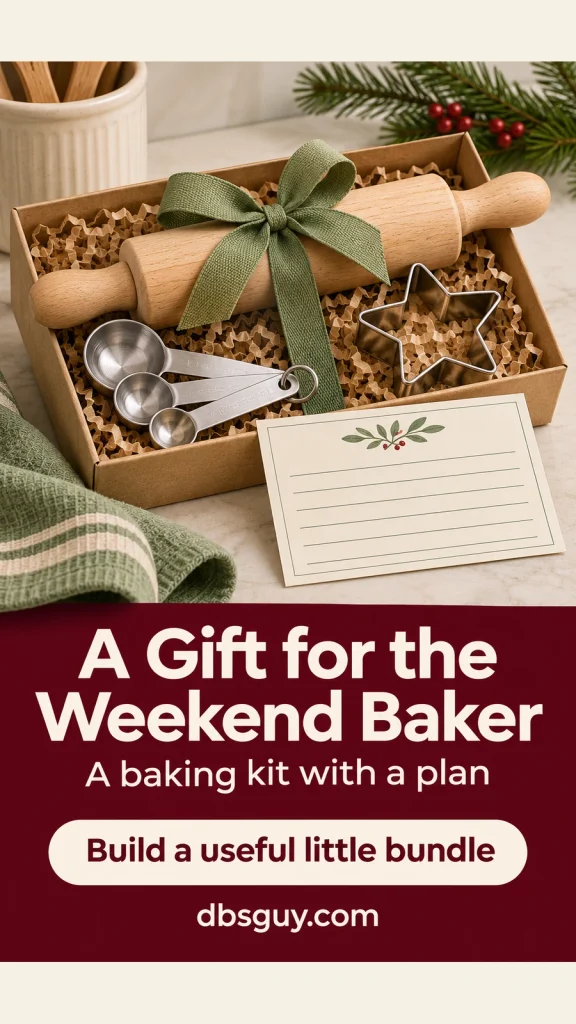
Choose a baking project and build around the missing tools. For someone wanting to roll cookies, that might mean a rolling pin and one cutter. For an established baker, it might be the specific measuring set they asked to replace.
Check drawer space and existing supplies. If you include ingredients, keep labels and consider allergies and storage. Add a recipe from a source they trust or a family recipe you can accurately share. The picture shows an arrangement idea, not a ready-made retail set.
25. A jigsaw puzzle that fits their table and patience
Best fit: Teen and adult puzzle fans, including older relatives. Suggested budget: $10–$35.

Choose a picture they would enjoy looking at for several evenings: a place they love, a favorite animal, or an appealing artwork. Then compare piece count, finished dimensions, and individual piece size.
A large-piece puzzle is a format preference, not an assumption to make about age. Ask what they enjoy. Check whether there is room to leave it out; a puzzle board is optional if it solves a real storage problem. Offer to work on it together if that would be welcome.
26. Gardening tools for the space they actually grow in
Best fit: Adult gardeners and interested beginners. Suggested budget: $15–$45.

A balcony gardener may need a comfortable hand trowel and gloves instead of a large tool collection. Ask what they grow and which piece is worn out or missing. An established gardener may have a specific preference.
Consider grip shape, weight, glove sizing, and storage. Avoid filling the package with random seed packets; plant choices depend on climate, light, season, and interest. A compact set and an offer to help prepare pots can be useful for the growing season ahead.
27. A photo book about one shared chapter
Best fit: Partners, parents, grandparents, and close friends. Suggested budget: $20–$70.

Give the book a theme: a family trip, a new home, or afternoons with the grandchildren. A focused selection is easier to enjoy than a hurried copy of an entire camera roll. Include ordinary moments that mean something to the person receiving it.
Add captions identifying people, places, or dates when helpful. Check every page proof for cropped faces and blurry images, and allow for production and delivery. If printing exceeds your budget, a small selection of prints with handwritten notes can preserve the same idea.
28. A digital photo frame with a realistic setup plan
Best fit: Adults and grandparents who want changing family pictures. Suggested budget: $70–$180+.

This works when the person likes the idea and someone has checked how pictures reach the frame. Some models rely on Wi-Fi and an app; others use different transfer methods. Compare the exact setup with what the recipient is comfortable doing.
Check account requirements, ongoing fees, storage, and who can send photos. Ask permission before creating an account or uploading private family images. Offer setup help if welcome and check the spot has power. A printed album may fit better if ongoing maintenance would become a burden.
29. A book in their preferred genre and edition
Best fit: Adult readers, including those who prefer large print. Suggested budget: $10–$35.

A new mystery by an author they follow can feel more personal than a generic book described as a gift for seniors. Ask about favorite genres, recent reads, and whether the title is already on their shelf.
Choose the format they enjoy: paperback, hardcover, audiobook, or a clearly identified large-print edition. The large-print picture is one option, not a recommendation based on age alone. If you are unsure about a title, a bookstore visit together can be part of the gift.
30. A robe that is comfortable to wear and wash
Best fit: Adults and older relatives whose preferences you know. Suggested budget: $25–$85.

Think about their morning rather than choosing the fluffiest robe available. They may prefer lightweight cotton, warm fleece, short sleeves, or a different length from the one pictured.
Check measurements, garment weight, closures, sleeve length, and care instructions. A robe should be easy for that person to put on and manage. Ask for a preferred style when needed and keep the gift receipt. An exchange option is helpful because comfort is individual.
31. A favorite-shop gift card with a specific note
Best fit: Teens and adults who prefer making the final choice. Suggested budget: An amount you choose; $10–$50 is one starting range.

A gift card becomes personal when the shop and note show you noticed something. Try, “For the book you tell me about next,” or, “Toward the yarn for your next project.” Choose a place they use and can access easily.
Buy from a trusted source, inspect packaging for tampering, and keep the receipt. Read the terms and confirm where the card works. For a younger recipient, check with a caregiver about accounts and purchases. Cash may be more useful when someone is saving for a larger goal.
32. A class connected to something they want to learn
Best fit: Interested kids with caregiver agreement, teens, and adults. Suggested budget: $25–$120+.

A pottery session, cooking workshop, drawing class, or lesson can turn a stated interest into a first step. Pottery is one example; choose the subject because they have shown interest rather than assigning them a hobby.
Check age requirements, accessibility, location, supplies, and booking terms. Find out whether materials or finishing cost extra. If scheduling is uncertain, discuss dates or choose a flexible option with clear terms instead of booking a surprise they cannot attend.
33. An outing with the practical details handled
Best fit: Children, teens, partners, friends, and older relatives, with a suitable plan. Suggested budget: $0–$100+.

Give a day that fits the relationship: a free museum visit, a walk with a packed lunch, a matinee, or a place they keep mentioning. A low-cost plan can be meaningful when it reflects how they like spending time.
Check schedules, transport, access needs, and extra costs. Say what is included, such as admission and lunch, so nobody gets an unexpected bill. Agree on a child’s outing with their caregiver. A handwritten invitation with a proposed date can be enough to put under the tree.
Turn the ideas into a wishlist somebody can use
If this list is for you, choose a few different price points that are comfortable for your family or friends. Include the details a shopper cannot guess: clothing size, color preference, exact device model, or book edition. Mark which choices are alternatives so several people do not buy versions of the same thing.
If you are shopping for someone else, set a total that includes delivery, tax, supplies, and accessories. Check return terms before buying, especially for clothing, electronics, and personalized gifts. Keep the gift receipt and recheck delivery estimates when ordering; a suggested budget is not an arrival guarantee.
Questions about choosing Christmas gifts
What should I ask for when I do not know what I want?
Look for something worn out, an activity you keep postponing, or a hobby supply you regularly use. Ask for a replacement, the missing first step, or a contribution toward a specific goal. If you would rather have less stuff, say so and suggest time together.
What can I get for Christmas on a very small budget?
Choose one useful item, such as a book, socks, or a favorite drink, instead of dividing the money among filler gifts. You can also write an invitation for a free outing or offer a specific piece of help the recipient wants. Include a plan you can realistically carry out.
How do I choose a Christmas gift for a child?
Ask the caregiver about current interests, duplicates, space, and the child’s stage. Follow the product’s age and safety information. Do not assume a bigger or more advanced gift is better; choose something the child can enjoy with the support available.
What should I get someone who says they want nothing?
First, respect the request. If they are open to an alternative, ask whether a favorite consumable, a shared meal, or practical help would be welcome. Avoid turning “no gifts” into another object they feel obliged to keep.
Is a gift card too impersonal?
It can be thoughtful when the recipient wants to choose and the shop suits their interests. Add a specific note and an amount you are comfortable giving. Confirm that the card can be used where they live and keep the receipt in case there is a problem.