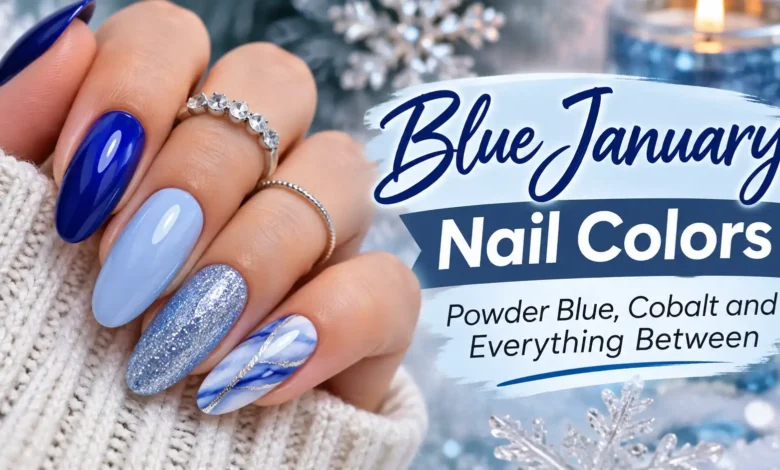
For blue January nail colors, start with how light, muted, or vivid you want the blue to be. Powder blue gives you a pale, solid color; blue-gray and denim soften the middle of the range; cobalt delivers the strongest hit of blue. Periwinkle and cornflower sit between pastel and bold, while an icy pearl finish adds reflection to a lighter base.
These seven references help you tell similar blues apart and describe the one you want at the salon. You can borrow any color without copying the nail length shown. The useful decision is whether you want your manicure to blend into your winter clothes or become the detail you notice first.
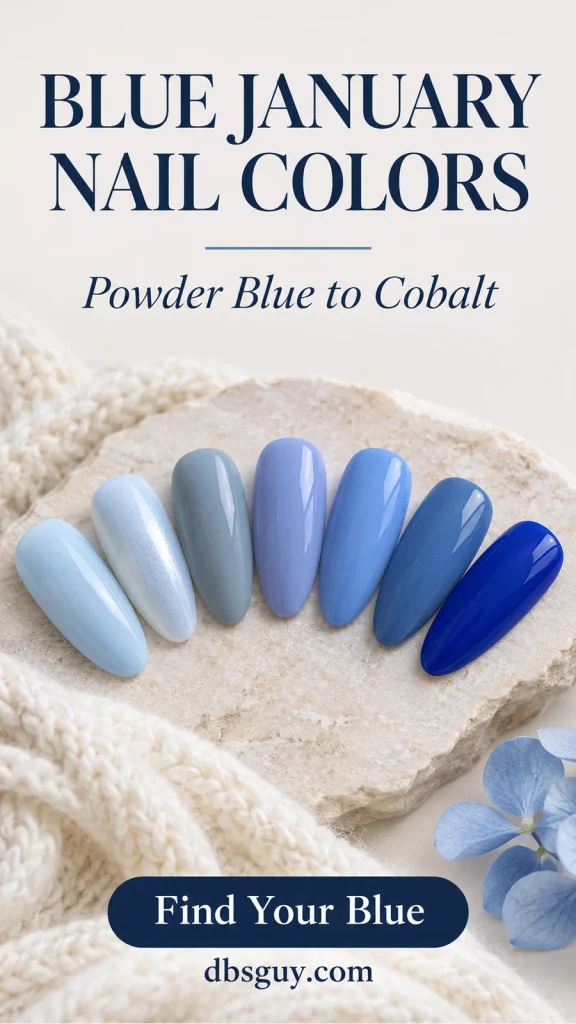
The images are AI-generated manicure concepts created for dbsguy.com. They illustrate color, shape, and finish; they are not photographs of completed salon work or swatches of the named polish example.
Find Your Starting Point on the Blue Spectrum
Shade names overlap between brands, so treat them as a starting vocabulary. In this guide, powder means pale and softly colored, denim means a muted medium blue, and cobalt means a vivid, saturated blue. A painted sample will tell you more than the bottle name.
- You want a light manicure: compare powder blue with icy pearl. Choose powder for a plain cream finish and pearl for a soft reflective sheen.
- You want color that feels quieter: compare blue-gray with denim. Blue-gray is lighter here; denim brings more depth.
- You want a blue-violet direction: compare periwinkle with cornflower. The periwinkle reference leans further toward lilac.
- You want the color to stand out: start with cobalt. It stays vivid rather than turning smoky or nearly black.
Choose coverage separately. An opaque cream hides the natural nail, while a sheer tint lets it remain visible. A pale blue can be fully opaque, and a glossy surface does not tell you whether the manicure uses regular polish or gel.
Also read: January Nails: How to Choose Your First Manicure of the Year.
1. Powder Blue: Pale Color With Solid Coverage
Choose powder blue when you want a light manicure that still looks clearly blue. This reference uses an opaque cream finish on short squoval nails, with gently squared ends and rounded corners. The gloss adds a clean reflection without changing the color into a shimmer shade.
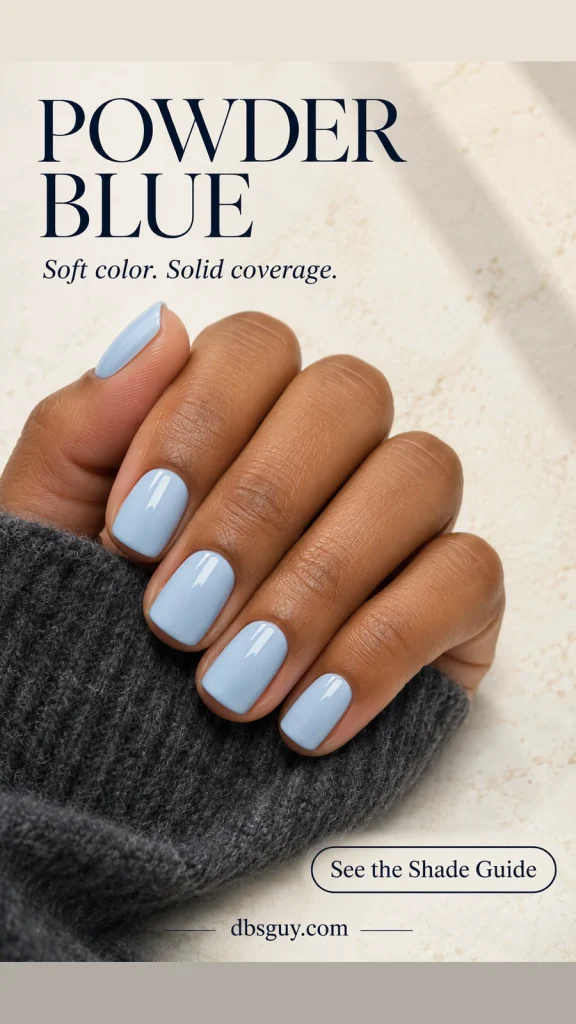
Beside a charcoal cuff, the pale blue becomes easy to see. Against an ivory sweater, the overall contrast feels softer. That makes your own clothes useful comparison tools: bring the sleeve you wear most often into the decision.
If the sample looks almost white, compare a slightly stronger blue. If it looks minty, ask to see a less green-leaning option. Keep the swatches beside each other so the difference is visible.
Salon wording: “An opaque pale powder blue, glossy, with no shimmer. I’d like short squoval nails, and I want the color to stay visibly blue.”
2. Icy Blue Pearl: A Light Base With a Soft Sheen
The difference here is the reflection. A very pale blue base carries a fine pearly sheen, giving the short oval nails a luminous surface. There are no separate glitter pieces or concentrated cat-eye bands in this reference.
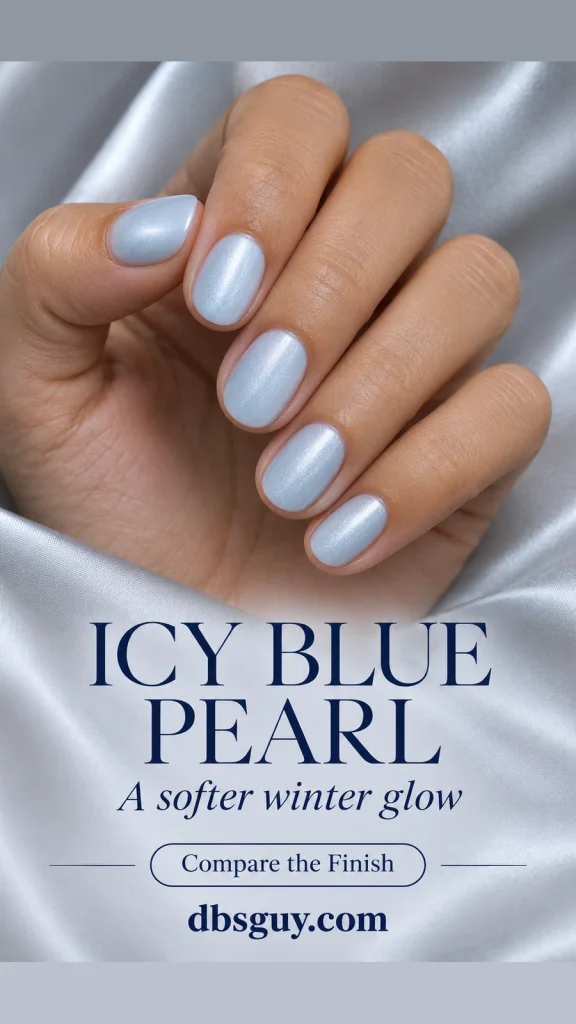
Turn a finished swatch slowly before choosing it. Check the blue underneath the bright reflection as well as the shine itself. If you only love the sample when the light hits it, you may prefer a stronger blue base with a gentler sheen.
“Ice blue” does not automatically mean shimmer. Some ice-blue polishes are plain creams. Say both parts of the request: a very pale blue color and a fine pearlescent finish. For this look, ask your artist to keep the blue visible rather than covering it with a nearly silver effect.
Also read: 17 Light Blue January Nail Ideas for a Frosty, Airy Finish.
3. Blue-Gray: A Muted Shade With a Clear Blue Cast
Blue-gray is a useful middle ground if powder feels too pale and a bright blue feels stronger than you want. The reference sits on the lighter side of slate: a muted blue mixed visually with enough gray to soften its impact. Its glossy soft-square shape keeps the color easy to read.
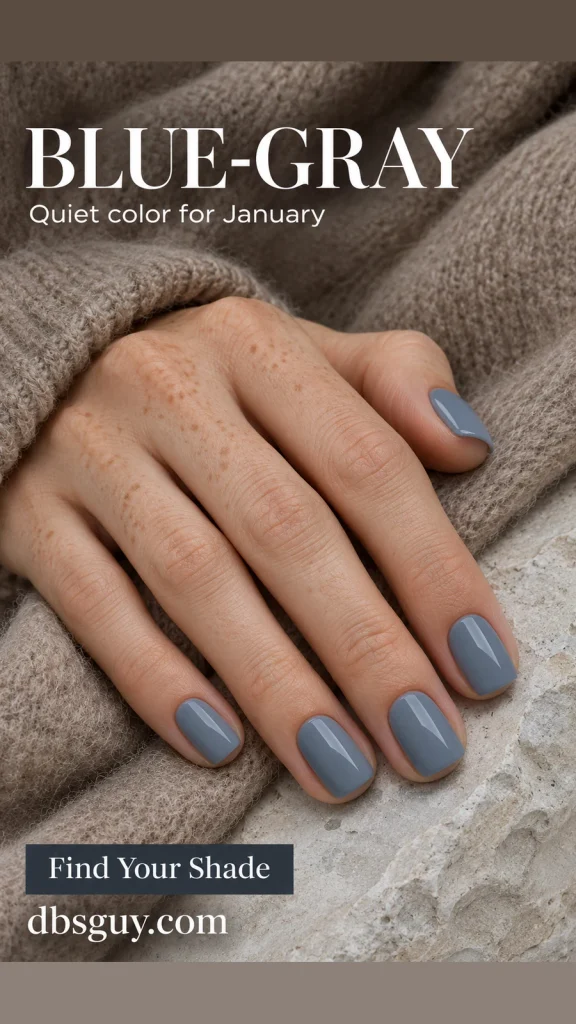
Compare it with an ordinary gray swatch. You should be able to see which one contains the blue you came for. If they look the same in your usual indoor light, choose a bluer sample rather than relying on a name such as “storm” or “slate.”
Try the sample beside taupe, cream, and black clothing. If you like the restrained effect but want more depth, move toward the denim reference below. If you want a lighter result, keep this level of gray and compare a paler sample.
4. Periwinkle: Blue With a Noticeable Lilac Lean
Periwinkle makes sense when you keep saving both blue and lavender manicures. The version here is blue-leaning, with enough violet to distinguish it from powder blue. Medium almond nails give the color a tapered outline, but the shade also works as a plain short manicure.
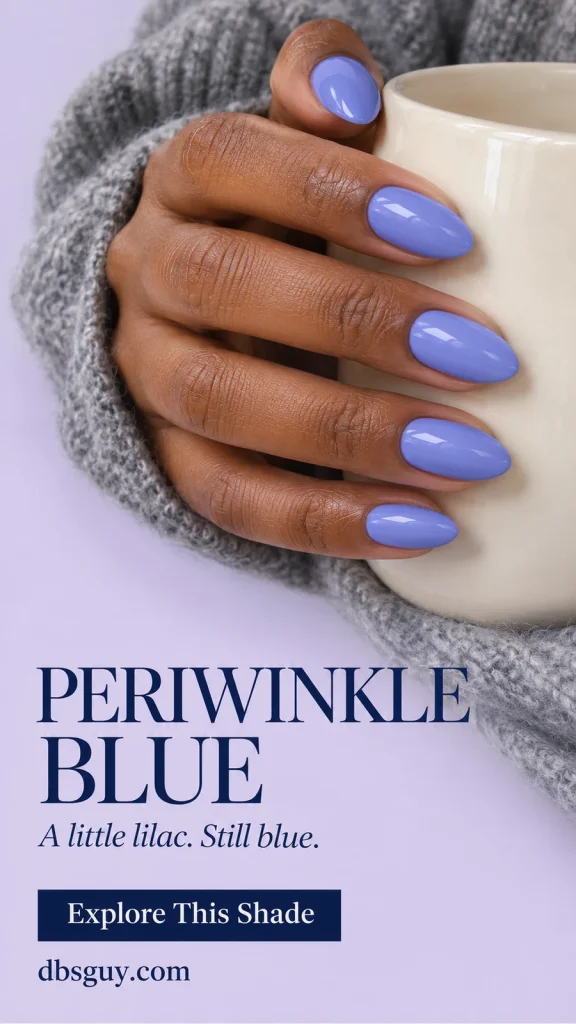
The choice to settle is how purple you want it to look. Place a periwinkle sample between a lavender and a straightforward blue. That small comparison is more helpful than asking for “a cooler pastel,” which can mean several different things.
For the reference shown, ask for an opaque periwinkle cream that still reads primarily blue, finished glossy. If you prefer lilac, say so; you do not need to stay on the blue side simply because it is January.
5. Cornflower Blue: More Color Than a Pale Pastel
Cornflower is the option to compare when powder blue looks too faint but cobalt feels too intense. This reference uses a medium-light blue with a slight violet lean, more visibly blue than the periwinkle above. Short squoval nails keep the outline simple.
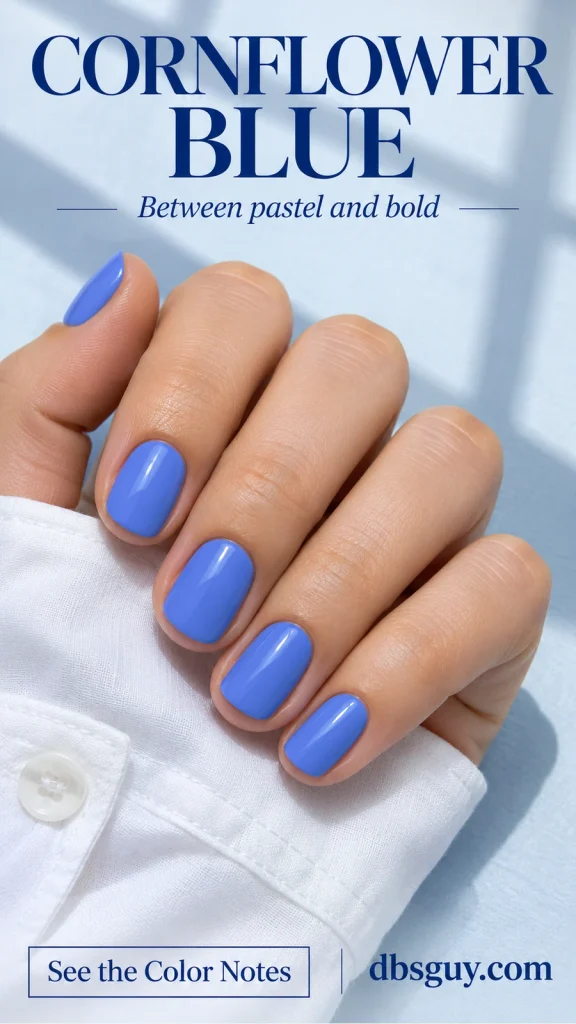
Check the finish before choosing a polish by name. For example, Essie describes Bikini So Teeny as a cornflower blue with fine shimmer. The concept image here shows a plain glossy cream instead. Those are two different finishes, even within a similar color family.
Use the reference to ask for the balance you want: “A clear cornflower blue, stronger than a pale pastel but softer than cobalt, with no shimmer.” If you enjoy the color but want it quieter, compare denim before switching to a completely different hue.
6. Denim Blue: More Depth, Less Brightness
Denim blue takes the range deeper without the vividness of cobalt. Think of a muted, washed blue rather than dark indigo or turquoise. The reference uses an even glossy color on squoval nails; the denim effect comes from the shade, without painted stitching or fabric texture.
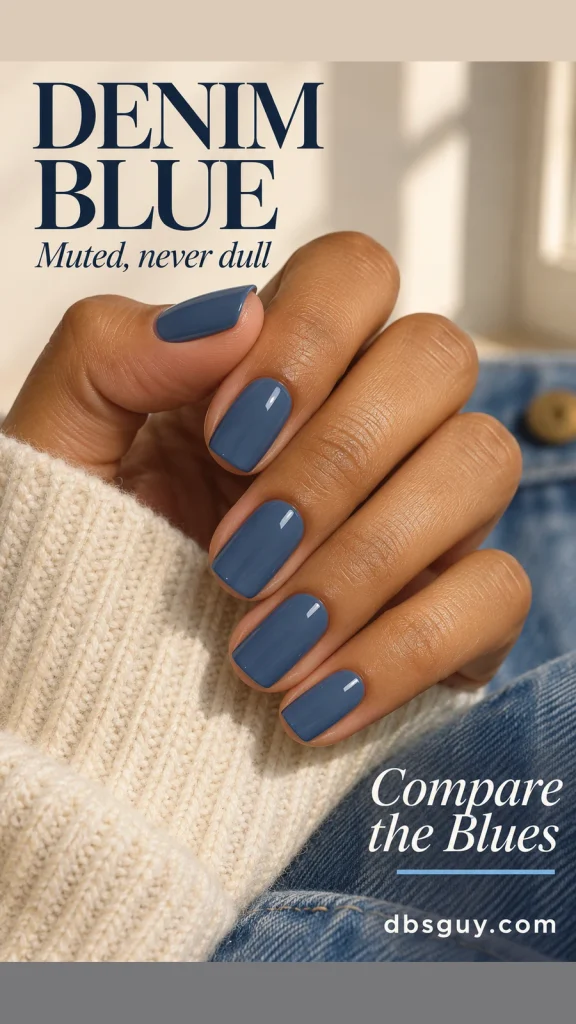
Hold the sample beside the jeans you wear often. You can choose a close match, but a little separation helps the manicure remain visible: a lighter blue against dark denim, for example. Cream knitwear gives the same shade a clearer contrast.
At the salon, ask for a medium, muted denim-blue cream. If the first option looks navy, compare a lighter one. If it looks too bright, ask for more gray in the color direction rather than simply going darker. Depth and brightness are different decisions.
Also read: 15 Blue January Nail Art Ideas With More Than Snowflakes.
7. Cobalt Blue: Vivid Color Without Added Artwork
Cobalt is the clearest choice here when you want a strong blue manicure. The reference is saturated and glossy, with short squoval nails and full coverage. It is brighter than navy and less muted than denim, so the color itself supplies the detail.
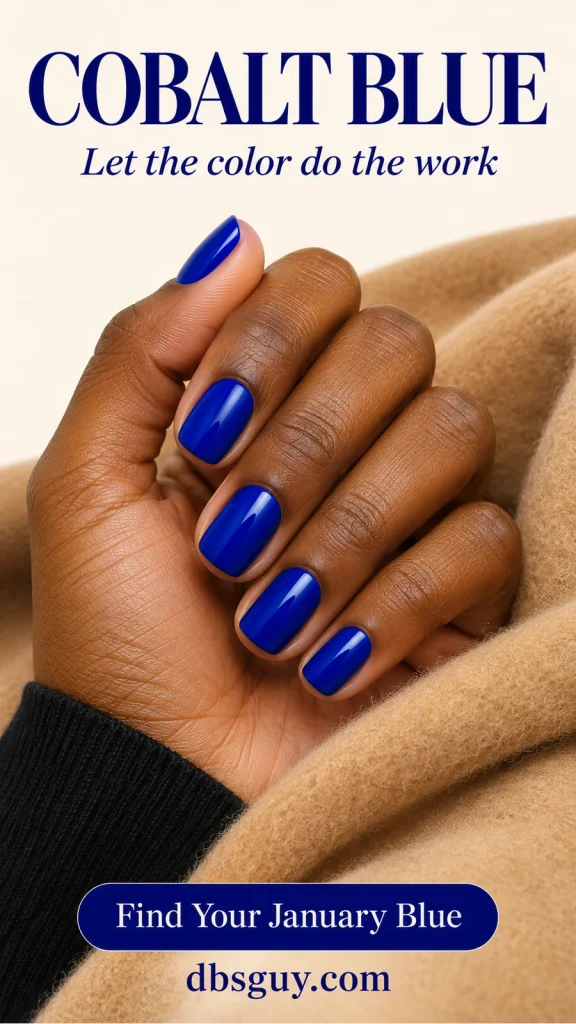
Check cobalt beside both a navy and a turquoise swatch. For this direction, look for an intense blue that avoids the near-black depth of navy and the green cast of turquoise. Your artist may use a different shade name, so point to the actual sample you like.
Camel wool gives this blue a warm contrast; a black sleeve makes the saturated color easy to notice. Keep your usual comfortable nail length if you want a bold color without a larger silhouette.
Salon wording: “A vivid cobalt-blue cream with full coverage and a glossy finish. Short squoval, no shimmer or nail art. Please show me the finished color on one nail first.”
Also read: 17 January French Tip Nail Ideas Beyond the Classic White Edge.
Choose the Shade Before You Choose the Bottle
Narrow the seven references to two, then compare painted samples beside your hand. Check them near a window and again in ordinary room light. Screens, photographs, and salon lighting can change how a color appears, so use the images to explain your direction rather than demand an exact digital match.
Ask how many coats are on each display sample and whether it includes a topper. That helps you compare coverage and reflection fairly. There is no need to assign yourself a blue based on a skin-tone chart; decide whether you enjoy the contrast on your own hand.
If you are painting at home, check whether your chosen product is regular polish or a lamp-cured system and follow that product’s application and removal instructions. A glossy concept image cannot identify the formula or promise its wear time.
Questions About Blue January Nails
Are powder blue and baby blue the same?
The names often overlap. Powder blue usually suggests a soft pale blue, but the label does not establish exact coverage or finish. Compare painted samples and specify whether you want opaque color, translucency, or shimmer.
What is the difference between periwinkle and cornflower blue?
In these references, periwinkle has the stronger lilac lean, while cornflower looks more distinctly blue. Brands may use the names differently. Put the samples side by side if that blue-to-purple balance matters to you.
Which blue works on very short nails?
Any of these color families can be worn at a short length. Powder blue gives you a pale block of color, denim offers a muted deeper choice, and cobalt stays vivid. Choose the effect you like without assuming that a stronger blue needs extensions.
Does a January manicure need snowflakes or silver?
No. The references here use color and finish to create a winter direction. A plain powder-blue, denim, or cobalt manicure is a complete choice. Save the reference you like best and tell your artist which color, coverage, shape, and finish you want to keep.