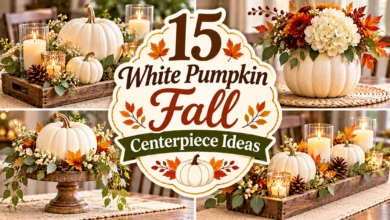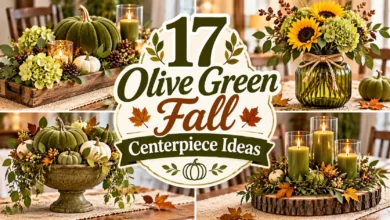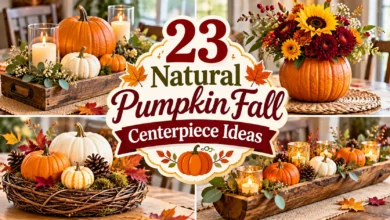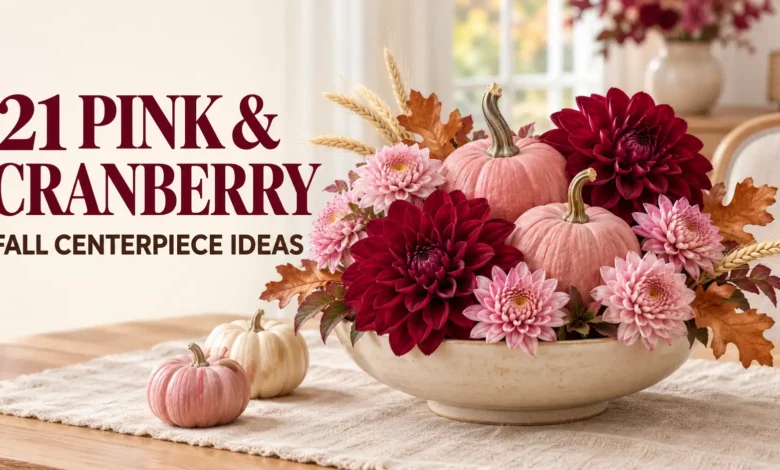
For a pink and cranberry fall centerpiece, start with one clear shape: a low flower bowl, a pumpkin vessel, or a tray you can lift away for dinner. Use dusty pink for softness and a red-leaning cranberry shade for contrast. Wood, wheat, autumn leaves, or pumpkins give the palette its fall setting.
These 21 fall centerpiece ideas include fresh arrangements, dry displays, and reusable paper accents. Choose the one that fits the space left after plates, glasses, and serving dishes are on the table.
The images are AI-generated styling concepts. They illustrate the ideas described here and do not document completed or tested projects.
Choose a Centerpiece That Fits the Meal
A container you already own is a useful starting point. Measure its footprint with the table set, then sit down to check the view across it. The measurements below are suggested starting sizes, not rules; the serving dishes and seated sightlines make the final decision.
- Small round table: try one roughly 8–10-inch bowl or a single small cachepot, as in ideas 6 and 7.
- Shared dishes down the center: choose the separate bud vases in idea 3 or the interrupted garland in idea 16.
- Decor you can assemble ahead: use the dry velvet bowl, cloche, or paper platter in ideas 4, 12, and 21.
- A buffet or sideboard: reserve the taller pitcher, tiered stand, and paper-leaf branch in ideas 17, 19, and 20 for these surfaces.
You do not need pink linens, red glasses, and new dishes to repeat the palette. If the centerpiece carries both colors, ordinary cream plates or a bare wood tabletop can finish the setting.
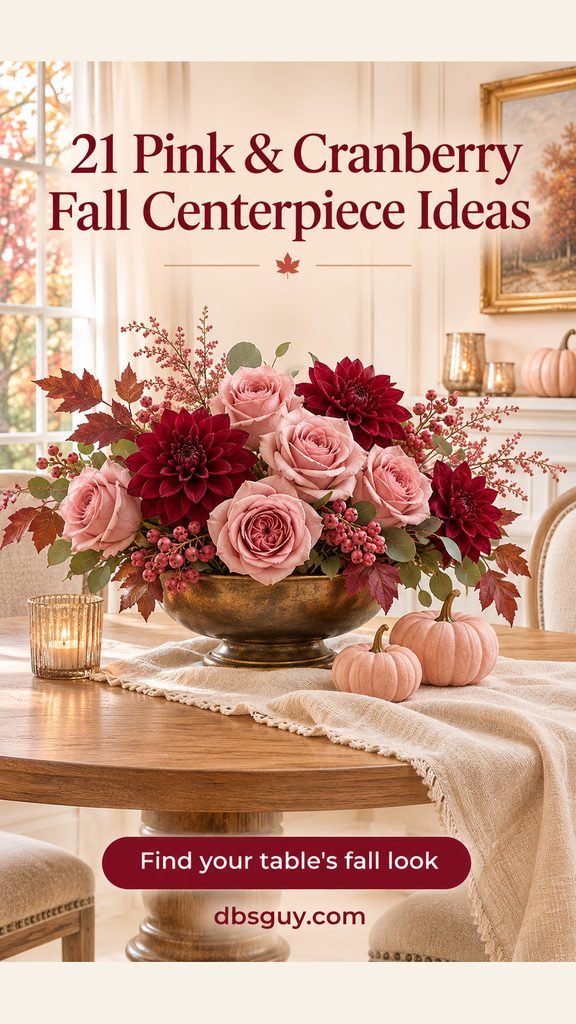
1. Gather Cranberry Dahlias and Blush Roses in a Low Bowl
A shallow bronze bowl gives plush dahlias and open roses a warm base. Start with a small watertight vase that sits below the bowl’s rim; the flowers need water even if the decorative bowl is not watertight. Choose cranberry blooms that still read red in your dining-room light, then soften them with dusty pink roses.
Make the first few stems into a loose crossing framework inside the vase. Add the largest flowers near the rim, turning the bowl as you work so every seat gets a finished view. Keep foliage sparse enough to see the flower shapes. Before trimming the remaining stems, sit down across the table and check that the arrangement leaves faces visible.

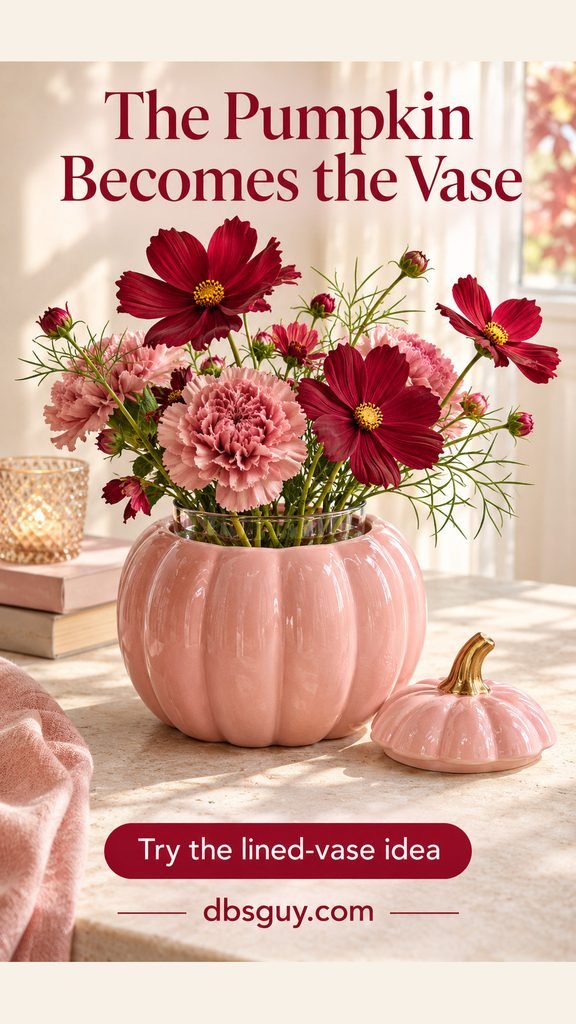
2. Use a Blush Pumpkin Vessel With a Removable Liner
A ceramic pumpkin with an open top turns a small bouquet into an unmistakable fall centerpiece. The example pairs cranberry cosmos with pink carnations; if cosmos are unavailable, choose another red flower with an open, airy shape. You do not need to carve a real pumpkin for this version.
Fit a narrow glass vase inside the pumpkin before adding water. Its rim should remain reachable so you can lift it out for cleaning. Arrange the carnations first, then let a few cosmos rise above them. Rest the removable lid alongside the vessel only if there is room. A liner that rocks or catches on the opening needs to be replaced with a better-fitting glass.
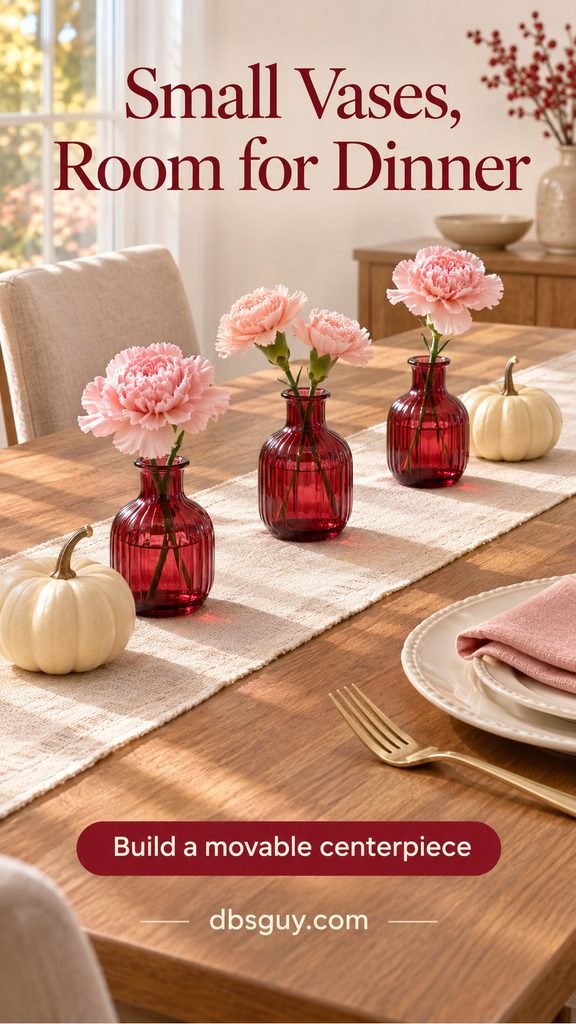
3. Spread Three Cranberry Bud Vases Between Mini Pumpkins
For a shared meal, use three short red glass bud vases instead of one bulky bouquet. One or two blush carnations in each vase give the color a gentle rhythm, while two ivory mini pumpkins mark the ends of the arrangement.
Put your serving dishes on the table first. Set each vase in a remaining gap, keeping the flowers clear of glass rims and reaching hands. You can move one vase to a sideboard when a platter arrives without dismantling the entire display. Narrow-necked vessels also make a few stems look intentional rather than lost in a large container.
4. Nest Velvet Pumpkins and Pinecones in a Dough Bowl
A shallow wooden dough bowl works well for a dry centerpiece you can assemble before guests arrive. Nestle blush, dusty rose, and cranberry velvet pumpkins directly into the bowl, then tuck a few decorative pinecones into the gaps. Keep some of the wood exposed so the arrangement has a clear boundary.
Choose pumpkins that sit securely on their own; avoid building a balancing act on top of loose filler. Check that their stems do not catch sleeves when someone reaches past. This option suits a table that gets cleared often because you can lift the whole bowl at once. For a different texture, compare it with our natural pumpkin fall centerpiece ideas.

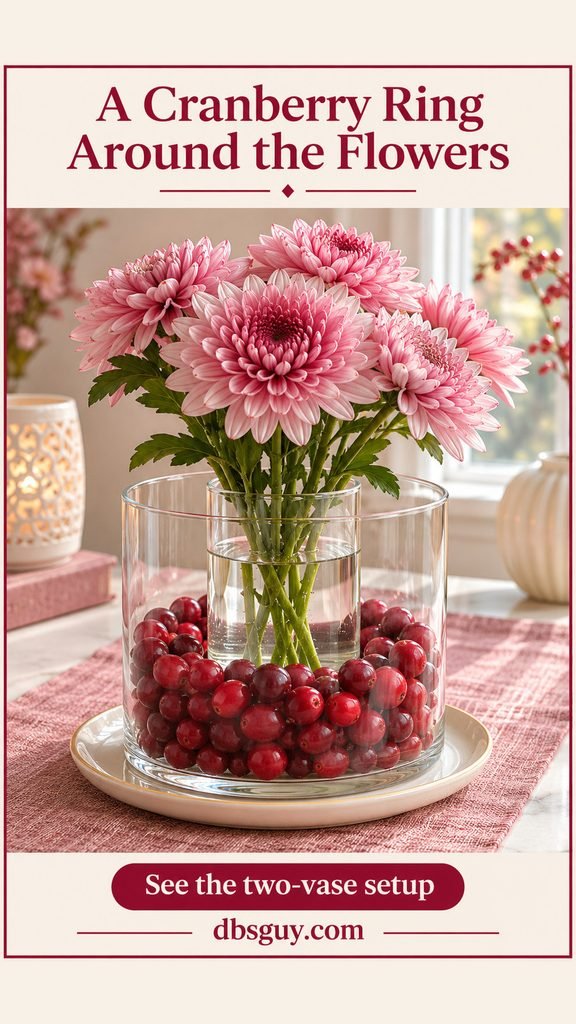
5. Build a Fresh Cranberry Ring Around a Flower Vase
This version uses two clear vessels: a narrow inner vase for pink chrysanthemums and a wider outer cylinder for a dry ring of fresh cranberries. The separate compartments let you change the flower water without soaking the decorative fruit.
Test the empty glasses together first. Leave a gap wide enough to add and remove berries, and make sure both bases sit flat. Put water and flowers in the inner vase, then add berries around it without pouring water into the outer ring. Assemble on a washable plate to catch spills. Check the berries daily and discard any that soften or show mold; this is a perishable accent, not an all-season filler.
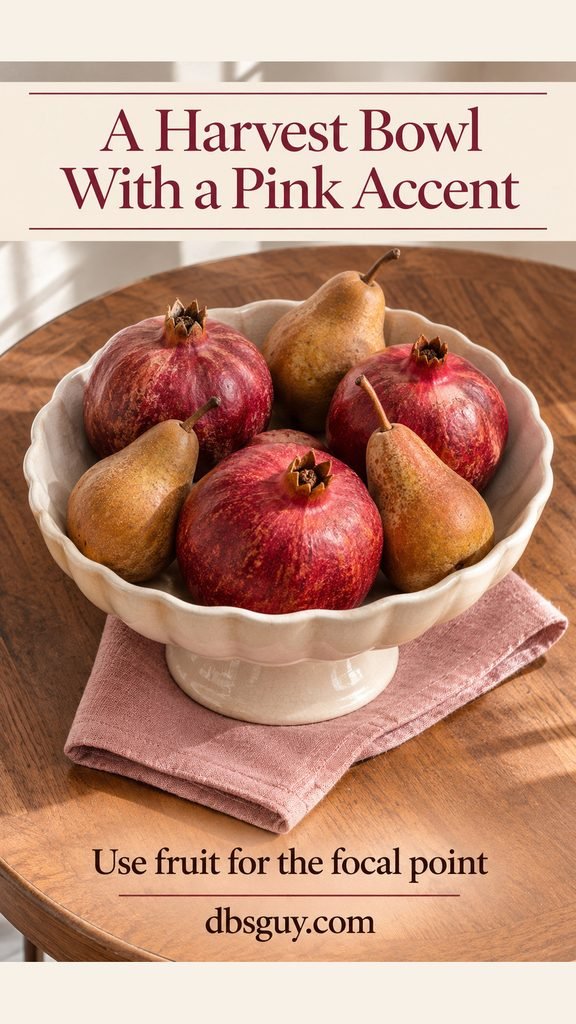
6. Make a Footed Fruit Bowl the Centerpiece
Whole pomegranates and russet pears bring a harvest feeling without flower arranging. Use a shallow footed bowl so the red fruit remains visible above the rim, and place a folded dusty pink napkin underneath for the second color.
Start with a single secure layer and add only a few pieces on top. Let the pears lean into the bowl rather than balance on its edge. Skip loose berries scattered across the tabletop, where they can roll into place settings. If the fruit will also be served, use a food-safe bowl, leave it untreated, and keep decorative picks or paint away from it.
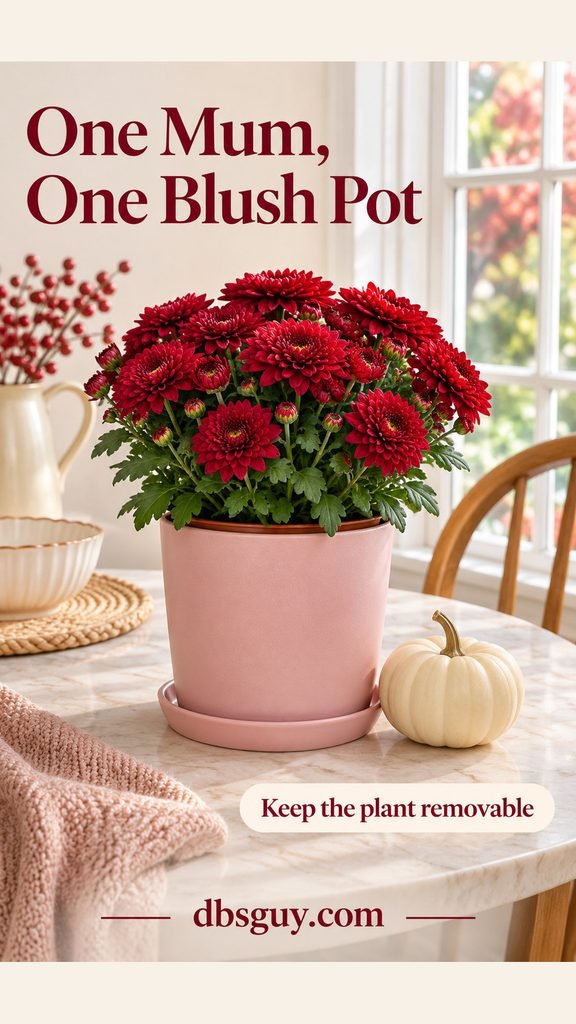
7. Drop a Cranberry Mum Into a Blush Cachepot
For a compact breakfast table, one flowering plant can do the work of a bouquet. Choose a small cranberry-colored mum and a plain blush outer pot. An ivory mini pumpkin beside it is optional; leave it out if the plant already fills the available space.
Keep the plant in its nursery pot so it can be removed for watering. Use a watertight outer container or protective saucer, and empty collected drainage water before returning it to the table. Follow the plant’s care tag rather than watering on a decorative schedule. Check the width of the foliage as well as the pot: a small container can still support a plant that crowds the plates.
8. Tie a Wheat and Blush Grass Bundle With Cranberry Ribbon
A short wheat sheaf supplies the harvest shape, while blush dried bunny tails soften its outline. Gather the stems into a compact bundle, secure them with a discreet tie, then cover the tie with cranberry velvet ribbon.
Trim the lower stems evenly and gently fan the base until the bundle stands without leaning. Set it on a small plate to catch shed pieces. If it will not stand reliably, place it in a short, heavy vase instead. Keep the ribbon tails above the plate rather than trailing toward dishes, and use only flameless candles anywhere near these dry materials.

9. Lay a Leaf Wreath Around a Flameless Pillar
A small faux-leaf wreath can frame a single battery-operated pillar candle. Choose pink and cranberry leaves with recognizable autumn shapes, then add one little blush fabric pumpkin at the outside edge. A plate beneath the wreath keeps the pieces together.
Choose the candle first and check that the wreath’s opening leaves room to reach its switch. Shape the foliage outward so it does not hide the candle body or tip over the holder. This arrangement puts leaves and fabric close to the light, so keep it flameless. NFPA’s candle guidance recommends flameless options; burning candles need at least 12 inches of clearance from anything combustible.

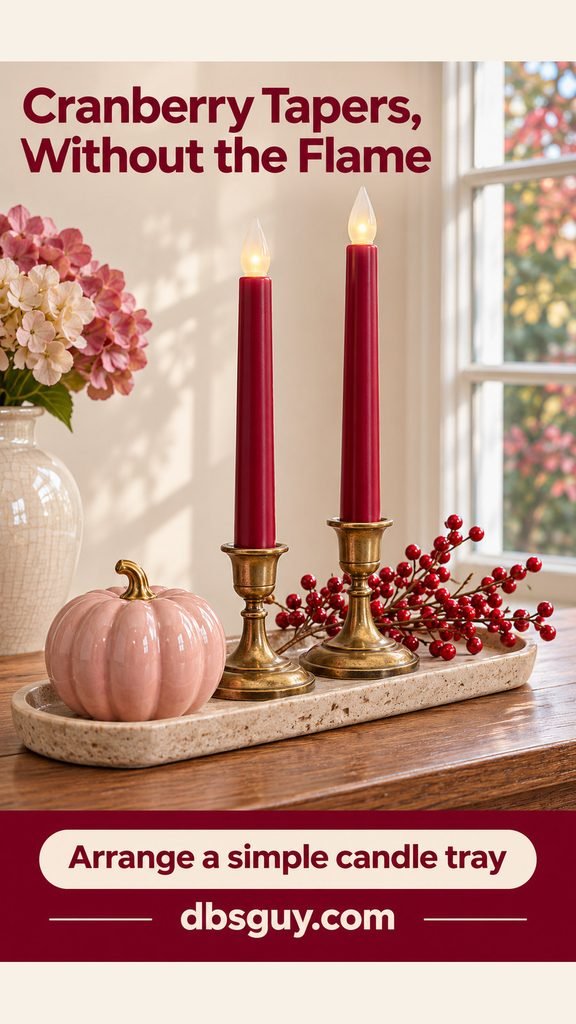
10. Arrange Cranberry LED Tapers on a Narrow Tray
Two cranberry battery-operated tapers in brass holders create a slim focal point with very little floral material. Add one blush ceramic pumpkin and a short faux berry spray on a stone tray. The holders provide height, while the tray gathers the smaller pieces.
Check the candle diameter against the holder before shopping; a taper that sits loosely is not a good fit. Keep the tray level and use a protective underside on a finished table. If the tapers interrupt the view across a small dining table, move the tray to a console or use shorter LED pillars. The berry spray should remain entirely inside the tray’s edges.
11. Paint Blush Faux Pumpkins With Cranberry Brush Stripes
Three small faux pumpkins become a graphic centerpiece when narrow red stripes follow their ribs. Choose a matte blush base so the cranberry lines remain visible, and display the finished pumpkins on a plain wood board.
Clean the pumpkins and check the paint label for surface preparation and primer requirements. Apply the blush base, let it dry as directed, then draw loose cranberry lines down selected ribs with a small brush. Slightly uneven strokes suit this look; you do not need perfect masking. Let the finish dry or cure as directed before putting it on fabric or wood. Keep the board free of extra filler so the painted pattern stays clear.

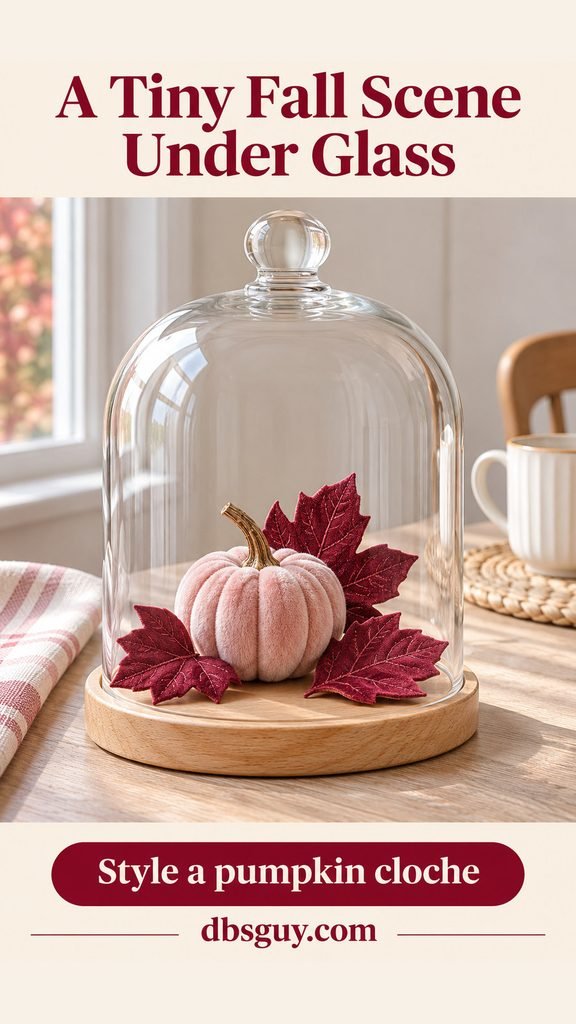
12. Place One Velvet Pumpkin Under a Glass Cloche
A cloche gives a small fabric pumpkin its own little stage. Set a blush pumpkin on the base, place a few cranberry fabric leaves around it, and lower the glass over the arrangement. Leave clear air above the stem so the display does not look squeezed into its cover.
Measure the inside width and height of the dome before choosing the pumpkin. The glass should close onto its base without pressing against leaves or fabric. Keep this version dry: there is no need to add fresh flowers, water, or a candle. It is especially useful when you want one contained accent rather than several loose pieces to move at mealtime.
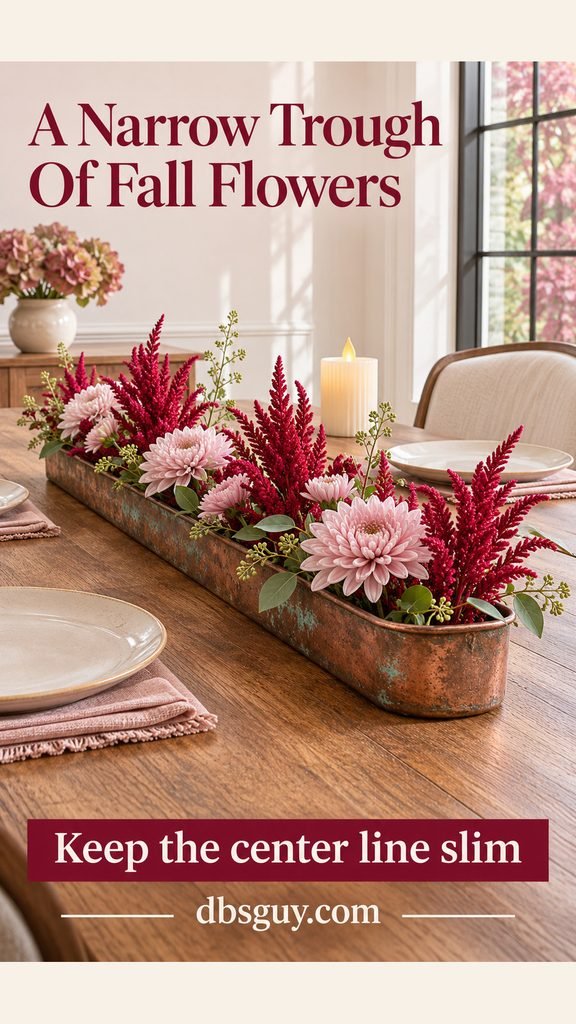
13. Fill a Copper Trough With Celosia and Pink Mums
A long, low copper trough lets you carry the palette down a rectangular table. Cranberry feathery celosia brings a pointed texture, while pink chrysanthemums fill the spaces between it. Keep the flowers within a slim strip rather than letting them spread toward the plates.
Use watertight inserts inside the decorative trough; do not assume the metal vessel will hold water. Arrange the inserts while empty to check their fit, then add water and stems. Repeat the two flower types along the length instead of putting all the red at one end. Rehearse the placement with your actual serving dishes; a narrow centerpiece can still be too long for a family-style meal.
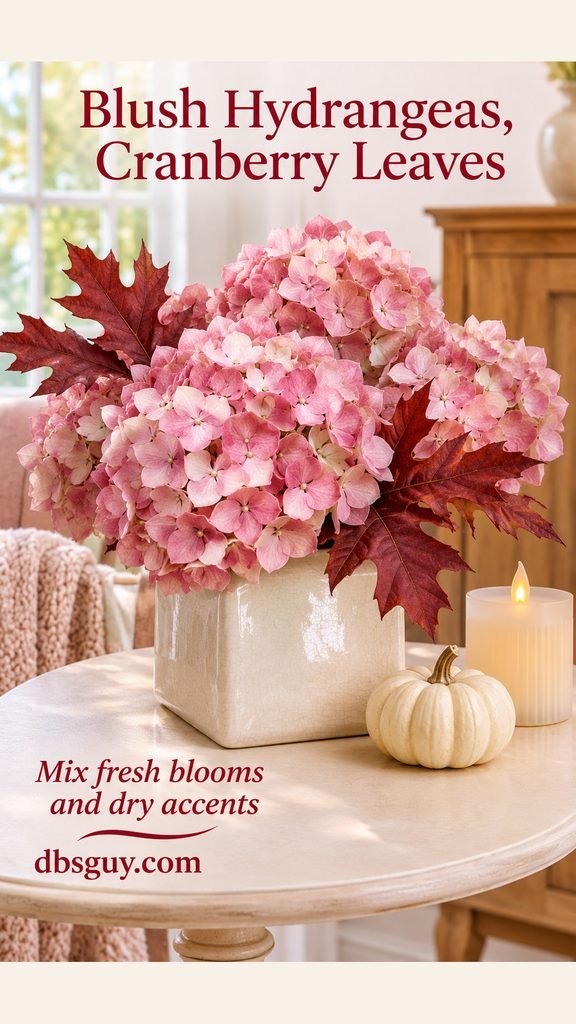
14. Pair Pink Hydrangeas With Cranberry Autumn Leaves
A few pink hydrangea heads can fill a short square vase without a complicated mix of flowers. Add cranberry-colored dried or faux autumn leaves at the sides, where their pointed shapes show against the rounded petals. One small ivory pumpkin makes the seasonal cue more explicit.
Start with the flower heads and assess the total width before adding leaves. Shorten leaf stems so they frame the bouquet instead of becoming tall branches. Keep dry decorative stems out of the flower water by resting them around the rim or securing them separately. If the display becomes too wide, remove a flower head rather than packing everything tightly together.
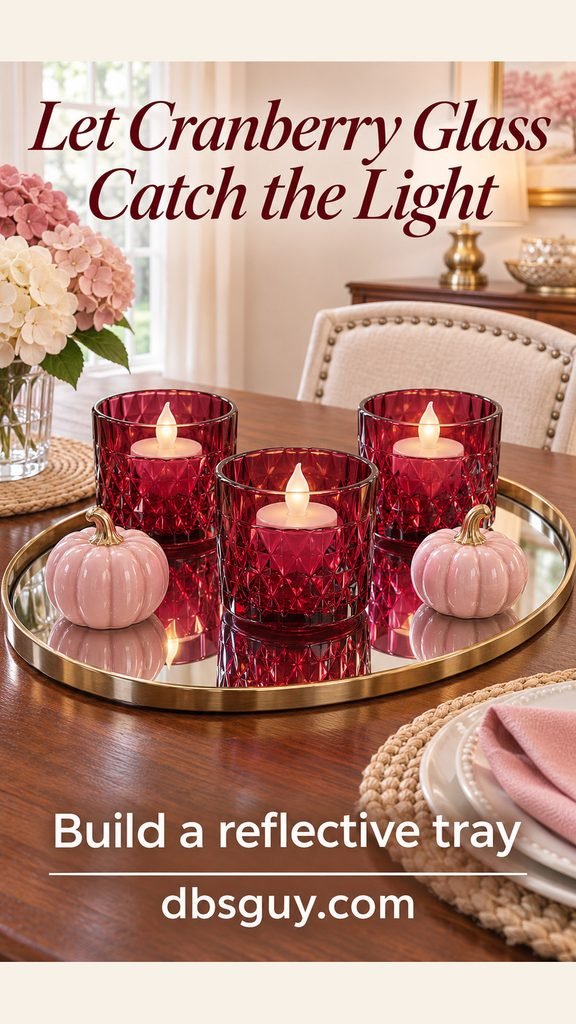
15. Reflect Cranberry Glass Votives on a Mirrored Tray
Cranberry glass gains another layer of color when it sits on a mirror. Group three short glass holders with battery-operated tea lights, then add two small blush ceramic pumpkins. An oval tray gives the reflections a defined edge.
Use a mirror tray made to support tabletop objects, and check its underside before placing it on wood. Leave a little space between holders so the red glass can be seen separately. Test the lights in the room where you will use them; very dim LEDs may disappear inside dark glass. Keep this arrangement flameless and contained so you can lift it away when dinner needs more room.
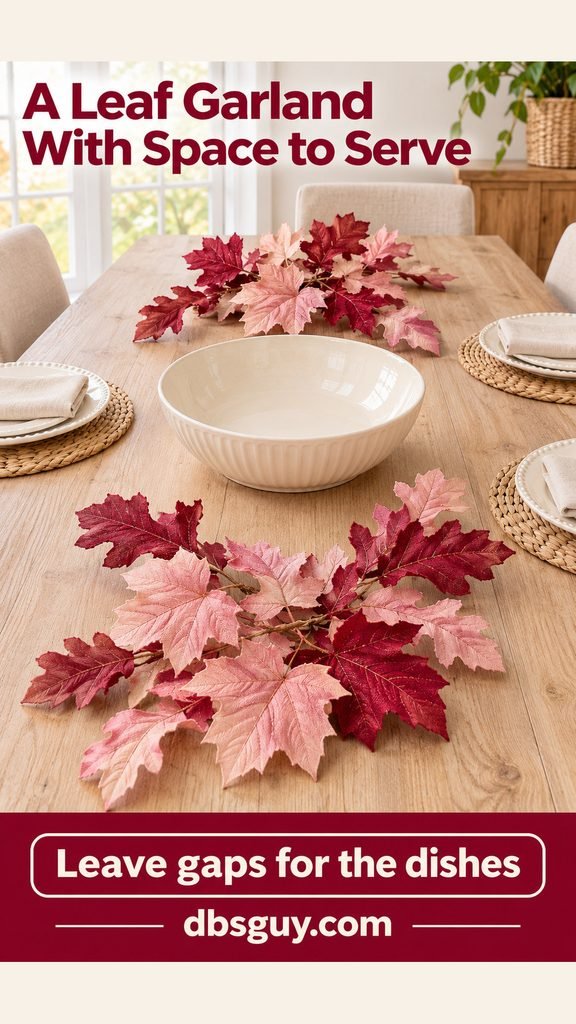
16. Break a Faux Leaf Garland Into Two Short Sections
A continuous garland can claim the exact space needed for serving bowls. Instead, arrange two short sections of blush and cranberry faux leaves along the table and leave a generous open gap between them. Let the wood show on both sides.
Set the largest serving bowl in place before shaping the leaves. Tuck cut wire ends inward, keep them away from hands, and avoid anything that could scratch the table. A few removable leaf stems are easier to adjust than a garland glued to a runner. For the place settings around this centerpiece, see our pink and cranberry Friendsgiving tablescape ideas.
17. Give a Blush Pitcher a Dried-Stem Silhouette
On a buffet, a pink ceramic pitcher can hold an airy arrangement of wheat and cranberry-colored dried amaranth. Let a few tassels fall to one side while the wheat rises above them. The pitcher handle becomes part of the silhouette, so leave it visible.
Start with a small bundle and turn the pitcher until its weight looks balanced from the room’s entrance. Use a stable vessel and keep trailing stems away from the edge. This taller arrangement is better beside the meal than between seated guests. If the stems shed, place a small mat underneath and position the pitcher away from uncovered food.

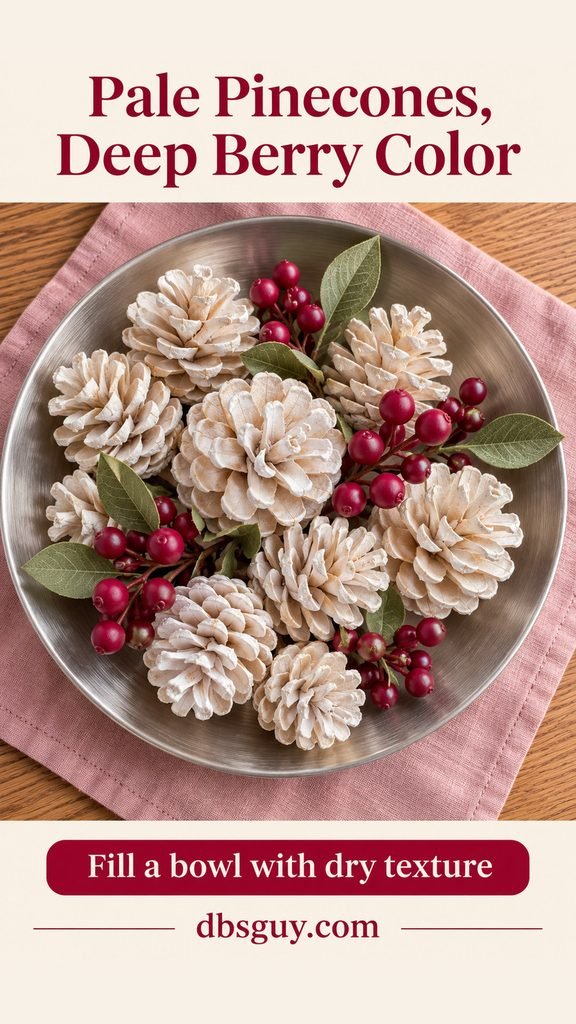
18. Mix Ivory Pinecones and Faux Cranberry Berries
Pale decorative pinecones make dark red faux berries easy to see. Collect them in a shallow pewter bowl and set the bowl on a folded pink cloth. This is a dry, textured alternative to flowers, with enough contrast to work on a dark wood table.
Choose ready-finished ivory pinecones rather than treating fresh cones at the dining table. Place the larger cones first, then slip a few berry picks into the spaces. Turn wire ends down and keep the bowl’s rim visible. The picks are decorative, not edible; keep loose pieces out of reach where young children may mistake them for food.
19. Turn a Tiered Stand Into a Pumpkin Display
An ivory two-tier stand can hold a collection of small blush and cranberry fabric pumpkins on a buffet. Put larger pumpkins on the lower tier and a smaller one above. A few decorative acorns connect the display to the harvest palette without adding another large object.
Assemble the stand fully and check that it sits level before decorating. Keep each tier lightly filled, with objects safely inside its edges. Do not carry a loaded stand by a decorative top ring unless the manufacturer says it is a carrying handle. Use this as a separate decor station, leaving a clear area beside it for food and serving utensils.

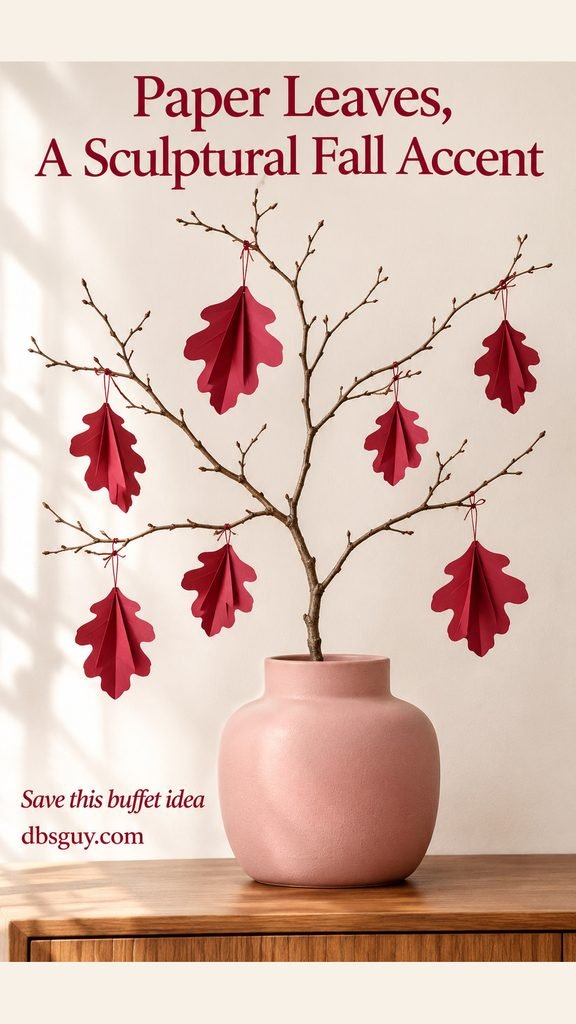
20. Hang Cranberry Paper Leaves From a Bare Branch
For a sculptural buffet centerpiece, set a modest bare branch in a heavy blush vase and hang a few cranberry paper leaves from its smaller twigs. The open spaces are part of the design. A handful of leaves will show more clearly than a dense paper canopy.
You can use pre-cut paper leaves or cut simple leaf shapes from cardstock, crease them once for dimension, and tie them on with short thread loops. Secure the branch inside the vase with a snug florist insert and test it with a gentle nudge. Keep the branch tips away from walkways, faces, and hanging lights. This is a display for a sideboard rather than the center of a crowded dinner table.
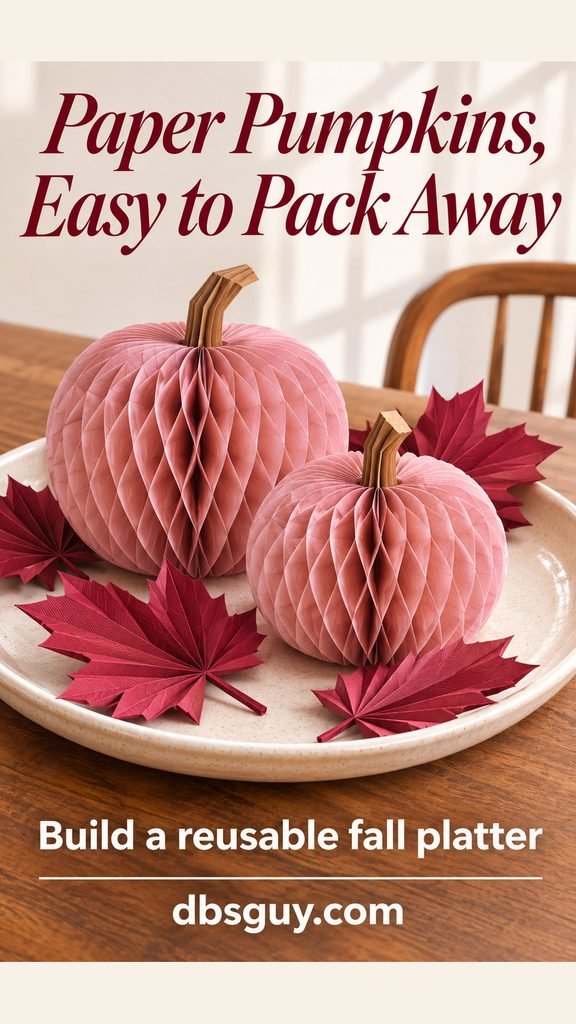
21. Arrange Honeycomb Pumpkins on a Cream Platter
Two small blush honeycomb paper pumpkins and several cranberry paper leaves make a lightweight centerpiece that can fold away after fall. Use a broad cream platter to give the paper pieces a little visual weight and keep them together.
Open and secure the pumpkins according to their fasteners, then check that their bases stand flat. Angle the leaves around the pumpkins without covering the honeycomb detail. Keep the platter away from splashes, steam, and candles with real flames. When the season ends, detach reusable closures gently and store the paper pieces flat. For the rest of the table, borrow a detail from our simple pink and cranberry fall tablescapes.
Keep the Arrangement Easy to Live With
For fresh flowers, wash the vase, remove leaves below the waterline, recut the stems, and use flower food according to its packet. Check the water level daily and replace water that becomes cloudy. Keep the arrangement away from heat and strong drafts. These steps support the flowers; they do not make every bloom last the same number of days.
Use a washable plate or watertight liner under fresh materials. Check fruit and berries for soft spots, and replace tired pieces individually. Dry bowls and paper displays skip the water changes, but they still need occasional dusting and a spot away from spills.
Questions About Pink and Cranberry Fall Centerpieces
How do I make this palette look like fall?
Let the centerpiece carry a recognizable autumn shape or texture. A pumpkin, wheat bundle, pinecone, or pointed fall leaf does that work. Dusty pink and cranberry can stay the only decorative colors; you do not need to add orange if it competes with the room.
Do I need real cranberries?
No. Most of these ideas use cranberry as a color in flowers, glass, ribbon, or fabric. The fresh-berry vase in idea 5 needs inspection and replacement as the fruit deteriorates. Choose faux berries or colored glass if you want to avoid that upkeep.
Which option needs the fewest new supplies?
Start with what is already in your cupboard. A fruit bowl and pink napkin work for idea 6; a platter and paper decorations work for idea 21. Check the price of the entire arrangement before buying a special container. A display with fewer types of materials is easier to simplify if something is unavailable.
Can I use the same centerpiece for Thanksgiving?
Yes, if it still leaves enough space for the meal. Set out your empty serving dishes before the holiday. Move a large bowl to the buffet, split a bud-vase group, or shorten the garland wherever platters need to go. The centerpiece should be easy to adjust once the food arrives.