15 December Nail Ideas Color: Reds, Greens and Golds That Set the Holiday Mood


Cherry red gives you a bright holiday manicure; forest green makes the mood deeper; champagne gold adds a softer kind of sparkle. If you want all three, you can give each color its own nail instead of squeezing several patterns into one set.
These 15 December nail color ideas focus on the differences that matter when you choose a polish: how light or dark the shade is, how much of the nail it covers, and what happens when the finish catches the light. Start with your favorite color family, then use the placement notes to make it your own.
07
Image note: The visuals are AI-generated manicure concepts, not photographs of completed or tested salon work. Use them as references for color, shape, and placement; actual polish and lighting will affect the result.
Choose Your December Color Direction
- Bright and straightforward: cherry red (1) or ruby shimmer (5).
- Deep and dressy: burgundy with gold edging (3), forest green (6), or emerald velvet (7).
- Muted and cozy: brick red with ivory (4), sage with champagne tips (8), or olive with gold foil (9).
- Mostly metallic: champagne shimmer (11), gold chrome (12), or a gold glitter fade (13).
- More than one holiday color: tonal greens (10), red-and-green corner tips (14), or the three-color plan (15).
Before settling on a shade, hold a painted swatch beside your hand in daylight and under the lighting where you will wear it. A dark green you love in a bright photo may look nearly black in your dining room. You do not need to follow a skin-tone rule; compare the actual colors and choose the contrast you enjoy.
1. Glossy Cherry Red on Short Square Nails
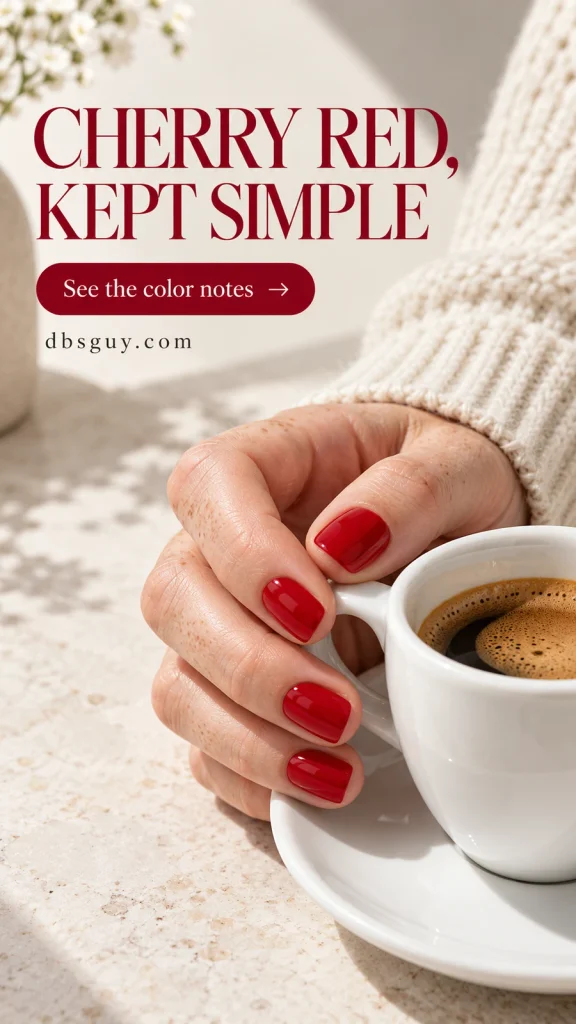
A clear, opaque cherry red is a useful starting point when you want the color to do all the work. There is no artwork to coordinate, and the short soft-square shape keeps the outline compact. Against an ivory sweater, the red becomes the strongest color in the outfit.
Choose a crème polish—an even color without visible shimmer—and compare it with both an orange-red and a berry-red swatch. That quick comparison helps you explain which red you actually mean. If you are painting at home, this is one of the more approachable options because you only need one color and your usual compatible base and top coat.
2. Cranberry Jelly With Translucent Tips
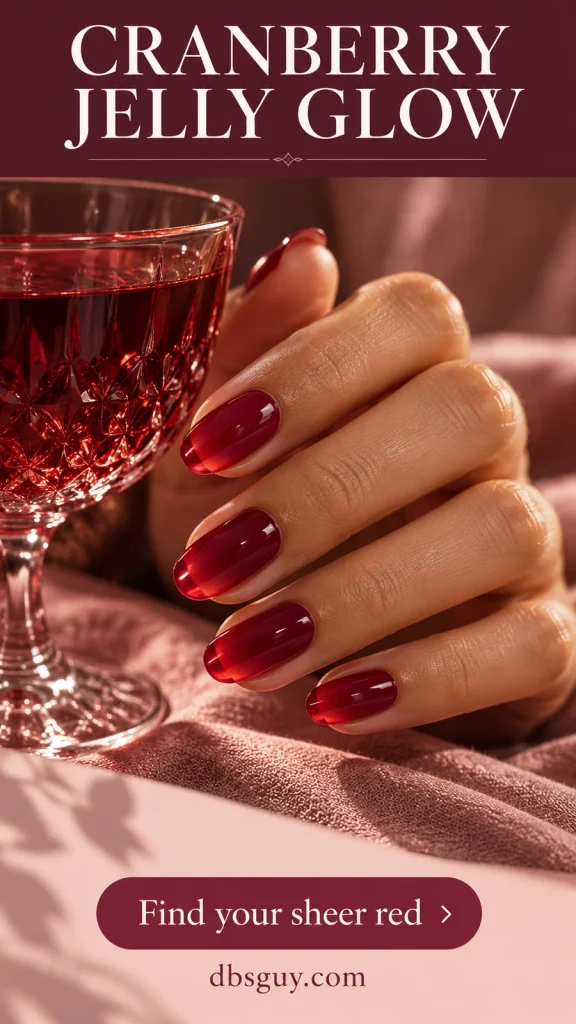
Cranberry jelly has a different job from opaque cherry red. Light passes through the color, leaving the tips with a glassy, slightly translucent look. It is a good choice if you like a berry shade but want to see some depth through it rather than a completely solid surface.
Ask to see the jelly polish over a clear swatch before choosing your coverage. Your natural free edge may remain visible; if that would bother you, discuss a suitable base or choose an opaque cranberry instead. A rosy base changes the result, so show your nail tech both the color and the level of transparency you want.
3. Deep Burgundy With Gold Edging on One Nail
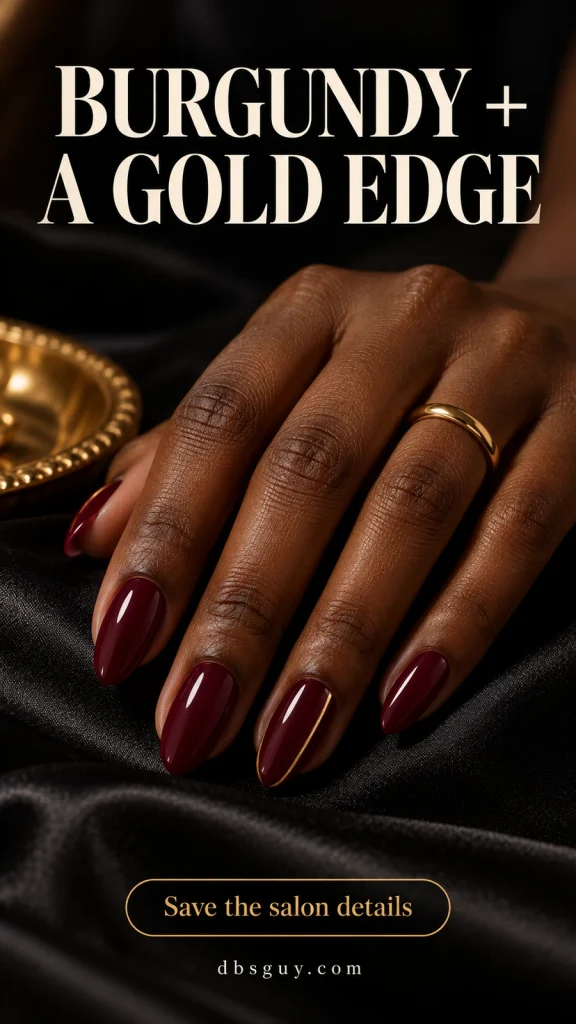
Burgundy is the darker red option here, with fine gold edging confined to the ring-finger nail. The other nails stay plain, so the metallic detail reads as a deliberate accent. This pairing works especially well if you want a manicure to sit beside a gold ring without adding glitter across every finger.
At your appointment, specify where the edging should run: along the side of the accent nail rather than as a full French tip. On a shorter nail, one slender side line is enough. Compare the burgundy away from the bottle; choose one that still reads wine-red in ordinary room light if you do not want an almost-black result.
4. Warm Brick Red Mixed With Ivory
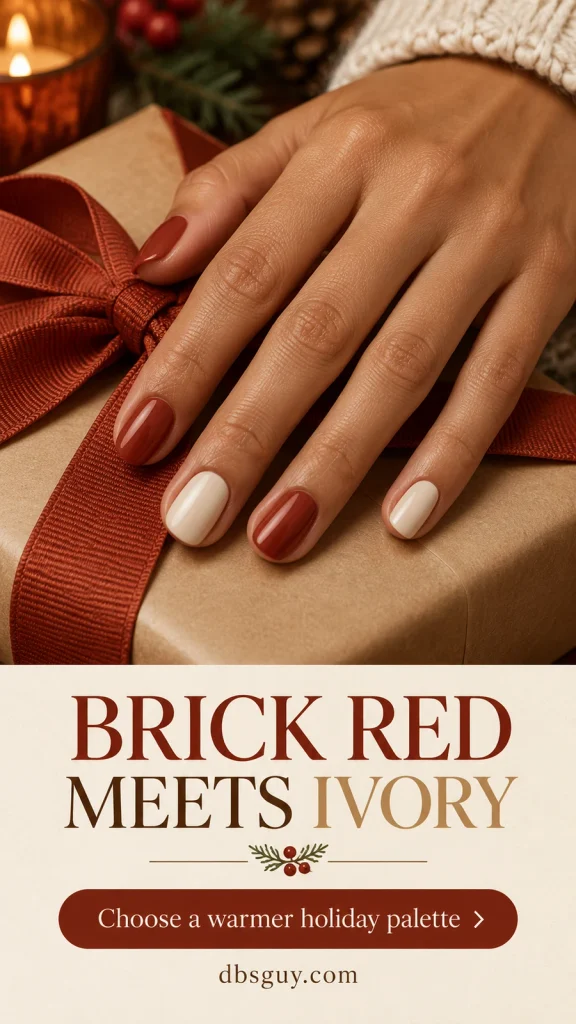
Brick red brings a brown-orange warmth that feels different from cranberry or burgundy. Pair it with creamy ivory for a palette that fits camel coats, oatmeal knits, and rust-colored accessories. This is a useful December option if bright red and bright green feel too sharp for your wardrobe.
For the pictured arrangement, paint the thumb, index, and ring finger brick red; make the middle and little finger ivory. Keeping all five nails glossy ties the two colors together. Check the ivory beside the red before starting: a warm cream supports this earthy direction, while a stark white creates a stronger contrast.
5. Ruby Red With Fine Shimmer
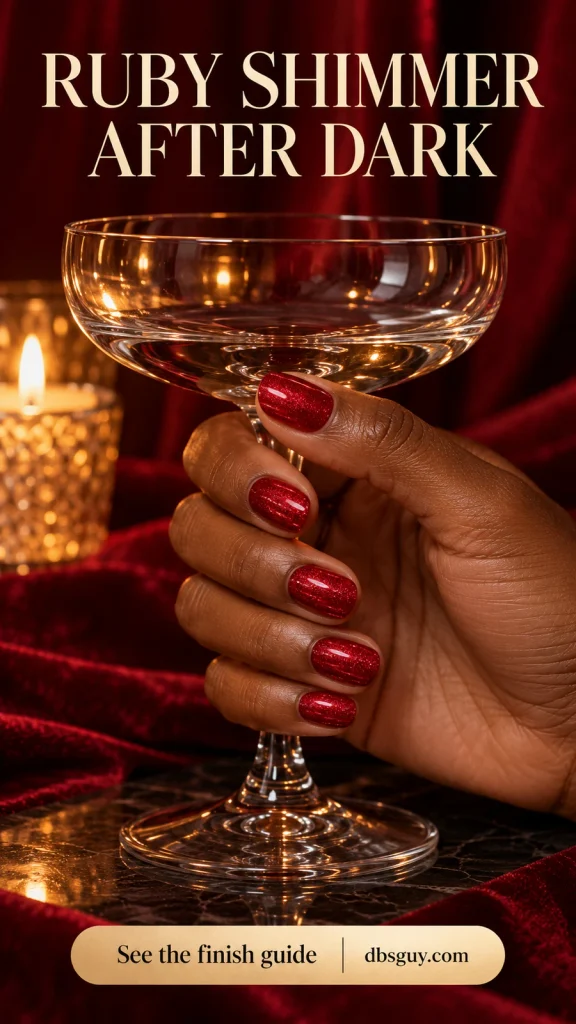
Ruby shimmer adds a fine scattering of sparkle while keeping the overall manicure red. Choose it when you want an evening finish without tiny stars, ornaments, or a separate accent nail. The short rounded shape in the concept leaves the shimmer easy to see across the whole nail.
Look at a finished swatch from more than one angle. Some red polishes have gold flashes, others lean pink, and a dense glitter can look quite different from fine shimmer. Ask for the finish you prefer rather than relying on the word “sparkly.” Keep the rest of the set plain if the changing highlights are what caught your eye.
6. Glossy Forest Green With No Artwork
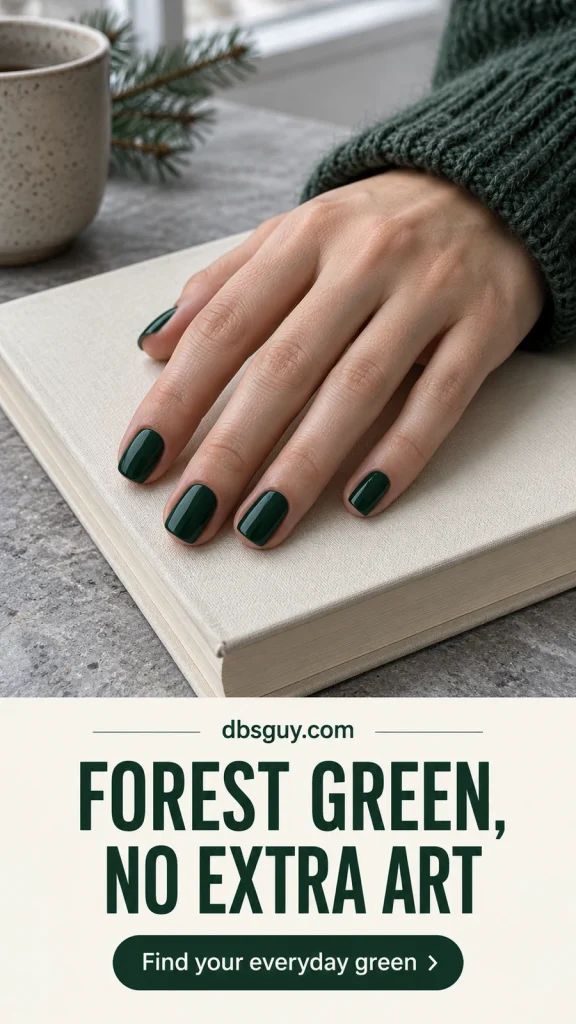
A deep forest-green crème gives you the evergreen part of the holiday palette without a Christmas motif. On short soft-square nails, the uninterrupted color makes a crisp outline. Try it with cream, gray, or denim if you want the nails to provide a single dark accent.
Forest, bottle, and hunter green can overlap as shade names. Instead of choosing by the label, compare a few painted swatches and decide whether you prefer a yellow-leaning green or a cooler blue-leaning one. For this concept, ask for opaque glossy green with no shimmer. That distinction separates it from the brighter velvet effect next.
7. Emerald Green With a Magnetic Velvet Glow
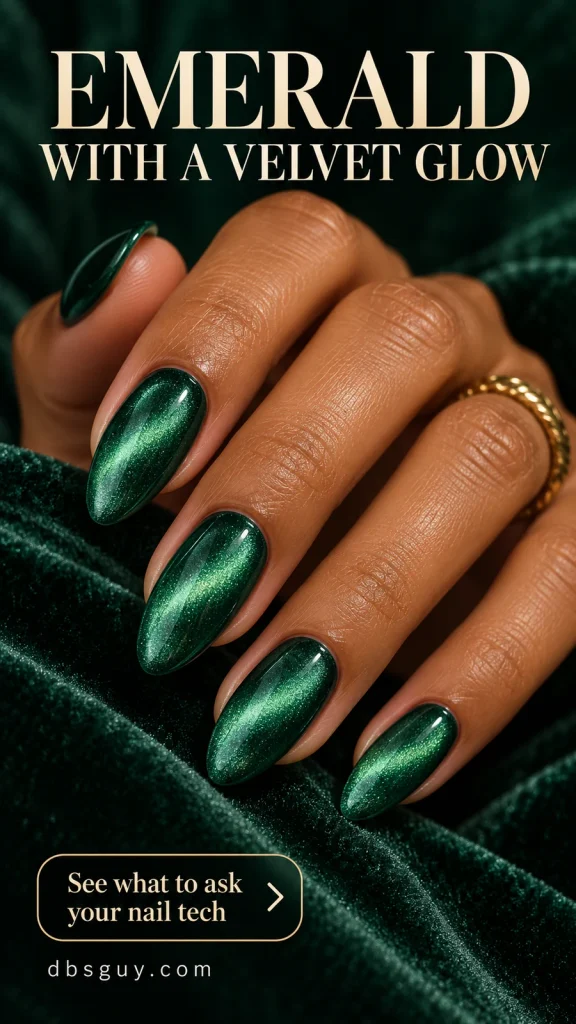
Emerald velvet keeps the green palette but changes how it reflects light. The concept has darker edges and a luminous green glow across the center. Choose it if a plain dark polish feels too flat for the party outfit you have planned.
The effect requires a magnetic polish and magnet technique; ordinary green shimmer will give you a different result. OPI explains how magnetic shimmer creates its velvet effect. Show your nail tech the broad glow you want rather than asking only for “cat-eye,” which can also mean a narrower light-catching stripe. A shorter oval shape can carry the same color and finish.
For more variations in that finish, explore 21 Velvet Cat-Eye Nail Ideas for December That Catch the Light Beautifully.
8. Muted Sage With Champagne-Gold Micro Tips
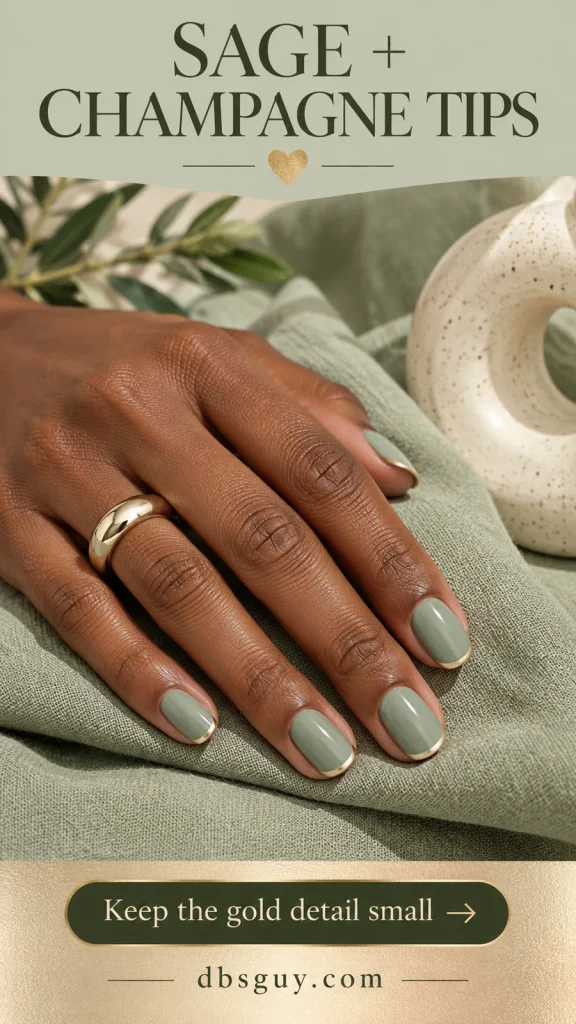
Sage gives you a lighter green with a gray cast. A narrow champagne-gold line at the free edge adds a holiday detail while leaving almost the entire nail sage. It is an appealing direction for someone who usually chooses muted polish and wants a small change for December.
Ask for a fine tip line, not a broad metallic band. On very short nails, keep the width proportional to the available space; the sage should remain the main color. Compare a pale champagne gold with a stronger yellow gold before choosing. The champagne version keeps the contrast gentle, while yellow gold makes the border more noticeable.
9. Olive Green With an Antique-Gold Foil Accent
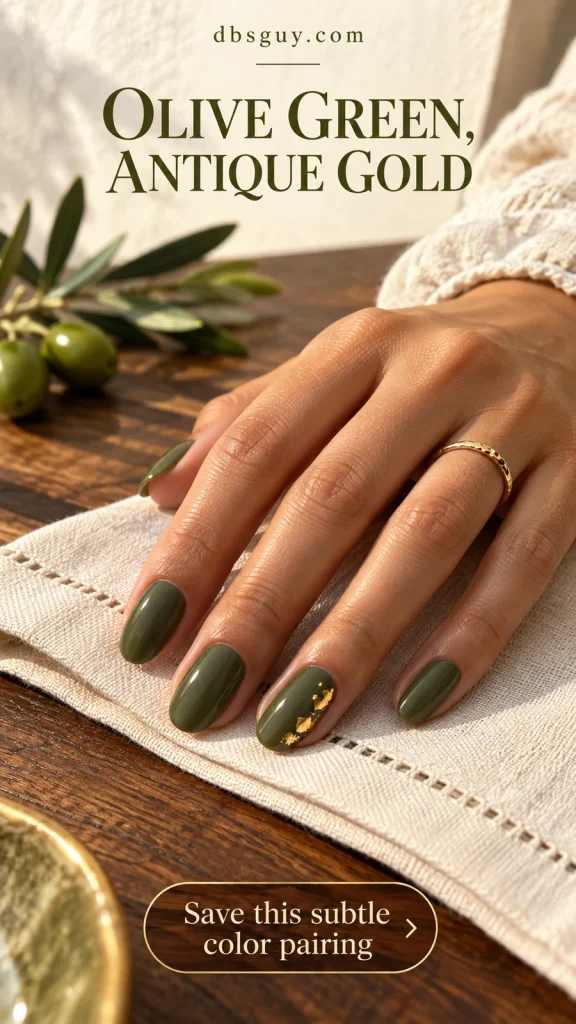
Olive is the earthier green in the group. A small patch of gold foil on the ring finger adds irregular texture, which makes this different from sage’s tidy tip line. Wear the foil near one side of the nail and let the olive remain visible around it.
Bring a placement reference so “a little foil” does not turn into a fully metallic accent nail. Ask for a few separated flecks or a narrow broken cluster rather than an unbroken sheet. An antique-looking gold suits the muted palette; brighter foil gives it a sharper flash. Keep the other nails plain to preserve that small focal point.
10. Five Green Shades in One Planned Set
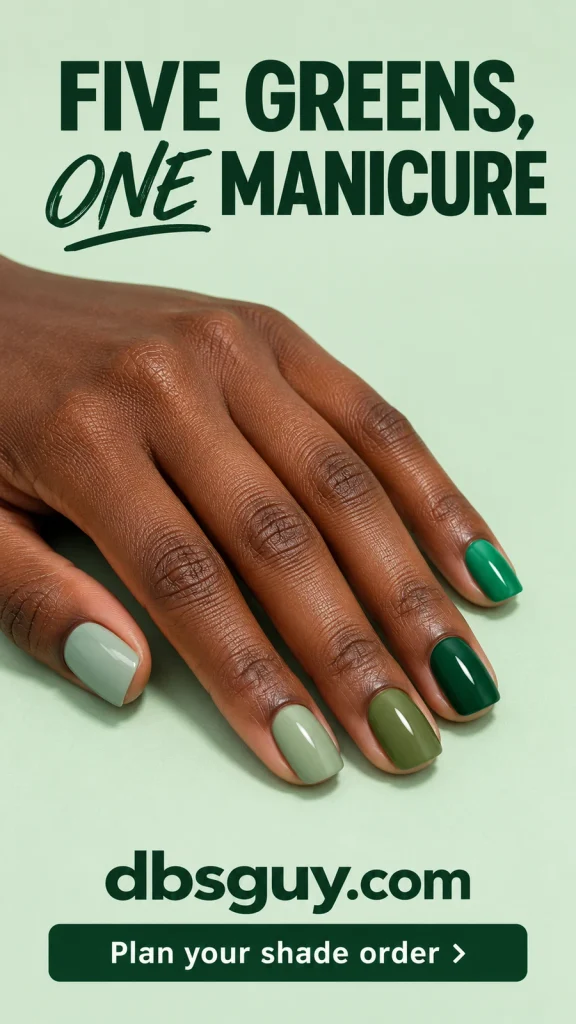
If you keep saving different greens, use one shade on each nail. The pictured order is pale eucalyptus on the thumb, sage on the index, muted olive on the middle, forest on the ring, and emerald on the little finger. It moves between light, muted, and deep greens without adding artwork.
Lay out all five swatches together before painting. The key decision is whether the colors feel related to you, not whether every bottle calls itself green. Using the same opaque crème finish gives this mixed palette a common thread. Repeat the order on your other hand if you want a clearly matched pair.
11. Soft Champagne-Gold Shimmer

Champagne shimmer is the quietest full-nail gold option here. Look for a pale beige-gold base with fine reflective particles, rather than a strong yellow mirror finish. It brings light to a neutral outfit while staying close to the cream and beige colors you may already wear.
Check the coverage as well as the color. A sheer champagne and an opaque champagne can look similar in their bottles but quite different on your nails. If you want to soften the visible nail line, ask for more coverage or an appropriate coordinating base. Keep the nails short and rounded if you like the compact look in the concept.
12. Reflective Yellow-Gold Chrome

Gold chrome makes the metallic finish the main feature. The smooth, reflective surface looks quite different from champagne shimmer’s fine sparkle. Pair it with a simple black or charcoal outfit if you want your nails to be one of the strongest accessories.
Ask to see a gold chrome sample over the base color your nail tech plans to use. Choose a warm yellow gold for this direction; a pale or rose-toned powder will change the palette. If you prefer regular polish, ask for a metallic lacquer alternative and expect a less mirror-like result. Keep the surface free of extra artwork so the reflection stays visible.
13. A Gold Glitter Fade Over a Sheer Base
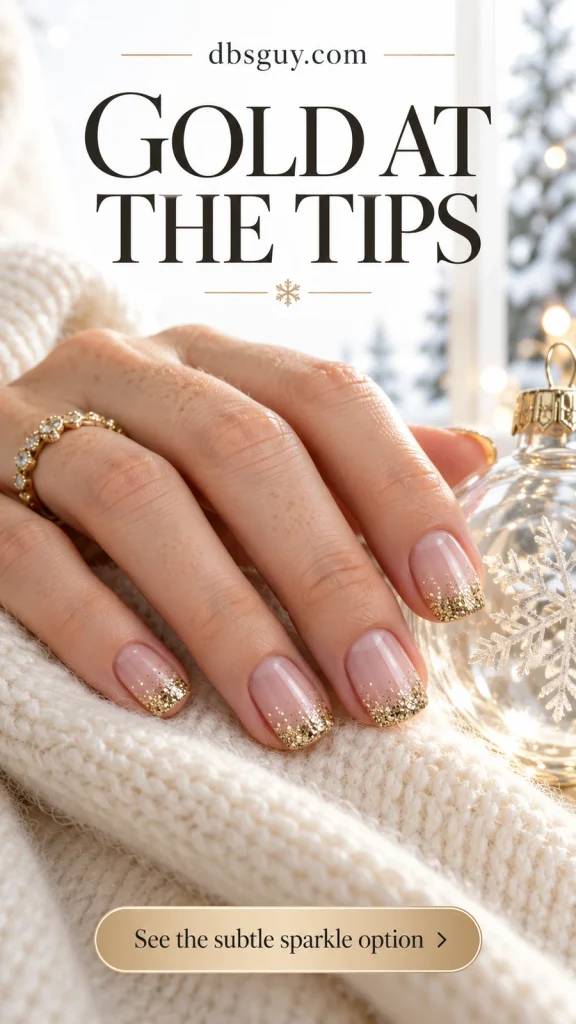
This option leaves most of the nail sheer and concentrates gold glitter at the tips. A few flecks trail back toward the center, creating a broken fade rather than a solid French line. It is the choice to save if you want gold sparkle without full metallic coverage.
Choose the sheer base beside your hand: rosy beige, peach, and milky pink each change the overall effect. For short nails, keep the dense glitter close to the free edge so there is still a clear stretch of base below it. Ask for a scattering of small pieces rather than an opaque gold stripe if you want to preserve the airy look.
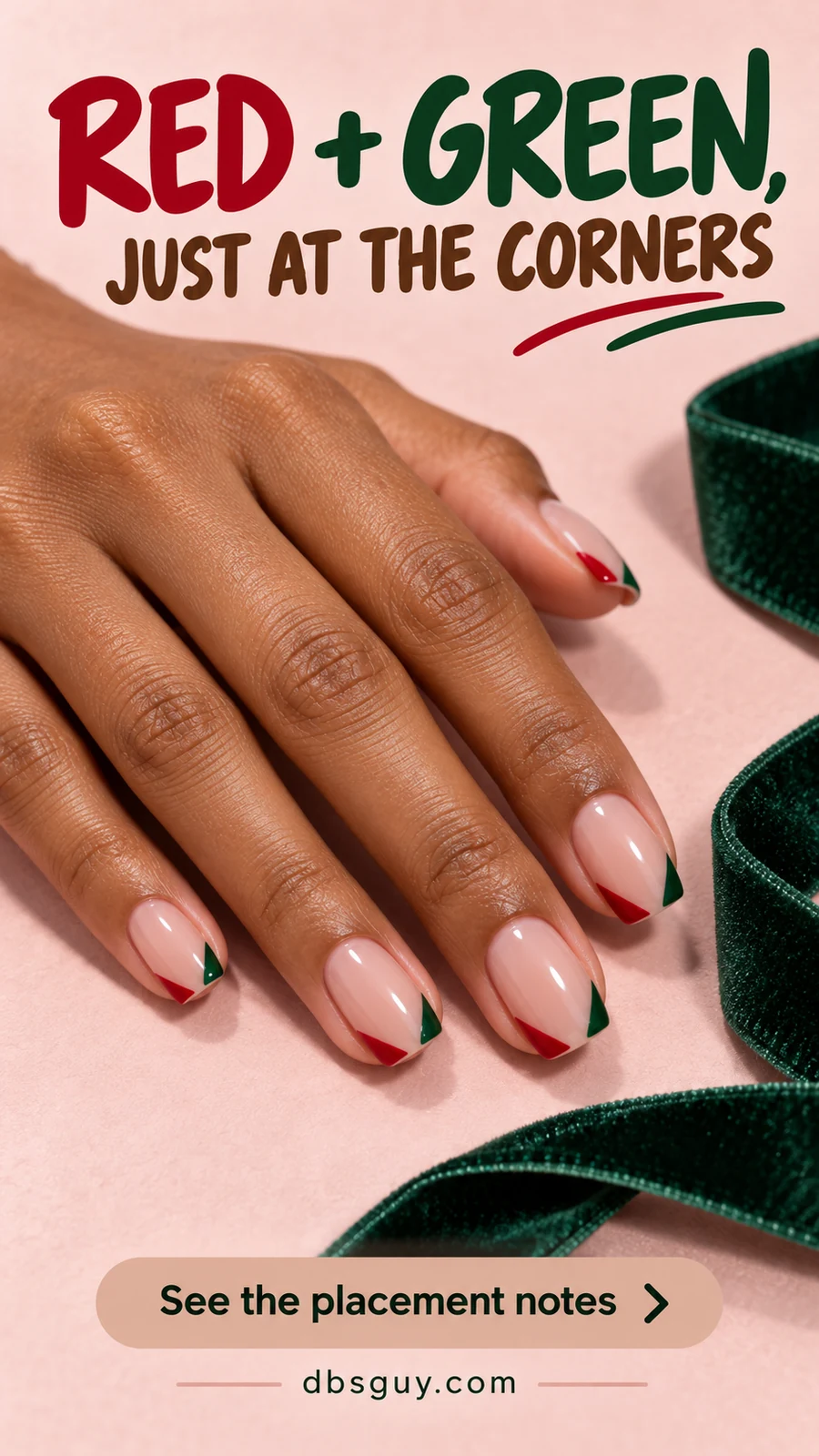
14. Red-and-Green Corner French Tips
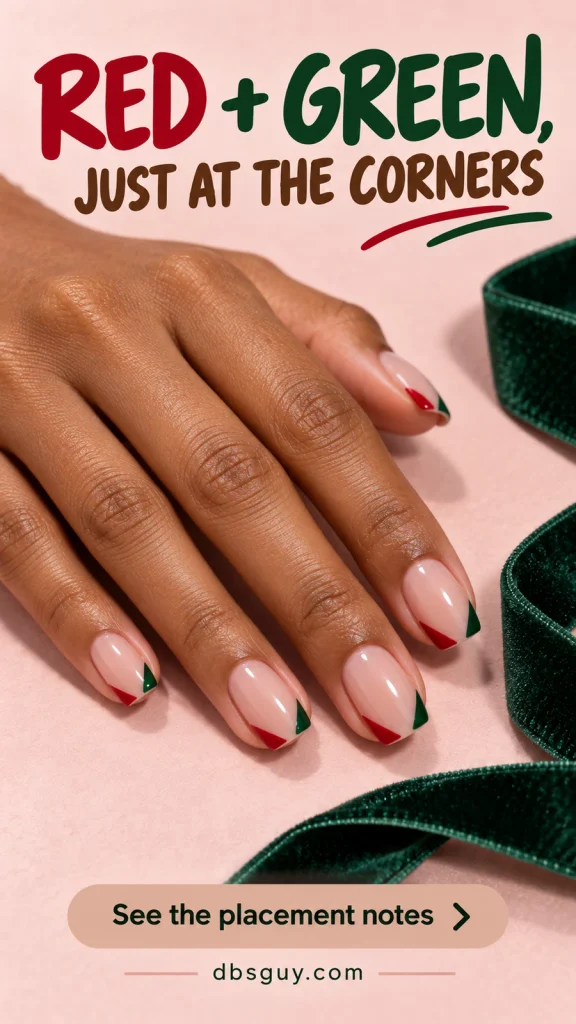
Give red and green one small corner each. Over a sheer rosy base, a red diagonal tip sits on one side and a forest-green tip sits on the other, with a gap between them. The holiday colors are easy to recognize, but most of each nail remains neutral.
The gap is an important part of the design. Show your nail tech where you want it and ask for both colored corners to stay shallow. On very short nails, shrink the triangles before making them meet in the center. You can also keep the corner treatment on two nails and leave the others sheer if painting the full set feels too detailed.
15. Burgundy, Forest Green, and One Brushed-Gold Nail
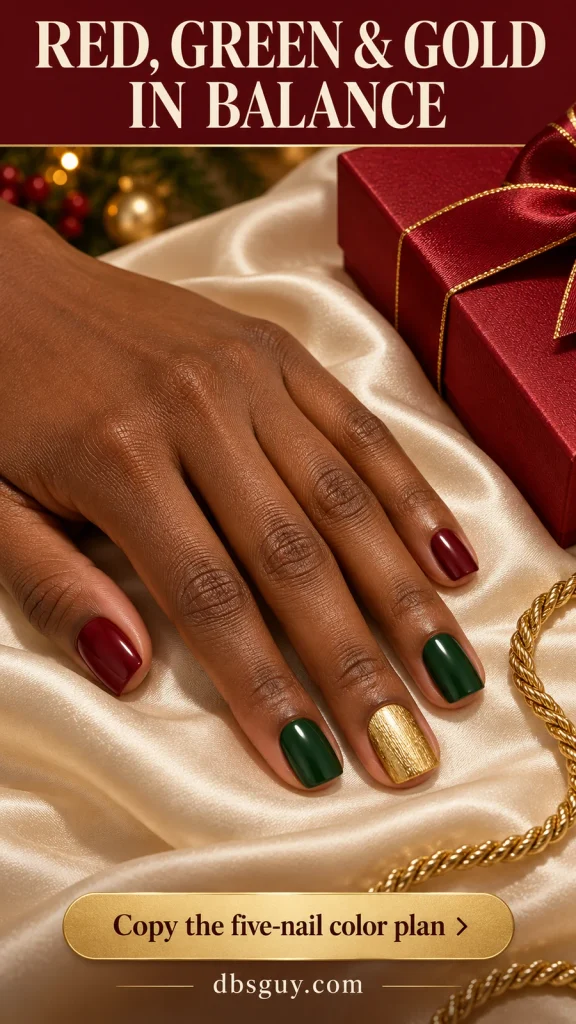
For the complete red-green-gold palette, give the colors a fixed order: burgundy thumb, forest-green index, brushed-gold middle, forest-green ring, and burgundy little finger. The repeated dark colors frame the metallic center, so every nail has a clear place in the set.
Use glossy crème finishes for the burgundy and green, then choose a visibly textured or brushed metallic gold for the middle nail. That makes the accent different from the mirror chrome in idea 12. Swatch the two dark colors together under room lighting; choose enough visible color that they do not both disappear into near-black. This is a color-placement design, so you can skip detailed nail art entirely.
Turn Your Favorite Image Into a Clear Salon Request
Save one main reference and identify what you want to keep: the shade, finish, shape, or color order. Those are separate choices. You can ask for the burgundy palette on your own short nails without copying the almond length, or keep the sage base and remove its gold tips.
A useful request sounds like this: “Short soft-square nails, opaque forest green, glossy finish, no shimmer or art.” For a mixed set, write down the thumb-to-little-finger order. If you are choosing a magnetic or chrome finish, confirm that the salon offers the result you want before the appointment.
For home painting, the solid-color options and planned color mixes are the simplest places to start. Follow the directions for the products you choose. Magnetic, chrome, and foil systems have their own application requirements; a curing time from a different product is not a substitute for those instructions.
December Nail Color Questions
What nail color should I choose for December?
Start with the effect you want. Cherry red is bright, burgundy and forest green are deeper, sage and olive are muted, and champagne gold adds a pale metallic glow. Hold your two favorite swatches beside an outfit you expect to wear often. That comparison is more useful than choosing a shade because it has a holiday name.
Can I wear red and green without detailed Christmas nail art?
Yes. Use the two colors as small corner tips, or assign them to separate nails. In the three-color set above, two burgundy nails and two forest-green nails surround one gold accent. You get the seasonal palette through placement alone.
Which gold finish is the most subtle?
For the styling shown here, pale champagne shimmer or a narrow gold tip creates a gentler effect than full yellow-gold chrome. The amount of coverage matters too: a tiny foil patch can be less noticeable overall than a full nail of pale shimmer. Compare finished samples rather than relying on a finish name.
Do these colors work on very short nails?
The solid colors, shimmer finishes, and one-color-per-nail mixes need very little space. For tips and accents, reduce the width or number of details to fit your nail. You can keep the color idea and change the shape; added length is optional.
Will the polish look exactly like the concept image?
Expect a reference rather than an exact match. Your base color, coverage, nail shape, lighting, and chosen products can all change what you see. Ask for a sample first if the precise shade or reflective finish is the main reason you chose the look.
Choose the color you want to see on your hands every day, then decide how much decoration it needs. A clear shade choice, one finish reference, and a simple placement plan give you a useful starting point for your December manicure.