
For a dorm room that needs a visual reset, start with the bed’s main top layer. A washable duvet cover can give an insert you already own a completely different look. Starting without an insert? A washable comforter may be the simpler purchase. That is the “one buy” here: choose the bedding that sets your room’s palette before collecting little accessories.
These 17 dorm bedding ideas give you different ways to make that choice, from fine blue stripes to a graphic quilt. Pick one direction and work with the sheets and pillows you have. You do not need a new headboard, a matching desk, or a pile of decorative cushions to make the bed feel finished.

The images are AI-generated design concepts, not photographs of completed dorm rooms or tested bedding products. Use them as styling references and check your room measurements and housing rules.
Before You Buy: Check Fit, Contents, and Laundry
Look up your assigned room’s mattress size first. Twin XL is common, but the actual listing matters: the University of Michigan’s packing guide, for example, specifies a 36-by-80-inch mattress and Twin XL linens. Measure the mattress depth with any permitted topper in place before choosing a fitted sheet.
- For a duvet cover: compare its finished width and length with your insert’s measurements. “Twin/Twin XL” labels alone do not establish that two products match. Look for compatible internal ties and insert loops, plus a closure you can manage.
- Check what the set includes: a duvet-cover set may contain only the cover and a sham. The insert, sheets, and sleeping pillow may be separate purchases.
- Read the care label before checkout: choose something you can wash and dry using the machines available to you. A removable cover still leaves an insert that needs its own care.
- Check the drop: on a low bed, keep loose fabric off the floor. For an elevated bed, keep bedding clear of access steps and follow housing guidance for the frame and guardrails.
If your current bed feels uncomfortable, separate that problem from the styling decision. A new pattern changes what you see; it does not change the mattress underneath.
1. Get Two Looks From a Reversible Gingham Cover

A sage-and-ivory gingham cover with a plain sage reverse gives you a patterned bed and a quieter solid option in the same piece. Fold the top back to show both sides, or flip the whole duvet when you want a change.
Keep the sleeping pillow plain so the small checks remain easy to see. Before buying, check the photos and description for the reverse: some “reversible” bedding has a second print rather than a solid back. Choose two sides you would actually use, especially if your storage space cannot accommodate a spare comforter.
2. Use Fine Blue Ticking Stripes for a Coastal Starting Point

Thin blue lines on a white ground bring pattern to the bed while leaving plenty of pale space. Let the striped cover fill most of the bed, then add a solid blue pillowcase or one denim-blue lumbar if you already own one.
Look closely at the product image: a fine ticking stripe gives a different effect from a broad cabana stripe. Skip the themed accessories and let the fabric establish the coastal feeling. To extend the palette beyond the bed, borrow a few useful details from these 13 blue dorm room ideas for a calm, coastal vibe.
3. Choose a Scalloped Quilt When You Want Detail at the Edges
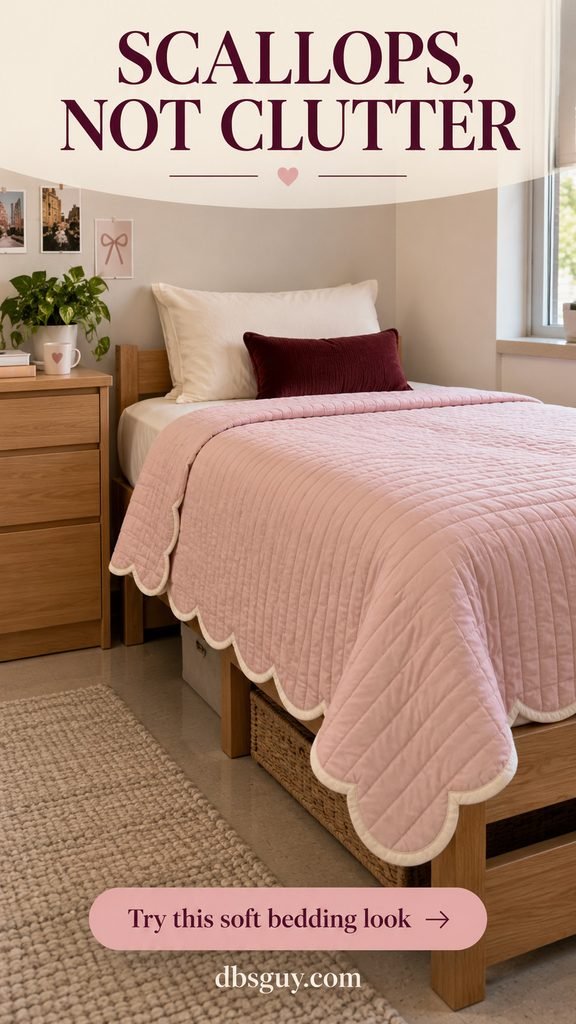
A blush quilt with a cream scalloped hem adds shape where a plain rectangular quilt would end. The important detail is the actual curved edge; a printed wavy line will look different when the fabric hangs over the bed.
Leave a little of the hem visible along the open side and foot. Pair it with ivory sheets and a plain pillow rather than surrounding it with more decorative trims. Check the underside and care instructions, too. A pretty edge is less useful if the quilt requires a laundry routine you cannot maintain during the semester.
4. Let Sage Waffle Texture Carry a Simple Bed

If prints feel too busy, try a solid sage duvet cover with a raised waffle surface. Side light catches the small squares, giving the bed detail without adding another color or motif. Smooth ivory sheets make the difference in texture visible.
Read the fabric description for both faces of the cover. A textured front with a smoother reverse may suit you if you like the appearance but prefer less texture against your skin. Check drying instructions and avoid buying solely from a close-up: you should also like how the weave looks across the whole bed.
5. Keep Cottage Florals Small and the Surroundings Plain

An ivory cover scattered with tiny rose flowers and olive leaves gives a dorm bed a cottage feel without requiring floral curtains or wall decor. The open background matters: it leaves visual breathing room between the little motifs.
Pull one subdued color from the print for a pillowcase you need, such as dusty rose. If your room already has patterned storage bins, compare them with the floral before ordering. You can keep those bins and choose a less crowded print. Start with the duvet rather than buying every coordinating piece in the collection.
6. Make an Earth-Tone Patchwork Quilt the Whole Palette

A quilt made from terracotta, oatmeal, muted ochre, and dusty rose blocks brings several colors together in one useful piece. Large rectangles feel more graphic than a tiny patchwork pattern, and they give you clear colors to repeat elsewhere.
Choose an oatmeal pillowcase and stop there at first. Notice whether the listing describes sewn fabric pieces or a patchwork print; either can create the color effect, but the seams and surface will differ. Check the quilt’s warmth and weight rather than assuming the word “quilt” means it will be enough for every room temperature.
7. Try White Bedding With a Defined Navy Border

A white duvet outlined with a navy rectangle gives a narrow dorm bed a crisp, hotel-inspired frame. A matching bordered sham can reinforce the outline, but a plain sleeping pillow works if you want to keep the purchase smaller.
Check where the border lands in the product photographs. On your bed, you want to see enough of the rectangle for it to read as a deliberate detail. White also makes marks easy to notice, so choose care instructions you can follow. Check the label before treating stains or using bleach; white fabric does not automatically mean bleach-safe.
8. Treat a Black-and-Ivory Abstract Print as the Main Artwork

Oversized black curves on an ivory duvet create a strong focal point across the mattress. This works particularly well when you would rather put the pattern into a washable textile than plan a wall display.
Keep the pillow solid and give the print room to show. If the rest of your belongings are neutral, one small green cushion can soften the combination, but it is optional. Inspect a full-bed photo before choosing: a large brushstroke that looks striking in a fabric swatch may land quite differently once the cover is folded and draped.
9. Use Lavender Stitching for a Tonal Look

A lavender quilt with curved, same-color stitching offers a softer kind of pattern. The design appears through the quilted surface rather than contrasting ink, so you can keep the whole bed in a narrow range of pale purple and ivory.
Look for close-up photographs that show the stitching clearly. Printed lines and stitched channels will not give you the same surface detail. Pair the quilt with one smooth pillowcase, and let the seams supply the decoration. If your existing lavender sheets lean very pink or blue, compare a fabric sample or a returnable pillowcase before committing to the larger piece.
10. Give Ochre Checkerboard Plenty of Plain Space

A medium-scale ochre-and-cream checkerboard makes the bed cheerful and easy to recognize from the doorway. Keep the checks large enough to read as individual squares, rather than a fine grid that disappears at a distance.
Use cream sheets and one plain sleeping pillow to keep the pattern in charge. You do not need checkered bins, a matching rug, and another checked cushion. Hold the yellow tone against the room’s wood furniture if you can: a muted ochre creates a different combination from a bright lemon yellow, even when both are described as “yellow” online.
11. Pick Two Big Color Blocks Instead of an Allover Print

A duvet divided into cream and deep teal sections gives you a clear color statement with very little visual detail. Choose a design with one broad boundary so the blocks remain visible even after the top is turned down.
Before ordering, check which end of the cover carries the color and whether the reverse is different. The product thumbnail may show a fold you will not make every morning. A plain cream pillow lets the teal section stand on its own, making this a useful option if you want strong color but dislike repeated motifs.
12. Go Casual With a Heather-Gray Jersey Cover

For a relaxed bed, look for a heather-gray jersey duvet cover with the lightly mottled appearance of a favorite T-shirt. The appeal is the knit surface and easygoing drape, rather than crisp folds or decorative trim.
Jersey describes a knit construction, so check the fiber label separately instead of assuming every jersey cover is cotton. Choose a weight and hand-feel you like, and follow that product’s washing instructions. Pair it with a white pillowcase and leave room to add a blanket only if you need more warmth. A casual look does not require an intentionally messy bed.
13. Bring in Botanical Pattern Through Leaf Shapes

An ivory duvet with olive leaf silhouettes gives you a botanical direction without the sweetness of little flowers. Choose a print with open spaces between the branches so the individual shapes stay visible on a narrow mattress.
Keep the other fabrics solid, especially if the leaves are large. The bedding already supplies the plant reference; you can leave the bedside surface free for a water bottle and other essentials. Look at the whole repeat before buying. A botanical pattern with branches crossing every few inches will feel denser than the airy version shown here.
14. Use Burgundy Paisley for a Richer, Vintage-Inspired Bed

A burgundy cover with a cream paisley pattern gives the bed depth without relying on a dark wall. Oatmeal sheets help the lighter details in the print connect to the rest of the bedding.
Because paisley contains several curved elements, avoid adding another intricate print directly beside it. Try the cover with your existing neutral pillow first. Check the care label for color-sorting and washing directions before the first load. If you like vintage style but do not want tassels, fringe, or multiple trims, the printed motif can do the work on its own.
15. Choose a Low-Bulk Channel Quilt for a Lighter Setup

A rust-colored quilt with straight stitched channels suits a bed you want to keep visually simple and relatively low in bulk. The long lines add structure, while the solid color makes a folded-back white sheet stand out.
For a room that runs warm, compare the actual fill, weight, and care information; thin-looking bedding is not a reliable temperature rating. Keep a separate blanket available if you need adjustable layers. Check the quilt’s length before buying, too. A beautiful throw-size version may leave part of a long dorm mattress uncovered.
16. Work With the Relaxed Surface of Washed Linen

A warm taupe washed-linen duvet cover gives the bed a softly rumpled surface that works with ordinary wood dorm furniture. Pair it with ivory sheets and a simple pillow instead of trying to press it into a crisp hotel arrangement.
Check whether the listing is 100% linen or a blend; the description and fiber label should tell you what you are buying. Feel a sample if possible, particularly if you are sensitive to fabric texture. Choose the cover because you like its surface and care requirements, rather than expecting the word “linen” to guarantee your preferred sleeping temperature.
17. Coordinate Roommate Beds Through One Shared Neutral

Two beds can belong in the same room without wearing identical sets. Try cream as the shared background: one roommate chooses sage stripes, and the other chooses a blush dotted cover. The repeated cream links them while each person keeps a pattern they like.
Agree on a color reference before ordering; “cream” can range from pale ivory to a yellow beige. Keep laundry, inserts, and purchases separate unless you both decide otherwise. If one roommate already owns bedding, build around a color in that piece rather than asking both people to replace useful items.
For more ways to use blush beyond the mattress, explore 15 pink dorm room ideas that are anything but basic.
Make Your Pick Without Buying a Whole New Room
Choose the detail you want to see most: a print, a defined edge, visible texture, or a plain color. Then check that the option works with your mattress, current bedding, and laundry routine. The cover or comforter should be a useful purchase even before you add a decorative pillow.
Once it arrives, make the bed with what you have and look at it from the doorway. That is the right time to decide whether anything is missing. Often the new top layer and a pillowcase already give the room the direction you wanted.
Dorm Bedding Questions
Do I need Twin XL sheets and a Twin XL comforter?
Choose fitted sheets for the mattress size and depth your school specifies. For a comforter or quilt, compare the actual finished dimensions with the mattress and the amount of overhang you want. For a duvet cover, also match the insert’s dimensions. These are different fit checks, even when the products share a size label.
Is a duvet cover or a comforter easier in a dorm?
A removable cover lets you launder the outer fabric separately, but you have to put the insert back inside. A comforter is one piece to make the bed with, and the whole item needs to fit a suitable washer and dryer when it is time to clean it. Choose the care routine you can actually manage.
How many pillows should I bring?
Start with the sleeping pillow or pillows you use at home. Add a decorative cushion only if you want it and have somewhere to put it at night. The concepts use restrained arrangements so the bedding stays visible; they are not a requirement to buy extra pillows.
Can I keep my current comforter and change its look?
You may be able to use a compatible duvet cover over it. Compare both items’ dimensions, closures, and attachment points first, and check that the combination will not be too bulky for you. If it is a poor fit, keep using the comforter as it is rather than forcing it into a smaller cover.
What should I buy first on a tight budget?
Cover the basics you are missing: properly fitting sheets, a sleeping pillow, and suitable warmth. Once those are in place, choose one top layer for a style update. Keep useful bedding you own and postpone matching accessories until you have lived in the room.