Sorority Rush Outfits: What to Wear for Every Round, From Open House to Bid Day


Start your sorority rush outfits with your campus dress guide: comfortable casual clothes for Open House, the provided shirt whenever one is required, a daytime look for Sisterhood, a dressier outfit for Preference, and something easy to move in on Bid Day. That is a useful planning order, but the exact clothes depend on your school.
The five looks below give you a starting outfit for each stage, with practical ways to adjust the fit, shoes, and coverage. You can build around pieces you already own. You do not need to copy someone else’s entire rush wardrobe.

These visuals are AI-generated outfit concepts, not photographs of actual recruitment events or products we have worn or tested. The plain shirts stand in for campus-provided tees; wear your school’s actual shirt when required.
Before you plan: Match the outfit to your campus
This guide covers the round-based Panhellenic primary recruitment described in the title. Other councils and chapter-led events may have different formats. Even within Panhellenic recruitment, schools may combine, rename, or move rounds online.
Read the current guide for your recruitment cycle before shopping. For example, the University of Arizona’s official recruitment guidance includes dressy separates and sneakers among its Preference options. A campus that recommends a dress and heels is setting a different expectation. Use your own instructions to decide how formal to go.
- Check the shirt requirement. Note which rounds use a provided tee, when you collect it, and whether the guide specifies bottoms or colors.
- Count days, not just round names. A round may span several days. Plan for laundry, weather, and any required shirt changes.
- Check the actual activities. Walking outside, sitting on the floor, watching videos, and attending a ceremony can call for different choices.
- Ask about unclear instructions. Send your recruitment counselor a full-outfit photo and a specific question, such as whether dressy flats fit the Preference guidance.
If your schedule also includes general welcome events, keep those outfits separate from required recruitment attire. Our freshman orientation outfit ideas cover everyday campus activities.
1. Open House: A relaxed tee, tailored shorts, and sneakers
The starting outfit: a pale blue crew-neck tee, tan tailored shorts, white sneakers, and small hoop earrings. The soft colors work together without needing several accessories, and the shoes suit a casual day that includes walking.

If your campus issues an Open House shirt, use that instead of the blue tee. Keep the neckline, printed design, and name tag visible. A loose front tuck can shorten the shirt visually without cutting it; check your campus instructions before altering a required shirt.
Choose shorts by how they feel when you sit as well as how they look standing up. The waistband should stay comfortable, and the hem should give you the coverage you want on a chair or steps. If you prefer more coverage and your guide permits it, substitute relaxed trousers without changing the casual feel.
For a video introduction or virtual Open House, check the framing before recording. Your neckline should be visible, your face well lit, and your background uncluttered. Follow the submission instructions rather than assuming the in-person outfit rules apply to the video.
2. Philanthropy: Build around the provided tee
On campuses that use a Philanthropy shirt, the tee is already decided. Put your effort into bottoms that stay comfortable through the day’s seating and shoes you can walk in. If your campus does not provide a shirt, follow its stated dress level instead of treating this as a universal T-shirt round.

Our example pairs a lilac tee with a navy skort and white sneakers. Navy gives an unfamiliar shirt color a simple base, while the skort offers the appearance of a skirt with shorts underneath. The lilac color is illustrative; wait to see your actual shirt before choosing a matching accessory.
Check that the inner shorts stay in place and the outer panel does not pull when you sit. At Alabama, the official guidance specifically recommends shorts or a skort because participants may sit on the floor. Your own schedule will tell you whether that detail matters for your events.
A slim cardigan is useful if you tend to feel cold indoors, provided it works with your campus guidance and does not hide required identification. Keep jewelry easy to wear: earrings that snag on the shirt every time you move are unlikely to earn their place in your bag.
Do a complete try-on with the tee once you receive it. A unisex shirt can have a different length and shoulder fit from the top you used while planning, which may change how a tuck looks.
3. Sisterhood: A daytime dress with room to move
The starting outfit: a light blue midi sundress with a small white floral print, tan low block-heel sandals, and a simple shoulder bag. The cotton-style texture and softly gathered skirt keep this look suited to a daytime event.
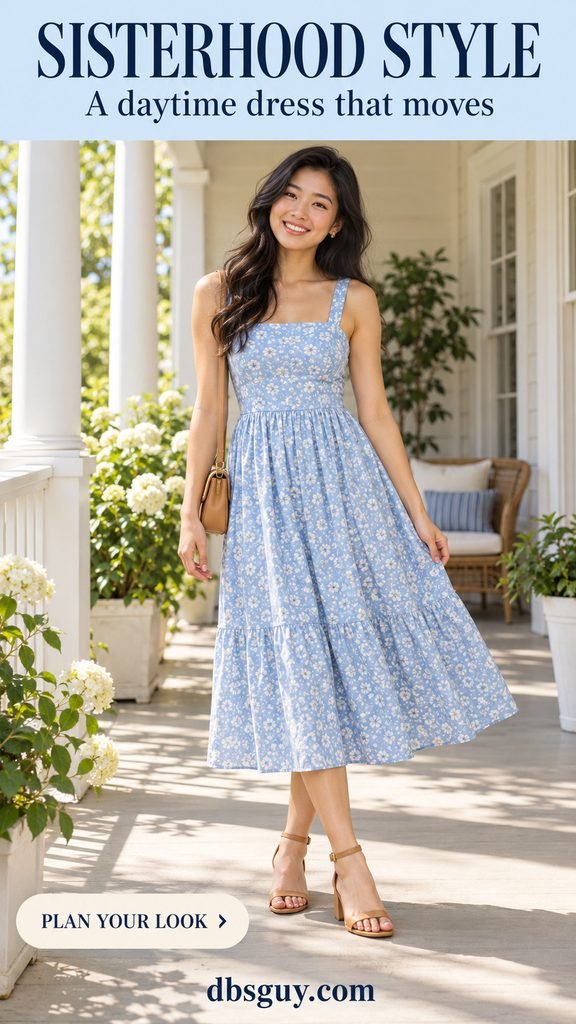
The difference from Preference is the finish. This dress has a relaxed skirt and a small daytime print; the navy Preference look below uses a solid color and more structured fabric. You can make that distinction without buying a more elaborate dress for every stage.
Try the dress while sitting, reaching, and walking. Broad straps can be convenient if they work with your preferred undergarments, but fit matters more than a particular neckline. If you keep pulling at the bodice during the try-on, choose another cut or arrange an alteration before recruitment.
Wear the block heels only if they suit your campus instructions and feel stable on your route. A wider heel can still rub or slip. Dressy flats or sandals may be a better choice where permitted; check what the guide actually recommends.
If you prefer separates, use the same level of polish as your campus’s examples. Ask about a blouse and trousers rather than assuming that Sisterhood requires a dress. Keep any walking-shoe change manageable, and confirm where you may leave a bag before planning to carry a second pair.
4. Preference: A polished midi dress and dressy flats
Preference is the dressiest stage on many recruitment schedules, but that does not automatically mean a gown or high heels. Read how your school describes it. “Dressy casual,” “semi-formal,” and a specific outfit requirement are different instructions.
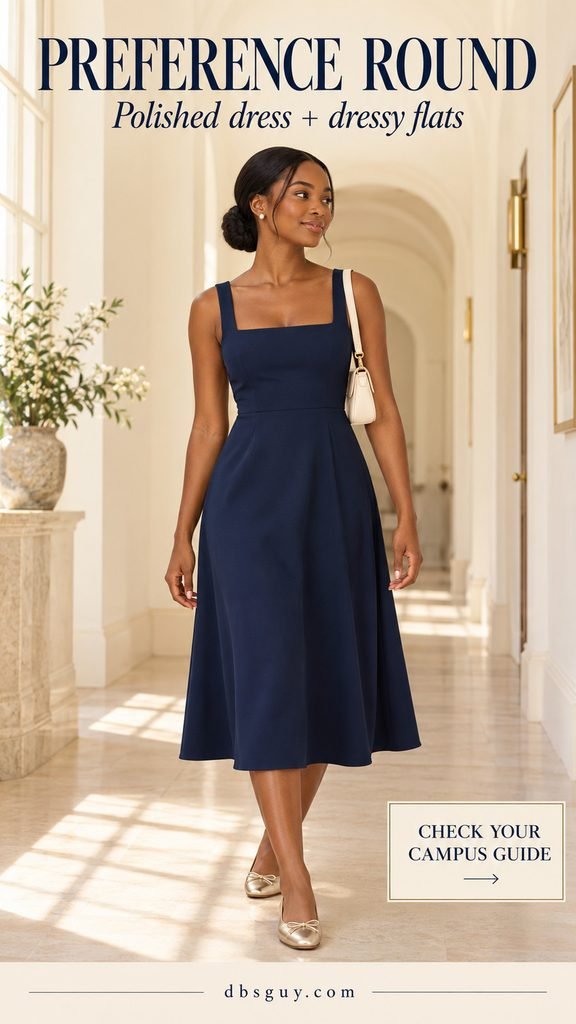
For a campus that allows dressy flats, try a navy crepe midi dress with a simple square neckline, pearl studs, and champagne-colored closed-toe flats. The solid fabric and defined shape make it dressier than the floral Sisterhood look, while the shoes give you a flat option.
Check the dress under the lighting you expect to encounter. Look for comfortable room through the waist when seated, an opaque skirt, and a neckline that stays where you want it. Wear the actual undergarments and shoes during this check; small changes can affect how the dress hangs.
If your guide recommends heels, choose a familiar pair you can manage and ask about an alternative if you need one. For disability-related footwear or clothing needs, contact the campus recruitment team about accommodations before the event.
Do not treat online claims about “forbidden” colors as rules for every school. Check for an actual color instruction in your current guide, and ask your counselor if it is unclear. Choose the outfit for your campus and your comfort rather than trying to infer a secret dress code from other people’s photos.
5. Bid Day: A simple base you can celebrate in
Bid Day is the celebration after the selection process. Check the arrival instructions before choosing your outfit: you may be given a chapter shirt, asked to wear certain colors, or told what to bring for later activities.

The starting outfit: a plain white tee, medium-wash denim shorts, white sneakers, and a small zipped belt bag. It is easy to coordinate with a shirt you receive later. If your campus specifies a different base, use that instead.
Choose shorts that stay comfortable while you sit and move, and check that a longer shirt will not make you feel as though your bottoms have disappeared. The coral shirt in the image illustrates a possible shirt change; it does not represent a particular chapter or a promised item.
Wear shoes that fit the planned activity and your mobility needs. If celebrations include outdoor movement, a secure sneaker is more practical than a loose shoe you have to grip with your toes. You do not have to plan your outfit around running if that is not part of your day.
Keep your phone and keys secure, and check bag rules before relying on the belt bag shown. If you will change shirts, confirm where you can do so and bring a way to carry your original top.
Make the five looks work for your actual week
Shop your closet before filling gaps
Lay out the required pieces first, then add clothes you already own that fit each round. San Diego State’s Panhellenic guidance explicitly says participants do not need to purchase new or specific clothing to take part. Your own school’s instructions still decide the details, but a social-media haul is not a shopping checklist.
Reuse shoes, jewelry, and a neutral bag where they fit the dress guidance. Borrowing a dress can help with cost, but try it on early enough to check fit and agree on cleaning or alteration limits. If money is tight, ask the recruitment team whether it offers a clothing closet or other assistance; availability varies.
Adjust for heat, rain, or winter recruitment
Use the forecast for your dates rather than dressing for the season in an inspiration photo. In heat, judge the actual fabric’s weight, lining, and airflow. A fiber label alone will not tell you whether a dress feels comfortable outside.
For cold weather, add layers that work over your approved outfit and ask about coat storage. Choose weather-appropriate shoes for the journey and confirm whether changing shoes is practical. In rain, check that hems clear the ground and use footwear you trust on wet surfaces.
Pack for the route and the rules
Confirm the bag policy, then pack what you will use: your required ID, phone, keys, schedule, water if permitted, and a few familiar touch-up items. Add a layer or alternate shoes only if you need them and can carry or store them.
Put each day’s outfit and required shirt together the night before. If recruitment overlaps with your first classes, use our first-week-of-college survival guide to organize the rest of your schedule.
Rush outfit questions, answered
How many outfits do I need for sorority recruitment?
Count the dates on your schedule, including required shirts and any outfit changes. Five stages do not necessarily mean five days or five separate purchases. Rewear suitable pieces when they are clean, comfortable, and allowed by the guide.
Can I wear jeans or pants to rush?
Check the round-specific instructions. Pants may fit a casual round, and some campuses include dressy separates in later-round guidance. If your guide only shows dresses, ask whether trousers with a blouse meet the intended dress level.
Are heels required for Preference?
They are not a universal requirement. Mizzou lists nice flats among its Preference footwear options, while other schools recommend heels or wedges. Follow your campus guidance and ask about alternatives or accommodations when needed.
Can I wear black or white?
Look for a specific color requirement or restriction in your school’s current instructions. Do not assume that a rule from another campus applies to yours. If the wording leaves you unsure, send your counselor a photo before buying something else.
Will an expensive outfit improve my chances of getting a bid?
No outfit can guarantee a bid. Build your wardrobe around the required attire, a comfortable fit, and clothes that let you focus on conversations. Keep clothing purchases separate from the membership costs you will need to understand before joining.
Your final outfit check
For each day, you should know which shirt to wear, whether the outfit meets the stated dress level, what shoes work for the route, and what you are allowed to carry. Try on anything you have not worn together. Once those questions are answered, you can stop shopping for imaginary rules and turn your attention to the people you will meet.