Morning Stretch Routine for Students: 10 Minutes Before Your First Class

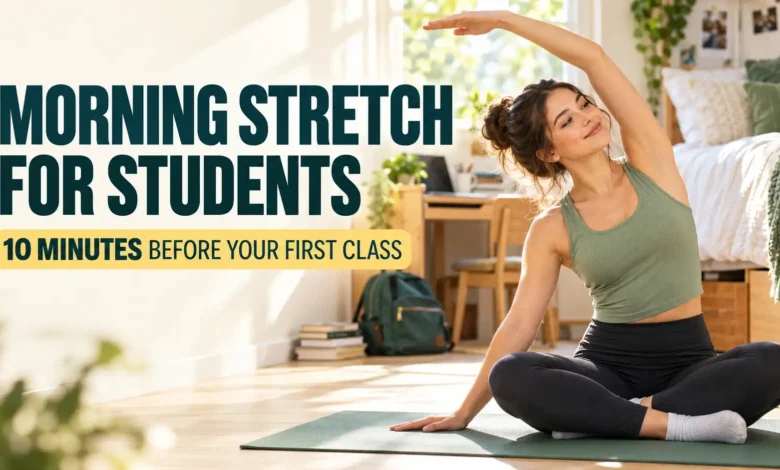
Start with five minutes of easy walking, then stretch your shoulders, chest, hamstrings, and calves. This morning stretch routine for students takes 10 minutes total, including time to switch sides and change positions. You need a sturdy chair and a clear wall, with no mat or floor exercises.
Use it before you leave for campus or before an online class. If you have to commute, schedule these minutes before your departure time rather than squeezing them into the last ten minutes before class.
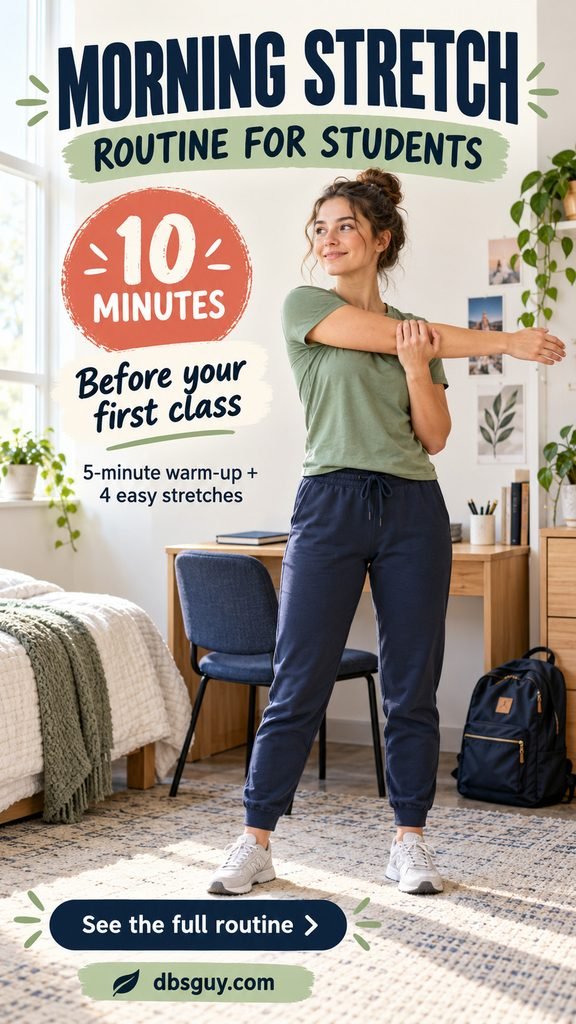
The images are AI-generated illustrations of the positions, not photographs documenting a tested workout. Follow the written cues and stay within your comfortable range.
Your 10-Minute Routine at a Glance
Read the instructions once before starting. Set a stopwatch, place the chair near the wall, and use these checkpoints:
- 0:00–5:00: Easy walking warm-up.
- 5:00–6:15: Cross-body shoulder stretch, 30 seconds per side, with 15 seconds for setup, switching, and sitting down.
- 6:15–7:15: Seated chest stretch, five 8-second holds with a 5-second release between holds.
- 7:15–8:45: Seated hamstring stretch, 30 seconds per leg, with 30 seconds to position your legs, switch, and move to the wall.
- 8:45–10:00: Wall calf stretch, 30 seconds per side, with 15 seconds for setup, switching, and finishing.
Those blocks add up to exactly 10 minutes. The transition time is there so you can move calmly. If you need longer, shorten or skip a hold instead of hurrying to catch the timer.
Before You Start
Choose a firm, armless chair without wheels. It should stay put when you sit near the front, with your feet flat on the floor. Clear enough space to extend one leg and open your arms. Set your backpack down and wear clothes that allow easy movement.
Keep each stretch gentle: a mild pull is enough. Breathe normally, avoid bouncing, and ease out if a position hurts. Mayo Clinic’s guidance on stretching safely recommends warming up with 5–10 minutes of light activity before holding stretches; the first five minutes below are included for that reason.
This general routine is for students who can walk, stand, and sit comfortably. If you have an injury, ongoing pain, a health condition that affects movement, or instructions to limit activity, ask your healthcare professional or physical therapist which movements fit your situation. Stop if you feel pain, tingling, or dizziness.
1. Walk Gently for Five Minutes
Timer: 0:00–5:00
Walk around your room, along a clear hallway, or on a level path outside. Use small, comfortable steps and let your arms swing naturally. Keep the pace easy; you are warming up rather than trying to fit in a workout.
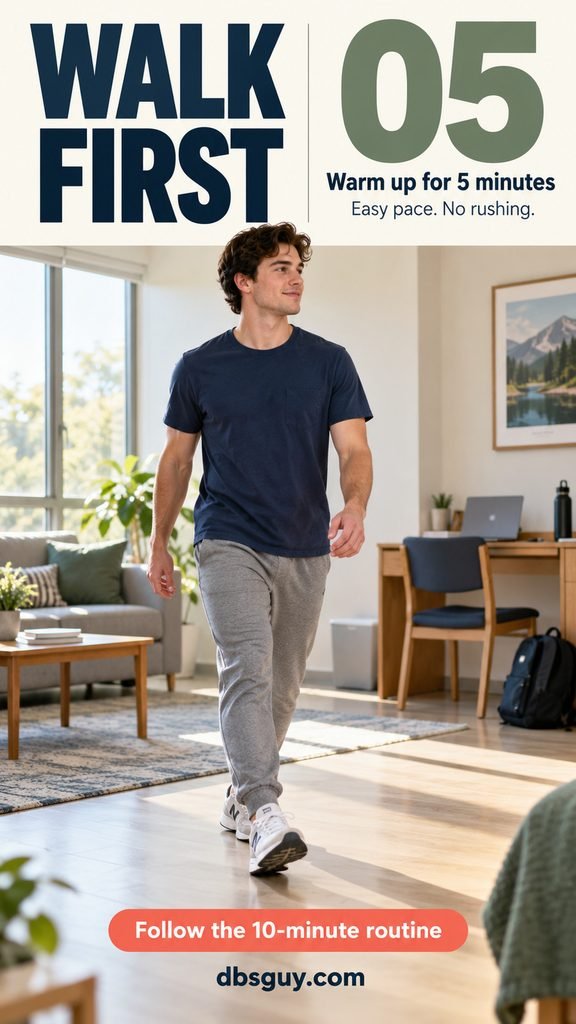
A short back-and-forth route is fine. Turn slowly at each end and keep bags and charging cables out of the way. For a shared dorm room, choose a hallway where you will not interrupt a sleeping roommate or block anyone’s route.
Keep this part: Do not replace the walking with five minutes of sitting and breathing. If you still need more warm-up time, keep walking and leave fewer stretches for today.
2. Stretch Each Shoulder Across Your Chest
Timer: 5:00–6:15
- Stand comfortably with your head upright and shoulders relaxed.
- Bring one arm across your upper chest. Use the opposite hand to support the upper arm just above the elbow.
- Draw the arm a little closer until you feel a gentle stretch behind the shoulder. Hold for 30 seconds without twisting your torso.
- Release slowly and repeat with the other arm for 30 seconds.
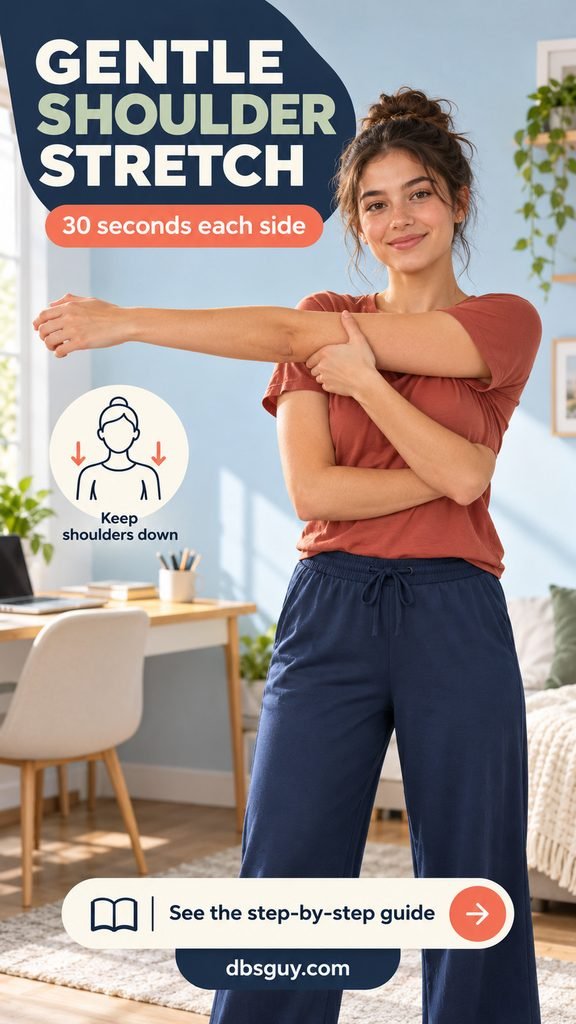
Use the remaining 15 seconds to get into position, switch arms, and sit down for the next stretch. The support hand should not push directly on the elbow joint. If your shoulder rises toward your ear, ease the pull and let it settle.
3. Open Your Chest While Seated
Timer: 6:15–7:15
Sit tall near the front of the chair with both feet flat. Let your arms open low to the sides, with your hands relaxed. Gently draw your shoulders back and down, then lift your chest slightly until you feel a comfortable stretch across the front.
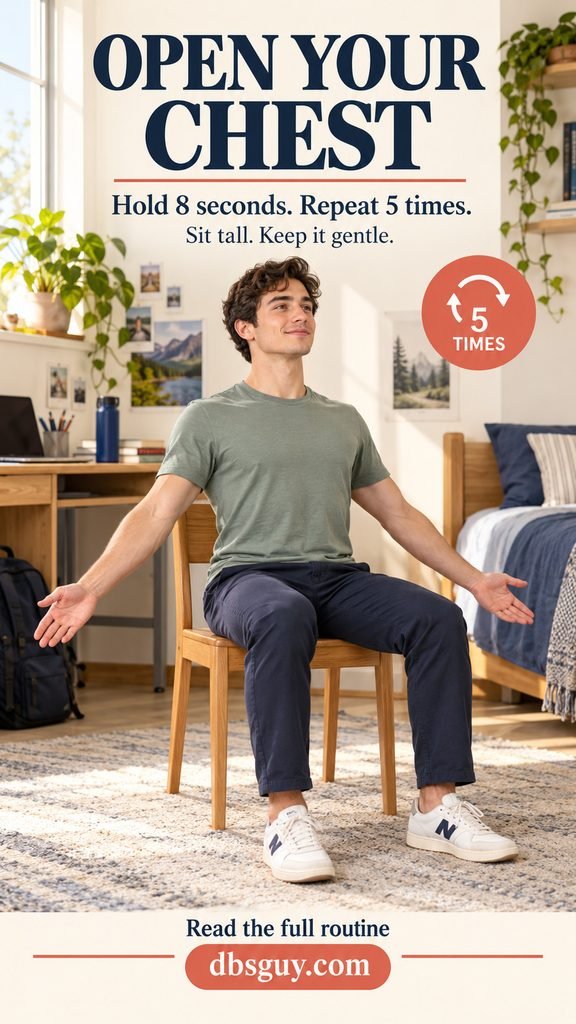
Hold for 8 seconds, then release for 5 seconds. Do five holds, with a release between each pair: 40 seconds of holding plus four 5-second releases makes one minute.
Keep your gaze level and your lower back comfortable. Leaning backward or lifting your chin does not make this a better chest stretch. Make the movement smaller if you find yourself arching.
4. Stretch the Back of Each Thigh From the Chair
Timer: 7:15–8:45
Stay seated near the front of the chair. Extend one leg forward with the heel on the floor and toes pointing up. Keep the other foot flat beneath a comfortably bent knee.
- Sit tall, then tip forward slightly from your hips while keeping your back long.
- Stop when you feel a mild stretch along the back of the extended thigh. Rest your hands lightly on the bent thigh.
- Hold for 30 seconds, return upright, and repeat on the other leg for 30 seconds.
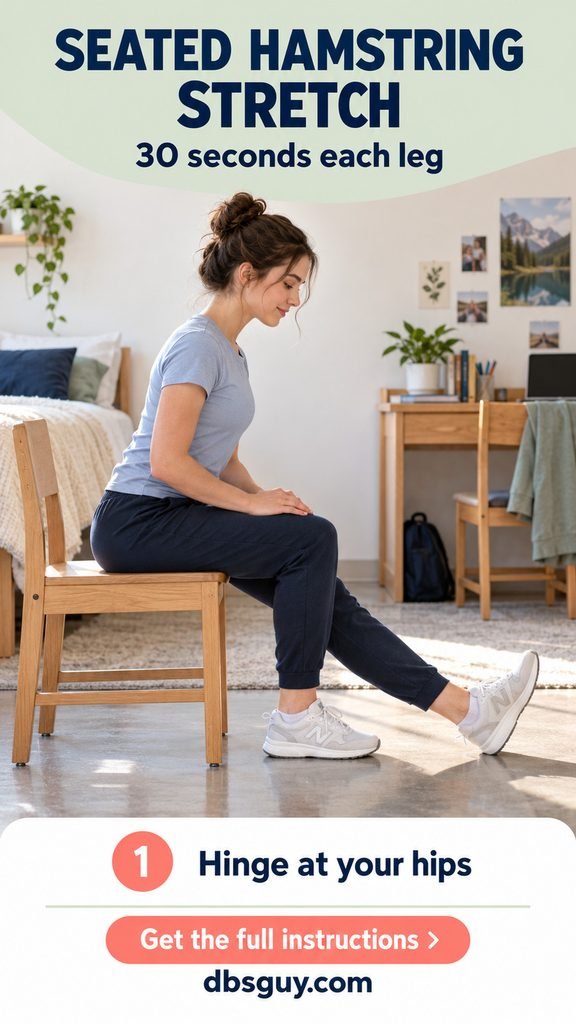
The extended knee can stay slightly soft; do not press it down or force it straight. You do not need to touch your toes. Use the extra 30 seconds to position yourself, change legs, then stand slowly and move to the wall.
5. Finish With a Wall Calf Stretch
Timer: 8:45–10:00
- Face a solid wall and place both palms against it around shoulder height.
- Step one foot back. Point both feet toward the wall and keep your hips facing forward.
- Bend the front knee gently while keeping the back knee straight without locking and the back heel on the floor.
- Hold the gentle stretch in the back calf for 30 seconds. Step in, switch legs, and repeat for 30 seconds.
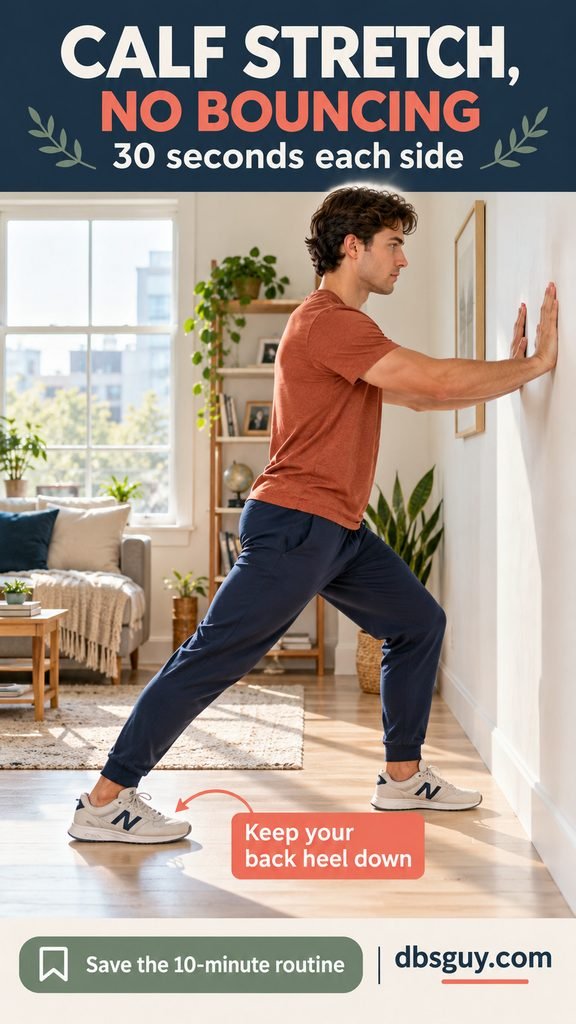
Allow 15 seconds across the block for setup, switching, and returning to a relaxed stance. If your back heel lifts, bring that foot closer to the wall. Keep the hold still rather than bouncing deeper.
Make It Fit Your First Class
Choose your starting point the night before: chair ready, wall clear, bag packed. That keeps the routine from turning into ten minutes of moving furniture and looking for your notebook.
For an 8:00 a.m. online class, one option is to start at 7:45, finish at 7:55, and leave five minutes to open your course page. For an in-person class, work backward from when you need to leave home. Keep your travel time separate.
If you are running late, save the full sequence for later. You can take your usual walk and return to a stretch after warming up when you have time. Avoid rushing through both sides or pulling harder to make a shorter hold feel more productive.
Questions Students Often Have
Can I do this in everyday clothes?
Yes, if they let you walk, sit, and extend your arms and legs comfortably. None of these positions requires lying down. If a waistband or sleeve restricts movement, change first or skip that movement.
What if I only have a rolling desk chair?
Find a stable chair without wheels for the two seated stretches. Do not rely on a rolling chair staying still or improvise on the edge of a soft bed. If a suitable chair is unavailable, leave those stretches out for now; that is a shortened version of the routine.
Will this help my grades or fix my posture?
This sequence has not been tested as a student performance program, so it cannot promise better grades, greater focus, or a posture correction. It offers a practical way to schedule gentle movement before class. Regular stretching can support flexibility, but this short routine is not a complete exercise program.
Can I use it before PE or sports practice?
Use your teacher’s or coach’s activity-specific warm-up for PE or sports. This routine was arranged for a morning before academic classes; it does not prepare you for every demand of sprinting, jumping, or competition.