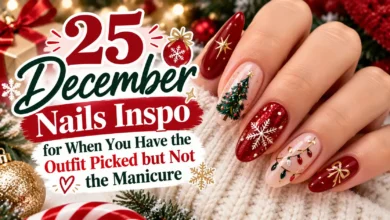
A December manicure has a lot of places to be: your keyboard, a coffee meeting, a family dinner, maybe a holiday party straight after work. If you want one set for all of them, a small detail can be more useful than a different design on every finger.
These 17 minimalist December nail ideas focus on clear color choices, little accents, and finishes you can dress up with your outfit. There are sheer sets with tiny red details, deeper winter shades with one metallic motif, and a couple of quiet finish changes for anyone who prefers to skip nail art.
Each look includes a salon request and a short-nail adjustment. Start with the burgundy dots if you want a manageable DIY idea, the forest-green finish mix if you love solid color, or the silver base cuff if you want a little evening reflection. If your workplace has a nail policy, let that guide your length and polish choice first.
1. Sheer Rose With Single Burgundy Dots
One little burgundy dot gives sheer rose nails a December touch while leaving most of the manicure soft and simple. Repeating the dot near the base of each nail makes the set feel deliberate. You get a hint of holiday color without committing to a full red manicure.

The dot should sit inside the nail plate with a little clear space between it and the skin. Choose a deep wine red that remains visible against the rose base, and keep the dots small enough that they feel like punctuation. This is an easy design to pair with ivory, charcoal, or navy during the day, then carry into dinner with the same colors.
Ask for: “Short rounded sheer-rose nails with one tiny burgundy dot near the base of each nail. Keep the dots flat-painted, leave a gap from the skin, and finish the set glossy.”
For short nails: Keep one dot rather than adding a second. Test the size on the smallest nail first, then use a similar scale across the hand. A clearly placed small dot is more effective here than an almost invisible one.
2. Cherry-Red Corner French
A red corner French gives you a little festive color at the edge of the nail. The sheer base stays open, while a narrow diagonal corner adds just enough red to notice. It is a lovely choice if you like a French manicure but want an arrangement that feels a little less expected.
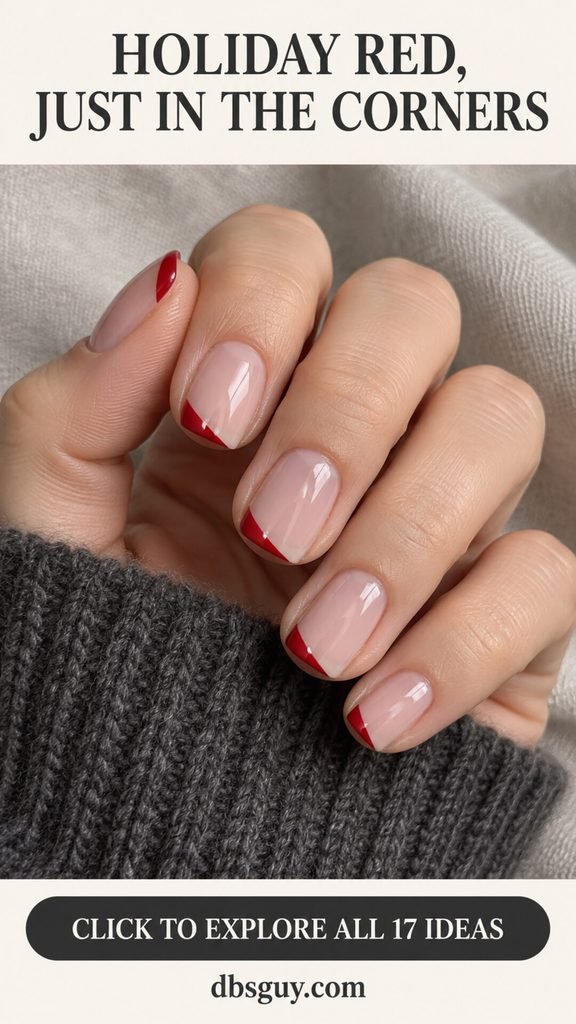
Keep the red on one corner of each tip rather than wrapping it around the whole free edge. The matching direction is what connects the set, so the corners do not need to be large. Bright cherry red gives a crisp holiday accent; a deeper cranberry shade can soften the contrast if that fits your usual wardrobe better.
Ask for: “Sheer beige-pink nails with a small cherry-red diagonal French corner at each outer tip. I want narrow corners, plenty of sheer base, and no extra artwork.”
For short nails: Use a shallow corner wedge instead of a deep diagonal section. The red can be painted as a visual tip even when you have very little natural free edge. Ask the artist to check the proportions on your shortest nail.
3. Soft Taupe With One Gold Dash
Taupe is an easy everyday color, and one short gold dash gives it a little evening interest. The accent sits on the ring nail, with all the other nails left solid. It is understated enough to blend with a work outfit while still offering a small detail to appreciate over dinner.
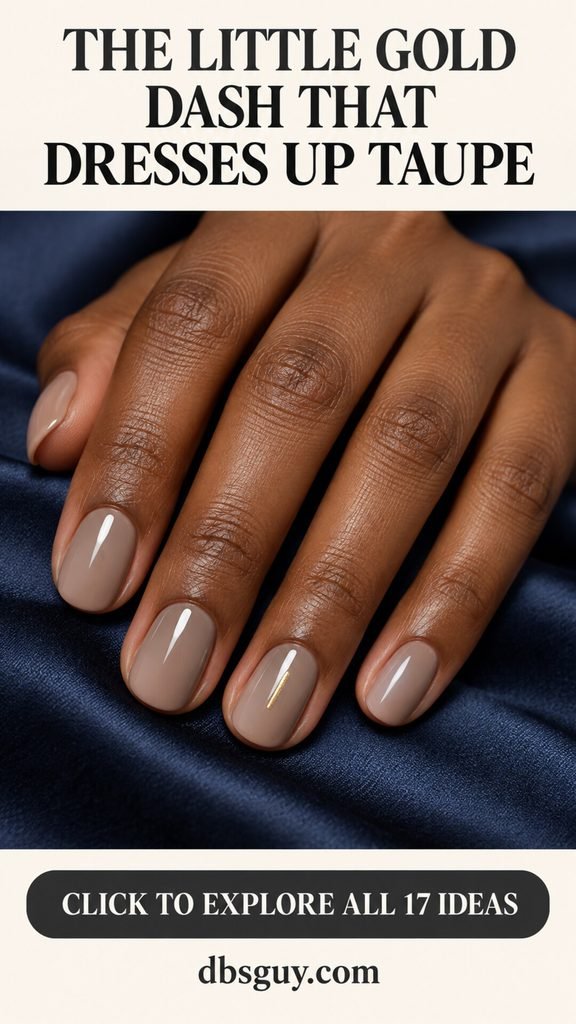
Choose a muted taupe you actually enjoy wearing, then compare it with a champagne gold rather than assuming the brightest yellow gold will look best. The dash should be short and fine, with plain polish around every side. Extending it from base to tip would make this a different, more graphic look; the small central mark is the point here.
Ask for: “Glossy warm-taupe nails with one small, fine champagne-gold vertical dash on the ring nail. Keep the other nails plain and the gold painted flat.”
For short nails: Make the dash about a small fraction of the nail length, with clear space above and below. You can move it slightly toward the tip if the center of your nail feels crowded, but keep it inside the edges.
4. Rose Beige With an Open Gold Circle
An open gold circle adds a neat little geometric detail to a rose-beige manicure. The tiny gap in the outline makes the shape feel light, and keeping it on one nail gives the rest of the set room to stay quiet. It works well when you prefer abstract art to seasonal symbols.

The circle should look intentionally open rather than like a thick ring squeezed onto the nail. Ask for a fine line and a visible gap, with the base color showing through the middle. Rose beige keeps the palette warm, while the gold gives a small reflection that can sit comfortably beside a simple bracelet or dressier earrings.
Ask for: “Glossy rose-beige nails with one small gold circle outline on the ring nail. Leave a deliberate little gap in the circle and keep the remaining nails plain.”
For short nails: Use a smaller circle with a relatively clear opening. A thick outline can fill its own center on a tiny nail. If your artist suggests an oval to suit your nail shape, that is a practical adaptation of the same idea.
5. Forest Green Gloss With One Matte Nail
A deep forest-green manicure can carry the December mood all by itself. Here, one matte nail changes the finish while the other four stay glossy. The color remains consistent, so the contrast is something you notice up close rather than another pattern competing for attention.
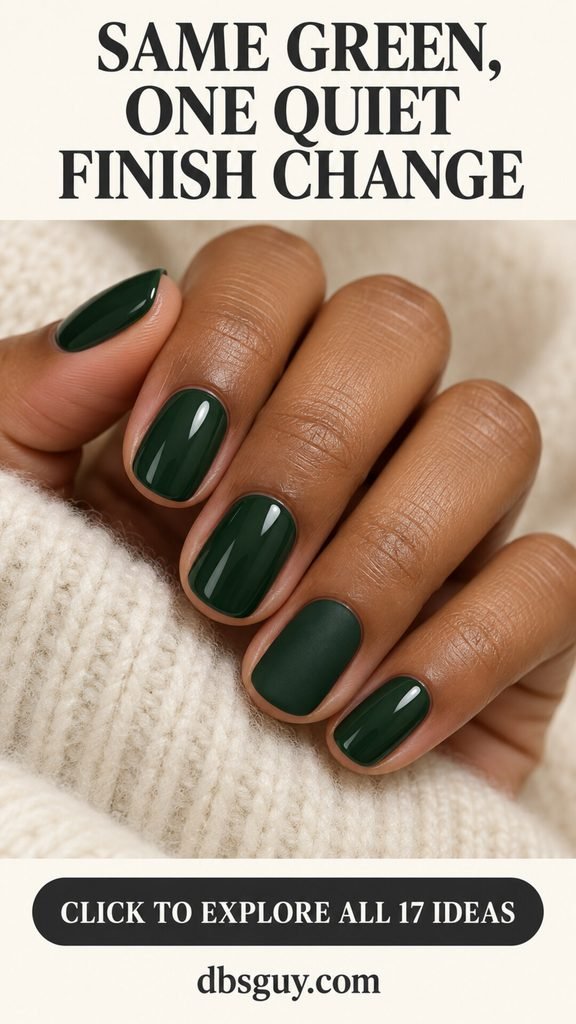
This is a good reference when you want a solid-color manicure with a small twist. Ask to see the green with both finishes before deciding: a matte top coat can change how you perceive the depth of the shade. Keeping just one nail matte makes the difference easy to follow, especially when light catches the glossy surrounding fingers.
Ask for: “Short forest-green nails, all in the same shade, with glossy finish on four nails and a matte finish on the ring nail. No artwork or embellishments.”
For short nails: Keep the shape simple and the green consistent. You do not need extra length for the finish contrast. If you would rather have a fully uniform set, choose the finish you like best and wear it on every nail.
6. Ink Navy With One Silver Star
Ink navy and a little silver star give you an evening detail in a calm color palette. The dark base makes the star easy to see, and the surrounding plain nails keep the set minimal. It feels especially fitting for a December dinner when you want a winter reference without a full snowy scene.
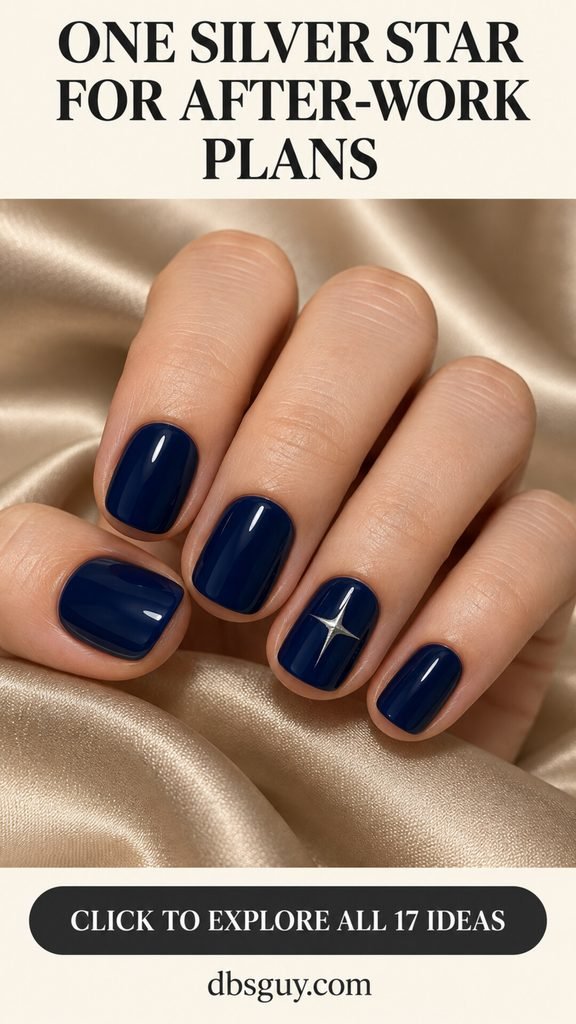
Use one simple four-point star with enough navy around it to keep the shape distinct. A broad glitter accent or several tiny stars would change the balance. Silver has a cooler appearance than gold, so try this combination beside the watch, rings, or bag hardware you normally wear if matching those details matters to you.
Ask for: “Glossy ink-navy nails with one small flat-painted silver four-point star on the ring nail. Keep the star centered and the rest of the set solid navy.”
For short nails: Ask for shorter, clearer points instead of a long spindly star. The artist can enlarge the center slightly so it remains recognizable. Leave out any extra dot accents; the single star already provides the focal point.
7. Sheer Nude With Burgundy Side Panels
A slim burgundy side panel is a different way to use a rich December shade. Most of the nail stays sheer nude, while a narrow strip follows one side from near the base toward the tip. The open area makes the darker color feel lighter on the hand.
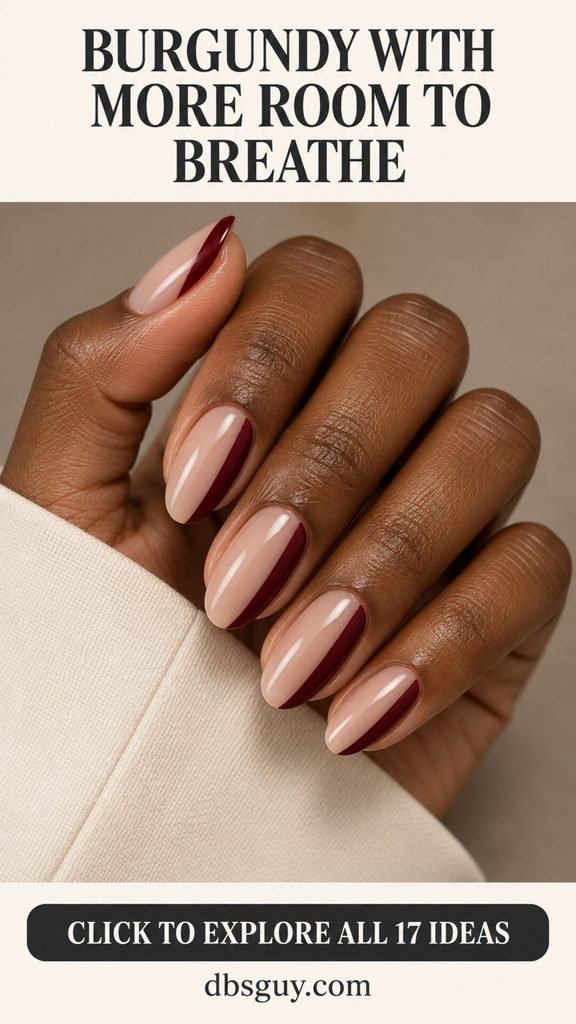
Consistency matters more than identical measurements. Each panel should occupy a similar share of its nail and follow the same side, so the set reads as one idea. This is a more precise painting request than it may first appear, because the boundary between burgundy and sheer polish is visible. A reference and a quick discussion of width will help your artist plan it.
Ask for: “Glossy sheer-nude nails with a slim burgundy side panel on each nail, leaving most of the plate sheer. Keep the panels aligned in the same direction, with clean curved boundaries.”
For short nails: Use a narrower panel and avoid adding an outline around it. If the side section overwhelms the sheer base, reduce the width or keep the panels on only two accent nails. Both versions preserve the open-space effect.
8. Dusty Lilac With Three Snow Dots
Dusty lilac brings a softer winter color into the collection, and three small white dots suggest a little snowfall. The dots sit together on one nail, while the rest of the manicure stays plain. It is a gentle option if red, green, and dark brown are not your favorite holiday shades.
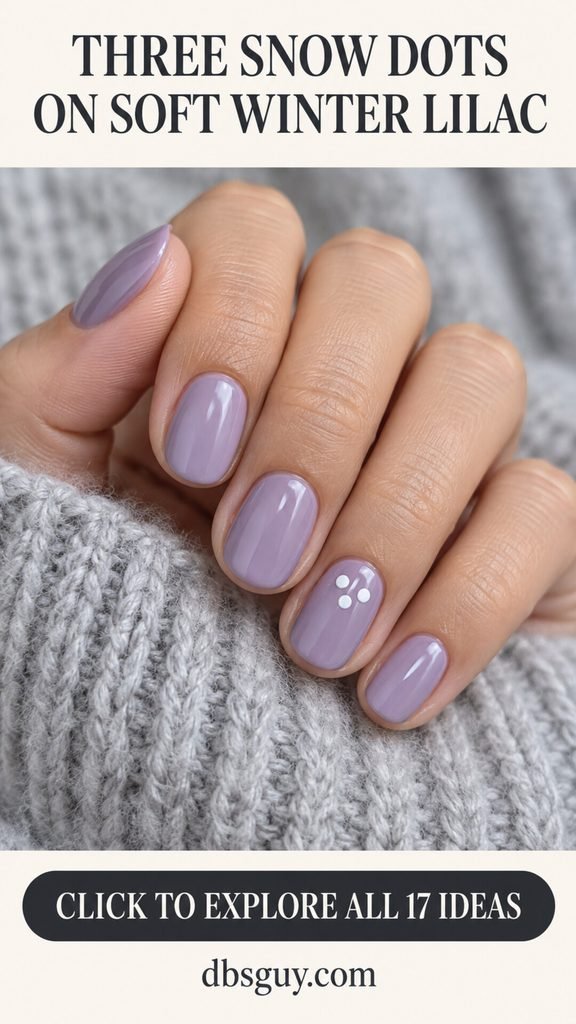
Choose a lilac with a muted gray undertone rather than a bright candy-purple look if you want the palette to stay quiet. The three dots should have enough space between them to remain separate, with a little plain lilac around the cluster. You can treat the placement as a loose triangle rather than trying to create a perfect tiny grid.
Ask for: “Glossy dusty-lilac nails with exactly three small white dots grouped loosely on the ring nail. Leave the other nails solid and skip snowflake artwork.”
For short nails: Use the upper center of the accent nail, where the cluster can sit clear of the tip and sidewalls. Keep all three dots small. If the available space is especially limited, one white dot is a simpler adaptation.
9. Warm Ivory With One Champagne Line
Warm ivory looks calm and polished, and one diagonal champagne line gives it a dressier detail. The line crosses the upper half of the ring nail, with the other fingers left plain. This is a useful choice when your December clothes already include color or texture and you want the nails to stay easy to pair.

The ivory should remain the main impression. Ask for a fine metallic line rather than a wide gold band, and keep it confined to the one accent. The diagonal placement adds a little movement to a simple shape. It can look lovely beside cream tailoring during the day or a darker satin outfit for dinner.
Ask for: “Glossy warm-ivory nails with one thin champagne-gold diagonal line across the upper half of the ring nail. No foil, French tips, or other decorations.”
For short nails: Keep the line in a place where its full sweep can be seen. A gentler diagonal may suit a wide, short nail better than a steep one. The artist can adjust the angle while keeping the small metallic accent.
10. Sheer Beige With a Tiny Evergreen Sprig
One little evergreen sprig gives sheer beige nails a seasonal detail without building a whole Christmas scene. A short green stem and a few leaf marks are enough. The remaining nails stay translucent and glossy, so the greenery becomes a small accent within a soft everyday manicure.
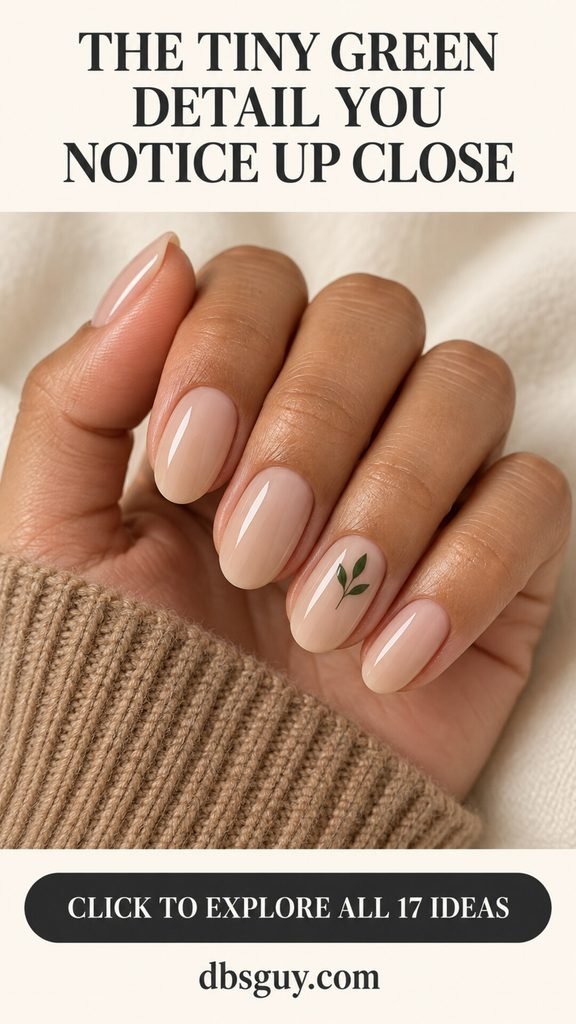
Make the sprig compact rather than long and intricate. Dark forest green gives it a clear outline against beige, while the limited number of leaves keeps the drawing easy to understand. This look pairs nicely with camel, cream, brown, or a green winter outfit. If you prefer less contrast, your artist can show you a muted olive version before painting it.
Ask for: “Glossy sheer-beige nails with one tiny flat-painted evergreen sprig on the ring nail: a short stem and three small leaf marks. Keep the other nails completely plain.”
For short nails: Place the sprig toward the upper center and remove detail before shrinking it too far. A stem with two leaves is a good adjustment. Leave out berries, bows, and extra branches so the little plant shape has room.
11. Plum Nails With Bare Half Moons
Deep plum with small sheer half moons creates a polished shape without an added motif. The color covers most of each nail, and the little curved windows sit near the base. It is a lovely option if you enjoy darker nails but want to see a little natural-looking space within the design.
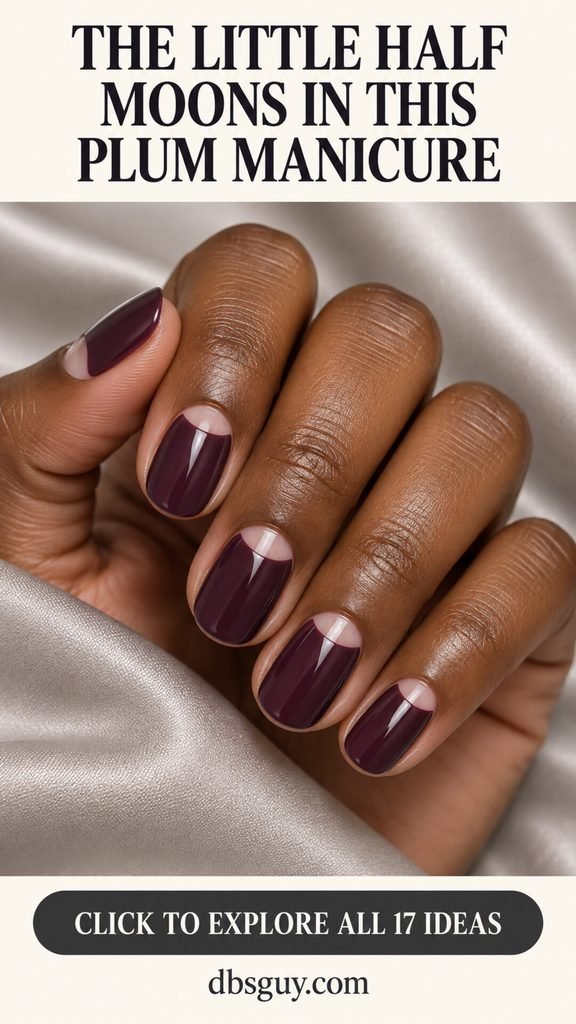
Use clear or sheer-nude polish as the background after the base-coat step, so the open windows are part of the finished manicure. Ask for a clean curved boundary and a modest half-moon size. The negative space is a visual feature; it does not promise that regrowth or chips will become invisible. Choose it because you like the shape.
Ask for: “Glossy deep-plum nails with small sheer-nude half-moon windows at the base of each nail. Keep the rest of the nail plum and the boundary smooth.”
For short nails: Keep the half moons shallow so they do not take over the nail. The curve can be sized to each finger rather than forced into one exact measurement. A small, clear window is easier to appreciate than a crowded deep semicircle.
12. Pearly Petal Pink
Pearly petal pink is the simplest look in this collection: one soft shade, one delicate finish, and no artwork. Its interest comes from the light moving across the surface. If your holiday outfit has sequins, rich velvet, or a patterned blouse, this manicure gives you an easy companion.
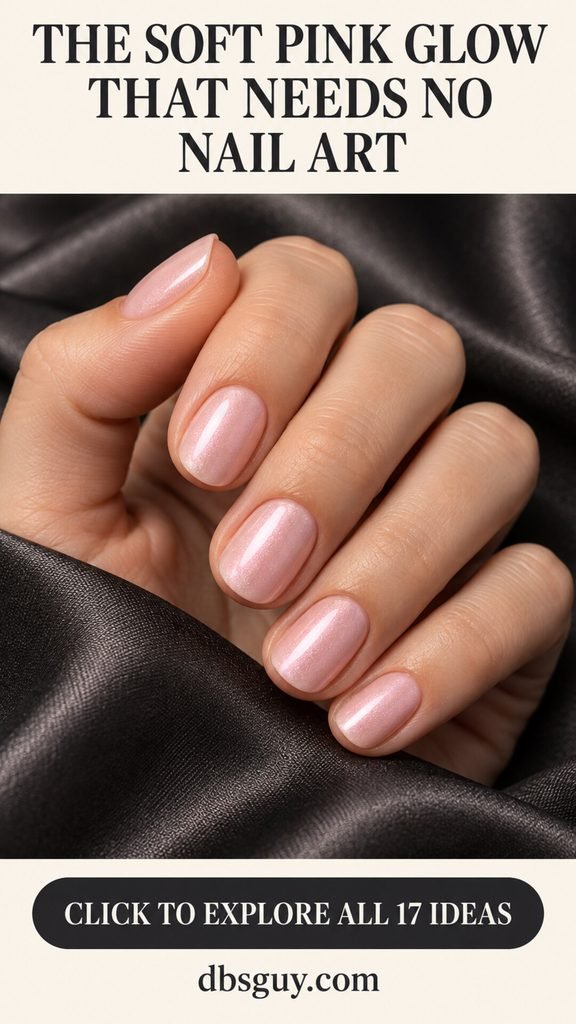
Ask for a restrained pearl sheen rather than a mirror finish or visible glitter pieces. The pink should stay soft when you look at the whole hand, with the glow appearing as you move. Check a finished swatch, because a product called “pearl” can look quite different depending on its base color and the number of layers.
Ask for: “Short petal-pink nails with a subtle pearlescent sheen and glossy finish. Keep the color consistent across every nail, with no art or chunky glitter.”
For short nails: You can keep this exactly as shown. Focus on a comfortable shape and a smooth, even color application. If the pearl effect feels stronger than you want, ask to see a sheerer version or a soft-pink cream alternative.
13. Nude Pink With One Tiny Red Heart
A little red heart adds a warm, personal detail to a nude-pink manicure. It is a sweet choice for a family dinner, a date, or a low-key holiday gathering. One centered heart gives the set a focal point while the surrounding sheer nails stay light.
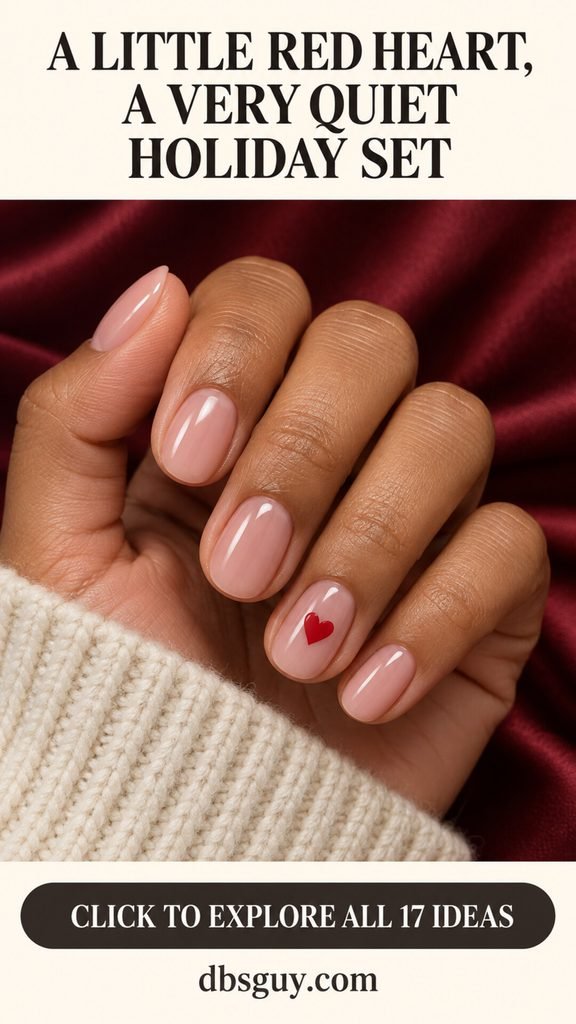
Keep the heart simple: two rounded lobes and a clear point, filled with cherry red. An outline, glitter border, or extra hearts would make the accent busier. The red ties into a December palette, but the design is not tied to one celebration, so it can fit whatever plans you have that month.
Ask for: “Glossy sheer nude-pink nails with one tiny flat-painted red heart on the ring nail. Leave all the other nails plain and use a smooth filled heart shape.”
For short nails: Choose one readable heart rather than several miniature ones. The center of the accent nail gives the shape a little space on every side. If you want an even quieter set, a deeper wine-red heart can reduce the contrast.
14. Matte Graphite With a Glossy Diagonal Accent
This graphite manicure uses reflected light as its detail. Most of the set is matte, with one diagonal glossy band across the ring nail. Because the band is the same gray as the base, you see the design when the light catches it rather than through a different polish color.
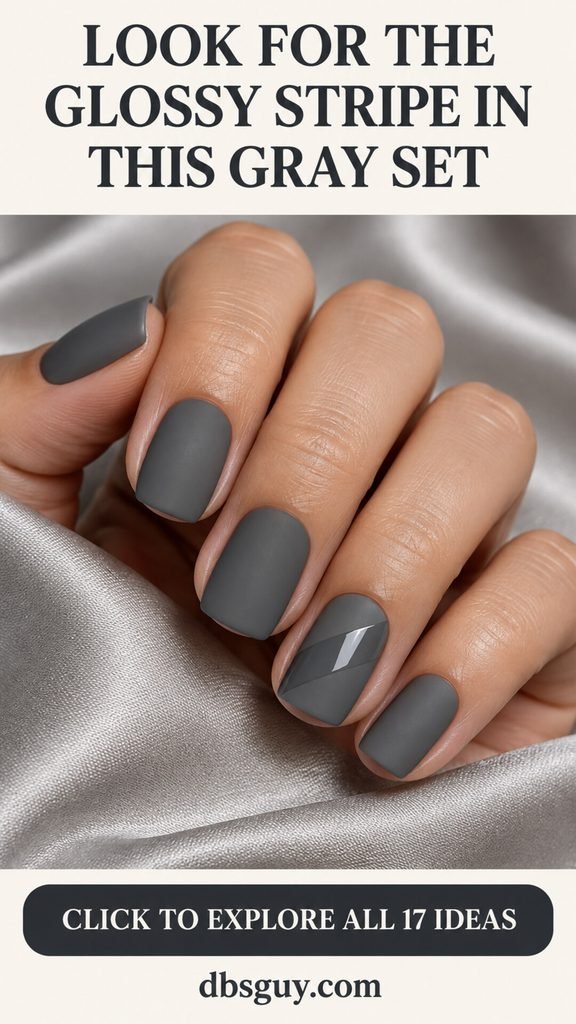
Show your artist the reference and describe the finish contrast clearly. You want gray with gray, not a painted silver stripe. The band can be broader than a fine metallic line because its contrast is quieter. It is a good option if you enjoy simple dark clothing and want a little visual interest without adding a holiday symbol.
Ask for: “Matte graphite-gray nails with one same-color glossy diagonal band on the ring nail. Keep the rest of the set matte and use finish contrast only.”
For short nails: Keep one broad, simple band with matte space on both sides. If the distinction is too subtle on your preferred shade, your artist can demonstrate a larger glossy section. A finished test tip is helpful for deciding how noticeable you want it.
15. Burgundy With a Gold Triangle Outline
A fine gold triangle gives deep burgundy a small graphic accent. The shape feels clean and deliberate, while the color combination carries the holiday mood. It is a more abstract option than a star, bow, or Christmas tree, and it can sit nicely beside a simple work outfit.
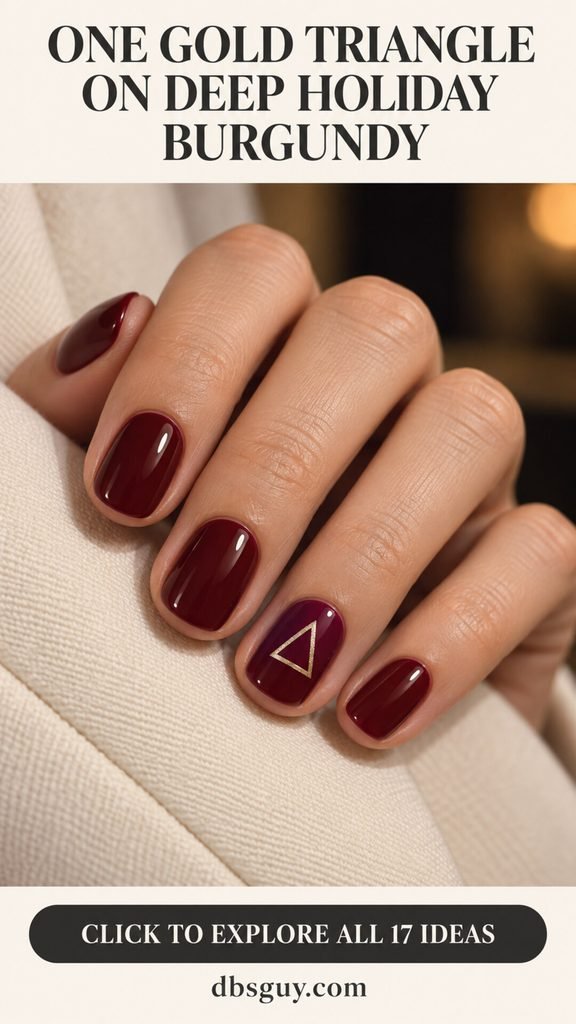
Keep the triangle open in the middle so burgundy remains visible through it. The outline should have clear corners and enough plain polish around the shape. Champagne gold gives a softer accent than a broad bright-gold block. On the surrounding nails, solid burgundy is enough; repeating triangles on every finger would create a more pronounced pattern.
Ask for: “Glossy deep-burgundy nails with one small champagne-gold triangle outline on the ring nail. Keep the inside burgundy and the other nails plain.”
For short nails: Make the triangle slightly wider rather than tall and narrow if that suits your nail plate. Leave space around all three points. If a tiny outline loses its shape, request a simpler gold dash instead of packing in more detail.
16. Navy and Taupe in Two Quiet Colors
A two-color manicure can feel minimal when the palette stays focused. Navy brings depth, taupe adds warmth, and the glossy finish connects them. There is no motif to explain or miniature art to maintain; the placement of the two colors is the design.

Use the same navy and taupe on both hands, then choose the distribution you like. The reference uses more taupe than navy, which gives the darker nails a balanced supporting role. A finished navy swatch is useful if you want the blue to remain visible, since very deep shades can look nearly black in some lighting.
Ask for: “Short glossy nails in just two colors: warm taupe on three nails and ink navy on two. No nail art, shimmer, or accent embellishments.”
For short nails: This is already a straightforward fit. Keep the length and shape consistent so the colors feel coordinated. If you prefer a quieter distribution, use navy on just one nail per hand and let taupe cover the rest.
17. Clear Blush With One Silver Base Cuff
A fine silver curve at the base of one blush nail gives this set a little jewelry-like detail. Most of the manicure remains translucent, and the metallic reflection stays small. It is a lovely finishing option if you want your nails to look soft during the day and catch a little light at dinner.
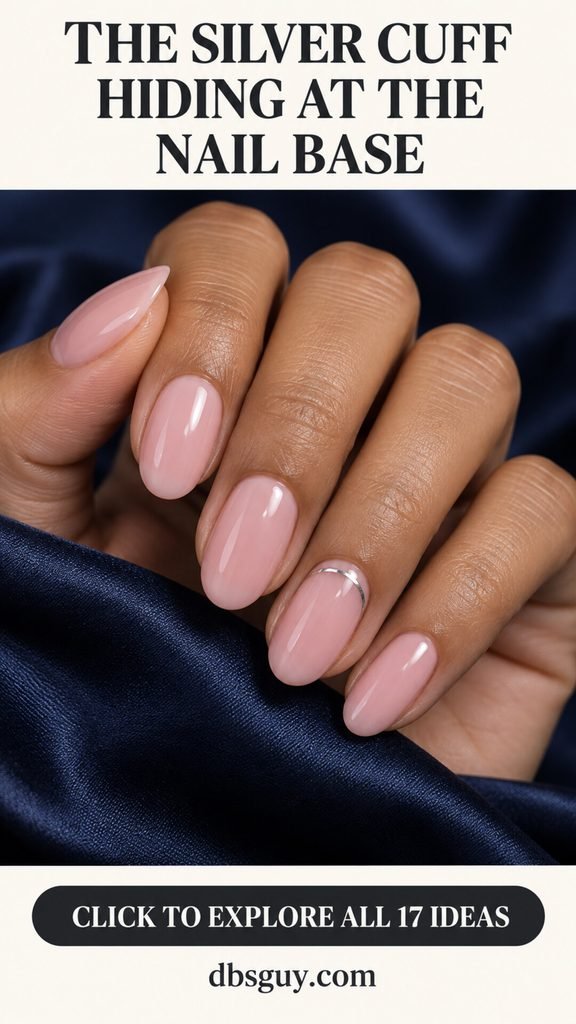
The cuff should follow the nail-base curve while leaving a visible gap from the skin. It is a painted line, not a raised metal ornament. One accent is enough for the version shown here. Keeping the tips plain helps the eye notice the curve at the opposite end of the nail.
Ask for: “Glossy sheer-blush nails with one thin flat-painted silver reverse-French cuff at the base of the ring nail. Leave space from the cuticle and keep the other nails plain.”
For short nails: Use a shallow arc and keep the line fine. A low curve will leave more blush visible above it. If you want to repeat the cuff on every nail, ask your artist to check that the added metal still feels as subtle as you want.
How to Choose One Manicure for Work and Holiday Dinner
Begin with the clothes you reach for during a normal week. If most of your wardrobe is cream, camel, and brown, rose beige, warm ivory, taupe, and a small gold detail will be easy colors to consider. If you wear navy, gray, or black, ink-blue nails and a silver accent may feel more familiar. These are starting points for choosing a palette, not rules that prevent you from wearing a color you love.
Next, decide what you want to notice first: a sheer base, a deep color, or a little reflection. Sheer rose with dots and the blush cuff keep the overall manicure light. Forest green, plum, navy, and burgundy make color the main feature. A gold dash, circle, line, or triangle gives you a little metal while leaving the rest of the set quiet.
For workdays, choose a length and shape you already find comfortable for your routine. For dinner, you can let your outfit and jewelry supply the extra detail. You do not have to repaint your nails just because you change from a cardigan into a satin blouse. A simple set can take on a different mood alongside the clothes you wear with it.
Make the accent small enough to stay part of the set
Minimal nail art is easier to plan when you choose one main idea. A tiny circle needs room around it; a star needs a plain background; a finish change needs the light to show it. Adding a second motif just because there is space can make the original detail harder to appreciate.
Essie’s minimalist nail-art guide includes sheer bases, simple dots, and small line-based designs. The looks here use that restrained approach with December colors and practical accent placement. Start with one decorated nail if you are unsure how much art you want, then decide whether repeating the detail adds anything you enjoy.
Choose gold or silver with the finished polish in view
A small metallic detail can look quite different against ivory, taupe, burgundy, or navy. Compare the colors together on a swatch or practice tip. Champagne gold is a gentle choice for the warm sets here; silver gives the navy and blush looks a cooler reflection. You can match your usual jewelry if you like, but the most useful test is whether you like the combination on the nail.
Check a finish in more than one light
Matte, glossy, and pearly versions of the same color can feel different. Ask to see the finished swatch in daylight and indoor light if possible. The graphite band is deliberately subtle, and a pearl pink may glow more clearly as the hand moves. If the effect is too faint or too reflective for your taste, changing the finish is a sensible adjustment.
Essie’s Nail Art Studio information describes pearl-based effects that can be layered to change their intensity. That is a useful reminder to assess the actual finished result rather than choosing only from a bottle name or an edited inspiration image.
Small Adjustments That Help Minimal Nail Art Look Intentional
Keep a visible margin. Dots, circles, hearts, and stars are easier to read when they sit inside the nail plate with plain polish around them. At the base, leave a little gap from the skin so the cuff or dot has a clear boundary.
Scale the design from your smallest nail. A red corner that looks narrow on a wide thumb can look much larger on a pinky. Ask your artist to keep the proportions similar rather than forcing every finger to carry an identical-sized shape.
Repeat the direction, not every tiny measurement. Side panels and diagonal corners look coordinated when their placement follows a consistent plan. Slight changes in width can suit different nail shapes while keeping the set visually connected.
Choose line thickness deliberately. A gold dash can be a little more substantial than a circle outline because its shape is simpler. For the corner French, a fine brush gives your artist more control over the small boundary. Essie’s holiday French guide also identifies fine brushes as useful tools for crisp tip lines.
Use plain nails to balance a detail. The graphite band, evergreen sprig, and silver star each work as a single accent. If the art becomes more elaborate during the appointment, keeping the other nails solid is a simple way to preserve the overall restraint.
An Approachable DIY Set: Sheer Rose With Burgundy Dots
The dot design is a sensible place to start if you enjoy doing your own nails. You need a compatible base coat and top coat, sheer rose polish, burgundy polish, and a small dotting tool. Put a little burgundy on a palette and practice the dot size before working on your nail.
1. Shape and prepare. Choose your usual comfortable nail length, remove old polish, and follow your polish system’s preparation directions. Apply its base coat as directed.
2. Paint the sheer background. Build the rose color in thin layers rather than one heavy coat. OPI’s regular-polish application guide recommends thin, even layers, allowing color coats to dry between applications, and applying top coat once the polish is dry. Keep the background as sheer as you want; the goal here is a soft base for the dots.
3. Test, then place one dot. Touch the dotting tool to your practice surface first to check how much polish it carries. Place one small burgundy dot near the base of each nail, leaving a visible gap from the skin. Manucurist’s beginner nail-art guide includes single-dot placement near the base as a simple design approach.
4. Let the detail dry and finish. Use your top coat according to its instructions after the art is dry. If the first dot is larger than you intended, practice with less polish before continuing. Keeping one clear dot on each nail is more useful than trying to hide a mistake beneath several extra dots.
This sequence is for air-drying regular polish. If you choose gel products, use their specific application and lamp instructions. The appearance of a simple design does not make every polish system interchangeable.
What to Tell Your Nail Artist
Send one reference and describe the part you want to keep. A message such as “I like the silver cuff, but I want it on short rounded nails and only on the ring finger” gives your artist a clearer starting point than a folder of unrelated manicures.
Include your preferred length, shape, finish, and service type. For the matte-and-gloss graphite look, ask whether the artist can show you the finish contrast on a test tip. For the side panels or open circle, discuss how fine the boundary should be. Small artwork can require careful painting, so check the art time and price before the appointment.
These images are AI-generated inspiration. Your nail artist can adapt the proportions and finish to your nail plate and the products they use. The “Ask for” notes give you a written design brief, while the short-nail adjustments help identify which details can be simplified.
Minimalist December Nails: Frequently Asked Questions
Can dark nails still look minimalist?
Yes. Minimalism can come from the number of colors, the amount of art, or the consistency of the finish. Plain forest green, navy with one star, and plum with small half moons all use deeper shades without a busy pattern. Choose a dark color you enjoy and keep the main design idea clear.
Which look is a good choice for very short nails?
The burgundy dots, two-color navy-and-taupe set, and pearly pink are straightforward starting points. They do not rely on long tips or several miniature shapes. A short nail can also carry one gold dash or a small red heart if your artist sizes the accent to the available space.
Are micro French tips the same as corner French tips?
A micro French usually uses a very narrow line across the free edge. The corner French shown here places color at one side of the tip, leaving the rest open. Both can feel subtle, but the placement is different. Show your artist the reference so the word “French” does not lead to a wider traditional tip than you wanted.
How much sparkle can I add and keep the manicure simple?
Start with one small metallic detail or a soft pearl finish. If you add a silver cuff, you can leave the tips and other nails plain. If you choose pearly pink, you may find that the moving light is enough. Judge the whole hand, since several small additions can create a busier set together.
Do these designs need gel polish or extensions?
Many can be painted with regular polish on natural nails, including dots, simple lines, solid colors, and small motifs. Gel is another service option, with its own product and lamp requirements. Extensions change the length and canvas, but they are not required for the basic design ideas in this collection.
What should I choose if my workplace limits nail polish?
Use the workplace policy as your starting point. If polish is permitted within specific limits, choose a length, color, and amount of art that fit them. You can reserve a more decorative manicure for time off. No inspiration image can determine what is appropriate for every role or workplace.
Will a negative-space design hide regrowth?
A sheer area can make the base look more open, but it does not guarantee invisible regrowth or a longer-lasting manicure. Color placement, your polish system, and wear all affect the appearance. Choose the plum half moons or burgundy side panels because you like the design, then follow the care advice for your actual service.
How do I keep a tiny line or dot from smearing?
With regular polish, let the background and artwork dry before applying the finishing layer, and follow the products’ instructions. Avoid repeatedly brushing over the tiny detail. For gel art, use the curing sequence required by that system rather than treating it like air-drying lacquer.
Keep the Detail You Love, Leave Room Around It
A minimalist December manicure can be a burgundy dot, a deep green finish, a little silver curve, or a quiet pink glow. Pick the detail you would enjoy seeing at your desk as well as across the dinner table. Then choose the length and amount of art that fit your routine. A clear, simple brief gives your nail artist room to make that idea work on your own nails.
Editorial note: Images are AI-generated manicure inspiration. The styling ideas and salon requests are original; application guidance is informed by the linked manufacturer resources. Colors, proportions, and finishes will vary with the nail size, products, lighting, and artist.