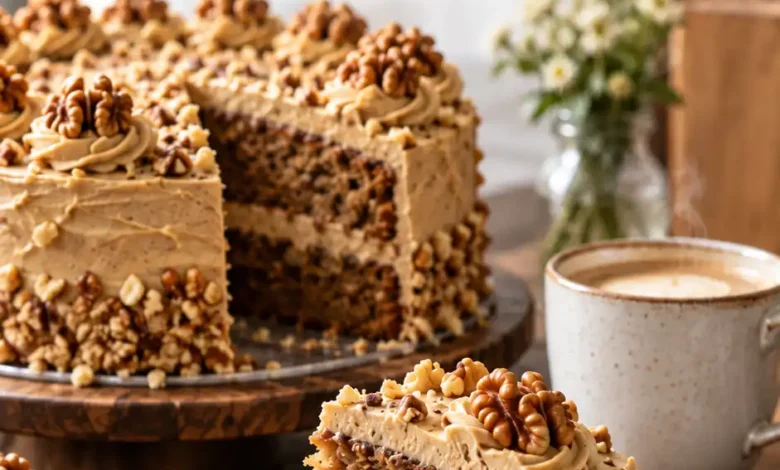
This coffee and walnut cake recipe fills your home with the aroma of a freshly baked treat. This moist, nutty delight delivers rich flavor and often leaves guests asking for seconds. Whether you host a festive celebration or enjoy a quiet afternoon, this dessert offers a truly crowd-pleasing finish.

Our guide helps home bakers master a classic coffee and walnut cake recipe with confidence. It explains each step, from preparation through the final decorative touches. You will also learn how to store your creation and keep it fresh for days. Prepare to impress your friends with this simple, polished masterpiece.
Key Takeaways
- Discover the secrets to achieving a perfectly moist crumb.
- Learn simple techniques for professional-looking frosting.
- Master the balance of bold flavors in every bite.
- Follow easy steps designed for home kitchen success.
- Get expert advice on storing your dessert to maintain freshness.
What Makes This Coffee and Walnut Cake a Perfect Dessert
If you have wondered how to make coffee and walnut cake that stands out, you are in the right place. This classic dessert remains popular because it combines sophisticated flavor with comforting, rustic charm.

The balance of rich coffee flavor and toasted walnuts
The secret to this dessert lies in the delicate interplay between its ingredients. Coffee offers deep, aromatic bitterness that balances the sponge’s sweetness, while toasted walnuts provide essential crunch.
“The best desserts are those that surprise the palate with a perfect harmony of earthy notes and bold, roasted undertones.”
Toast the walnuts before adding them to the batter; this step is essential. It intensifies their natural nuttiness and creates a clear contrast with the cake’s soft, airy crumb.
What creates a moist, tender coffee and walnut sponge cake
Achieving the ideal texture requires careful attention during mixing. A moist, tender sponge results from creaming the butter and sugar until the mixture becomes pale and light.
- Use room temperature ingredients to ensure a smooth emulsion.
- Fold in dry ingredients gently to maintain the air bubbles created during creaming.
- Dissolve your coffee granules in a minimal amount of hot water for a concentrated flavor without excess liquid.
How this homemade cake suits celebrations and everyday desserts
A homemade coffee and walnut cake is incredibly versatile. Its elegant profile suits birthday parties and afternoon tea gatherings, yet it remains simple enough for a quiet weekend treat.
Whether served as a centerpiece at a special event or enjoyed with your morning brew, this recipe delivers consistent results. It is truly a reliable staple for any home baker’s collection.
Ingredients for the Coffee and Walnut Cake Recipe
Gathering the right ingredients begins the process of mastering this classic dessert. Whether you are a novice or seasoned baker, fresh, high-quality components support a successful coffee and walnut cake recipe. Measure and prepare each ingredient carefully for a moist, flavorful result.
Ingredients for the coffee and walnut sponge
The foundation of any easy coffee and walnut cake recipe depends on quality dry and wet ingredients. Assemble everything before you begin mixing the batter.
Choosing unsalted butter, granulated sugar, and all-purpose flour
Unsalted butter gives you complete control over the salt in your coffee and walnut sponge cake recipe. Soften it to room temperature for proper aeration during creaming. Combine it with quality granulated sugar and all-purpose flour for a tender, stable crumb that holds its shape.

Fresh walnuts provide the dessert’s signature crunch and earthy depth. Toast them lightly to release their natural oils and strengthen their nutty aroma. Choose quality instant coffee powder or granules, then dissolve them in hot water for even flavor throughout the sponge.
Ingredients for the coffee buttercream
The frosting needs different ingredients for a silky, spreadable consistency. You will need:
- Unsalted butter: Must be very soft for a smooth, lump-free texture.
- Confectioners’ sugar: Sifted to remove any stubborn clumps.
- Strong coffee extract: Made by dissolving instant coffee in a teaspoon of boiling water.
- A splash of milk or heavy cream: Used only if you need to adjust the thickness of the frosting.
Optional ingredients for decorating and finishing
For a professional finish, consider adding a few decorative touches. Place whole walnut halves on top of the frosting swirls. Press finely chopped walnuts into the cake’s sides for added texture. A light cocoa dusting or coffee syrup drizzle can elevate the presentation for special occasions.
Essential Equipment and Preparation Before Baking
Preparing your kitchen is the first step toward successful baking. When learning how to make coffee and walnut cake, careful preparation makes the process smoother and more enjoyable.

Preparing the cake pans and oven
Preheat your oven to the temperature specified in your recipe. This creates steady heat, helping the sponges rise evenly. Grease the cake pans with butter or non-stick spray, then line their bottoms with parchment paper.
Bringing refrigerated ingredients to room temperature
Butter and eggs emulsify best when they reach room temperature. Remove them from the refrigerator at least thirty minutes before mixing. This step helps create a smooth, stable batter that holds air during baking.
Grinding, measuring, and lightly toasting the walnuts
Walnuts add welcome crunch and depth to this dessert. Toast them lightly in a dry pan for a few minutes to release their oils and strengthen their nutty aroma. After they cool, chop or grind them to your preferred texture before measuring them into the batter.
Organizing the ingredients for efficient cake preparation
Gathering every supply before starting is a hallmark of skilled baking. This practice, often called mise en place, keeps your workspace tidy and prevents missed ingredients. Use the following guide to prepare everything for your baking session.
| Preparation Task | Why It Matters | Best Practice |
|---|---|---|
| Oven Preheating | Ensures even rise | Start 20 minutes early |
| Pan Lining | Prevents sticking | Use parchment paper |
| Ingredient Temp | Better emulsion | Room temperature |
| Nut Toasting | Boosts flavor | Light golden brown |
How to Prepare the Coffee and Walnut Cake Batter
Your coffee and walnut cake recipe begins with careful batter preparation. The right consistency is essential for a sponge that feels light and tastes flavorful. Follow a precise sequence so every ingredient blends evenly.

Creaming the butter and sugar until light and fluffy
Beat the softened butter and sugar together in a large mixing bowl. Continue until the mixture turns pale and develops a fluffy, airy texture. This process adds air to the fat, helping the cake rise during baking.
Adding the eggs without curdling the mixture
When learning how to make coffee and walnut cake, remember that temperature matters. Use room-temperature eggs to prevent the batter from splitting. Add them one at a time, beating well after each addition to preserve a smooth, stable emulsion.
Folding in the flour, baking powder, and walnuts
Once the wet ingredients combine, add the dry components. Sift the flour and baking powder into the bowl, then add the toasted, chopped walnuts. Use a large metal spoon or spatula to gently fold everything in without losing the air you created.
Mixing in dissolved coffee for an even flavor
To create the signature taste, dissolve the instant coffee granules in a small amount of hot water. Let the liquid cool slightly before folding it into the batter. This method spreads the coffee flavor evenly throughout the sponge.
Checking the batter’s texture before it goes into the pans
Before transferring the mixture to your prepared pans, perform a quick visual check. The batter should look smooth and thick, then drop easily from your spoon. If it seems too stiff, add a tiny splash of milk to reach the ideal consistency.
| Mixing Stage | Goal | Key Tip |
|---|---|---|
| Creaming | Aeration | Use room temp butter |
| Egg Addition | Emulsification | Add slowly to avoid curdling |
| Folding | Structure | Be gentle to keep it light |
| Coffee Integration | Flavor | Dissolve fully before adding |
Baking the Coffee and Walnut Sponge Cake
Once the batter is ready, it transforms from liquid mixture into a light, airy sponge in the oven. The right techniques define the best coffee and walnut cake recipe, producing consistent, professional layers.
Dividing the batter evenly between the cake pans
For uniform layers, weigh each cake pan on a kitchen scale before and after adding the batter. This step prevents uneven thickness and supports a balanced final presentation.

Setting the correct oven temperature and baking time
Preheat your oven for at least 20 minutes before baking to create a stable environment. A steady temperature prevents the cake from rising too quickly or collapsing when heat fluctuates.
Testing the cakes for doneness with a toothpick
Insert a wooden toothpick into the sponge’s center to test its readiness. If it emerges clean or with a few moist crumbs, your coffee and walnut sponge cake recipe is perfectly baked.
Cooling the sponges without drying them out
Leave the cakes in their pans for about ten minutes before moving them to a wire rack. This short cooling period sets the structure and prevents the delicate sponge from breaking.
Common baking problems and how to prevent them
Even experienced bakers face challenges, but careful attention makes most problems avoidable. Recognizing common pitfalls helps preserve the quality of your bake.
Why a cake may sink in the center
A sunken center often comes from opening the oven too soon or using ingredients below room temperature. Avoid checking the oven until the minimum baking time passes, keeping the heat steady.
How to avoid dry edges and an underbaked middle
Dry edges usually result from excessive heat or baking the pans too long. Set the pans on a lower rack, and consider cake strips so edges bake as quickly as the center.
What to do when the cake layers rise unevenly
Uneven rising often results from an improperly leveled oven rack or batter spread unevenly in the pan. Use an offset spatula to spread batter toward the edges, leaving a slight dip in the center.
Making the Coffee Buttercream Frosting
A truly delicious coffee and walnut cake recipe relies on a silky, well-balanced buttercream frosting. This frosting links the nutty sponge with the final decoration, keeping every bite harmonious.
Dissolving the coffee for a smooth frosting
To prevent grit, never add dry instant coffee granules directly to butter. Instead, dissolve the coffee in a small amount of hot water, creating a concentrated espresso shot. This liquid base spreads flavor evenly through the fat, producing a perfectly smooth finish.

Beating the butter until pale and creamy
Beat softened butter on high speed for several minutes. It should change from a yellow block into a pale, aerated, and fluffy cloud. This aeration creates a light mouthfeel and keeps the frosting from feeling heavy or greasy.
Adding confectioners’ sugar gradually
When the butter is light, add confectioners’ sugar one cup at a time. Sifting the sugar first is a pro tip that removes lumps and ensures velvety consistency. Whip thoroughly after each addition to preserve its airy structure.
Adjusting the frosting’s coffee strength and consistency
Taste the frosting as you work to ensure the coffee intensity matches your preference. If it feels too stiff, add a tiny splash of milk or more coffee concentrate for a spreadable consistency. Careful balance gives your delicious coffee and walnut cake recipe rich, professional-grade flavor in every slice.
Assembling and Filling the Cake Layers
Assembly brings your coffee and walnut sponge cake recipe to life. Careful layering helps each slice look beautiful and taste delicious.

Leveling the cooled sponge layers
Before starting, make sure the sponges feel completely cool. Use a serrated bread knife to trim the domed tops, creating a perfectly flat surface for stacking. This step supports the cake and helps prevent leaning.
Positioning the first cake layer on a serving plate
Place a small buttercream dollop in the center of your serving plate as an anchor. Set the first sponge layer on top, then press lightly. This foundation keeps the cake from sliding while you add the filling.
Spreading an even layer of coffee buttercream
Use an offset spatula to spread a generous, even layer of frosting over the base sponge. Keep the thickness consistent, so every bite of this coffee and walnut sponge cake recipe balances its flavors. Consistency is the secret to a professional finish.
Adding chopped walnuts between the layers
Sprinkle toasted, chopped walnuts over the buttercream layer. They add a pleasant crunch against the soft, tender sponge. Leave a narrow border around the edge to keep the nuts neatly inside.
Stacking the second layer securely
Place the second sponge layer on top, carefully aligning its edges with the base. Press down gently so the layers adhere to the buttercream filling. A secure stack completes your homemade masterpiece before you frost the exterior.
Frosting and Decorating the Finished Cake
The final stage of a delicious coffee and walnut cake recipe involves frosting and decoration. This artistic step brings your kitchen work to life, transforming simple sponge layers into a striking table centerpiece.

Applying a smooth crumb coat
Before applying the final frosting layer, begin with a crumb coat. This thin buttercream layer acts as a sealant, trapping loose crumbs against the sponge. That keeps crumbs from spoiling the final finish.
Spread a very light frosting layer over the cake’s top and sides. The surface should look cleaner and ready for the final application.
Chilling the cake before the final frosting layer
After applying the crumb coat, refrigerate the cake for 20 to 30 minutes. This chilling step is crucial because it firms the butter in the frosting, creating a stable base for the next layer.
“Baking is a story told through layers, and the final decoration is the punctuation that makes the message clear.”
Creating a polished finish with a spatula or cake scraper
Once the crumb coat is firm, apply the remaining buttercream. Use a long offset spatula or metal cake scraper to smooth the top and sides in one fluid motion.
Hold your tool at a slight angle to the cake surface for the best results. If the frosting is not perfectly smooth, dip your scraper in warm water and wipe it dry before making another pass.
Decorating with walnut halves, crumbs, and coffee buttercream swirls
To complete your delicious coffee and walnut cake recipe, add a personal decorative touch. Pipe elegant buttercream swirls on top, then nestle toasted walnut halves into each swirl for a classic look.
Press finely crushed walnut pieces around the cake’s base for added texture. This combination of smooth frosting and crunchy nuts creates a professional, high-end finish.
| Decoration Method | Visual Impact | Difficulty Level |
|---|---|---|
| Buttercream Swirls | Elegant and Classic | Easy |
| Toasted Walnut Halves | Rustic and Bold | Beginner |
| Crushed Walnut Border | Textured and Polished | Intermediate |
Flavor and Texture Tips for the Best Coffee and Walnut Cake Recipe
Mastering your bake can turn a standard treat into the best coffee and walnut cake recipe you have ever tasted. Professional results at home require attention to details that shape your dessert’s flavor and texture. Refined technique helps each slice of your coffee and walnut cake recipe deliver a balanced, satisfying experience.

How to achieve a stronger but balanced coffee flavor
Use high-quality instant espresso powder instead of standard granules to intensify the coffee flavor. Dissolve it in a very small amount of hot water, creating a concentrated liquid before adding it to the batter. This approach spreads the flavor evenly without adding excess liquid that could weaken the cake’s structure.
Keeping the walnuts crisp without making the cake dry
Walnuts add welcome crunch, but they may soften when mixed directly into the batter. Always toast your walnuts lightly in a dry pan for a few minutes, until they become fragrant. This process preserves their natural oils and keeps them crisp after baking.
Using gentle mixing to preserve a light sponge texture
Overmixing is the main threat to a tender sponge. After adding the flour, use a large metal spoon or silicone spatula to fold the ingredients gently. Stop when the final streak of flour disappears, or the cake may become dense or rubbery.
Improving moisture with careful baking and storage
The best coffee and walnut cake recipe depends on precise timing to preserve its soft crumb. Remove the cakes from the oven as soon as a toothpick comes out clean, preventing overbaking. After cooling, store the cake in an airtight container at room temperature to keep it moist for several days.
| Goal | Technique | Result |
|---|---|---|
| Stronger Flavor | Use Espresso Powder | Deep Coffee Notes |
| Crispy Walnuts | Lightly Toast First | Better Texture |
| Light Sponge | Gentle Folding | Tender Crumb |
| Maximum Moisture | Airtight Storage | Longer Freshness |
Easy Variations for a Homemade Coffee and Walnut Cake
You can tailor your homemade coffee and walnut cake for any occasion or preference. Adjust a few elements while preserving its signature walnut crunch and bold coffee flavor.

Making a simple single-layer coffee and walnut cake
For a casual treat, bake the batter in one square or round pan. This streamlined approach shortens baking time and creates an ideal afternoon snack with hot tea.
Preparing a layer cake with espresso buttercream
For a stronger caffeine kick, replace standard coffee with a concentrated espresso shot in the frosting. The result is a sophisticated flavor profile suited to dinner parties and special celebrations.
Adding chocolate chips or cocoa for a mocha variation
Chocolate lovers can adapt this easy coffee and walnut cake recipe with dark chocolate chips. Alternatively, add one tablespoon of high-quality cocoa powder to the dry ingredients. Coffee and chocolate create a rich mocha flavor that balances the walnuts’ earthy character.
Using a coffee glaze instead of buttercream
For a lighter finish, drizzle the cooled sponge with a glaze made from powdered sugar and strong brewed coffee. This delicate sweetness avoids the heaviness of traditional buttercream.
Adapting the recipe for cupcakes or mini cakes
Divide the batter among muffin tins to create individual portions. These mini cakes are ideal for gatherings, baking faster while offering a convenient, mess-free dessert.
Making practical ingredient substitutions
Flexibility matters when pantry staples run low. The original recipe is balanced, but careful adjustments can preserve the batter’s chemistry.
Replacing all-purpose flour with a gluten-free baking blend
Replace standard flour with a high-quality gluten-free blend. Ensure it contains xanthan gum to maintain the necessary structure and moisture of the sponge.
Using pecans when walnuts are unavailable
If walnuts are unavailable, pecans make an excellent substitute. Their buttery texture and crunch complement the coffee flavor beautifully.
Adjusting sweetness without changing the cake’s structure
You can reduce the sugar slightly, but remember that it supplies moisture and tenderness. To lower the sugar, add a little more liquid or yogurt, keeping the result perfectly moist.
Serving Suggestions for This Classic Coffee and Walnut Cake Recipe
Once your homemade coffee and walnut cake is ready, create a memorable serving experience. Thoughtful presentation can elevate the flavors and textures you worked hard to achieve.

Choosing the best serving temperature
For the best experience, serve your cake at room temperature. This lets the butter in the frosting soften, creating a luxurious, melt-in-your-mouth sensation.
If refrigerated, remove the cake about thirty minutes before serving. This keeps the sponge tender and makes the buttercream perfectly spreadable.
Pairing the cake with coffee, tea, or milk
This classic coffee and walnut cake recipe pairs beautifully with several beverages. A hot cup of black coffee highlights the sponge’s deep espresso notes.
Alternatively, delicate Earl Grey tea offers a refreshing contrast to the rich, nutty flavors. For a comforting treat, choose cold milk to balance the frosting’s sweetness.
Adding whipped cream, ice cream, or fresh fruit
Customize your dessert with a few simple sides. A dollop of lightly sweetened whipped cream adds a velvety texture that complements the walnuts’ crunch.
For a more indulgent dessert, serve each slice with vanilla bean ice cream. For a lighter option, add raspberries or blackberries for a bright, acidic note that cuts through the richness.
Cutting neat slices for parties and afternoon gatherings
Clean, professional-looking slices are easier than you might think. Dip a sharp knife in hot water, wipe it dry, and cut through the layers without dragging the frosting.
This method gives every guest a beautiful, uniform piece of your homemade coffee and walnut cake. Whether hosting a large party or small afternoon tea, these presentation tips will impress your guests.
| Pairing Type | Recommended Item | Flavor Profile |
|---|---|---|
| Hot Beverage | Dark Roast Coffee | Bold and Robust |
| Cold Beverage | Whole Milk | Creamy and Mild |
| Topping | Fresh Raspberries | Tart and Bright |
| Dessert Side | Vanilla Ice Cream | Sweet and Smooth |
Storing, Freezing, and Preparing the Cake Ahead
Planning ahead helps your delicious coffee and walnut cake recipe stay fresh for any occasion. Proper storage preserves the homemade dessert’s texture and rich flavor.

Storing frosted cake at room temperature
If you will serve the cake within 24 hours, keeping it at room temperature is fine. Place it in a cake dome or an airtight container to prevent drying. Keep the cake in a cool, shaded spot away from sunlight and heat sources.
Refrigerating the cake without losing its moisture
For longer storage, refrigerate the cake. Cover it tightly with plastic wrap or place it in a sealed container to preserve moisture. Remember to return the cake to room temperature about an hour before serving, so the buttercream becomes soft and creamy.
Freezing sponge layers and buttercream separately
Freezing works well when you want to prepare components in advance. Bake the sponges, cool them completely, and wrap them in several plastic-wrap layers. Store the buttercream separately in an airtight container to preserve its smooth, whipped consistency.
- Wrap sponge layers individually to prevent freezer burn.
- Label containers with the date to track freshness.
- Keep buttercream in a freezer-safe bag or tub.
Thawing and serving the cake after freezing
When ready to assemble, move the frozen sponges to the refrigerator overnight. Let the buttercream thaw slowly at room temperature until it becomes spreadable. Avoid using a microwave to thaw the cake, because it can melt the butter and damage the texture.
How long leftovers remain fresh and flavorful
Properly stored leftovers remain delicious for several days. Follow these general guidelines to protect their quality:
| Storage Method | Duration | Best For |
|---|---|---|
| Room Temperature | 2-3 Days | Immediate serving |
| Refrigerator | 5-7 Days | Extended freshness |
| Freezer | Up to 3 Months | Long-term planning |
These simple steps let you enjoy your delicious coffee and walnut cake recipe whenever cravings strike. Preparation makes hosting easier and keeps each slice as fresh as the day it was baked.
Troubleshooting Common Coffee and Walnut Cake Problems
Even experienced bakers face problems when making the best coffee and walnut cake recipe. Baking is precise, so small changes in temperature or mixing can affect the final cake. Most problems, however, respond to a few simple adjustments.

Fixing a dense or heavy sponge
A dense sponge often develops when you overmix the batter after adding flour. Always fold your dry ingredients gently to preserve the air bubbles. Use fresh baking powder, and bring the butter to room temperature before starting.
Correcting weak coffee flavor
If the cake lacks its signature punch, the coffee may be too weak. Try using high-quality instant espresso powder dissolved in very little hot water. This creates a potent flavor profile without excess liquid that could damage batter consistency.
Repairing crumbly or uneven cake layers
Crumbly layers usually result from slicing the cake while it is still warm. Cool the sponges completely on a wire rack before leveling or frosting them. If a layer breaks, use buttercream as “glue” to piece it together before applying the final coat.
Managing runny, grainy, or overly sweet frosting
Runny frosting often results from butter that is too soft or warm. A grainy mixture may mean the sugar has not fully blended into the fat. Gradually add your confectioners’ sugar and beat on high speed until the texture is smooth and stable.
Preventing walnuts from sinking or becoming bitter
Walnuts may sink when they are too heavy or oily. Coat chopped nuts with a teaspoon of flour before folding them into the batter. To avoid a bitter taste, always toast your walnuts lightly in a dry pan to release their natural oils and enhance their crunch.
| Common Issue | Primary Cause | Quick Solution |
|---|---|---|
| Dense Sponge | Over-mixing batter | Fold ingredients gently |
| Weak Coffee Taste | Diluted coffee | Use concentrated espresso |
| Runny Frosting | Warm butter | Chill for 10 minutes |
| Sinking Walnuts | Lack of flour coating | Dust nuts with flour |
These tips can help every attempt at the best coffee and walnut cake recipe produce a delicious, professional-quality dessert. Keep these solutions nearby as you troubleshoot and build your baking success.
Conclusion
Creating a perfect dessert demands precision and patience. This coffee and walnut cake recipe helps you develop the skills to make a moist, nutty sponge that impresses every guest. Accurate measurements and gentle mixing preserve the cake’s light, airy crumb each time.
Rich coffee buttercream balances the toasted walnuts, creating a sophisticated flavor profile. This classic coffee and walnut cake recipe suits birthday celebrations, afternoon tea, or quiet moments at home. Proper storage keeps the dessert fresh and flavorful for days after baking.
You now know how to troubleshoot common issues and customize your layers with ease. Experiment with different coffee strengths or decorative finishes to make this treat your own. Your kitchen is ready to produce a bakery-quality dessert that brings joy to any table.
FAQ
What is the secret to making the best coffee and walnut cake recipe at home?
A truly exceptional homemade coffee and walnut cake starts with high-quality ingredients and properly prepared nuts. Use high-quality instant coffee, such as Nescafe Taster’s Choice, for rich flavor. Lightly toast walnuts before adding them to the coffee and walnut sponge cake recipe; this creates crisp texture and balances sweet buttercream.
How can I ensure my coffee and walnut cake recipe stays moist and tender?
Start with room-temperature Land O’Lakes unsalted butter and large eggs for a moist, tender cake. Cream butter and sugar thoroughly until pale and aerated. When adding King Arthur all-purpose flour, fold it gently by hand or use a low mixer setting. This prevents overworked gluten and creates the soft crumb expected from a delicious coffee and walnut cake recipe.
Is this an easy coffee and walnut cake recipe for beginner bakers?
Yes. This classic coffee and walnut cake recipe keeps the process simple. Organize equipment first by lining your Wilton cake pans with parchment paper and preheating your oven. Then follow the straightforward mixing sequence to create a polished, bakery-quality dessert without advanced professional skills.
How do I make coffee and walnut cake with a stronger coffee punch?
If you prefer a stronger caffeine kick, increase the coffee concentration in the batter. Dissolve two tablespoons of espresso powder in a very small amount of boiling water. This infuses the coffee and walnut sponge cake recipe with bold flavor without excess liquid disrupting the delicate sponge balance.
What is the best way to store a homemade coffee and walnut cake to keep it fresh?
To keep your delicious coffee and walnut cake recipe fresh, store the frosted cake in an airtight container. Use a Tupperware cake carrier at room temperature for up to three days. If your kitchen is particularly warm, refrigerate it, then bring slices to room temperature before serving. This lets the coffee buttercream soften and the flavors shine.
Why do the walnuts sometimes sink to the bottom of the cake pans?
Walnuts often sink when they are too large or the batter is thin from over-mixing. For this classic coffee and walnut cake recipe, chop nuts into smaller, uniform pieces. Toss them in a light dusting of flour before folding them into the batter. This helps nuts “grip” the sponge as it rises, distributing crunch evenly through every bite of homemade coffee and walnut cake.
Can I adapt this into a gluten-free coffee and walnut sponge cake recipe?
Absolutely. You can adapt this into a gluten-free best coffee and walnut cake recipe. Substitute the flour with a high-quality 1:1 baking blend, such as Bob’s Red Mill Gluten Free 1-to-1 Baking Flour. Walnuts’ nutty texture and bold coffee flavor complement gluten-free alternatives, preserving the cake’s rich, indulgent character.