Wellness Became Another Job—25 “Anti-Optimization” Habits People Are Using To Feel Human Again


Somewhere between “go for a walk” and “check your recovery score before deciding whether your nervous system has permission to go for a walk,” wellness got a management dashboard.
Sleep has a score.
Movement has rings.
Food has macros.
Stress has charts.
Recovery has a color.
Hydration has reminders.
Meditation has streaks.
Your wrist can congratulate you, warn you, vibrate at you and occasionally reveal that the perfectly pleasant day you thought you were having was, statistically speaking, disappointing.
None of this technology is inherently absurd.
Some of it is genuinely useful.
Wearable activity trackers can help people increase physical activity. An umbrella review covering dozens of systematic reviews found activity trackers were associated with meaningful increases in movement across many populations. Continuous glucose monitors are important clinical tools for many people with diabetes. Sleep trackers can reveal patterns people had never noticed. Food logging can support specific goals when it is appropriate and not distressing.
The problem begins when the tool quietly becomes the boss.
You wake feeling fine, check a sleep score, and suddenly feel tired.
You take a beautiful 40-minute walk and feel irritated because it did not close a ring.
You enjoy dinner, then decide the meal was “bad” because an app colored something red.
You planned to rest, but a watch tells you your recovery is excellent, so apparently the body has been overruled by a tiny glowing rectangle strapped to it.
This growing pushback has been described as anti-optimization: not an argument against health, medicine or technology, but a rejection of the idea that every healthy behavior has to be measured, improved, gamified and turned into another performance metric. Wellness trend researchers have described a wider backlash against hyper-optimization, while recent mainstream coverage has documented brands and consumers emphasizing presence, pleasure and simpler routines over constant biometric surveillance. Global Wellness Summit; Vogue.
Sleep offers one of the clearest examples of why this conversation exists.
In a U.S. survey of 1,280 adults, 32.4% reported digitally tracking sleep. Among the people who tracked it, 30.9% screened positive on the researchers’ adapted measure for risk of “orthosomnia”—worry or anxiety related to sleep-tracker data. The study authors explicitly called for more research, and the project disclosed gift support from Oura Ring Ltd. That does not mean trackers cause sleep anxiety. It means a meaningful share of users reported worrying about the numbers enough for researchers to take the phenomenon seriously. SLEEP.
Accuracy is not absolute, either. A meta-analysis comparing consumer wrist devices with polysomnography—the laboratory gold standard—found significant differences in several sleep measures and concluded that consumer trackers can be useful for general patterns but should be interpreted with caution. Another systematic review found that wearable sleep metrics often had poor-to-moderate agreement with how people themselves rated their sleep quality. Sleep-tracker meta-analysis; Wearable vs. subjective sleep review.
The same tension appears elsewhere in wellness.
Yale researchers reviewing continuous glucose monitoring found useful evidence for people with type 2 diabetes, but said there were currently no evidence-based recommendations supporting routine CGM use for otherwise healthy people without diabetes. They also warned that constant glucose data can create overload and anxiety. Their phrase is worth stealing for the rest of wellness culture:
“They’re a tool, not a taskmaster.” Yale School of Medicine.
Important medical boundary: Anti-optimization is not “stop monitoring your health.” If a clinician has asked you to monitor glucose, blood pressure, heart rhythm, oxygen, weight, sleep or another health marker, do not stop or change that plan because an internet trend told you to be more intuitive. Medical monitoring and recreational self-quantification are not the same thing. The habits below are about reducing unnecessary performance pressure around wellness—not replacing professional care.
With that distinction firmly in place, here are 25 ways people are making health feel less like an unpaid analytics position.
1. Sleep First. Check The Score Later—Or Not At All.
The strangest thing about sleep tracking is that the number can arrive before your own opinion.
You wake up.
Your eyes open.
You stretch.
Before asking, How do I feel?, you ask the ring.
That reverses the order of information.
Consumer trackers estimate sleep from sensors and algorithms. They do not directly experience whether you feel restored, foggy, calm or exhausted. Research comparing wearables with both polysomnography and validated subjective sleep measures shows useful pattern tracking, but imperfect agreement.
A simple anti-optimization experiment is to delay the score.
Before opening any sleep app, notice:
Did I wake naturally?
Am I sleepy?
Do I feel mentally clear?
Am I irritable?
Did I wake repeatedly?
Then, if the data is useful to you, look.
Your lived experience does not have to wait for algorithmic approval.
The habit: do a 30-second subjective check-in before viewing sleep data.
Why it helps: it keeps the score as one input rather than the verdict.
Medical exception: follow clinician-directed sleep monitoring as instructed.

2. Take A Few Nights Off From Sleep Tracking
If knowing your score improves your habits, great.
If knowing your score makes bedtime feel like an exam, the device may be changing the thing it was supposed to observe.
Researchers use the term orthosomnia for a pattern in which the pursuit of “perfect” sleep data becomes counterproductive or anxiety-provoking. The concept began in clinical case reports and has since become part of broader research on consumer sleep technology.
You do not need to dramatically throw the wearable into a lake.
Try two or three untracked nights.
Notice whether bedtime feels different when there is nothing to achieve.
If the answer is “I miss useful information,” put it back on.
If the answer is “I feel relieved,” that is information too.
The habit: experiment with tracker-free nights when tracking is optional.
Why it helps: it reveals whether the device is supporting sleep or adding performance pressure.
Do not: stop medically indicated monitoring without discussing it with your clinician.

3. Let The Walk Count Even If The Watch Did Not
The 10,000-step target is one of wellness culture’s most successful round numbers.
It is also not a magical biological threshold.
A large systematic review and dose-response meta-analysis found meaningful health associations at lower step counts too, with around 7,000 daily steps associated with clinically meaningful improvements across several outcomes for many adults. The precise useful amount varies with age, baseline activity and health context. Step-count meta-analysis.
The CDC’s public-health guidance is even simpler:
Some activity is better than none.
That matters because a metric can turn a good behavior into a failed target.
A 6,800-step day is not a defective 10,000-step day.
It is a day in which you walked 6,800 steps.
The habit: treat steps as information, not a pass/fail grade.
Why it helps: it preserves the value of partial progress.
Evidence-based baseline: public-health guidance emphasizes moving more and sitting less—not hitting one universal round number.

4. Choose Exercise You Actually Like
Optimization culture loves the “best” workout.
The best calorie burn.
The best heart-rate zone.
The best protocol.
The best return per minute.
But a theoretically efficient workout you hate and abandon is competing with an imperfect activity you happily repeat.
Research on exercise maintenance consistently identifies enjoyment, intrinsic motivation and social support as important contributors to sticking with physical activity. A qualitative synthesis of dozens of studies found that people who maintained activity often described enjoyment and integration into daily life as central. Physical-activity maintenance review.
Dance.
Walk hills.
Lift weights.
Swim.
Play tennis badly.
Garden aggressively.
The cardiovascular system does not require your workout to look impressive online.
The habit: optimize first for repeatability, then for sophistication.
Why it helps: enjoyment supports adherence.
Health baseline: use public-health activity guidelines or clinician advice as the frame, then choose enjoyable ways to meet it.

5. Stop Grading Every Workout
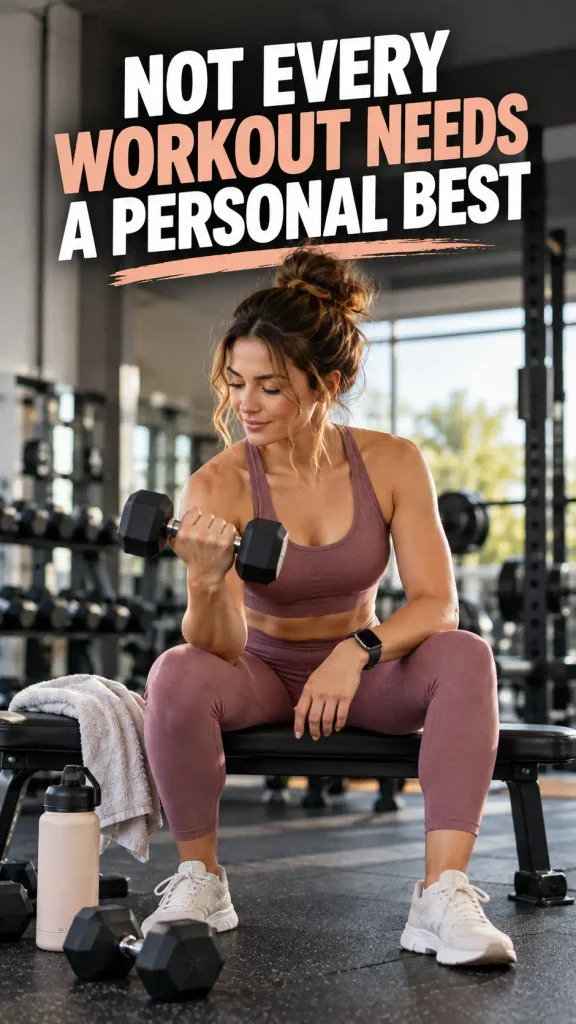
Not every session needs a personal record.
Not every run needs to be faster.
Not every ride needs more watts.
Not every strength session needs heavier weight.
Training is built from variation.
Some days are hard.
Some days are easy.
Some days exist mainly to maintain the habit.
Fitness platforms can turn exercise into a permanent comparison against yesterday’s version of you. That can motivate some people. For others, the constant grading squeezes out the satisfaction of simply having trained.
Try naming the purpose before the workout:
Hard day.
Technique day.
Easy day.
Social day.
Move-because-I’ve-been-sitting-all-day day.
Once the purpose changes, “not beating your score” stops meaning failure.
The habit: define the session’s purpose before seeing its metrics.
Why it helps: maintenance and easy work stop masquerading as bad performance.
For structured athletes: use your training plan or coach—not social-media pressure—to define progression.
6. Rest Without Making Yourself Earn It
Wellness culture can turn rest into a reward for sufficient productivity.
You trained hard enough, so you may rest.
You closed your rings, so you may sit down.
You worked long enough, so you may recover.
But recovery is not a prize at the end of health.
It is part of health.
This does not mean ignoring movement guidelines or using “listening to my body” as a permanent euphemism for never moving.
It means recognizing that fatigue, illness, soreness, stress and life demands are real inputs too.
A rest day can be planned because recovery is useful—not because a wearable has finally granted clemency.
The habit: schedule recovery like part of the plan, not evidence of failure.
Why it helps: it removes moral language from ordinary rest.
See a clinician: if unusual or persistent fatigue is unexplained, severe or accompanied by other concerning symptoms.

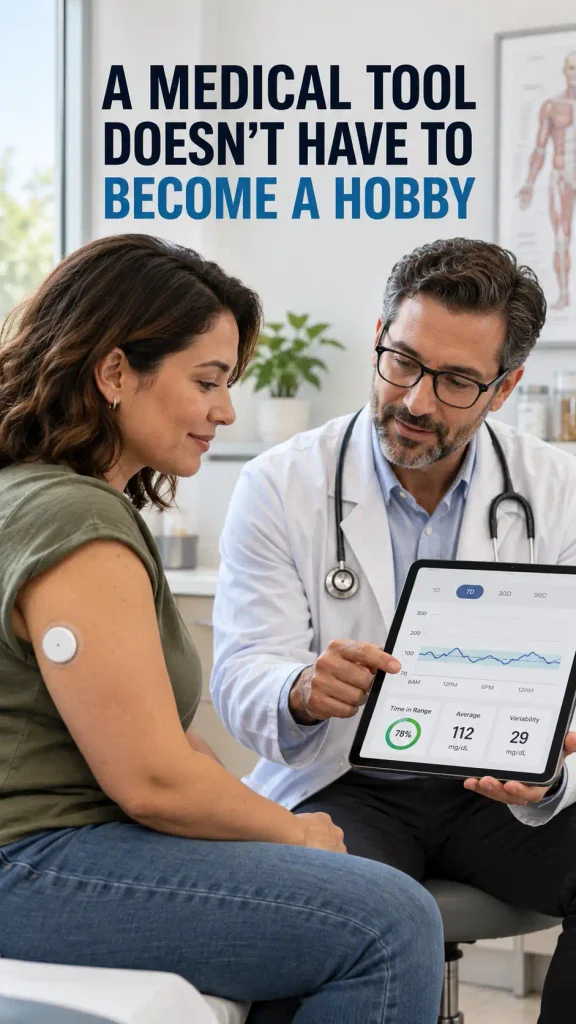
7. Keep CGMs Medical When The Evidence Is Medical
Continuous glucose monitors are excellent examples of a useful medical technology wandering into lifestyle optimization.
For people with diabetes, CGMs can provide important information for treatment and glucose management.
For otherwise healthy people without diabetes, the picture is different.
A Yale-led evidence review found no evidence-based recommendation supporting routine CGM use in people without diabetes. Researchers also cautioned that data overload can lead users to obsess over flattening normal glucose fluctuations without knowing whether those fluctuations are clinically meaningful.
This is not an argument against CGMs.
It is an argument for matching the tool to the evidence.
If you have diabetes, prediabetes or another medical reason to monitor glucose, follow clinical advice.
If the goal is simply to collect another graph, ask what decision the graph is supposed to improve.
The habit: use medical-grade tracking when there is a medical question to answer.
Why it helps: it prevents normal physiology from becoming a constant optimization project.
Important: never stop prescribed glucose monitoring or medication based on this article.
8. Track One Goal Instead Of Your Entire Body
The modern wellness dashboard can become a cockpit.
Sleep.
Steps.
Calories.
Protein.
Water.
Heart-rate variability.
Resting heart rate.
Weight.
Body fat.
Readiness.
Stress.
Temperature.
Recovery.
If every number is important, your attention becomes the scarce resource.
Choose the metric connected to the behavior you are actively changing.
If you are trying to walk more, track walking.
If your clinician asked you to monitor blood pressure, track blood pressure.
If sleep is fine, perhaps it does not need a quarterly performance review.
Measurement is most useful when it changes a decision.
The habit: ask, “What action will this number change?”
Why it helps: it separates useful feedback from ambient surveillance.
Rule: if a metric never changes a decision, consider hiding it.
9. Eat A Meal Without Turning It Into A Data Entry Task
Food logging can be useful.
It can also become astonishingly labor-intensive.
Weigh.
Scan.
Search.
Adjust serving size.
Discover the restaurant’s database entry has eight versions of the same sandwich.
Research on diet and fitness apps is nuanced. A systematic review found associations between app use and disordered-eating symptoms, body-image concerns and compulsive exercise, particularly among frequent users and young adults—but the authors emphasized that most evidence was cross-sectional, so it cannot establish that tracking caused those outcomes. Another meta-analysis of weight-related self-monitoring did not find a significant overall association with global eating-disorder scores in general adult populations, suggesting individual risk factors matter. Diet/fitness app review; Self-monitoring meta-analysis.
That is exactly why one-size-fits-all advice is unhelpful.
For some people, tracking is clarifying.
For others, it turns lunch into accounting.
The habit: if food tracking is optional, experiment with untracked meals and notice whether eating becomes easier or more stressful.
Why it helps: it tests whether the tool is serving your goal.
Important: people with eating-disorder histories or medical nutrition needs should follow guidance from qualified clinicians.

10. Stop Treating Protein Like A Competitive Sport
Protein matters.
It is essential.
It also became one of the easiest numbers to turn into a lifestyle personality.
A protein target can be useful for specific goals and populations.
It does not follow that every snack, coffee, cereal, dessert and bottle of water needs to become a protein-delivery system.
Nutrition needs differ with body size, age, activity, pregnancy, illness and training goals. The more individualized the question becomes, the less useful influencer arithmetic becomes.
An anti-optimization approach asks a simpler question:
Am I eating an overall diet that meets my needs?
If the answer requires precision because of sport or medical context, get precise.
If not, food can occasionally remain food.
The habit: use specific nutrient targets when they have a clear purpose.
Why it helps: one nutrient stops crowding out overall diet quality and enjoyment.
For individualized needs: consult a qualified dietitian or clinician rather than copying another person’s macro target.

11. Simplify The Supplement Stack
A countertop covered in capsules looks scientific.
That does not mean the stack is evidence-based.
The NIH Office of Dietary Supplements warns that supplements can have strong biological effects, can interact with medicines and are more likely to cause problems when taken in high doses or in large combinations. Some supplement-medication interactions can be clinically significant. NIH Office of Dietary Supplements.
The U.S. Preventive Services Task Force has also concluded that evidence is insufficient to determine the balance of benefits and harms for many vitamin/mineral supplements used by generally healthy adults specifically to prevent cardiovascular disease or cancer, while recommending against beta carotene or vitamin E for that preventive purpose. USPSTF.
Supplements can absolutely be appropriate.
Deficiencies exist.
Pregnancy-related recommendations exist.
Medical conditions create specific needs.
The anti-optimization move is not “supplements are bad.”
It is “know why each one is there.”
The habit: review every supplement by purpose, dose, evidence and interaction risk.
Why it helps: the stack becomes intentional instead of cumulative.
Especially important: tell your clinician/pharmacist what supplements you use if you take medication or have surgery planned.

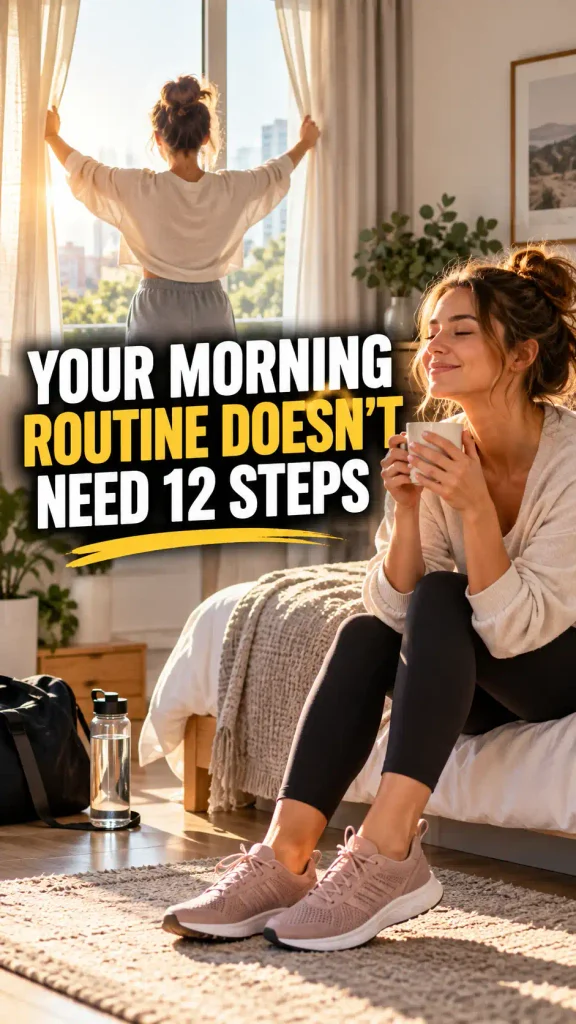
12. Make The Morning Routine Short Enough To Survive A Morning
A wellness morning can now require the project management skills of a small airport.
Wake.
Hydrate.
Journal.
Meditate.
Get sunlight.
Stretch.
Take supplements.
Do breathwork.
Cold shower.
Walk.
Eat a perfectly composed breakfast.
Do not look at a screen.
Apparently arrive at work at some point.
Most useful routines survive because they are repeatable.
Choose the few actions that noticeably improve your morning.
Everything else can remain an option rather than a moral obligation.
The habit: pick a two- or three-step morning anchor.
Example: wake, daylight, breakfast—or wake, coffee, short walk.
Why it helps: a routine becomes support rather than another source of failure.
13. Get Morning Light Without Timing It Like A Lab Protocol
Daylight is useful.
The CDC recommends getting enough natural light, especially earlier in the day, as part of healthy sleep habits.
You do not necessarily need to stand outside staring at a timer while wondering whether the cloud cover has invalidated minute eight.
Take the coffee outside.
Walk the dog.
Walk yourself.
Open the blinds and step outdoors when practical.
Health advice becomes fragile when normal life needs laboratory precision to count.
The habit: build daylight into something you already do.
Why it helps: evidence-based behavior becomes easier to repeat.
Common-sense boundary: protect your skin/eyes appropriately and do not stare directly at the sun.

14. Drink Water Without Turning Your Bottle Into A Boss
Hydration matters.
But the internet has a talent for converting flexible biological needs into one universal giant-bottle target.
Fluid needs vary with body size, climate, exercise, pregnancy, diet and health conditions.
Some people benefit from reminders because they genuinely forget to drink.
Others end up treating a hydration number like another streak they can fail.
The less theatrical version is boring:
Drink regularly.
Drink more when heat and exercise demand it.
Pay attention to thirst and context.
Follow medical advice if a condition changes your fluid needs.
The habit: use reminders only if they solve an actual problem.
Why it helps: hydration remains care, not competition.
Medical note: some kidney, heart and endocrine conditions require specific fluid guidance—follow your clinician’s plan.

15. Meditate Without Protecting A Streak
A streak is a clever behavior-design tool.
It can also create a strange situation in which missing one meditation session becomes more emotionally significant than the meditation itself.
Gamification is common in health apps because rewards, goals and feedback can encourage engagement. Research reviews also note that gamified systems often rely heavily on external reinforcement.
If the streak motivates you, keep it.
If you find yourself opening a mindfulness app at 11:58 p.m. solely to preserve a number, the number may have become the practice.
Meditate because you want to meditate.
Skip a day.
Return the next day without needing to begin your identity from zero.
The habit: hide the streak if it creates guilt rather than consistency.
Why it helps: missed days become pauses, not failure events.
Keep gamification: if it genuinely helps you engage without adding pressure.

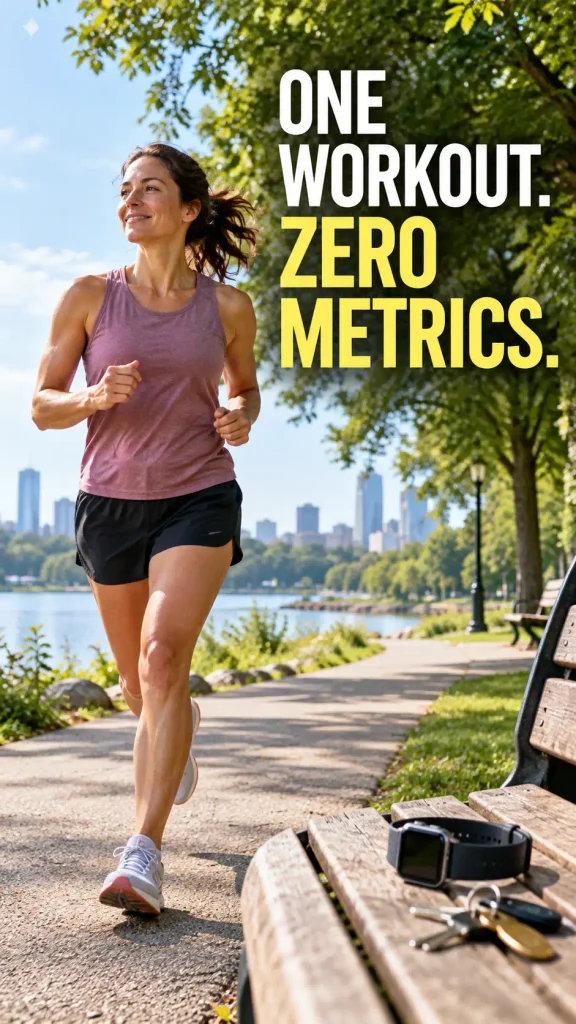
16. Have A Workout With No Watch
This is not an argument for throwing away a useful training device.
It is an experiment.
Take one familiar workout and remove the live feedback.
No pace screen.
No heart-rate zone.
No calories.
No recovery estimate.
Notice what happens.
Do you start too fast?
Do you become anxious without data?
Do you slow down and enjoy yourself?
Do you realize you have forgotten how effort feels without a number attached?
A tracker can teach body awareness.
Occasional untracked sessions can test whether you retained any of it.
The habit: do an optional familiar session without live metrics.
Why it helps: perceived effort gets a turn at the microphone.
Exception: keep prescribed monitoring and safety-critical devices on.
17. Replace A Performance Workout With A Social One
Health apps measure speed extremely well.
They are less good at measuring:
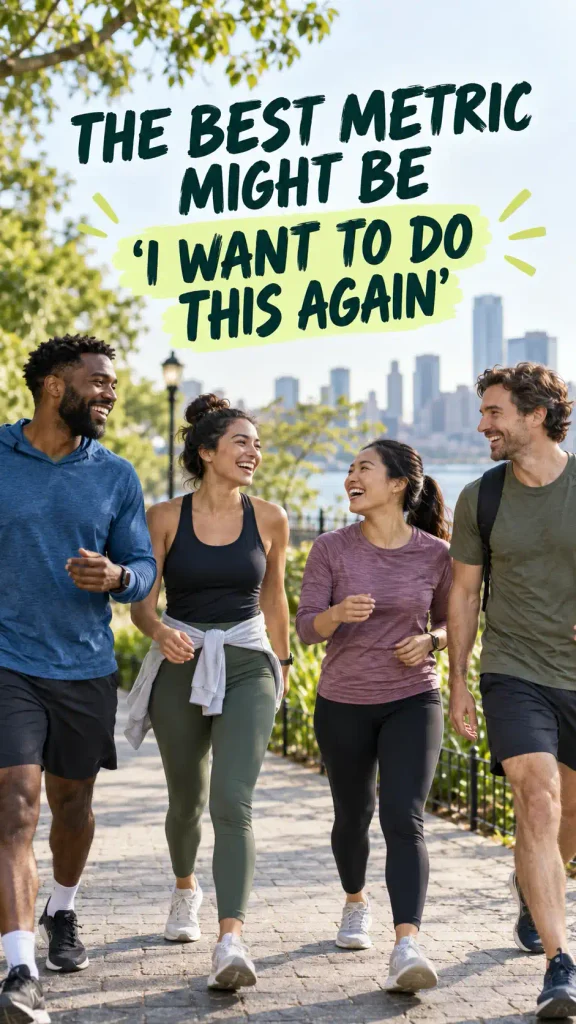
I laughed for forty minutes.
I finally saw my friend.
I moved without thinking about exercise.
I want to do this again next week.
CDC guidance recognizes social support—including buddies and activity groups—as a useful strategy for starting and maintaining physical activity. Research on long-term activity maintenance also repeatedly identifies social factors and enjoyment. CDC social-support guidance.
Swap one solo optimization session for a walk with a friend, dance class, casual game, hiking group or recreational sport.
You may collect fewer metrics.
You may collect more reasons to come back.
The habit: choose one movement session for connection rather than performance.
Why it helps: social support can strengthen activity habits.
Bonus metric: whether you are looking forward to doing it again.
18. Give Yourself A Wearable-Free Day
Most people do not need to choose between “track everything forever” and “smash the smartwatch with a hammer.”
There is a middle ground.
Sunday without it.
Vacation afternoons without it.
Date night without it.
The day after a race without it.
A wearable-free day can reveal which features are useful and which ones have become ambient obligation.
If you miss the safety features, schedule reminders or activity prompts, that is useful feedback.
If what you miss most is the green ring, that is useful feedback too.
The habit: deliberately choose short periods without optional wearables.
Why it helps: absence makes dependency and usefulness easier to distinguish.
Do not: remove medically required monitoring without clinician guidance.

19. Ask For The Trend, Not The Daily Verdict
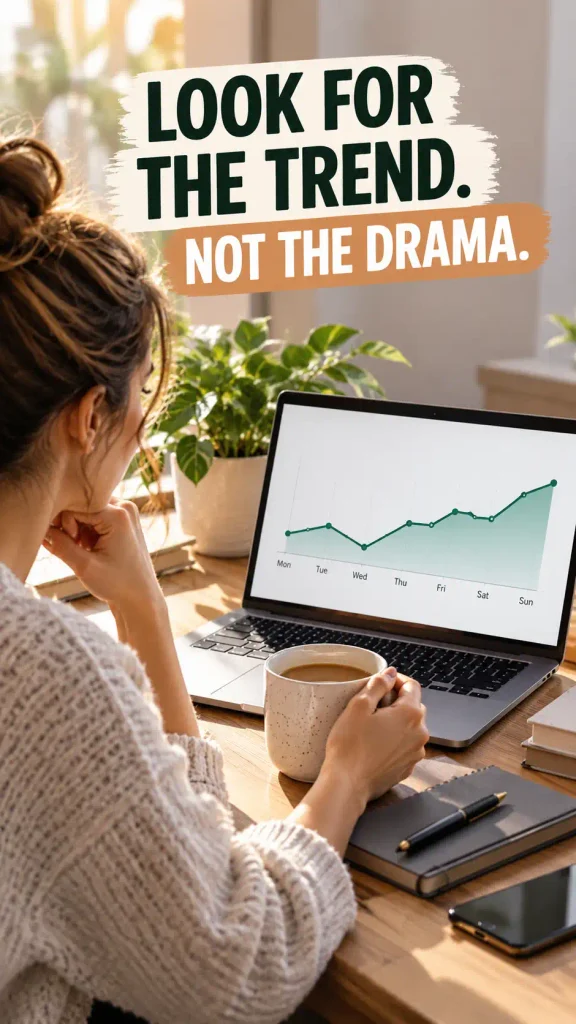
Health data is often more meaningful across time than in one dramatic morning.
One bad night.
One high resting heart rate.
One lower recovery score.
One missed target.
Humans vary.
Measurement varies.
Life varies.
If a metric is genuinely useful, consider reviewing weekly or monthly patterns instead of allowing every fluctuation to alter your mood.
This is particularly sensible for noisy consumer estimates.
Pattern recognition is a strength of tracking.
Turning one estimate into a personality diagnosis is not.
The habit: review trends at a cadence appropriate to the metric instead of reacting to every fluctuation.
Why it helps: noise becomes less emotionally powerful.
Exception: follow immediate-action thresholds provided by your clinician for medical measurements.
20. Let Subjective Experience Sit Beside Objective Data
Objective data sounds more serious because it contains numbers.
Subjective experience sounds suspicious because it contains you.
But wellbeing includes things sensors cannot fully capture.
Did the workout energize you?
Did you enjoy the meal?
Did you feel rested?
Did your stress improve after the walk?
Did the routine make life easier?
A systematic review comparing consumer sleep trackers with validated subjective sleep measures found limited concordance, highlighting that device metrics do not fully capture how people experience sleep.
Neither source of information should automatically erase the other.
Numbers can catch patterns you miss.
Experience can catch meaning the sensor cannot see.
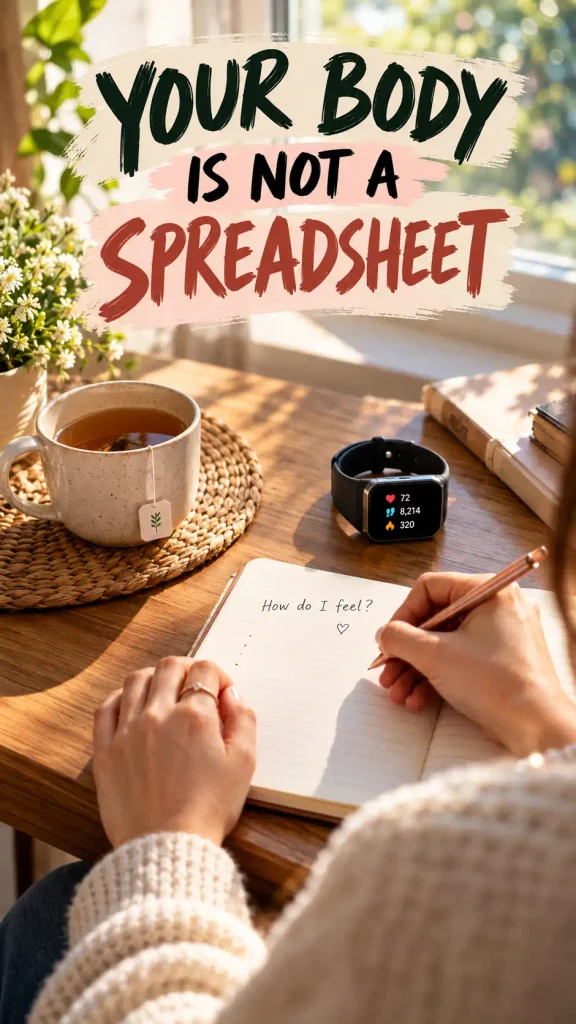
The habit: pair one number with one human question.
Example: “Resting heart rate: X. How do I feel today?”
Why it helps: the dashboard stops pretending to be the entire person.
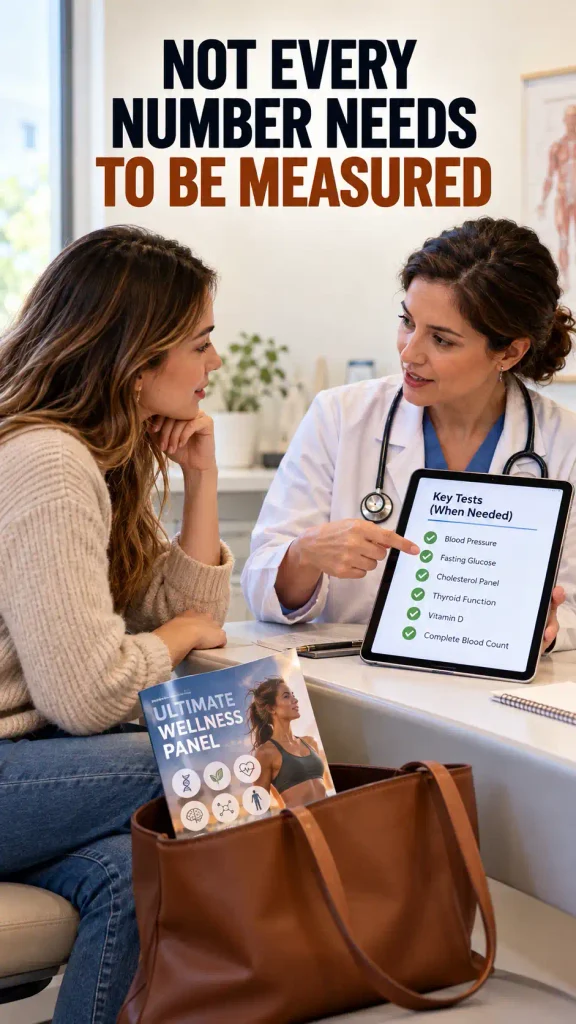
21. Test Less Because A Clinician Asked A Question—Not Because An Influencer Sold Curiosity
Wellness optimization loves testing because testing generates numbers.
Numbers generate interpretation.
Interpretation generates more decisions.
Sometimes that is excellent medicine.
Sometimes it is a chain of expensive curiosity.
A useful lab test starts with a clinical question:
What are we trying to diagnose, monitor or rule out?
How would the result change care?
Without that context, broad consumer testing can produce borderline or incidental findings that require more interpretation and sometimes more testing.
Anti-optimization does not mean avoiding preventive care or recommended screening.
It means letting evidence-based medical guidance—not content marketing—decide what needs measuring.
The habit: ask what decision a test result would change before ordering optional wellness panels.
Why it helps: curiosity does not automatically become a medical project.
Keep doing: recommended preventive screenings and clinician-directed tests appropriate to you.
22. Let One Healthy Habit Be Enough For A While
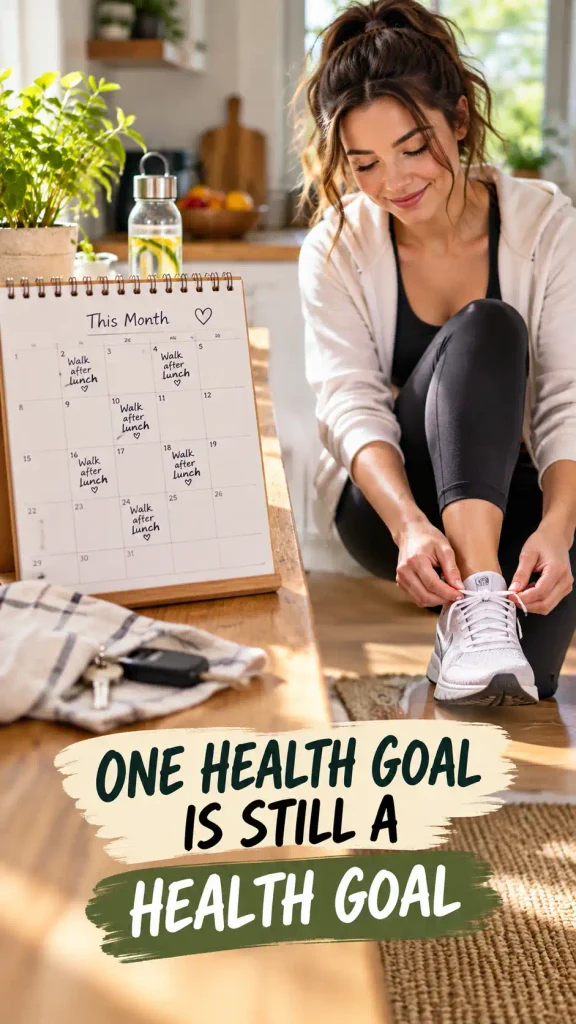
Wellness plans fail spectacularly when Monday becomes responsible for rebuilding the entire human organism.
New sleep schedule.
New diet.
New gym.
New supplements.
New meditation habit.
No alcohol.
More water.
Ten thousand steps.
Cold showers.
Meal prep.
Journaling.
By Thursday, the person has been replaced by a compliance department.
Behavior change tends to become easier when the behavior is specific enough to practice.
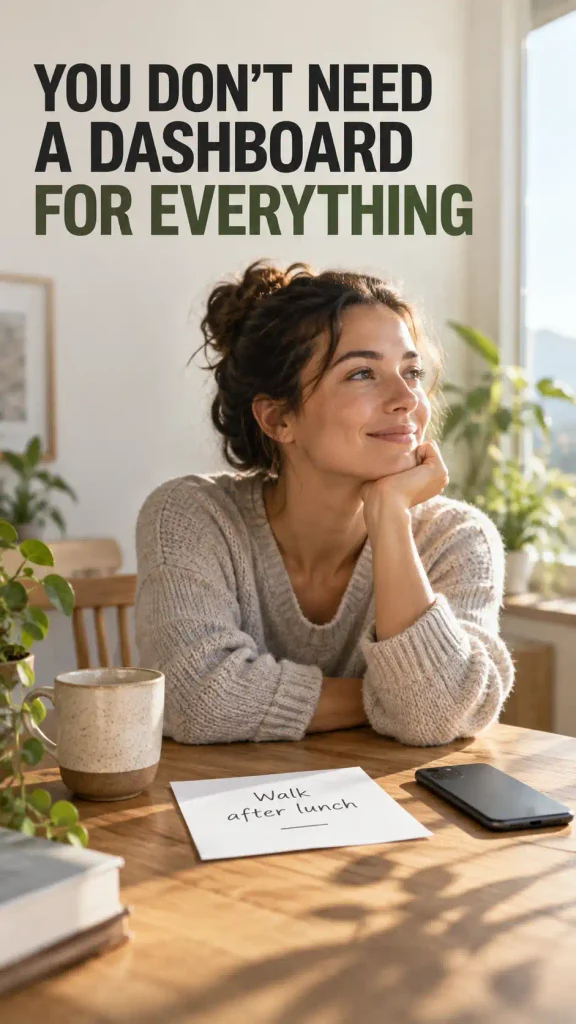
Pick one.
Walk after lunch.
Go to bed at a more consistent time.
Strength train twice a week.
Eat breakfast.
Then let it become ordinary before creating a second optimization project.
The habit: choose one meaningful change and let it stabilize.
Why it helps: health behavior gets repetition instead of novelty overload.
Question: “What single habit would make the next month noticeably easier?”
23. Stop Buying Wellness Equipment To Prove You Care About Wellness
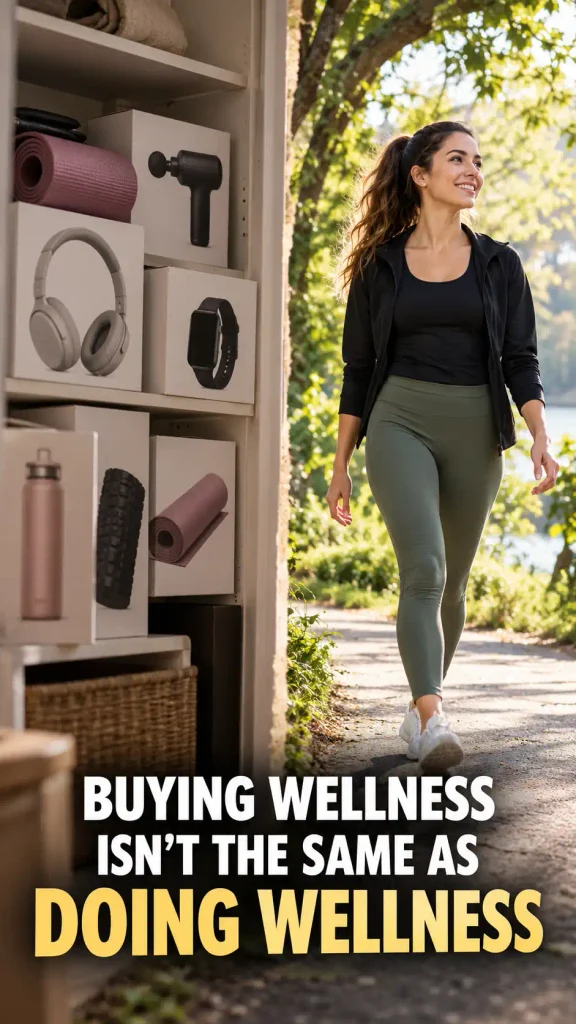
A person can own:
A sunrise lamp.
A red-light panel.
A cold-plunge tub.
A massage gun.
A smart scale.
A sleep ring.
A meditation headband.
A posture device.
Four foam rollers.
And still need the deeply unsexy basics:
sleep, food, movement, relationships, healthcare and time.
This is not an argument that wellness products never help.
It is a reminder that purchasing health equipment can create the emotional sensation of taking action before the behavior itself changes.
Before buying a new device, ask what problem it solves that your current routine cannot.
If the answer is specific, great.
If the answer is “people who have their life together seem to own this,” put it on a wishlist.
The habit: require a specific use case before adding a wellness gadget.
Why it helps: identity shopping separates from actual health behavior.
Useful test: “What will I do differently the week after I buy it?”
24. Let Maintenance Be A Goal
Optimization has only one direction:
better.
Faster.
Leaner.
Stronger.
More efficient.
Lower resting heart rate.
Higher score.
Longer streak.
But real health has seasons.
Sometimes improvement is appropriate.
Sometimes the win is maintaining movement during a stressful job change.
Keeping your sleep routine through a difficult month.
Holding strength steady while caring for someone.
Eating reasonably while traveling.
Optimization culture treats maintenance like stagnation because a stable line makes a terrible before-and-after post.
Your body does not work for social media.
The habit: deliberately choose maintenance during demanding periods.
Why it helps: realistic goals reduce the pressure for endless escalation.
Reframe: maintaining a useful behavior under harder conditions is progress in context.

25. Ask “How Do I Feel?” Before “What Did I Score?”
This is the smallest habit in the article.
It may also be the whole article.
Metrics are powerful because they make invisible things visible.
That is useful.
They are dangerous only when visibility becomes authority over everything else.
The sleep score can help you notice patterns.
It cannot tell you whether the evening with your friends was worth staying up for.
The step count can measure distance.
It cannot fully measure whether the walk cleared your head.
The workout score can estimate strain.
It cannot tell you whether playing tennis with someone you love made you want to move again tomorrow.
The calorie log can quantify food.
It cannot contain culture, pleasure, memory, hunger and social life in one neat cell.
Data deserves a seat at the table.
It does not need the head chair.
So before opening the dashboard, try the embarrassingly low-tech diagnostic tool that came preinstalled:
How do I feel?
Then use the number if the number helps.
The habit: check the human signal before the digital one.
Why it helps: health becomes something you live, not only something you measure.
Best version: intuition and evidence cooperate instead of competing.

The original promise of wellness was not that you would become endlessly measurable.
It was that life might feel better.
More energy.
Better sleep.
A body capable of doing the things you care about.
Food that nourishes you.
Movement you can keep doing.
Enough recovery to return tomorrow.
Technology can help with all of that.
So can medicine.
So can data.
The anti-optimization idea is not that ignorance is healthier.
It is that information should make your life easier to live—not turn living into another stream of information.
Use the tracker if it helps.
Take it off if you do not need it today.
Follow the medical number when the medical number matters.
Ignore the arbitrary streak when it does not.
Let a good walk be a good walk.
Let dinner occasionally be dinner.
Let sleep be something that happens at night rather than a report card delivered in the morning.
And perhaps most importantly:
Do not optimize the joy out of being healthy.
Which wellness metric genuinely helps you—and which one would you happily stop checking?
Sources & Further Reading
- Vogue — The Anti-Optimization Wellness Wave
- Global Wellness Summit — Over-Optimization Backlash
- SLEEP — U.S. Survey of Sleep Tracking and Orthosomnia Risk
- Consumer Wrist-Worn Sleep Trackers vs. Polysomnography — Meta-analysis
- Wearable Sleep Metrics vs. Patient-Reported Sleep Quality — Systematic Review
- Consumer Sleep Technology — U.S. User Concerns and Barriers
- Yale School of Medicine — Who Benefits From Continuous Glucose Monitoring?
- Wearable Activity Trackers — Umbrella Review of Effectiveness
- Wearable Activity Trackers and Physical Activity — Meta-analytic Review
- CDC — Physical Activity Guidelines
- CDC — Social Support for Physical Activity
- Maintaining Physical Activity — Systematic Review and Qualitative Synthesis
- Exercise Enjoyment and Affective Response — Meta-analytic Review
- Daily Steps and Health Outcomes — Systematic Review and Dose-Response Meta-analysis
- Diet/Fitness Monitoring Apps, Body Image and Disordered Eating — Systematic Review
- Weight-Related Self-Monitoring and Eating-Disorder Symptoms — Meta-analysis
- NIH Office of Dietary Supplements — Supplement Safety and Interactions
- USPSTF — Vitamin and Mineral Supplementation Evidence
- CDC — Healthy Sleep Guidance
- Gamification in Health Apps — Systematic Review
- Gamification in Mental Health and Wellbeing Technologies — Systematic Review