Making Friends As An Adult Got Weirdly Hard—These 25 Ways People Are Finding Their People Again

As a kid, friendship could begin because somebody sat next to you in math class. As an adult, you can live three doors away from someone for four years and know only that they own a very determined vacuum cleaner.
Nothing dramatic has to happen for an adult social life to shrink.
A friend moves. Another gets married. Somebody has a baby. Work changes. You change cities. The coworker you liked leaves. The group chat gets quieter. Two people keep saying, “We really need to catch up,” until the sentence becomes a small annual tradition.
Then one day you realize the problem is not that you dislike people.
You simply no longer have a place where the same people keep appearing around you for no particular effort of your own.
That may be one of the biggest differences between childhood friendship and adult friendship. School, university, dorms and early workplaces create repeated contact automatically. Adult life often replaces that with calendars, commutes, remote work, partners, children, errands and carefully negotiated availability.
Research on friendship formation helps explain why that matters. In one study of people building new relationships, psychologist Jeffrey Hall found that time spent together—particularly leisure time and everyday conversation—was associated with growing closeness. His estimates suggested that moving from acquaintance to casual friendship often required dozens of hours together, not one magical conversation. Those numbers are not a universal friendship stopwatch, but the larger point is useful: familiarity needs repetitions. Journal of Social and Personal Relationships.
A systematic review of adult friendship research likewise found that friendship quality, socializing and efforts to maintain friendships were positively associated with wellbeing, although—as with most relationship research—the strength and direction of findings vary by study and population. Adult Friendship and Wellbeing: A Systematic Review.
The World Health Organization has gone further and identified social connection as a major public-health issue, arguing that loneliness and social isolation are widespread and deserve serious attention. WHO Commission on Social Connection.
None of that means a pottery class automatically produces a best friend.
In fact, that is where a lot of adult-friendship advice becomes annoyingly vague.
“Join a hobby.”
Okay. Then what?
You can attend a giant one-off event, speak to nobody, leave after 90 minutes and technically have followed the advice perfectly.
The useful pattern is more specific: go somewhere recurring, where roughly the same people return, where there is something to do besides interview each other, and where small conversations have time to become familiar ones.
A useful rule before the list: do not judge a group entirely by the first awkward visit. Recent adult-friendship discussions online repeatedly describe the same experience: the first few sessions feel like being the new kid, then familiarity starts doing some of the social work. That is anecdotal rather than scientific proof, but it lines up neatly with research showing that friendship formation takes time. A bad, unsafe or hostile group is different—you never owe a place repeated chances if you feel unwelcome or uncomfortable.
With that in mind, here are 25 ways adults are rebuilding the thing life used to provide automatically: somewhere to keep running into potential friends.
1. Join A Weekly Rec League—Not A One-Off Sports Event
Adult recreational sports solve a friendship problem that networking events do not: nobody needs to invent a reason to talk.
You have a score to complain about. A serve to return. A teammate whose name you are eventually going to learn because you have now accidentally passed them the ball six weeks in a row.
The sport itself almost does not matter. Volleyball, softball, pickleball, futsal, badminton and social football can all work if the structure brings the same people back on a predictable schedule.
That last part matters more than whether you are good.
Recent adult-friendship discussions repeatedly describe weekly leagues as useful precisely because attendance is recurring. One Reddit user who joined an adult volleyball league said the early weeks were awkward, but by the second month the group had become familiar enough that conversation came more naturally. That is anecdotal, but the mechanism is plausible: repeated exposure turns “stranger” into “person I know from Tuesdays.”
You do not need to become best friends with the entire team. You need one or two people you would actually be happy to see somewhere else.
Why it can work: repeated contact + shared task + built-in conversation.
Best version: a league or class with a stable roster rather than constantly changing drop-ins.
Next move: after a few sessions, suggest coffee or food after the game instead of waiting for somebody else to formalize the friendship.

2. Try A Run Club—Even If You Are More “Jog And Chat” Than “Personal Best”
Run clubs have one enormous social advantage: conversation happens side-by-side.
You are not sitting opposite a stranger thinking, Excellent, now we must create chemistry.
You are moving. There are natural pauses. The route gives you something to comment on. If conversation dies for thirty seconds, nobody has to hold a funeral for it.
Research around parkrun—a free, recurring community running event—has found social cohesion and community to be important parts of continued participation. A qualitative study of men at parkrun in Ireland reported that social connections developed through repeated attendance, while network research has found participants becoming more interconnected over time. PubMed; parkrun Research Hub.
The key is finding the right club.
A fiercely competitive group training for marathon times may be a terrible social fit if you want a conversational 5K. Look for words like “all paces,” “social run,” “run/walk” or “no-drop.”
Why it can work: side-by-side conversation tends to feel less interview-like.
Best version: a group that meets at the same time every week and hangs around afterward.
You do not need: to be fast.

3. Go Bouldering Somewhere That Has A Regular Crowd
Climbing gyms are unusually good at creating legitimate reasons to talk to strangers.
“Have you tried that route?”
“How did you get past the blue hold?”
“Is that move horrible, or am I just making it horrible?”
You do not have to manufacture a clever opener. The wall has already provided one.
Bouldering also includes a lot of resting. That means people spend time in the same area, repeatedly attempting the same problems and watching each other solve them.
The friendship potential comes from becoming a regular rather than sampling five gyms once each. Same evening. Similar time. Same wall section. Familiar faces.
If you prefer roped climbing, beginner courses and partner-finding sessions can offer even more structured interaction—but safety rules and proper instruction matter.
Why it can work: people naturally ask for tips, celebrate attempts and rest near each other.
Best version: a recurring beginner/social session or consistent weekly time.
Safety: follow gym rules and qualified instruction for belaying or rope systems.

4. Join A Silent Book Club If Traditional Book Clubs Feel Like Homework
Silent Book Club may have accidentally solved one of the strangest social contradictions:
Some people want community but do not want to perform sociability for two uninterrupted hours.
The format is simple. People arrive with whatever they are reading, talk briefly if they want, read quietly together, then socialize afterward if they feel like it. No assigned novel. No panic-finishing 180 pages because somebody named Claire is absolutely going to ask what you thought of chapter twelve.
The organization describes itself as a global community built around “quiet camaraderie,” with chapters meeting in bookstores, cafés, libraries and parks. Silent Book Club.
For shy people, introverts or anyone tired after work, this lowers the social entry fee.
You are allowed to be present before you are expected to be interesting.
Why it can work: belonging without nonstop conversation.
Best for: readers who want repeated community with low social pressure.
Easy opener: “What are you reading?” is already sitting in everybody’s hands.

5. Try A Cookbook Club—Because Dinner Gives Everybody A Job
A cookbook club combines two reliable facts about humans:
We like belonging to groups, and we become approximately 37% easier to talk to when holding a plate of food.
The format usually works like a book club, except everybody cooks something from the same cookbook and brings it to a shared meal. Instead of arriving with nothing but your personality and hoping for the best, you arrive with a dish that immediately gives people something to ask about.
A Melbourne cookbook club profiled by The Guardian built its gatherings around exactly that idea: cooking from a selected book, bringing dishes together and creating a recurring community around the meal. The Guardian.
You do not need to be a serious cook. In fact, “this pie collapsed in the car” is much better conversation material than flawless pastry.
Why it can work: everybody arrives having contributed something, so there is immediate shared context.
Best version: recurring monthly group with roughly the same core members.
Beginner move: choose a forgiving recipe and admit you are learning.

6. Work A Regular Volunteer Shift Instead Of Attending A Random Mixer
Volunteering changes the social question from “What do we talk about?” to “What needs doing?”
Sort donations. Pack food. Walk shelter dogs. Check people in. Plant trees. Set up chairs. Clean a trail.
Shared tasks are useful because interaction has a purpose before friendship enters the picture.
Evidence here should be described carefully. Research does not show that volunteering magically cures loneliness for everyone. But studies and reviews have found associations between volunteering and social connection in some adult populations, and qualitative research describes volunteer settings as places where people can help create social contact for themselves and others. PubMed; PubMed.
If friendship is part of your goal, choose a recurring team shift rather than solo volunteering you do once every six months.
Why it can work: shared purpose removes some conversational pressure.
Best version: same organization, same shift, enough repetition to recognize people.
Important: pick a cause you actually care about; friendship should be a bonus, not the only reason you showed up.

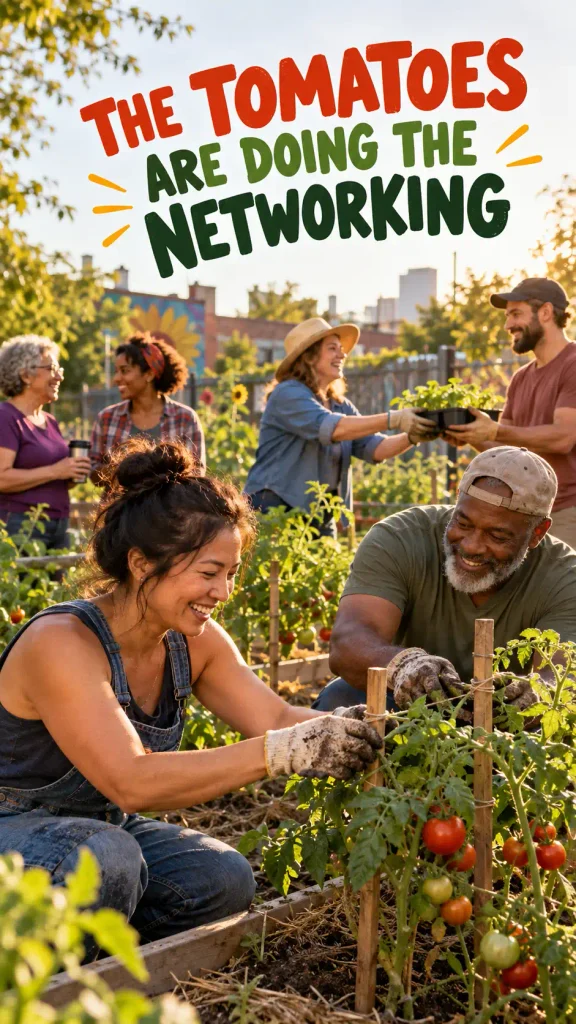
7. Join A Community Garden And Let The Tomatoes Introduce You
Community gardens are basically neighborhoods with a shared group project growing out of the ground.
People water. Weed. Trade seedlings. Ask who stole the basil. Discover that nobody stole the basil; the basil simply gave up.
A recent review synthesizing dozens of studies describes community gardens as spaces that can support social connectedness, civic engagement and different forms of social capital. Earlier systematic reviews also found generally positive social-health associations, although much of the evidence is observational and should not be treated as proof that gardening itself caused every benefit. PubMed; PubMed.
The friendship advantage is practical: gardens create repeated micro-interactions.
You may not become close because of one conversation about compost. You might because it is conversation number eleven.
Why it can work: repeated low-stakes encounters + shared responsibility.
Best for: people who prefer doing something while talking.
No green thumb required: community gardens often need help with maintenance, events and organization too.
8. Join A Choir Even If Your Shower Is Your Current Venue
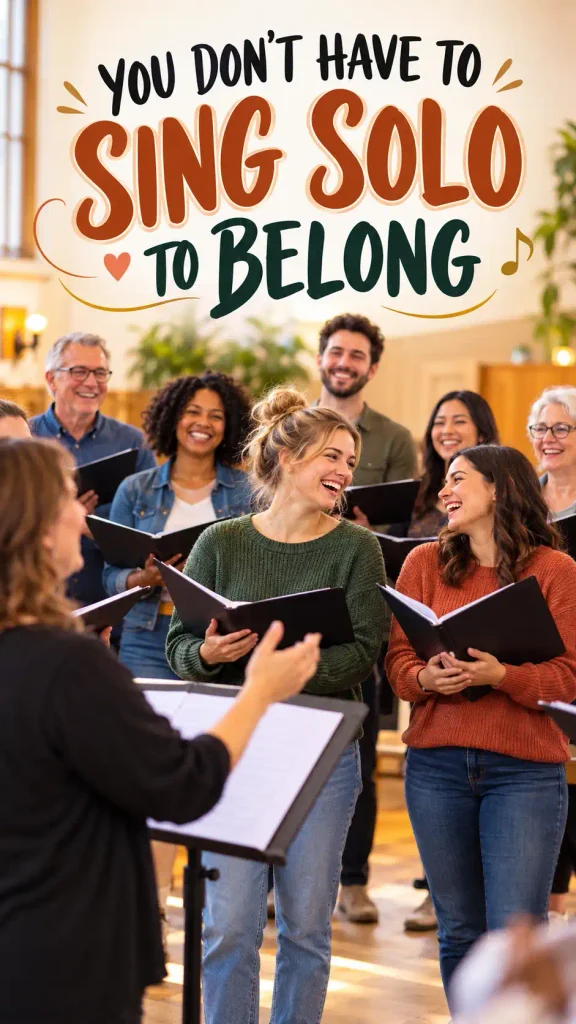
Choirs have one unusual social feature: the group has to do the same thing at the same time.
You breathe together. Enter together. Get lost together. Pretend nobody heard the wrong note. Try again.
Research on group singing has repeatedly explored its potential for social bonding and wellbeing. A systematic review in adults with mental-health conditions found encouraging results but also noted limits in the evidence base, so choir should not be marketed as treatment. What it clearly provides, however, is structured repeated group participation. PubMed.
Community choirs often include people who cannot read music and have no audition requirement. Search specifically for “community,” “open,” “non-audition” or “all voices.”
Why it can work: synchrony + repetition + a shared goal larger than any one person.
Best version: a choir with rehearsals over a season, not a one-day workshop.
If you are nervous: stand near someone who seems to know when to come in.
9. Take A Multi-Week Pottery Class, Not Just A Cute One-Night Workshop
A one-night pottery class is a fun evening.
A six-week pottery class has friendship infrastructure.
The difference is not clay. It is recurrence.
In a multi-week course, you see the same people fail to center clay, finally center clay, destroy the object while trying to improve it, then emotionally recover.
By week four, you know who always makes tiny bowls and who has somehow decided their first project should be a lamp.
The activity also creates gentle pauses. Nobody expects constant conversation while your hands are covered in slip.
Why it can work: a fixed cohort gets repeated time together without constant social performance.
Choose: multi-week courses over isolated “experience” workshops if connection is the goal.
Easy follow-up: ask someone if they want coffee while pieces are being fired or after class.

10. Join A Board-Game Group Where The Same Players Keep Coming Back
Board games are socially useful because the rules give the evening structure.
You do not have to sustain free-floating conversation for three hours. You take a turn. React to somebody’s terrible decision. Discover that the quiet person across the table becomes alarmingly competitive when sheep are involved.
The strongest friendship potential usually comes from groups with some continuity: weekly board-game nights, regular tabletop campaigns or a recurring small group.
A giant open event with different strangers every week can still be fun, but it offers less repeated exposure.
If you are joining alone, cooperative games can be especially comfortable because the table has a shared problem rather than an immediate winner-loser divide.
Why it can work: rules create interaction without demanding constant personal disclosure.
Best version: recurring table or campaign with stable players.
For shy newcomers: cooperative games give everybody something to solve together.

11. Try A Tabletop Role-Playing Campaign—Because A Six-Month Quest Is A Lot Of Repeated Contact
Dungeons, spaceships, mysteries, haunted houses—the fictional setting is almost secondary.
A recurring tabletop role-playing campaign can give a small group a reason to meet for months.
Players cooperate, improvise, solve problems and slowly accumulate shared jokes that make absolutely no sense to anybody outside the table. That last part is suspiciously close to how friendship usually works.
The barrier is finding the right group culture. Look for beginner-friendly sessions, clear conduct rules and a schedule you can realistically keep.
You do not need to arrive knowing forty pages of rules. You need to arrive willing to participate and return.
Why it can work: stable small group + recurring schedule + cooperative storytelling.
Best for: people who find activity-based conversation easier than unstructured mingling.
Green flag: groups that explicitly welcome new players and explain expectations.

12. Go To A Language Exchange Where Being Awkward Is Literally Expected
Language exchanges come with a beautiful built-in excuse for saying something weird.
You are practicing.
That lowers the stakes for everyone.
Good exchanges alternate languages, use conversation prompts, rotate partners or meet at predictable intervals. You get immediate topics—food, travel, slang, family expressions, words that absolutely refuse to translate—and a reason to ask questions without feeling nosy.
If you are new to a city or an international community, language exchange can also introduce people from very different backgrounds who might never otherwise share a table.
Why it can work: curiosity is built into the activity and mistakes are normal.
Best version: recurring group rather than tourist-heavy one-off event.
Conversation advantage: “How do you say this?” works when your mind goes blank.

13. Take A Partner-Rotation Dance Class
Dance classes solve one part of meeting people almost aggressively: the instructor tells you who to interact with.
Salsa, swing, bachata and other social-dance classes often rotate partners, which means you meet several people without having to walk across a room and introduce yourself cold.
Research on dance and social connection is varied and not strong enough to promise that a class will fix loneliness, but qualitative studies have described belonging and group identity emerging through repeated group participation. PubMed.
The beginner advantage is that everybody is too busy remembering where their feet go to maintain a sophisticated social persona.
Humility is communal.
Why it can work: structured partner interaction + regular attendance + built-in social events.
Best version: beginner series that keeps a consistent class together.
Important: choose a school with clear consent and respectful partner etiquette.

14. Take Improv If You Want A Fast Track Through “Trying To Look Normal”
Improv is socially efficient because dignity leaves the room very early.
You may have to pretend to be a confused astronaut, accept an imaginary sandwich from a stranger or enthusiastically agree that the floor is lava.
After that, asking somebody if they want coffee feels comparatively manageable.
A good beginner class emphasizes listening, accepting offers and making your scene partner look good—not being the funniest person alive.
That cooperative mindset is the useful part socially. Everybody takes small risks in front of the same group over several weeks.
Why it can work: structured vulnerability breaks down polished first impressions quickly.
Best version: multi-week beginner course with a respectful instructor.
Not required: being naturally funny.

15. Join A Makerspace Or Workshop Where People Borrow Tools And Knowledge
Makerspaces are friendship-friendly for the same reason old garages and workshops often were: people need help.
How do you use this clamp?
Why is this cut crooked?
Is the printer supposed to make that noise?
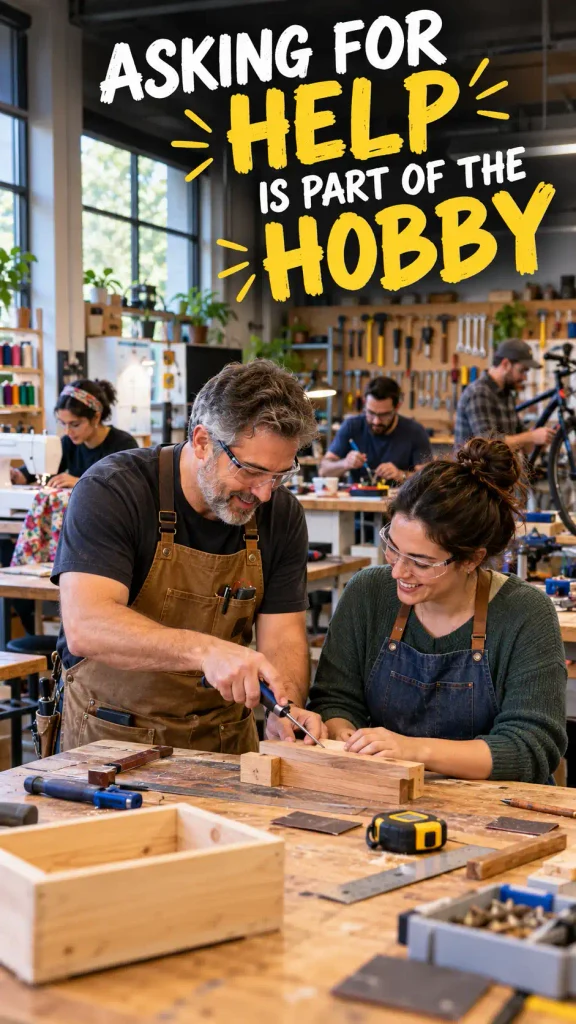
A shared workshop creates a culture where asking questions is normal. Woodworking benches, sewing machines, electronics, 3D printers and repair tools all become excuses for low-stakes interaction.
Look for orientation nights, open-shop hours and recurring beginner workshops. A space full of highly skilled people can feel intimidating, but a healthy makerspace should have explicit safety procedures and a culture of teaching.
Why it can work: knowledge-sharing creates natural reasons to talk and help.
Best version: recurring open-shop hours where regulars overlap.
Safety: get trained before using unfamiliar equipment; friendship is not improved by emergency-room bonding.
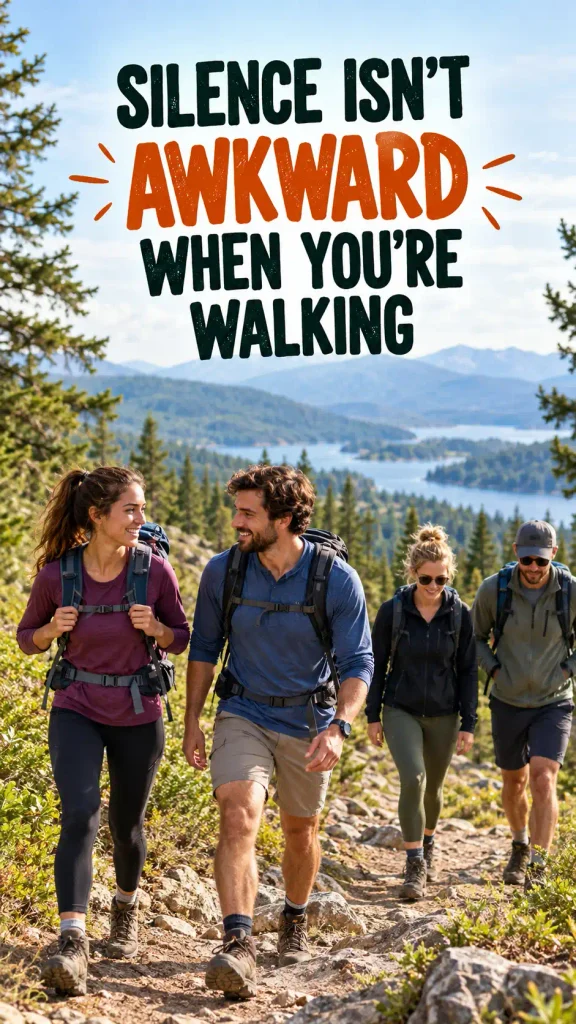
16. Join A Hiking Group That Actually Hikes Often
Hiking gives friendship time to stretch out.
You can talk for ten minutes, walk quietly for twenty, then resume the exact conversation without anybody wondering why there was silence.
That rhythm can be far easier than meeting a stranger for coffee and feeling responsible for every second of airtime.
Choose a group whose pace and difficulty match you. A “casual social hike” and a sunrise summit scramble are both hiking, in the same way that toast and a seven-course tasting menu are both technically food.
The strongest social groups often combine regular outings with lower-effort events so people can continue relationships when weather or fitness gets in the way.
Why it can work: long side-by-side time with natural pauses.
Best version: recurring local group with clear difficulty ratings.
Safety: use proper route, weather and gear planning; do not let social pressure push you beyond your ability.
17. Become A Regular At A Dog-Walking Route Or Park
Dogs are spectacularly unconcerned with the social rules that stop humans talking to each other.
They sniff somebody’s shoes and suddenly the owners have a conversation.
Recent research has examined dogs as catalysts for neighborhood social relationships, finding dog ownership associated with stronger anchored personal relationships and sense of community in the studied sample. That does not mean adopting a dog is a friendship strategy—you should never take responsibility for an animal for that reason alone—but if you already have one, the social spillover can be real. PubMed.
The trick is routine.
Same park. Similar time. Same route.
Eventually “the person with the ridiculous brown spaniel” becomes Maya.
Why it can work: pets provide repeated spontaneous openers between neighbors.
Best for: existing dog owners who can build a consistent walking routine.
Please do not: get a pet simply because you want to meet people.

18. Pick A Library Program That Meets More Than Once
Libraries are one of the few places where you can attend something alone without feeling as if you arrived alone.
Writing groups. Craft circles. lectures. language practice. genealogy sessions. film clubs. game nights. local-history groups.
The key, again, is choosing a recurring format.
A one-off author talk may be interesting but socially anonymous. A writing circle that meets every second Saturday gives names and personalities time to stick.
Libraries are especially useful if you want community without a strong expectation to spend money every time you enter the room.
Why it can work: low-cost public space + recurring programs + self-selecting interests.
Best move: ask staff which groups have regular returning members.
Good for: people who dislike loud bars and high-pressure networking.

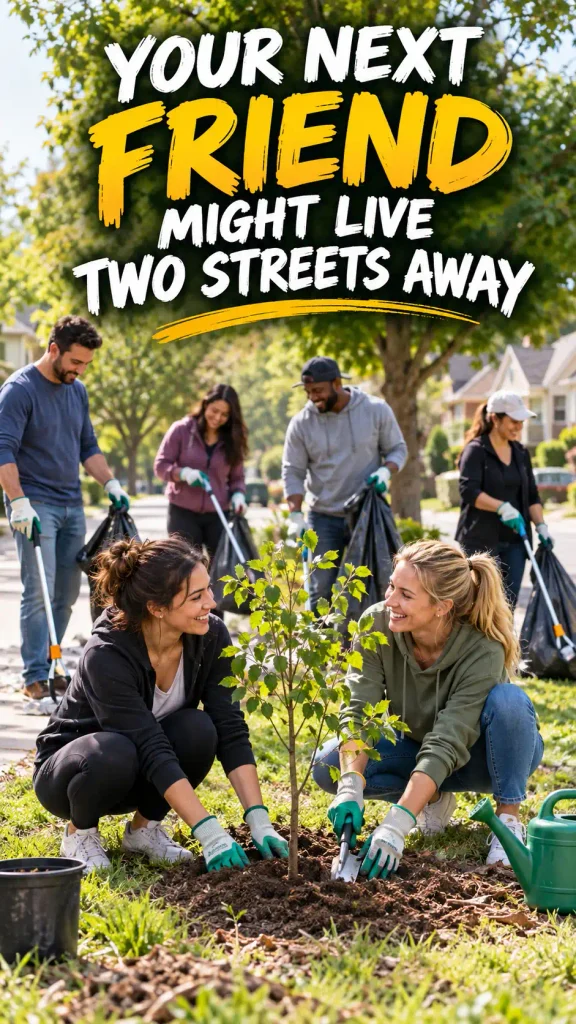
19. Join A Neighborhood Cleanup Or Local Civic Project
It is difficult to stay in “polite stranger mode” while both holding opposite ends of the same trash bag.
Neighborhood cleanups, tree planting, street beautification, mutual-aid projects and community events bring together people who live near one another but might otherwise never cross paths long enough to talk.
The proximity advantage matters.
A person you meet across town may require a 45-minute plan every time you want to see them. A person you discover lives six minutes away has a much lower logistical barrier to becoming part of ordinary life.
Even if friendship does not emerge, knowing more people on your own street or block can make a place feel less anonymous.
Why it can work: shared task + geographic closeness.
Best version: projects organized repeatedly in the same neighborhood.
Follow-up: if conversation clicks, suggest a walk or coffee nearby rather than a grand social plan.
20. If You Work Remotely, Create A Recurring Coworking Day
Remote work removed a lot of bad office things.
It also removed the tiny interactions that used to happen without scheduling them.
“How was your weekend?” may not have been profound, but enough repeated small interactions sometimes turned coworkers into actual friends.
If you work remotely and miss that ambient social contact, a recurring coworking day can rebuild some of it without returning to an office full-time. Meet the same two or three people at a library, coworking space or quiet café every Thursday. Work separately. Eat lunch together. Repeat.
The point is not to turn every task into a social event.
It is to create a predictable place where life overlaps.
Why it can work: repeated proximity without requiring constant interaction.
Best version: same day, same people, light shared ritual such as lunch or a walk.
Boundary: choose a setting where work and conversation can coexist without annoying everyone else.

21. Choose A Six-Week Class Over Six Random Social Events
This is less about what you learn than how the class is structured.
Photography. Drawing. sewing. cooking. first aid. woodworking. creative writing. local history.
A cohort course gives the same group repeated exposure with built-in material to discuss.
One-off events continually reset everybody to stranger status. A multi-week class lets people become familiar enough for the conversation to move from “Have you done this before?” to “How did your interview go?”
That shift is the beginning of actual friendship.
Why it can work: fixed cohort + predictable schedule + shared learning curve.
Choose: courses with 4–10 sessions rather than isolated workshops.
The hidden advantage: you do not need to decide to meet again every week; the calendar already decided.

22. Say Yes To Friend-Of-Friend Invitations More Often Than Feels Efficient
Not every new friendship needs to begin with a room full of total strangers.
Weak ties—the people around your existing friends, coworkers, neighbors and acquaintances—can be bridges into new social circles.
That boring birthday dinner you nearly skip because you know only one person?
Potentially useful.
The coworker inviting three people to trivia?
Useful.
The neighbor asking if you want to come to a barbecue where you will know nobody?
Terrifying, but useful.
This does not mean saying yes to everything until your calendar becomes a punishment. It means recognizing that new friendships often need access to new networks.
Why it can work: somebody you already trust provides a social bridge.
Best mindset: aim to have one decent conversation, not to “make friends tonight.”
Afterward: if you click with someone, follow up rather than assuming you will magically meet again.

23. Start The Tiny Group You Keep Wishing Existed
This is annoying advice because it requires effort.
It is also sometimes the fastest route.
If you keep thinking, I wish there were a relaxed Sunday walking group / monthly horror-movie night / casual drawing club / parents’ coffee / beginner board-game night around here, there may be five other people quietly thinking the same thing.
Do not launch a “community.” Launch one date.
“First Sunday of every month, 10 a.m., 45-minute walk, coffee afterward.”
That is easier to understand than a giant mission statement.
Existing communities such as Silent Book Club explicitly encourage people to start local chapters when one does not exist. The lesson generalizes: a simple repeatable format is easier to sustain than an event that needs reinvention every time.
Why it can work: you design the kind of social environment you actually want.
Start small: four people is a group.
Most important: choose a schedule simple enough that you can keep hosting when enthusiasm is no longer brand-new.

24. Move The Friendship Out Of The Group Before You Expect It To Become A Friendship
This is the part “join a club” advice often forgets.
You can see the same person at pottery for a year and still remain “pottery friends” if neither of you ever changes the context.
At some point, somebody has to make the tiny bridge.
“Want to grab coffee after this?”
“I’m checking out that market Saturday if you want to come.”
“Send me that recipe—I’ll text you.”
“A few of us are getting food after the game.”
The invitation does not need to be emotionally significant. In fact, small is better.
Research on offline self-disclosure and friendship has found that sharing personal information can be associated with greater trust and relationship satisfaction, including in more casual friendships. That does not mean dumping your entire life story onto a near-stranger. Closeness usually grows through gradual reciprocity, not a surprise autobiography. PubMed.
Why it can work: it changes the relationship from “person from activity” to “person I chose to see.”
Best invitation: specific, low-cost and easy to decline.
Do not wait for: absolute certainty that they like you enough. That certainty usually comes after the friendship exists.

25. Become A Regular Somewhere—Because Friendship Needs A Chance To Stop Being New
If there is one idea underneath nearly everything on this list, it is this:
Stop optimizing only for meeting more people. Start creating more repeats with some of the same people.
Adult friendship can feel impossible partly because adulthood is very good at generating first meetings and very bad at generating fifteenth meetings.
You can attend mixers, conferences, parties, apps and events and continuously meet interesting humans you never see again.
Meanwhile, the person at your Thursday run club slowly becomes familiar.
Then reliable.
Then someone you talk to even when running is over.
Hall’s friendship research estimated that casual friendship often emerged only after substantial time together. Again, the exact number is not a deadline. Nobody becomes your friend when an invisible clock reaches hour 43.
The valuable part is the scale of the estimate.
Friendship usually needs more time than modern adults accidentally give it.
So choose one or two places you genuinely enjoy enough to revisit.
Go again.
Learn names.
Ask a second question.
Show up when it would be easier to stay home.
Accept that the first few times may feel unremarkable.
Then, when someone starts feeling familiar, make the small invitation that gives the relationship somewhere else to go.
There is no hack in that process.
That may be exactly why it works.
The principle: repeated contact beats endless introductions.
A reasonable experiment: give a decent recurring group several visits before deciding there is “nobody there for you.”
Exception: leave immediately if a group feels unsafe, hostile or fundamentally incompatible with you.

Maybe adult friendship feels so mysterious because childhood hid the machinery from us.
We thought friendship happened because we “clicked.”
Sometimes it did.
But school also put the same person beside us five days a week, gave us shared problems, shared jokes, lunch breaks, boring afternoons and hundreds of chances to become less strange to each other.
Adult life removes most of that machinery and then tells us to “put ourselves out there.”
So perhaps the answer is not becoming dramatically more charming, extroverted or fearless.
It is rebuilding some of the conditions friendship used to get for free.
A place.
A reason to return.
The same faces.
Enough time for “I think I’ve seen you here before” to become “Are you coming next week?”
And eventually, if things go well:
“Want to do something when we’re not here?”
Where have you actually made friends as an adult—and what made that place work?
Sources & Further Reading
- World Health Organization — Report of the Commission on Social Connection
- Jeffrey A. Hall — How Many Hours Does It Take to Make a Friend?
- Adult Friendship and Wellbeing: A Systematic Review
- Interventions to Improve Social Connections: Systematic Review and Meta-analysis
- Community Friendship Groups and Social/Mental Health: Meta-analysis
- Social Experiences and Friendship at parkrun
- parkrun — Social Networks Research
- Silent Book Club — About the Community and Format
- The Guardian — Cookbook Club and Friendship
- Volunteering, Loneliness and Perceived Social Isolation
- Volunteering and Social Connection
- Community Gardens and the Cultivation of Social Capital
- Urban Collective Garden Participation and Health: Systematic Review
- Group Singing and Wellbeing: Systematic Review
- Dance, Social Isolation and Connection
- Dog Ownership, Personal Relationships and Sense of Community
- Offline Self-Disclosure, Trust and Friendship Satisfaction
- Reddit — Adult Rec League and Repeated Attendance Discussion
- Reddit — Community Experiences of Making Friends Through Hobbies