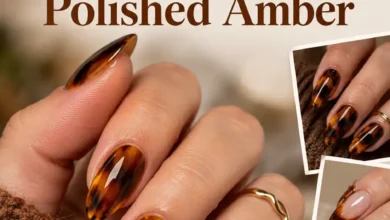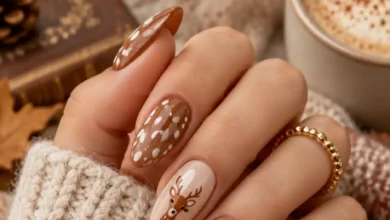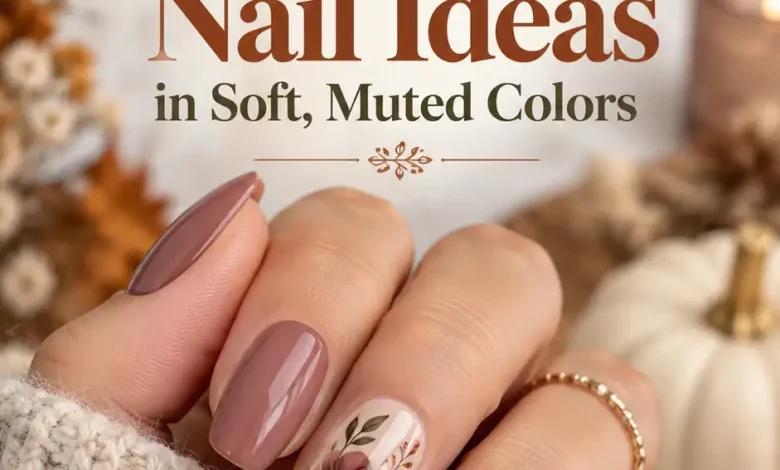
Fall floral November nails are a lovely way to keep flowers in your manicure while moving into sweater weather. Think cream daisies over mocha, tiny rosebuds in dusty mauve, or a few ivory stems against soft sage. The colors do the seasonal work, so the flowers can stay delicate.
These 19 ideas range from small accents on short nails to more detailed bouquets and painterly petals. Each one has its own image and a clear salon note. Start with the shape and length you like wearing, then choose whether you want a little flower, a border, or a whole nail in bloom.
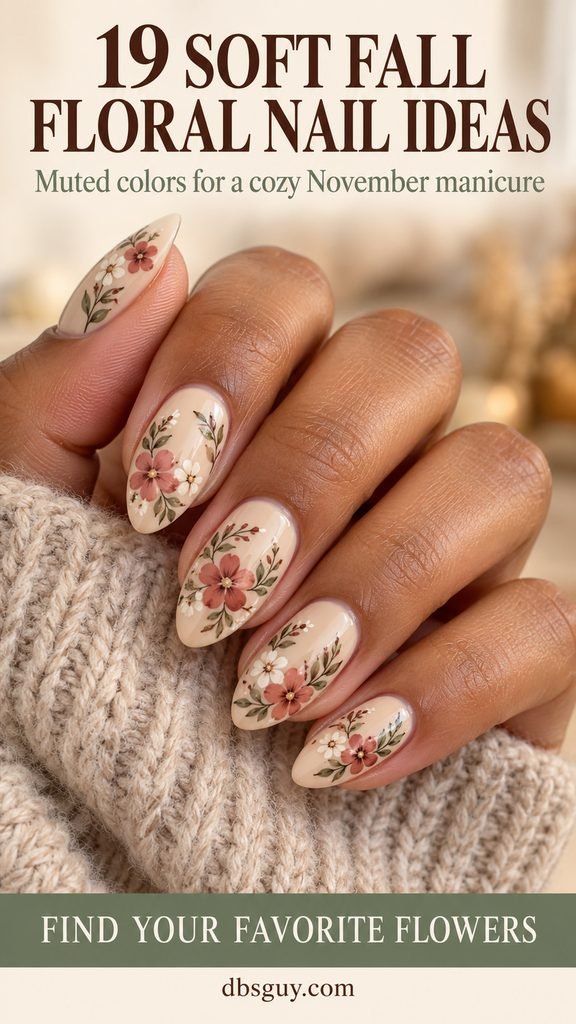
Choose Your Fall Floral Palette and Placement
A muted palette has a softened quality: dusty rose, gray-green sage, mushroom taupe, clay, or smoky blue. Pair one of those colors with cream or cocoa and you have a simple starting point. Set the finished swatches beside each other so you can check that the petals will remain visible against the base.
For short nails, designs 1, 4, and 9 offer three different approaches: tiny scattered daisies, one printed accent, or fine line art. If you like a French manicure, go to 10. For a more detailed salon appointment, look at the layered chrysanthemums in 8, the rose bouquets in 16, or the watercolor-style accents in 18.
Decide which detail you want to notice first. A large flower needs room for its petals; a small bouquet needs space between its stems; a pearl finish needs some uncovered color to catch the light. You can simplify any reference by keeping its palette and reducing the number of flowers.
1. Short Mocha Nails With Cream Daisies
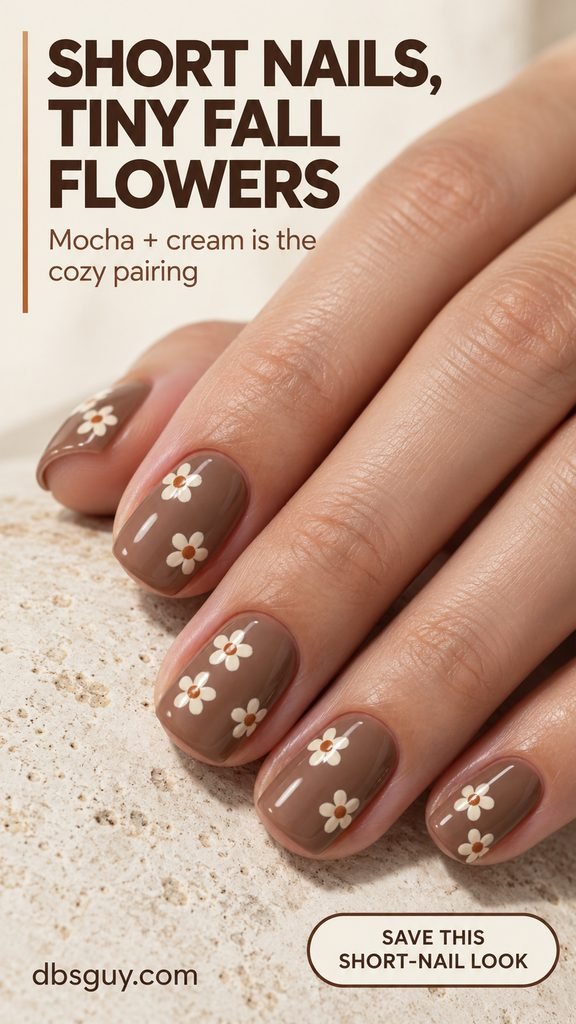
Tiny cream daisies give a short mocha manicure a playful detail without taking over the brown. The cinnamon-colored centers add a little warmth, and the squoval shape keeps the canvas compact. A few flowers on each nail are enough to make the pattern clear.
Use the width of your nail to choose the flower size. If the petals nearly touch both sides, they will read as large blooms instead. For a very short version, keep one or two complete daisies and leave the rest of the mocha visible. This is also a useful design to practice on a spare nail tip.
Salon note: Short glossy squoval mocha nails with a few tiny cream daisies and muted cinnamon centers on each nail.
2. Dusty Rose Nails With Cocoa Floral Sprigs
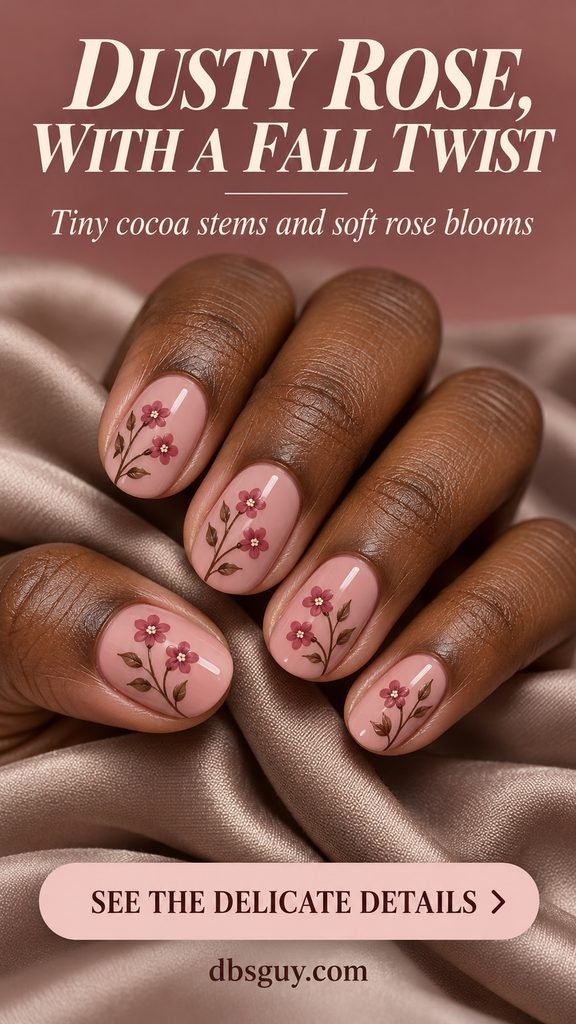
Fine brown stems give this soft pink manicure its autumn character. Small darker-rose flowers sit along each sprig, with tiny cocoa leaves connecting the shapes. The base stays fully covered in dusty rose, so the line work reads clearly against it.
The stem is as important as the flower here. Keep it fine and slightly curved, with some pink showing around the branches. If you prefer fewer details, carry the sprigs on two nails and leave the others plain. Choose a rose shade with a little muted depth to maintain the gentle fall palette.
Salon note: Glossy short oval dusty-rose nails with fine cocoa floral sprigs, deeper rose blossoms and tiny brown leaves.
3. Sage Green Nails With Ivory Wildflowers
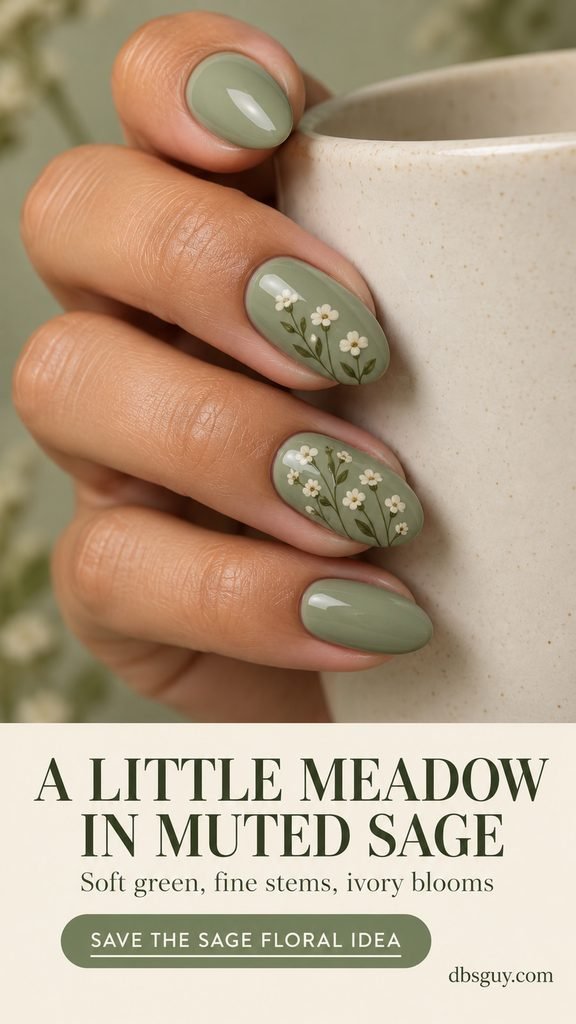
Sage makes a calm background for a little ivory meadow. Two accent nails carry the slender stems and small flower heads, while the surrounding nails stay plain green. Keeping the same base color across the set makes the artwork feel connected.
Ask for a slightly deeper green in the stems so they remain visible beside the sage polish. On shorter nails, reduce the number of branches and let one main stem lead the design. The ivory petals should still be distinct enough to see at a glance, even when the leaves are very fine.
Salon note: Glossy muted sage nails with ivory wildflowers on fine darker-green stems on two accents; keep the other nails solid sage.
4. Terracotta Nails With a Cream Floral Accent
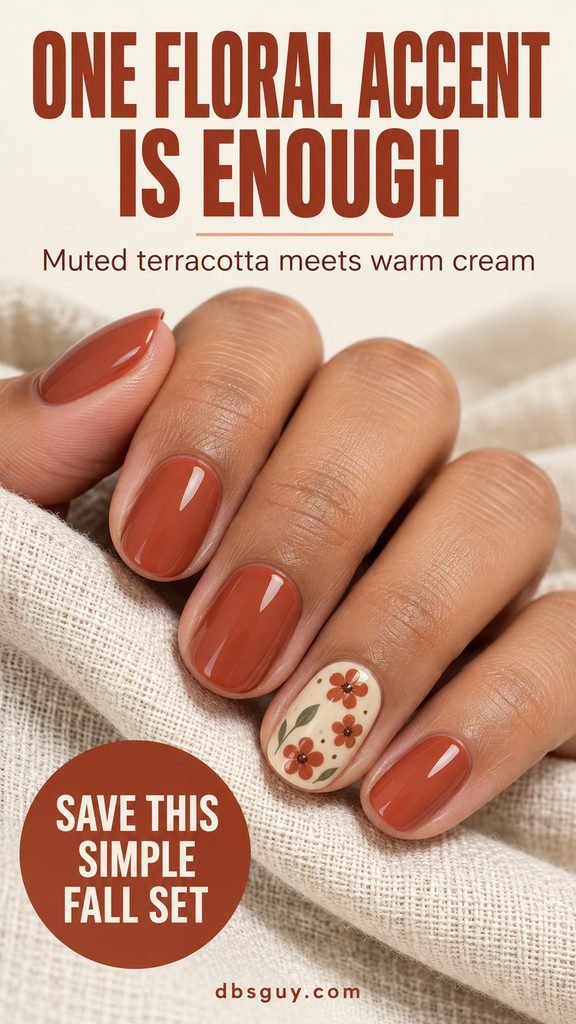
A single cream nail gives the terracotta flowers their own little canvas. The same muted orange-brown appears on the plain nails and in the petals, so the accent belongs to the set immediately. Small sage leaves add a second detail without changing the overall warmth.
This is a good choice when you want most of the manicure to remain a solid color. Keep the cream warm rather than stark white if you like the softness of the reference. Three little flowers fit the pictured accent; on a smaller nail, one well-placed bloom can carry the idea.
Salon note: Glossy short rounded terracotta nails with one warm-cream ring accent featuring tiny matching flowers and sparse sage leaves.
5. Taupe Nails With Dusty Blue Blossoms
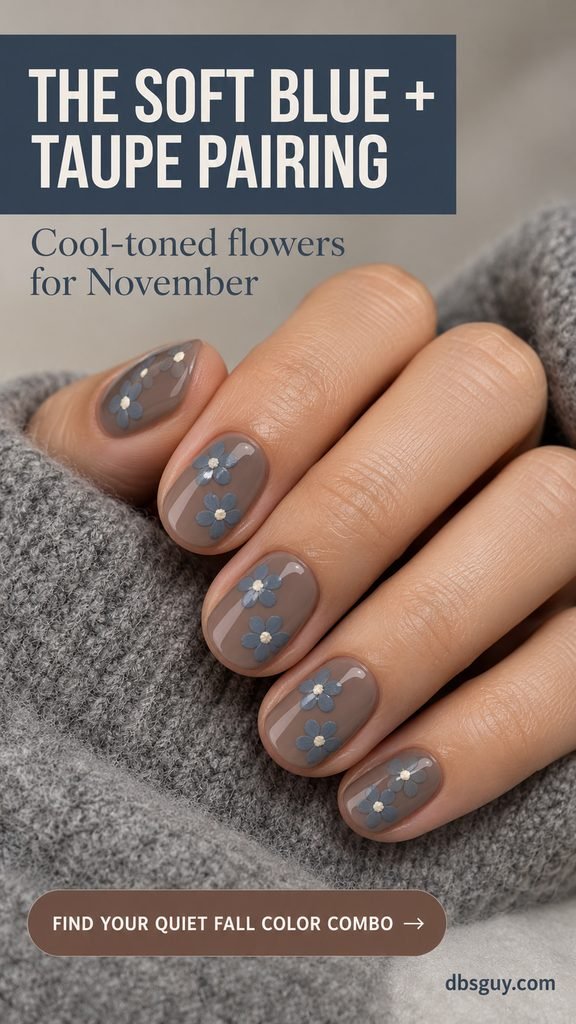
Dusty blue brings a cool note to mushroom taupe. The little flowers have cream centers and no stems, which gives this manicure a clean, scattered pattern. Both main colors have a gray softness, making the combination easy to picture beside a charcoal sweater.
Look at the blue and taupe together under ordinary light. If the two shades blend too closely, choose a slightly lighter blue or a deeper taupe. Keeping the petals distinct matters more than matching a color name on a bottle. A couple of blooms per nail leaves room to appreciate the pairing.
Salon note: Short glossy oval mushroom-taupe nails with small dusty-blue blossoms, cream centers and no stems.
6. Buttercream Nails With Cinnamon Daisies
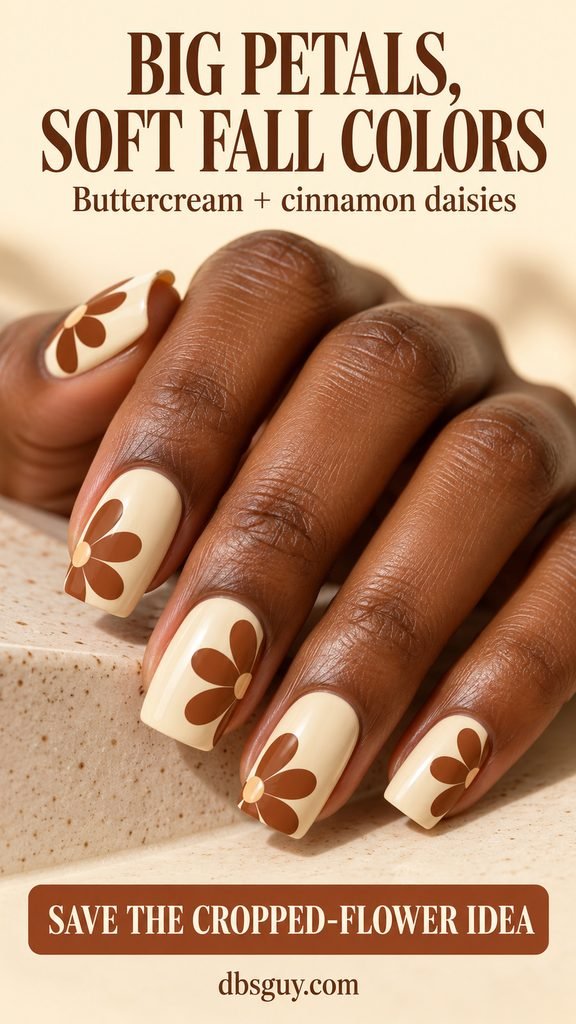
One large daisy makes a different impression from a scattering of tiny flowers. Here, cinnamon petals extend beyond the side of the nail, with the pale buttercream base showing around them. The cropped placement gives the design a bold shape while the colors stay soft.
Choose the flower center’s position before the petals are painted. Moving it nearer the edge leaves more cream visible; moving it inward gives you a fuller bloom. The design can work on short nails too, because you only need a convincing part of the flower rather than squeezing in every petal.
Salon note: Glossy pale-buttercream soft-square nails with one oversized cinnamon daisy cropped at a side edge on each nail.
7. Vintage Mauve Rosebud Nails
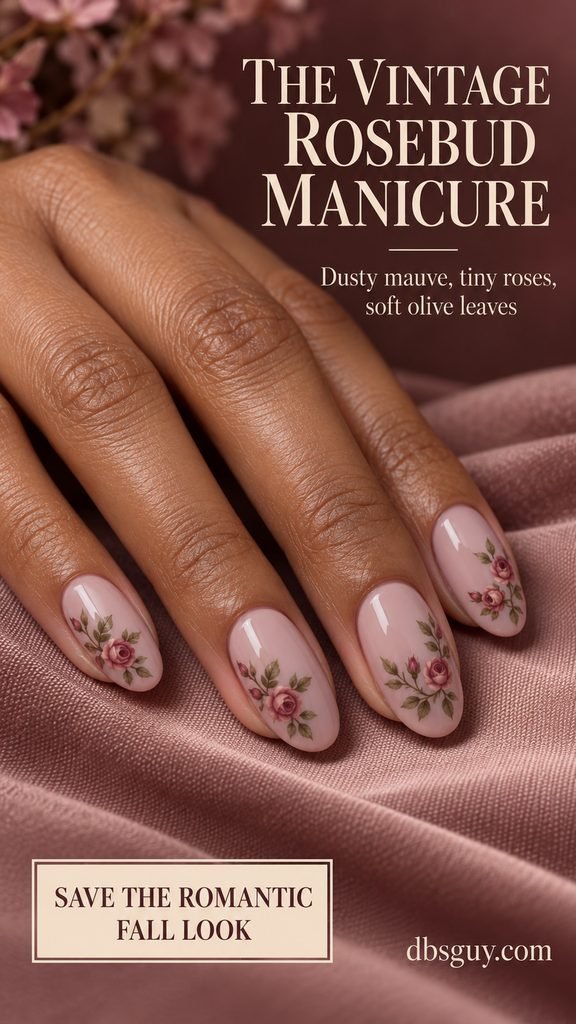
Little rosebuds give this manicure the feel of a vintage floral print. Curved strokes build the rose centers, while tiny olive leaves add definition around the muted pink and mauve. An opaque dusty base keeps the whole set within a close color family.
Save a close view of the roses when you take this idea to the salon. Their curled petals are the detail that separates them from simple daisies. If the full pattern feels busy at your nail length, use one small rosebud cluster per nail or keep the roses on a pair of accents.
Salon note: Glossy dusty-mauve oval nails with miniature vintage rosebud clusters in deeper rose and mauve, plus tiny olive leaves.
8. Dusty Rust Chrysanthemum Accent Nails
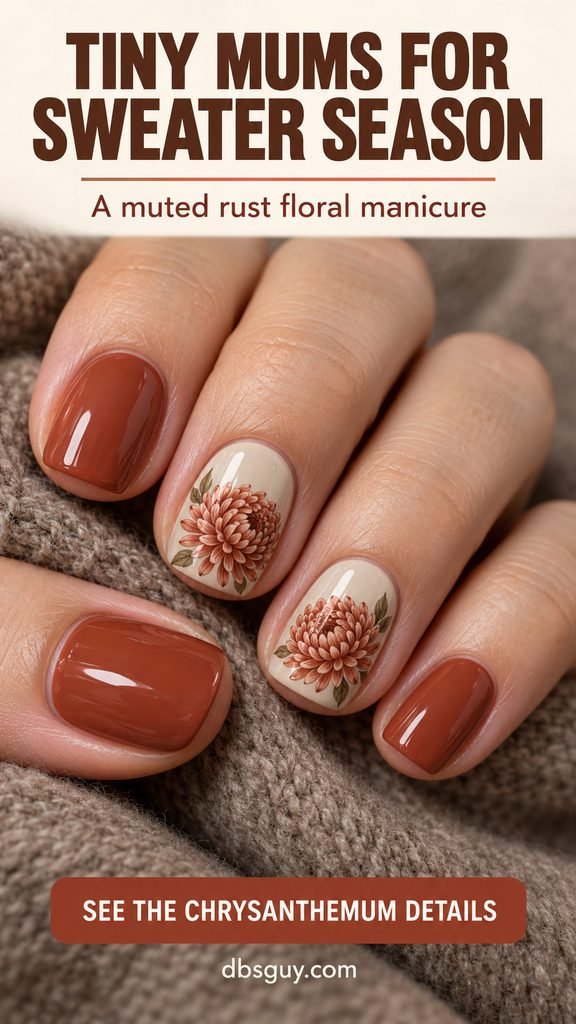
The chrysanthemum shape comes from many narrow petals gathered around a center. Painted in dusty rust over oatmeal, it gives the accent nails a detailed, almost illustrated look. Plain rust on the other fingers lets those flower heads hold the attention.
Leave a little oatmeal visible around each bloom so the outer petals keep their outline. For a smaller nail, a cropped mum is an option worth discussing with your artist. This fine, layered artwork needs a different level of detail from a dot-flower manicure, so send the reference when you book.
Salon note: Short glossy squoval nails in dusty rust, with oatmeal middle and ring accents carrying finely painted rust chrysanthemums.
9. Oatmeal Nails With Cocoa Floral Line Art
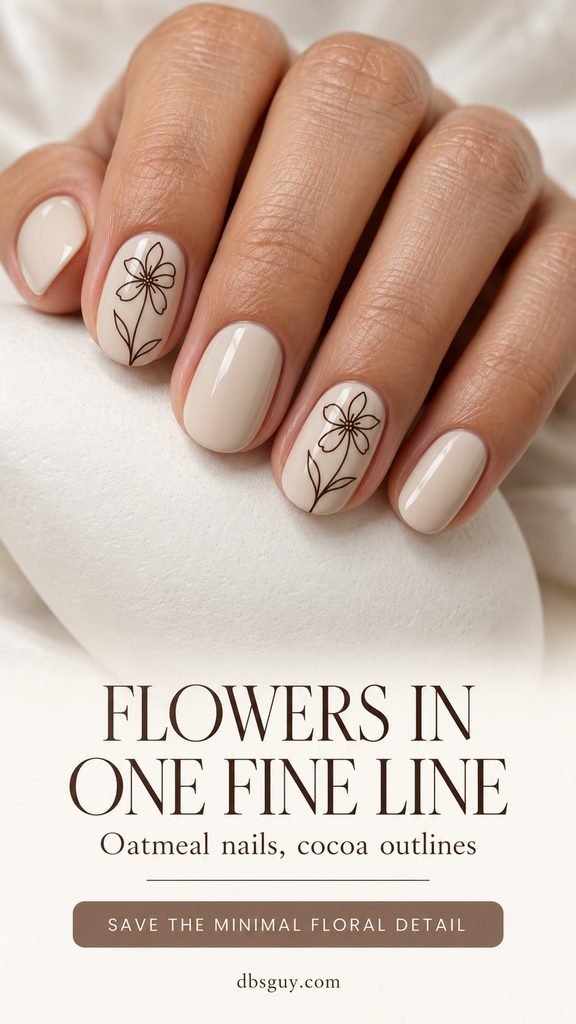
An outlined flower can give you plenty of botanical detail with very little color. The petals, stem and leaves are drawn in fine cocoa over an opaque oatmeal base. Two accents keep the line work easy to appreciate beside the plain nails.
The petals stay open inside, letting the oatmeal show through. Make that detail clear if you want this light, drawn effect. On a very short nail, shorten the stem and reduce the leaves before making the whole flower smaller; that preserves the part of the design you are most likely to notice.
Salon note: Glossy oatmeal short oval nails with fine cocoa outline flowers on the index and ring; leave the petal interiors unfilled.
10. Muted Floral French Tips
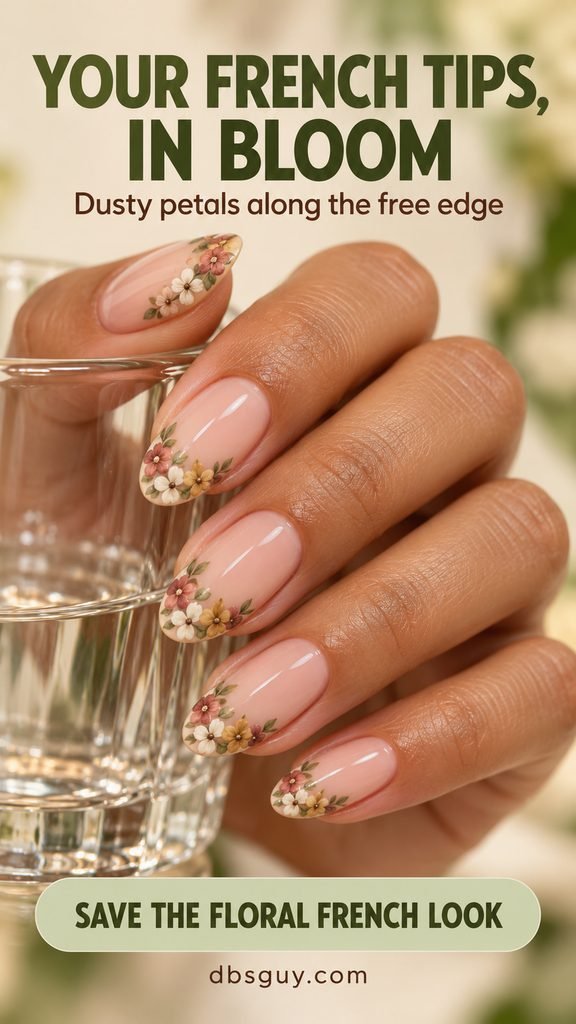
Tiny flowers form the tip itself in this French manicure. Dusty rose, muted ochre and ivory sit along the free edge, with small sage leaves filling the spaces between them. The nude base gives the curved floral band a clear place to stand out.
Check how deep the floral tip will need to be on your nails. A longer almond can hold several complete flowers, while a short version may need fewer blooms and partial petals. The important detail is the curved placement at the edge, so you can simplify the flowers while keeping the French shape.
Salon note: Sheer nude almond nails with French tips made from small muted rose, ochre and ivory flowers, plus sparse sage leaves.
11. Diagonal Floral Borders on Milky Beige Nails
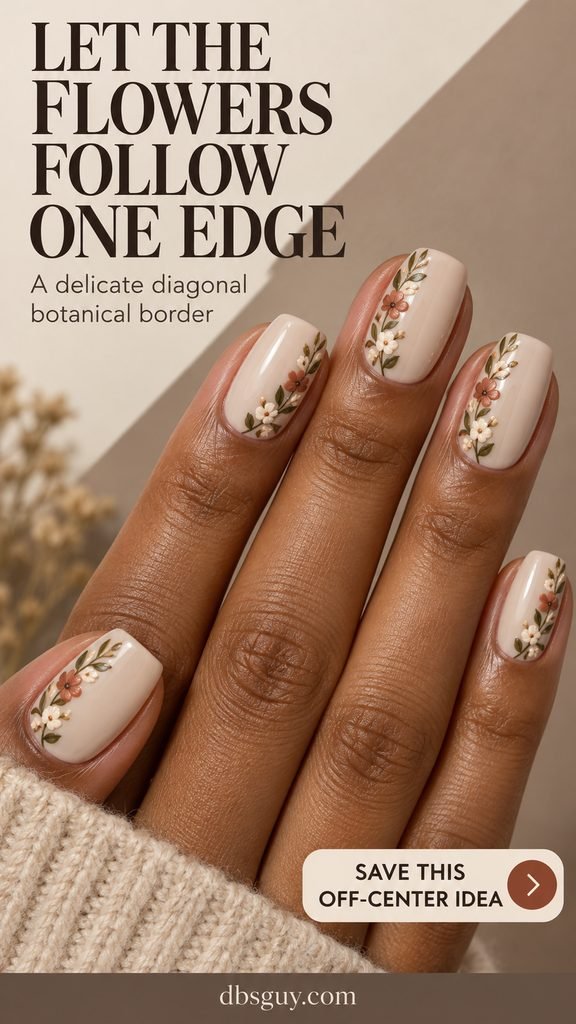
A narrow botanical border sends the eye along one side of the nail. Small terracotta and ivory flowers follow a fine olive stem, leaving most of the milky beige surface open. The diagonal direction gives the design movement without covering the whole nail in print.
Keep the border close enough to the side that it still feels off-center. The flowers can vary in size, but the stem should remain easy to follow. If you want a shorter adaptation, choose one small blossom and a bud along the diagonal instead of compressing a full trail of flowers.
Salon note: Glossy opaque milky-beige soft-square nails with a narrow diagonal border of tiny terracotta and ivory flowers along one side.
12. Tiny Floral Cuticle Arcs
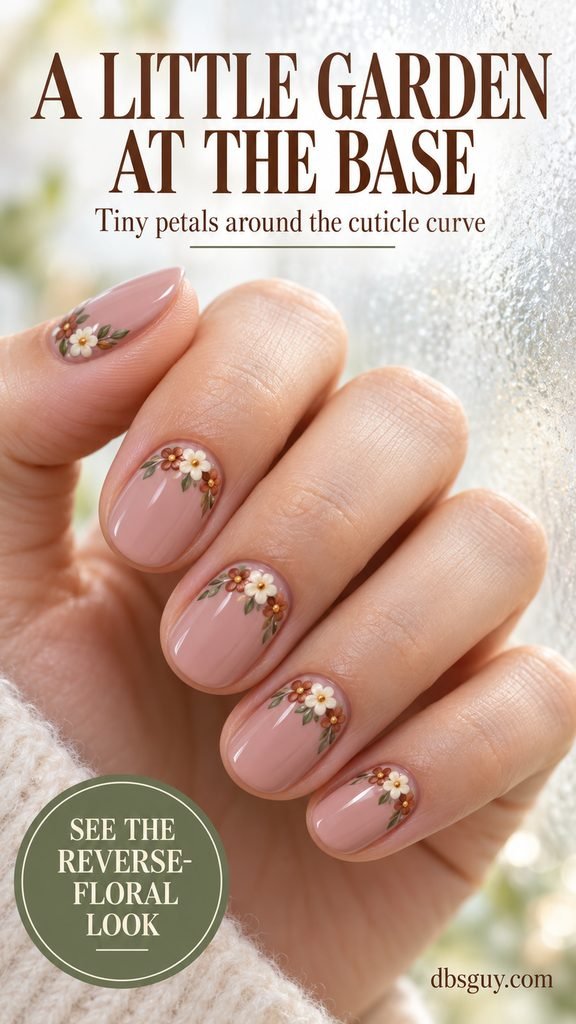
A little curve of flowers frames the base of each nail. Ivory and cinnamon petals sit close together near the cuticle, with the dusty-blush polish left plain above them. It is a sweet way to concentrate the artwork in one small area.
The arc should follow the shape of the individual nail. On a narrow pinky, two tiny blooms may give a clearer result than a crowded row. The reference has a slightly raised appearance; ask for flat painted petals if you prefer a smooth surface. Keep the free edge plain to preserve the placement.
Salon note: Glossy short dusty-blush nails with tiny ivory-and-cinnamon floral arcs near each cuticle; agree on flat or slightly raised petals and leave the tips plain.
13. Oversized Dusty Mauve Anemone Nails
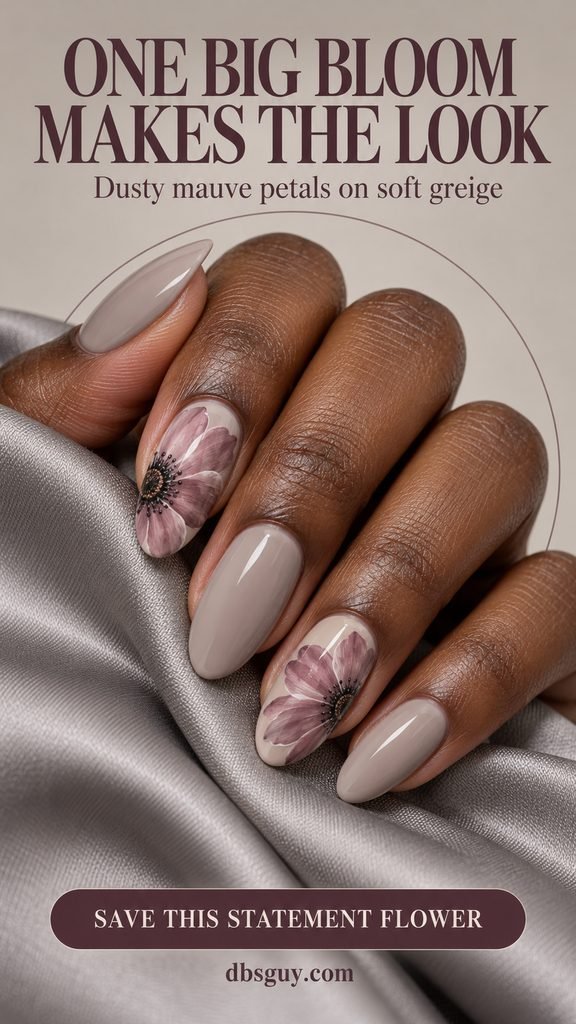
Broad mauve petals and a dark center make this flower readable even when part of it is cropped. The greige base gives the anemone a quiet background, while plain nails on either side balance the larger artwork. It is a statement flower in a restrained palette.
Keep the center visible if you want the same recognizable flower shape. The petals can extend off the nail edge, which helps a large bloom fit without shrinking every detail. Show your artist the soft variation within the petals as well as the outline; a flat solid silhouette will have a different character.
Salon note: Glossy soft-greige almond nails with one oversized dusty-mauve anemone and a dark center on each of two accents.
14. Sage and Cream Floral Checker Accents
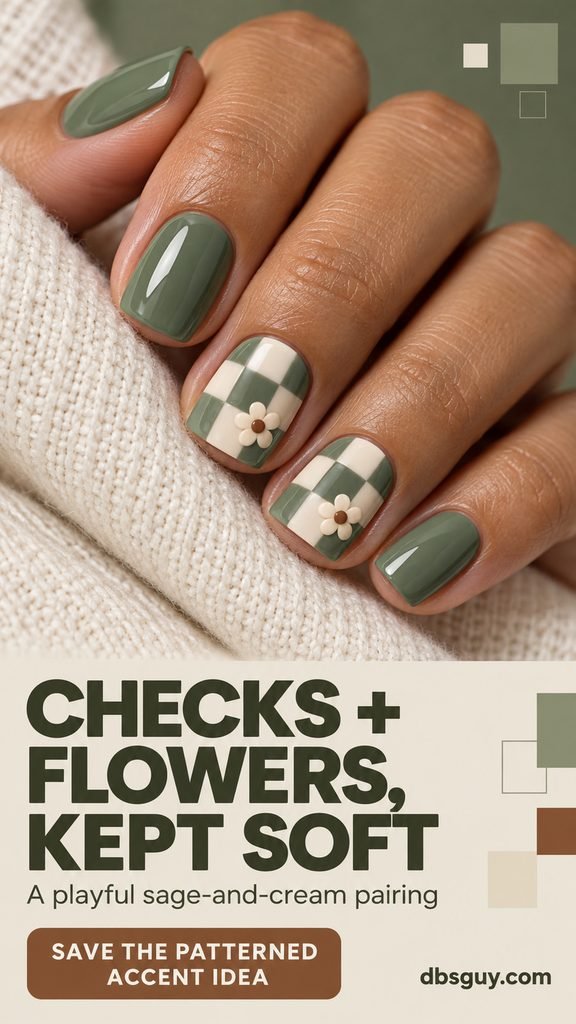
Soft colors give the checkerboard a gentler feel. Sage and cream squares create the background on the accent nails, with a small, slightly raised flower laid over the pattern. Plain sage on the other fingers keeps the set from feeling too crowded.
Choose a flower placement that remains visible against the checks. A cream petal needs enough sage behind it to keep its edge clear. For smaller nails, use fewer, larger squares and one simple bloom. Ask for a flat painted flower if you want the pattern without the raised detail.
Salon note: Glossy short sage nails with sage-and-cream checker accents on the middle and ring, each finished with a small low-profile cream flower.
15. Cocoa Nails With Pale Peach Petals
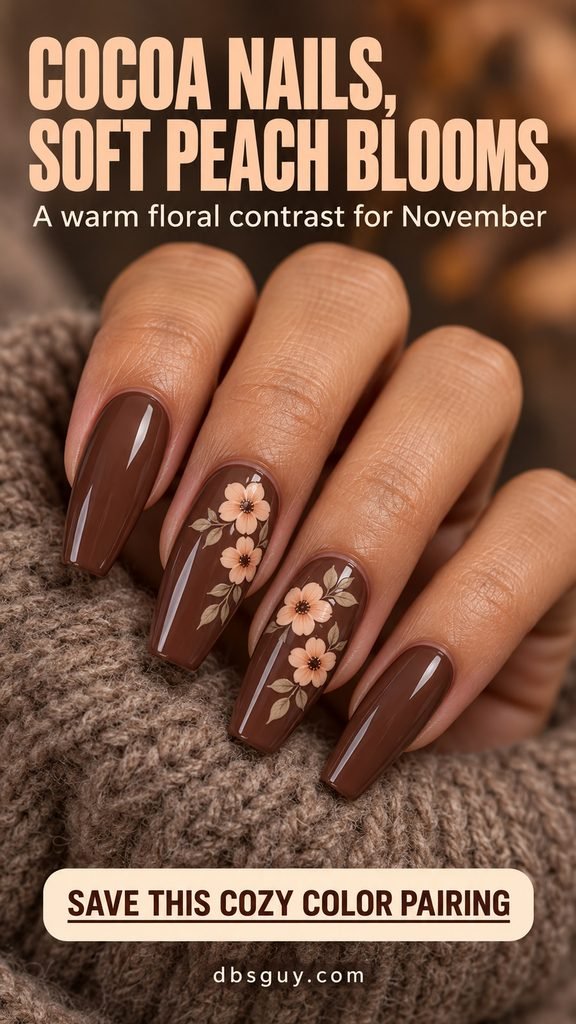
Pale peach adds a warm floral contrast to cocoa brown. A few little blooms travel diagonally across two accent nails, while the remaining nails keep their smooth chocolate color. The tapered coffin shape gives the soft petals a more defined frame.
Choose a medium cocoa if you want the brown to stay noticeable in ordinary light. Peach will stand out differently over a near-black base. On shorter nails, keep the two-color pairing and reduce the flower trail to one or two blooms; the warm contrast is the detail to preserve.
Salon note: Glossy medium cocoa coffin nails with a diagonal trail of small pale-peach flowers on the middle and ring accents.
16. Smoky Blue Nails With Antique-Rose Bouquets
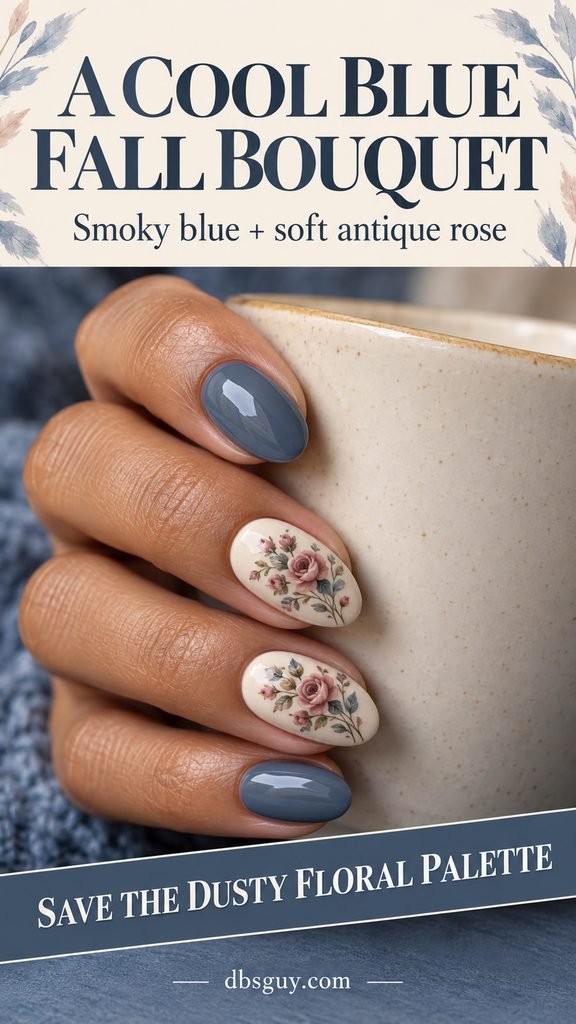
Smoky blue gives the manicure a cool frame, and the cream accent nails hold a miniature rose bouquet. Dusty pink petals, gray-green leaves and fine taupe stems make the little arrangements feel softly painted. The grouped flowers give this a different rhythm from scattered blossoms.
Keep the bouquet together, with the stems gathering beneath the flower heads. On short nails, one rose and a small bud can suggest the same arrangement. A muted blue is key to the pictured palette; compare it beside the cream and rose shades so all three feel equally softened.
Salon note: Glossy smoky-blue oval nails with warm-cream middle and ring accents featuring miniature antique-rose bouquets and fine stems.
17. Matte Clay Nails With Ivory Cosmos
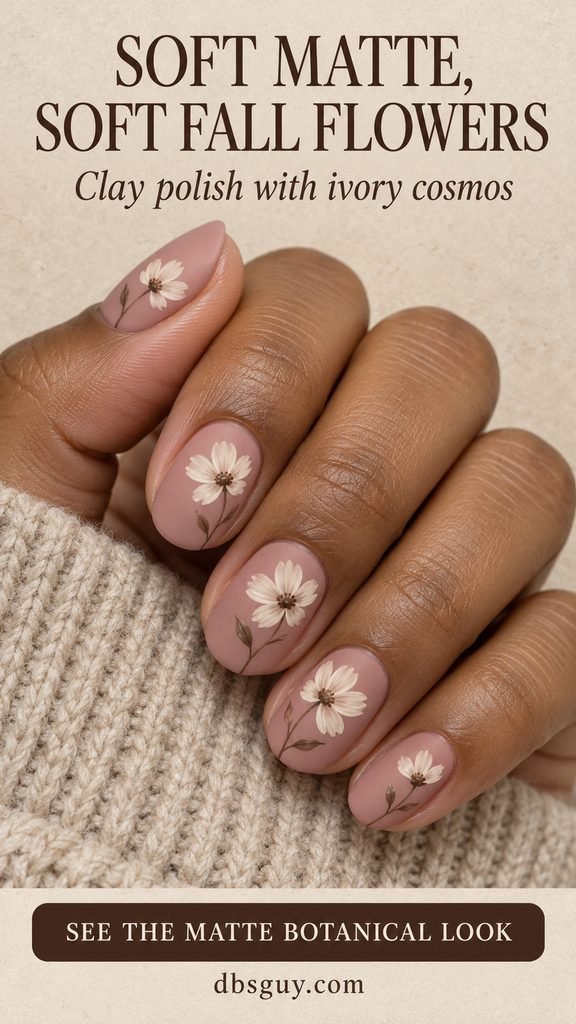
The matte clay background makes the ivory petals easy to study. Each flower has slender, softly shaped petals, a small darker center and a fine stem. The finish gives the whole manicure a quiet, painted appearance beside an oatmeal knit.
Ask to see your chosen clay color with the matte finish applied before settling on the shade. The petals should stay delicate even when their position changes from nail to nail. If you want less repetition, put the cosmos on two accents and keep the remaining nails in the same matte clay.
Salon note: Short oval clay-pink nails with an even matte finish and delicate ivory cosmos flowers on fine taupe stems.
18. Soft Watercolor-Style Floral Nails
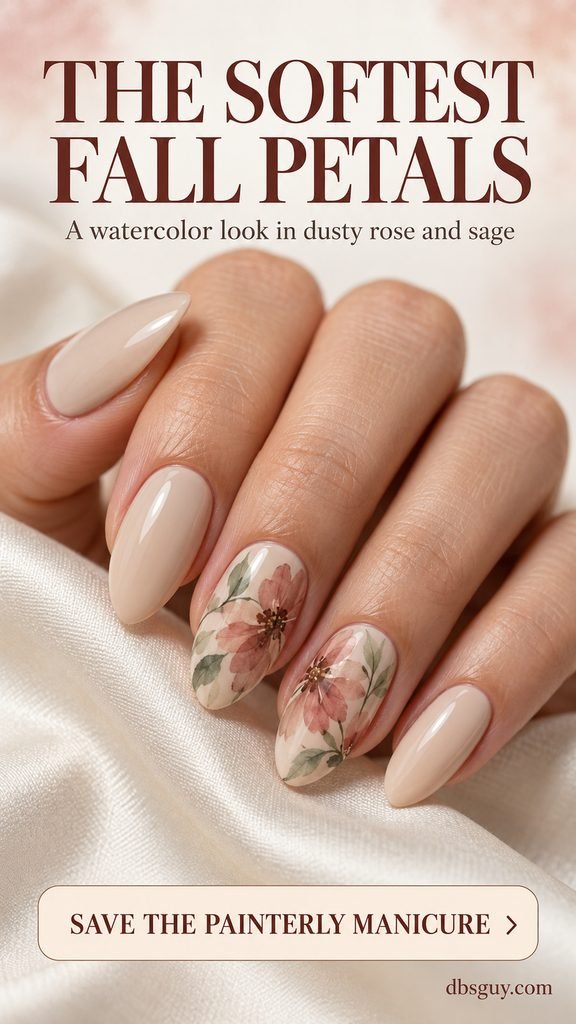
Softly blended petal edges give these accents their watercolor look. Dusty rose and terracotta overlap on a warm beige base, with small cocoa centers helping the flowers keep their shape. The plain surrounding nails leave room for the painterly detail.
Use the image to show the softness you want, then let your nail artist choose a suitable product technique. Watercolor-style describes the appearance here. If you prefer more definition, ask for clearer flower centers while keeping the outside edges hazy. The finished surface can stay smooth and glossy.
Salon note: Glossy warm-beige almond nails with two softly blended floral accents in dusty rose, muted terracotta and sage.
19. Champagne-Pearl Nails With Delicate Taupe Flowers
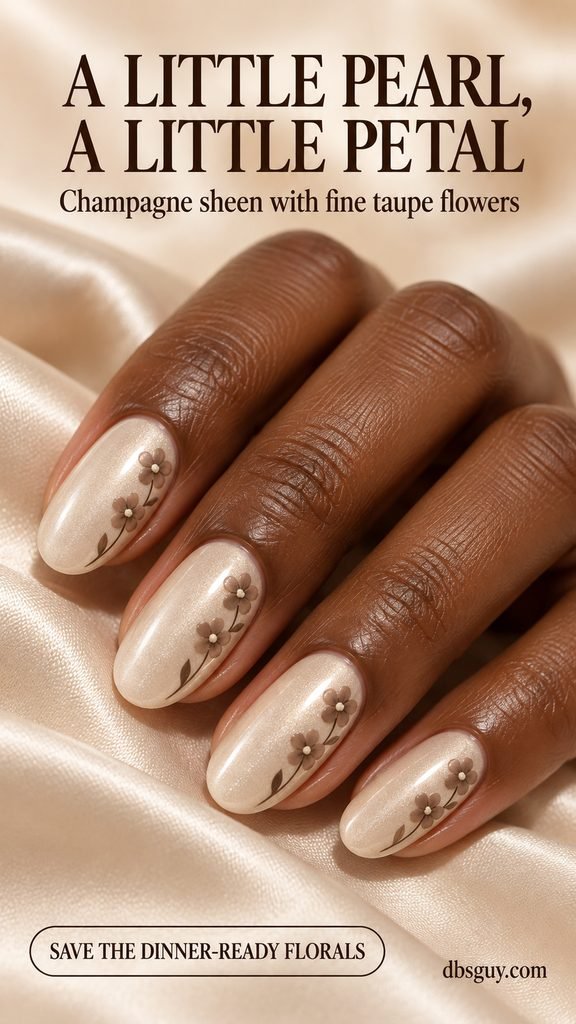
A subtle pearl sheen gives the beige base a little light for a November dinner. Small taupe flowers sit along one side, leaving most of the surface clear enough to show the silky reflection. The close neutral colors keep the effect understated.
Bring a reference for the amount of shine as well as the flowers. A fine pearl finish will look different from chunky glitter or a strong mirror effect. Check that the taupe art remains visible over the finished sheen, especially where the light reflection passes through the petals.
Salon note: Champagne-beige oval nails with a fine pearl sheen and delicate taupe floral sprigs along one side; agree on the flower texture.
How to Take Your Floral Reference to the Salon
Save the image and its salon note, then identify the two details you most want to keep. For example: “I like the sage color and ivory flowers from number 3, but I want them on my usual short oval nails.” That gives your artist a clear starting point for adapting the design.
For fine chrysanthemums, rose bouquets, checker patterns or soft blended petals, send the picture when booking. Ask which art service to reserve and whether the detail will fit your chosen length. If possible, agree on one sample nail before the full set so you can check flower size, contrast and finish together.
A Simple Flower Accent to Practice at Home
Start with one accent and a simple rounded-petal flower. Choose a base shade, a petal color and a center color that are easy to distinguish. Practice on a spare nail tip first so you can judge the size before working on your own manicure.
For a basic technique reference, Olive & June’s fall floral tutorial builds flowers from dotted petals and a contrasting center. OPI’s floral nail-art tutorial also demonstrates a five-dot flower. Those petal shapes are useful practice references for the simpler designs here.
With regular nail polish, follow the maker’s base-coat and color instructions and let the base dry as directed. Use a small dotting tool to place a ring of petal dots, then add the center once the petals have dried enough for the next step. Leave some base color around the flower and follow the product’s directions before applying your top coat.
Fine stems, layered rose petals and blended flowers call for different brushwork from a dot flower. Treat those images as salon references if you want help with the detail. For gel products, use the exact product and lamp instructions; regular-polish drying directions do not apply to gel.
Fall Floral November Nails: FAQs
How can floral nails feel right for November?
Choose the palette first. Muted brown, clay, sage, dusty rose and smoky blue can give familiar flowers a fall mood. Cream and cocoa make useful supporting colors, and a matte or fine pearl finish can change the feel without adding more artwork.
Which floral designs are easiest to adapt to short nails?
Tiny daisies, a single floral accent and a simple outline flower all offer clear starting points. Reduce the number of blooms before shrinking every detail. A cropped large flower can also work because it does not need to fit entirely inside the nail.
Do I need flowers on every nail?
No. One or two accents can carry the whole idea. Repeat a petal color in the solid nails, or use the same base across the set, to keep the manicure connected. Designs 4, 9 and 16 show different ways to arrange that balance.
Can these looks work for Thanksgiving?
The terracotta accent, dusty rust mums and champagne-pearl florals each offer a different dinner-ready direction. Choose the palette you enjoy with your outfit and keep the level of detail comfortable for you; a single flower can be enough.
Can I use floral nail stickers instead of painting?
Stickers can be another way to add a similar motif. Check that their size fits your nail and that the colors work with your chosen base. Follow the maker’s application and finishing directions; stickers and water-slide decals may use different methods.
Are these floral designs raised or smooth?
The collection includes painted-looking flowers and some accents with a slightly raised appearance, especially the cuticle arcs and checker flowers. Show your artist whether you want a flat surface or a little relief. The watercolor-style look describes soft petal edges, not a required texture.
Save Your Favorite Soft Fall Floral Look
Pick the image that suits your usual nail length, then save its salon note with it. The flower does not have to be complicated: a tiny cream daisy, a single outlined bloom or a soft rose bouquet can each make the manicure feel personal. Start with the colors you want to wear all month and let the floral detail follow.
Manicure images are AI-generated concepts created for dbsguy.com. Your nail artist can adapt the colors, flower detail, finish, and shape to your nails.