15 Valentine Bedroom Decor Ideas for Kids With Colorful Hearts and Sweet Little Notes

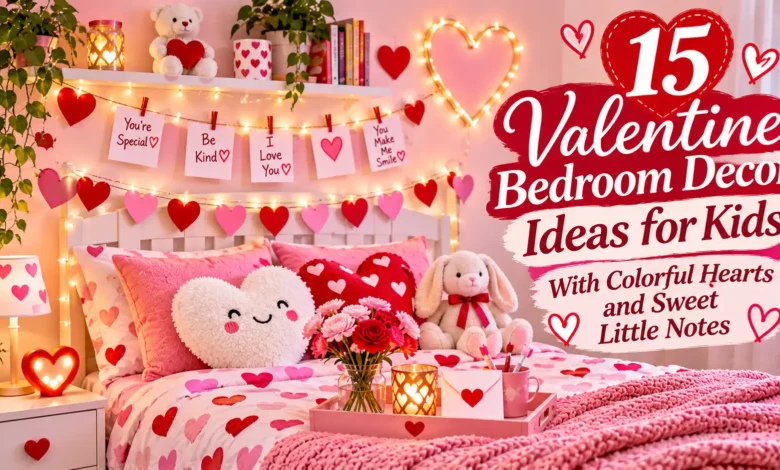
Start with a few colorful hearts on the door, one soft accent on the bed, and a note your child can read or have read aloud. That is enough to make a bedroom feel ready for Valentine’s Day without moving furniture or replacing everything they already like.
These 15 Valentine bedroom decor ideas for kids mix things to look at with things to use: a little mailbox, a reading invitation, a place for their artwork, and messages from the people who love them. Choose two or three that suit your child rather than putting every idea in one room.

The visuals are AI-generated decor concepts, not photographs of completed or tested projects. Adapt the colors, scale, and materials to your room.
Choose a color palette and a place to start
Ask your child to pick one favorite color, then pair it with a Valentine accent. Teal and coral, purple and yellow, or blue and red all work; pink is optional. Repeat those colors in one wall or door display and one small object so the room still feels connected.
For a small bedroom, try the door hearts and bedside note frame. For a child who likes making things, choose the watercolor gallery or paper village. Keep the desk clear enough for homework and the route from the bed to the door open.
Gather supplies only for your chosen projects: colored paper or cardstock, broad markers, a glue stick, age-appropriate scissors, and an adhesive labeled for the surface. The measurements below are suggested starting sizes. Test adhesives in a hidden spot and follow their removal directions; even removable tape can affect some finishes.
Plan for the child who uses the room. These setups are intended for school-age children, with adult help for cutting and mounting. Choose age-labeled materials and account for younger siblings who visit. Keep paper away from heaters and lamps, avoid sharp or breakable accents and loose small parts, and leave cords out of reach. The American Academy of Pediatrics’ holiday decoration safety guidance explains these concerns. Do not add pillows, toys, loose blankets, or paper decorations inside an infant’s crib or bassinet.
1. Fill the bedroom door with heart notes
Cut six large hearts from coral, yellow, mint, and lavender paper. A width of about 5 to 7 inches leaves enough space for a short message in a thick marker. Arrange them above or beside the handle, keeping the latch, hinges, and door edges clear.
Mix words with drawings. “I love your ideas,” “You belong here,” and “I love being your parent” fit on a heart without tiny lettering. A smile or a doodle works for a child who is still learning to read. You can put them all up together or add them gradually; there is no need to start on a particular date.
Keep affection separate from a behavior chart. The notes can simply say that your child is loved, with no task to finish or reward to earn.

2. Make a rainbow sweep on a side wall
If your child wants a bigger splash of color, arrange flat paper hearts in a loose diagonal that rises across one side wall. Move from warm colors to cool ones: coral, yellow, mint, blue, then purple. The gradual change gives the display a direction even when the shapes are uneven.
Try hearts about 3, 4, and 6 inches wide. Lay them out on the floor first, then transfer small groups to the wall with a surface-appropriate adhesive. Leave a little wall showing between them instead of covering the whole area. A side wall above low storage keeps the design visible while leaving room for the bed’s existing headboard.
For a quieter version, use just three shades of your child’s favorite color. The same rising arrangement still works.

3. Turn a small box into a Valentine mailbox
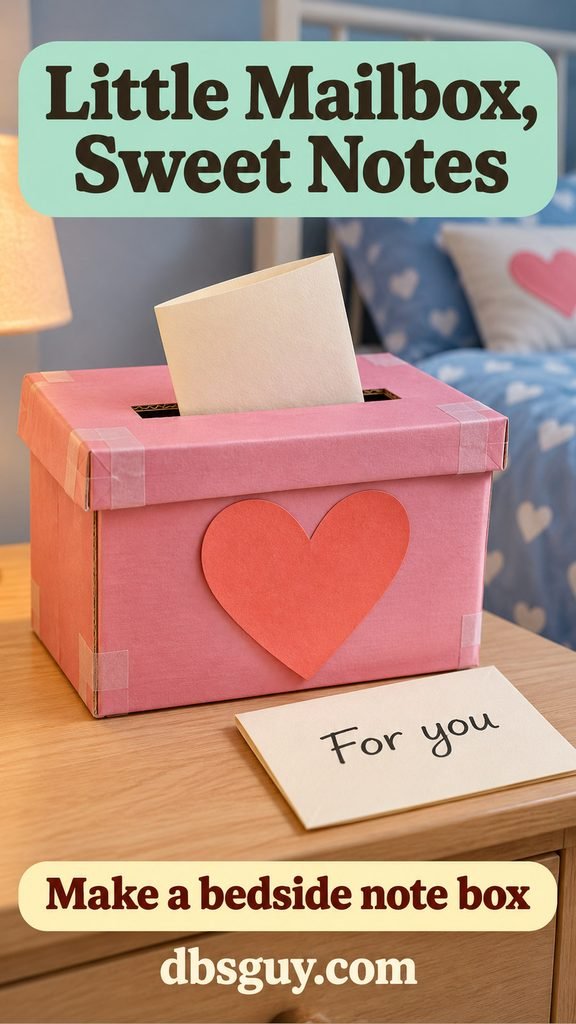
A small shoebox with a lift-off lid makes a useful mailbox because the notes are easy to retrieve. Have an adult cut a slot in the lid wide enough for your folded cards and cover any rough edges with tape. Wrap the box in colored paper and glue a large heart flat to the front.
Set it on a low desk or bedside table, away from the edge. Leave several blank cards nearby so your child can send replies, draw a picture, or ask someone to help write a message.
Make the first delivery specific: “I liked hearing your story about the dragon,” or “Would you like to choose our next book?” A note that starts a conversation gives the box something to do after the decorating is finished.
4. Add one heart pillow to familiar bedding
Keep the usual quilt and sleeping pillow, then add one heart-shaped cushion for daytime decorating. A raspberry heart against ivory bedding looks bright; a teal throw folded at the foot of the bed connects it to a blue or green room.
Choose a cushion with a simple sewn shape and care instructions that suit your household. Skip glued-on decorations or dangling trim. If the room already has patterned bedding, pick a solid heart in one of its colors instead of introducing another print.
This is a good choice for a child who wants a seasonal change without making a craft. Move the decorative cushion to a chair or storage spot at bedtime if it gets in the way. Keep loose paper notes off the sleeping surface.

5. Give three watercolor hearts their own gallery
Use three small sheets of watercolor paper, around 5 by 7 inches each. Let your child paint one large heart on each sheet using coral, purple, and teal, or any three colors they choose. Leave a white border so each painting reads clearly against the wall.
Let the pages dry flat before mounting them above an art desk. Use tape suited to the wall and paper, or display them on an existing art board. If painting feels like too much setup, crayons on plain cardstock give the same three-piece arrangement without drying time.
Ask your child which way the pictures should go. A slightly wonky heart can be the best part of the display; it does not need an adult redraw.

Also Read: 17 Valentine Art Ideas With Watercolor, Collage, and Colorful Hearts
6. Put tissue-paper hearts on a window
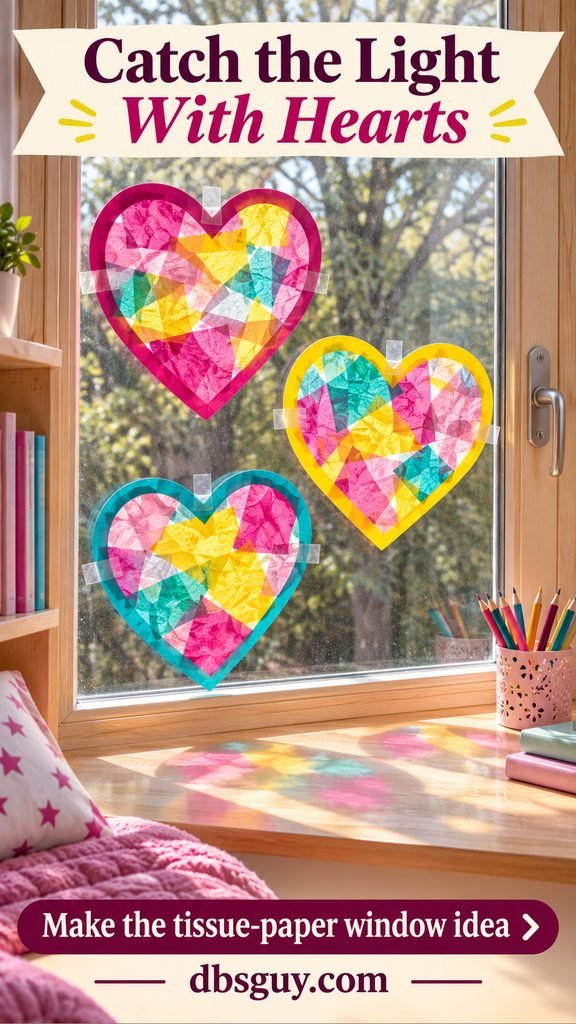
Make three large hearts from overlapping pieces of colored tissue paper sandwiched between clear self-adhesive sheets. Work on a table: lay one clear sheet sticky-side up, add tissue pieces, cover with the second sheet, and smooth it down. An adult can help cut the heart outlines and add broad paper borders.
Use small tabs of tape labeled for glass to attach the finished hearts flat to a fixed pane. Leave handles, locks, and the opening path clear. Do not move furniture into a climbing position to reach the window; an adult should place the display.
Keep enough of the pane uncovered to see outside. You get translucent color in daylight without adding a hanging strand or electrical lights.
7. Make the reading corner feel like an invitation
Refresh an existing chair or reading spot with a book about friendship and a homemade bookmark. Cut a cardstock strip about 2 by 7 inches, draw a heart near the top, and add “One more story?” beneath it. Leave off tassels and beads so the bookmark stays flat inside the book.
Place the open book on the chair for the reveal, then return it to the book rack when the seat is needed. A cream cushion or a favorite blanket can supply the cozy part; the handwritten invitation supplies the Valentine detail.
If space is tight, put the bookmark in tonight’s book on the bedside table. You can use the idea without creating a new reading nook.

8. Build a seven-envelope display for a week of notes
Glue seven envelopes to sturdy poster board in two rows of three, with the final envelope centered below. Leave the tops open, number them 1 through 7, and add a flat paper heart to each front. Check that your cards slide out easily before mounting the board beside the desk.
Fill them with a mix of messages: a funny family memory, an invitation to draw together, something you enjoy about your child, or a little picture. “Let’s make up a silly story” works just as well as a compliment. You can start any seven days before Valentine’s Day or use it afterward.
This is a short sequence to open together, while the mailbox in idea 3 is for ongoing exchanges. Choose the one your child is more likely to enjoy; you do not need both.

Also Read: Valentine Classroom Ideas for a Day Full of Crafts, Games, and Kindness
9. Make a bouquet from paper hearts
Five large hearts in coral, pink, yellow, mint, and purple make a cheerful desk bouquet. Fold each heart lightly down the center for shape. Glue the lower back of each one to a broad green cardstock stem, then let the joints dry before arranging them.
For the stems, fold green cardstock strips lengthwise and glue the layers together for stiffness. Keep them short enough to stand without flopping. Fan them inside a sturdy plastic cup and tape the lower ends inside the cup if they shift. The cup stays empty of water or loose filler.
Add a folded note that says “You brighten my day.” If the bouquet tips, shorten the stems or use a wider container rather than adding small weights.

10. Give a favorite stuffed animal a Valentine seat
Choose one favorite, age-appropriate stuffed animal and place it in a small chair or an existing reading seat. Prop a large paper heart in its lap with a message such as “Saved you a hug.” Rest the card there instead of tying it around the toy.
Use a chair that is already part of the room, and keep it out of the walking route. The familiar toy makes this setup personal even if the only new material is a sheet of paper. Your child might want a dinosaur, rabbit, or well-loved bear; it does not have to match the room.
Once the toy comes out to play, let the display change. There is no reason to keep a favorite stuffed animal off limits for the sake of the arrangement.

11. Put one kind message in a bedside frame
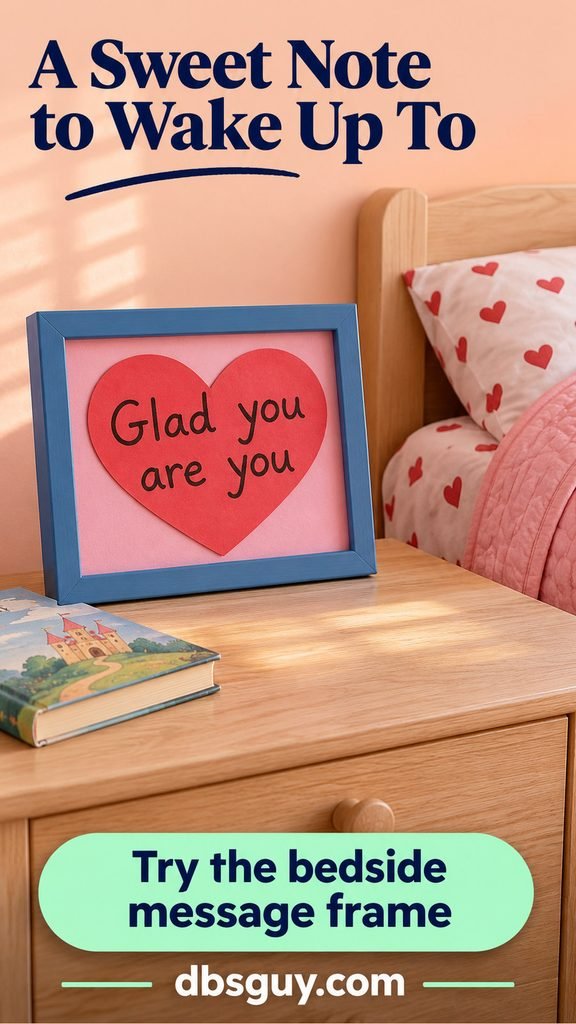
For a child who prefers less decoration, use a small standing frame with an acrylic front. A 4-by-6-inch frame is a manageable size for a crowded nightstand. Fill it with a bold paper heart and a short line such as “Glad you are you.”
Choose dark lettering on a light background and check it from the bed, rather than only from your hand. Set the frame toward the back of a stable tabletop, leaving space for the things your child actually uses at night.
You can change the message later or let your child pick the wording. This is the smallest setup in the list, and it works especially well when wall space or decorating energy is limited.
12. Give a desk organizer a heart-covered front
Wrap an existing cardboard desk organizer in colored paper, then glue broad hearts to the outside front panels. Teal paper with coral and lavender hearts adds color while leaving the compartments easy to see and use.
If you are making an organizer from boxes, choose sturdy open-top cartons and tape their sides together securely. An adult should trim uneven edges. Keep the rims clear of decorations so pencils and crayons do not snag, and avoid embellishments that could fall into the compartments.
A flat note on the desk side can read “Your ideas matter.” Leave the main writing area empty; this idea earns its place by keeping supplies together as well as looking festive.

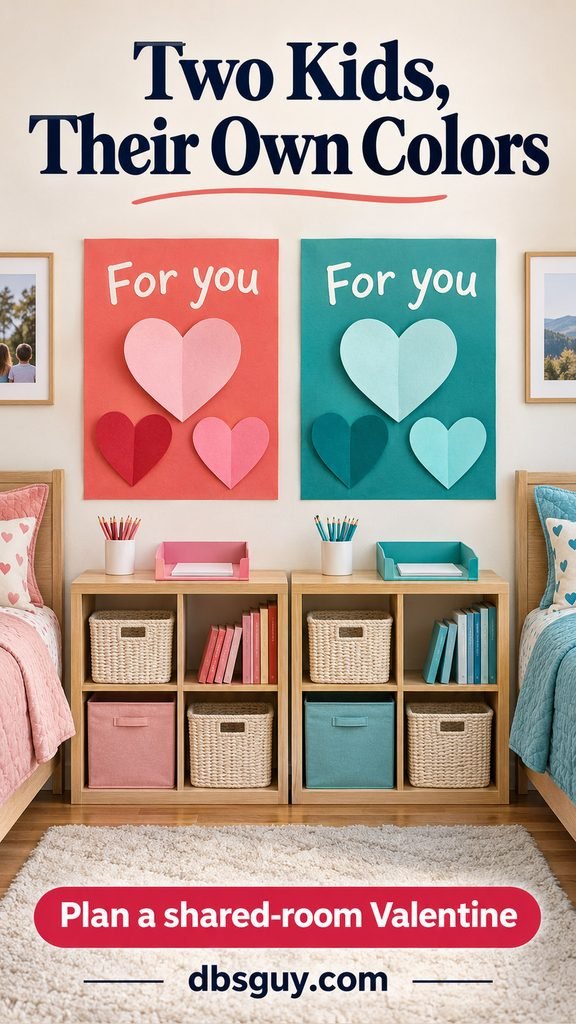
13. Give siblings equal space in their own colors
In a shared room, use two matching poster boards and let each child choose a palette. Coral and teal make an easy pair, but the colors do not need to match gender or age. Put three large paper hearts on each board and set an individual note tray below it.
Keep the boards the same size and offer the same amount of display space. Mount them over separate low storage areas rather than making one child’s side the main feature. If you only have one dresser, give each child half of a single board and a clearly separate tray.
Invite children to exchange notes, but let them keep messages private. The setup should not become a comparison of who received more cards.
14. Build a tiny village of heart-front houses
Three small paper-covered houses add dimension to a desk without hanging anything overhead. Start with clean, empty cardboard cartons as forms. Cover the bodies in cardstock, fold separate rectangles into pitched roofs, and tape the roofs in place. An adult can trim the carton tops to fit the roof shape.
Glue one large heart to each front. Use coral, mustard, and teal for contrast, and vary the heights slightly while keeping the bases wide enough to stand. Folded cardstock feet taped underneath can help a light house sit flat. If one still wobbles, shorten it or display it lying against the back of the desk.
Keep the houses unlit and add a card reading “Home is with you.” Place the village along the back of a low desk, with the working area clear in front.

15. Make a heart-shaped memory collage
Cut one large heart from poster board, around 16 to 20 inches wide if the space allows. Arrange three small photo copies and three short note slips on it before gluing anything down. “Our park day,” “Funny stories,” and “Together” can label the memories without filling the heart with writing.
Let your child choose the pictures: a pet, a grandparent, a friend, or a favorite shared outing can all belong here. Use copies so original photographs stay intact. Leave some background showing, then add a few paper hearts in the gaps.
Mount it flat on a closet door or another suitable surface, clear of the handle and moving edges. When you take it down, save the whole collage as a keepsake instead of peeling off each piece.

Pick a combination that fits your room
For a simple finish, pair the door notes with the framed bedside message. For a craft-focused afternoon, choose the watercolor gallery and paper bouquet. In a shared room, start with the equal-size color boards and let each child decide whether to add another small accent.
Check the room from your child’s height before you finish. Can they open the door, use the desk, find their books, and move around easily? Keep what works, remove what gets in the way, and store flat paper decorations in a folder when the season ends.
Questions about Valentine bedroom decor for kids
How can I decorate without buying new bedding?
Use paper hearts on the door, a bookmark in a favorite book, or one note in a frame you already own. Repeat a color from the existing quilt in the paper decorations. A new bedding set is optional.
What if my child does not like pink or hearts everywhere?
Use their favorite colors and keep the heart motif to one spot. A blue note box, purple painting, or yellow heart card still fits Valentine’s Day. Ask which part they would like to see each day and build around that choice.
How can a child who cannot read enjoy the notes?
Use a simple drawing, a photo, or one or two familiar words, then read the message together. Your child can reply with a drawing or dictate a note to an adult. The exchange matters more than independent reading.
How do I hang the decorations without damaging paint?
No adhesive works harmlessly on every finish. Check the product’s surface and paint-curing directions, test a hidden area, and remove it as instructed. If you cannot attach anything to the wall, use the mailbox, paper bouquet, or standing note frame instead.
Also Read: 25 Valentine Decor Ideas From Heart Garlands to Flower-Filled Tables