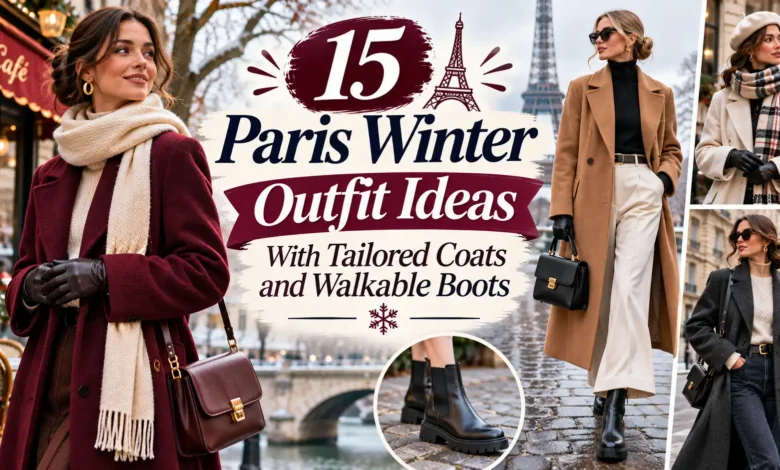
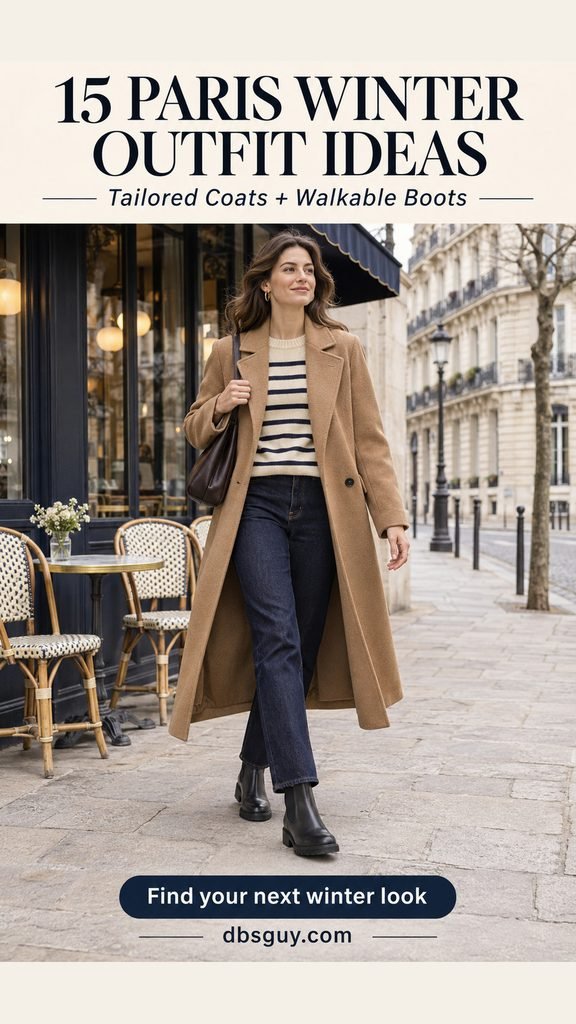
Start with a coat that closes comfortably over a sweater, then choose boots you already enjoy walking in. Dark straight-leg jeans, a striped knit, and a camel coat make an easy first outfit. For dinner, keep the same boots and switch to a knit midi dress or tailored trousers.
These 15 Paris winter outfit ideas give you different ways to use that coat-and-boots foundation: wide-leg pants, warm skirts, layered shirts, and a few richer evening colors. Pick the combinations that suit your plans and your closet. You can repeat one coat throughout a trip.
The visuals are AI-generated styling concepts. They illustrate outfit combinations, not actual trips, tested products, or verified weather performance.
Before you choose a look: warmth, fit, and the forecast
The Paris Tourist Office lists December through February average daytime highs of about 46–48°F (8–9°C), with average lows around 38–39°F (3–4°C). Those are climate averages, not a forecast for your dates. Check the expected rain, wind, and evening temperature before packing.
Begin with a fine long-sleeve layer, add a sweater or cardigan, and finish with your coat. Bring a scarf, gloves, and a hat for longer outdoor stretches. A thin base layer under trousers can be useful if you feel cold easily. On an unusually cold day, wear the warmer insulated outerwear you need; a tailored silhouette is an option, not a warmth rating.
Try the coat on over the thickest combination you intend to wear. Button it, reach forward, and sit down. The upper sleeves should allow movement, and the front should close without pulling. The open coats in the illustrations reveal the outfit underneath; close yours outdoors when you need the warmth.
What makes boots a useful walking choice?
Look for a secure fit through the heel and instep, room for your toes, cushioning, and a low, broad heel you find comfortable. Guy’s and St Thomas’ recommends about 1 centimeter of space beyond your longest toe and trying shoes with the socks you will wear. Its footwear fitting guidance also advises against relying on uncomfortable shoes to improve through breaking in.
Wear your proposed boots on a normal walk before the trip. Chelsea boots should hold your foot securely; choose laces or another adjustable fastening if your heel lifts or your toes grip to keep them on. A low heel alone does not establish comfort.
For wet days, check the maker’s waterproofing information and the condition of the soles. Leather, suede, and wool are not automatically waterproof. Choose tread suited to wet pavement, and remember that no everyday sole makes ice safe. Follow the footwear care instructions rather than applying an unfamiliar spray to every material.
Choose a starting point: looks 1–3 and 12 suit casual exploring; 4, 10, and 11 offer dress or skirt options; 7 and 13 add shirt-and-blazer structure; 5 and 14 are dinner ideas. Look 8 addresses rain, and look 15 is for travel.
1. Camel Coat, Striped Knit, and Dark Straight Jeans
A long camel coat, ivory-and-navy striped sweater, and dark indigo jeans make a useful first-day combination for coffee stops and neighborhood exploring. Black Chelsea boots and a small black crossbody keep the accessories simple. An oatmeal scarf softens the contrast around your face.
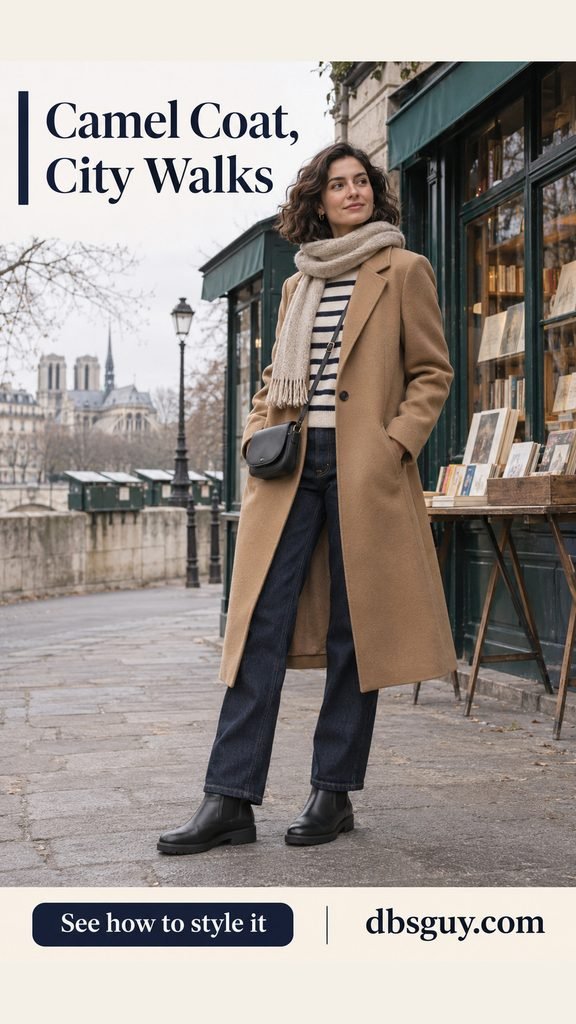
Choose jeans with enough room at the hem to sit over the boot shaft without catching. If your pair is cropped, wear socks that cover the gap when you sit. A fine striped knit fits beneath a tailored sleeve more easily than a very bulky sweater; add a thin base layer if you need more warmth.
2. Charcoal Coat With Navy Wide-Leg Trousers
For a museum-and-lunch day, pair a charcoal coat with a slate-gray sweater and navy wool or wool-blend trousers. The broad trouser leg changes the silhouette from a jeans outfit, while black zip ankle boots keep the lower half streamlined. An oxblood bag adds a small area of color.
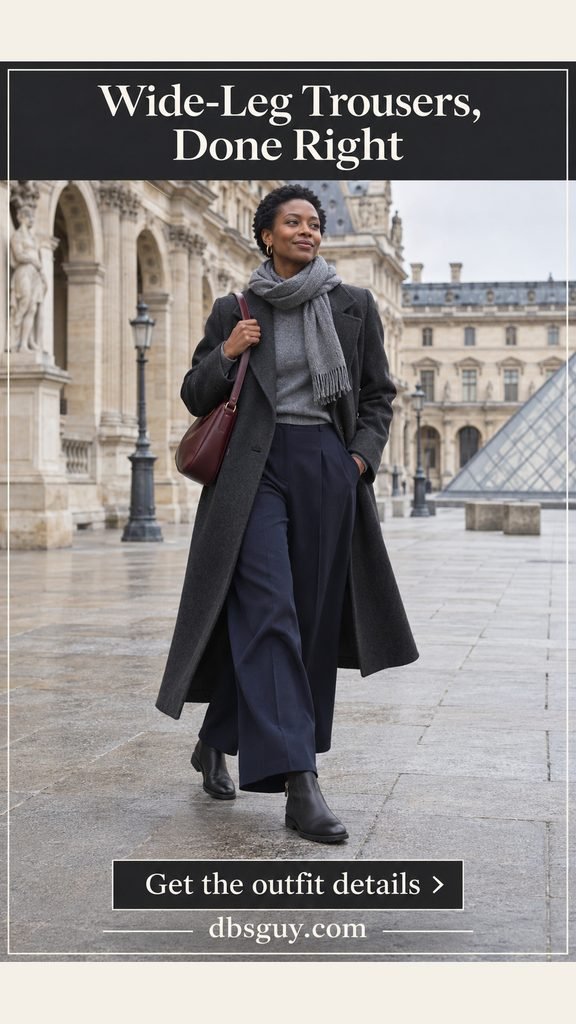
Have the hem checked while wearing the actual boots. It should clear the pavement through a full stride, not sweep the ground behind you. If you often find wide legs awkward on stairs, use a less generous straight cut in the same fabric. The outfit keeps its dressed-up character.
3. Navy Peacoat, Ecru Jeans, and Brown Lace-Up Boots
A tailored navy peacoat offers a shorter coat option with a little more ease for sitting. Wear it with an ivory fisherman sweater, ecru straight jeans, and chocolate-brown lace-up boots. A burgundy scarf connects the dark coat to the lighter middle of the outfit.
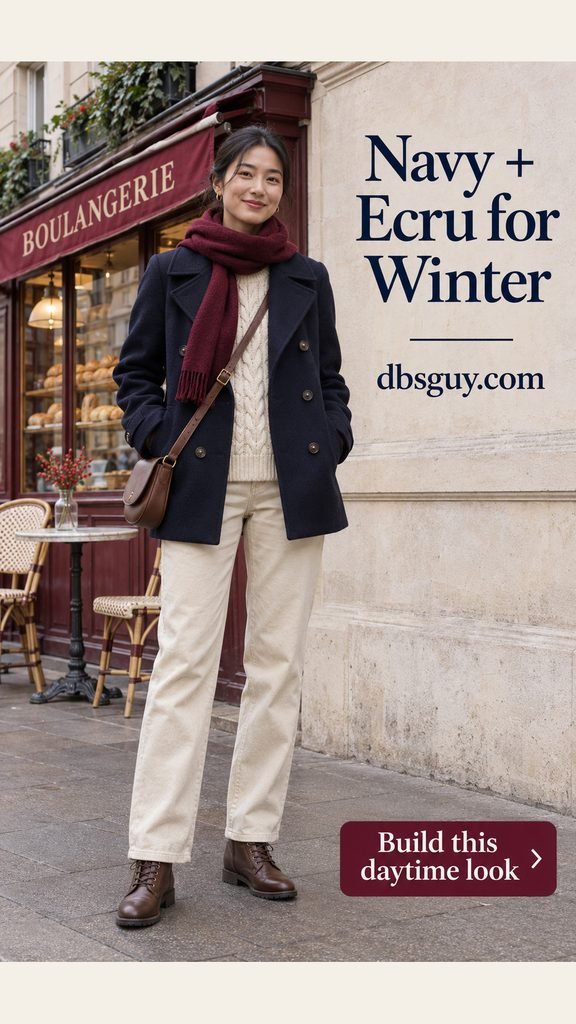
Save the pale denim for a dry forecast if splashes will bother you. The cable knit needs room inside the coat’s shoulders; try a finer textured sweater if the sleeves feel tight. On a colder day, wear a base layer under the jeans or repeat the colors with more substantial trousers.
4. Taupe Wrap Coat and an Oatmeal Sweater Dress
An oatmeal midi sweater dress and chocolate knee-high boots give you a one-piece alternative to separates. A taupe wrap coat and brown scarf keep the colors close, while a cognac shoulder bag adds a warmer note. This is an easy direction for lunch followed by a gallery visit.
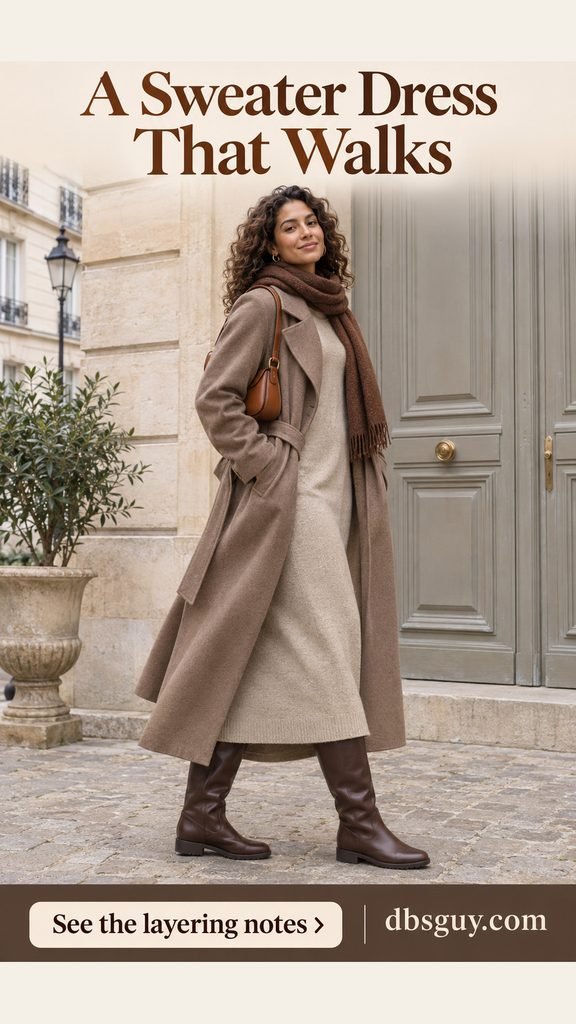
Walk and sit in the dress before packing it. You want enough stretch or skirt width for a normal stride, and boot shafts that do not catch the hem. Add tights beneath the dress for warmth. Use the coat belt to define the waist without cinching so tightly that the knit bunches underneath.
5. Black Tailoring Over a Burgundy Knit Midi Dress
A burgundy ribbed midi dress gives a black coat a clear focal point for a bistro dinner. Black knee-high boots, a small shoulder bag, and a black scarf finish the outfit without requiring a shoe change after a day out. Small earrings are enough beside the ribbed neckline.
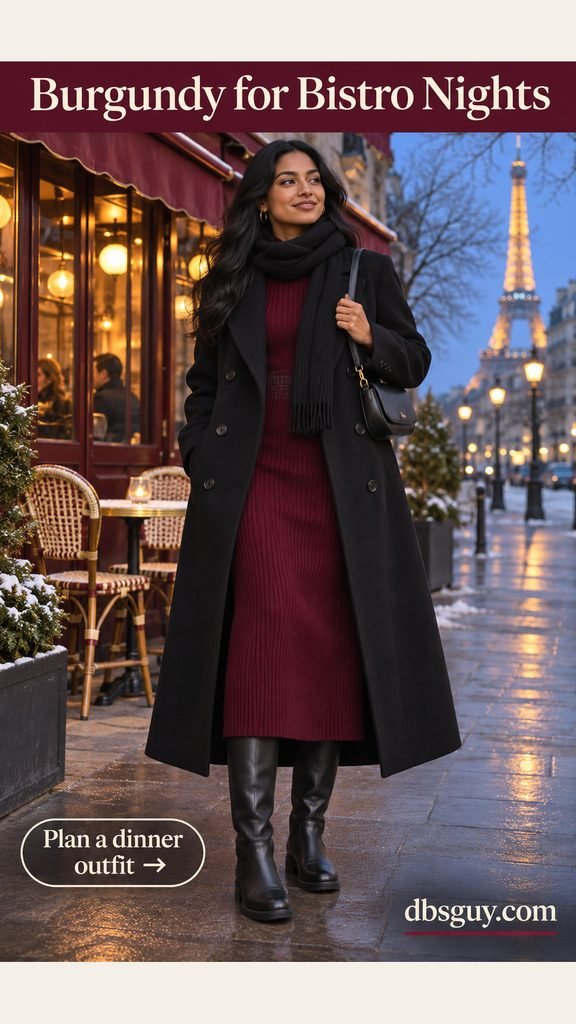
Choose a dress that skims rather than grips if you want to sit comfortably through a meal. Keep tights underneath and check that the skirt overlaps the boots when seated. For a special reservation, check the venue’s own dress guidance; this is a styling suggestion, not a guarantee that every restaurant will accept the same outfit.
6. Herringbone Coat With Burgundy Lace-Up Boots
Let the boots supply the color: oxblood lace-ups beneath black cigarette trousers, a fine black turtleneck, and a gray herringbone coat. The patterned wool gives the outfit texture without adding another print. Burgundy gloves repeat the footwear color in a small, deliberate way.
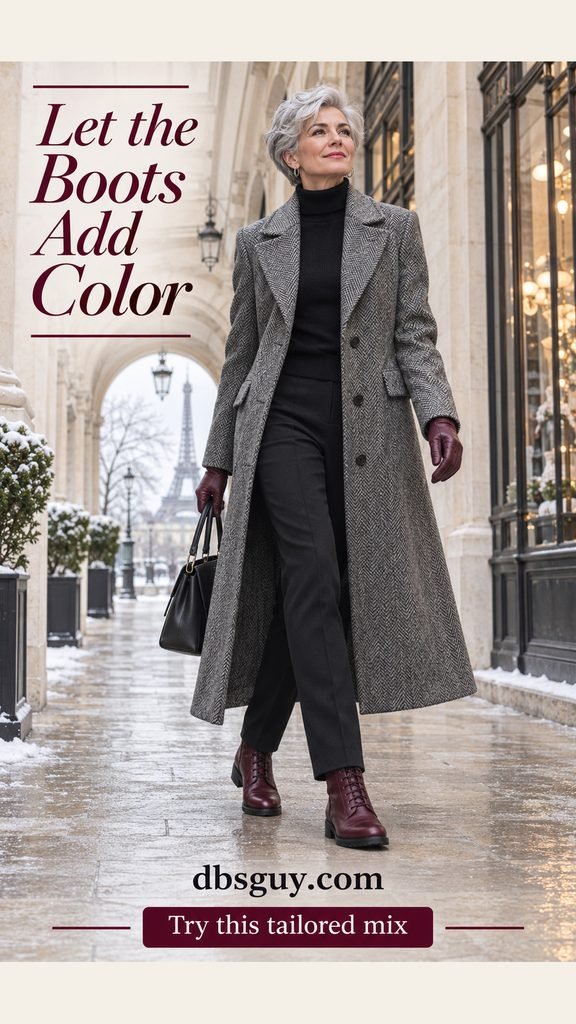
A slightly tapered trouser hem can rest just over the boot top. If the fabric gets caught on the laces, choose a little more width through the lower leg. This is a useful look when you want the structure of tailoring with an adjustable boot fastening, particularly if pull-on styles do not hold your foot well.
7. Chocolate Coat With a Pale Blue Shirt
For a workday or a lunch where you want a collar, layer a pale blue shirt over an ivory fine-gauge knit. Add charcoal straight trousers, a chocolate coat, and dark brown zip ankle boots. The blue shirt separates the brown outerwear from the gray trousers without a bold print.
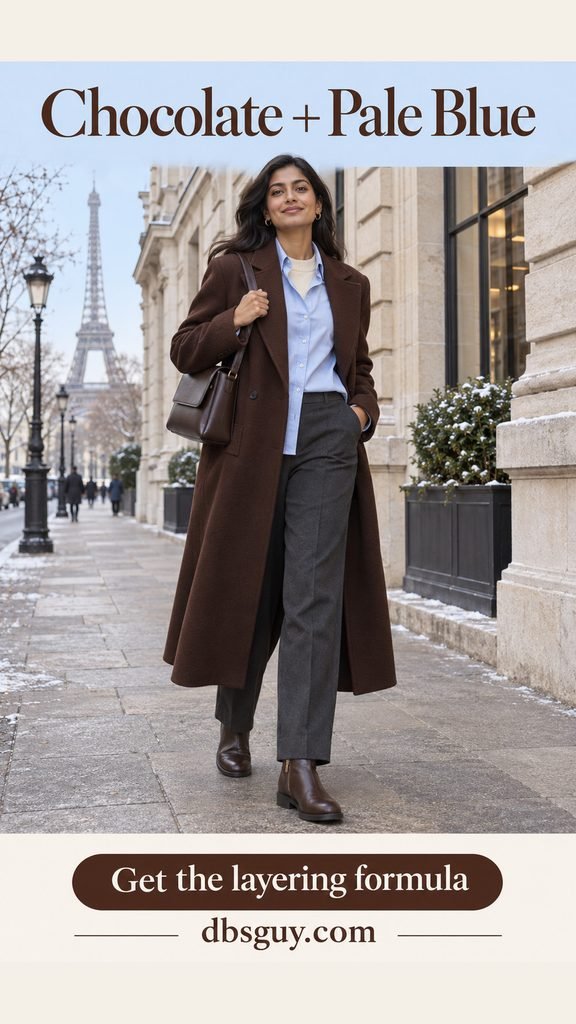
Use a shirt with enough ease to button over the knit without pulling across your chest. Check the combination at the elbows as well as the collar. If the sleeves feel crowded, wear a thin thermal camisole under the shirt instead and keep the coat warm enough for your journey.
8. Olive Tailored Outerwear for a Rainy Day
Choose an olive coat with a structured shape, insulation appropriate for the forecast, and rain protection confirmed by its maker. A navy rollneck, black straight trousers, and black lace-up boots keep the outfit practical. A compact umbrella and gloves complete the look shown.
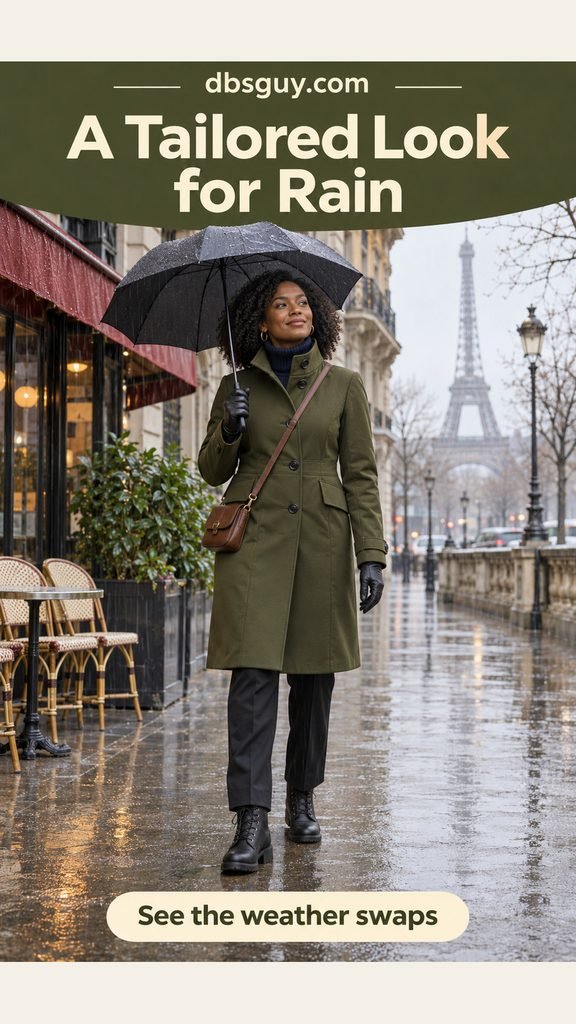
For sustained rain, prioritize a genuinely waterproof coat and boots even if they look more technical than this illustration. Water-resistant fabric has limits. Keep trouser hems clear of puddles, and use a hooded outer layer if wind makes the umbrella difficult to manage. The image’s appearance cannot establish any garment’s waterproof performance.
9. Cream Coat With Taupe Wide-Leg Pants
For a dry daytime outing, combine a cream tailored coat, ivory sweater, and taupe wide-leg trousers. Chocolate Chelsea boots and a matching dark bag give the pale outfit a firm outline. Slightly different shades and textures keep the neutrals from looking like an almost-matching suit.
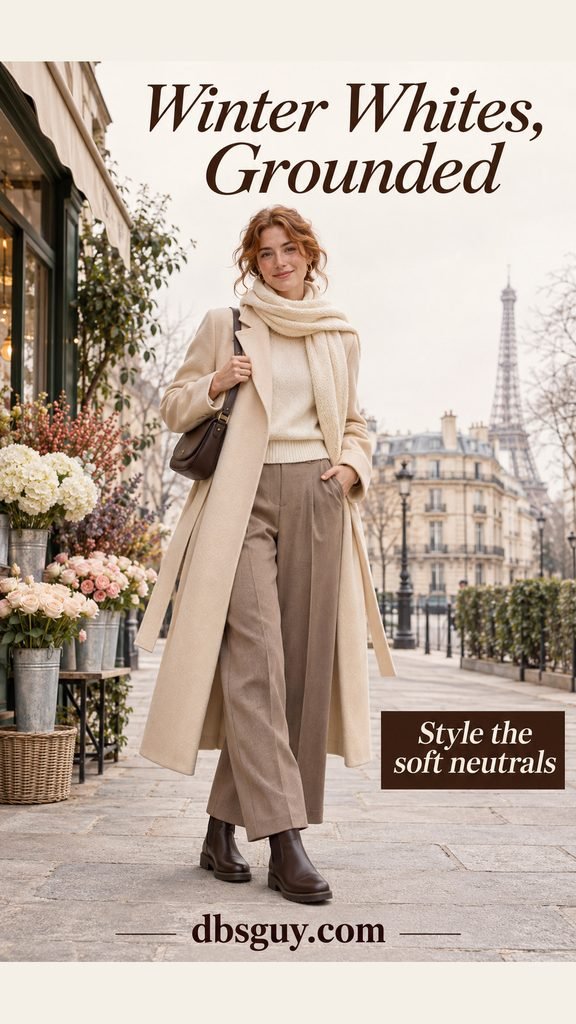
Take care with the trouser length: pale hems show splashes and dirt quickly. A shorter full-length hem that clears the ground is more useful than a puddled one. For a smaller suitcase, wear this same cream knit under the navy peacoat in look 3 instead of adding another coat.
10. Navy Coat, Burgundy Cardigan, and a Pleated Midi Skirt
A burgundy cardigan worn as a top adds color above a charcoal pleated midi skirt. Put a long navy coat over it, then add opaque black tights and black knee-high boots. This combination brings movement to an outfit built from otherwise familiar winter pieces.
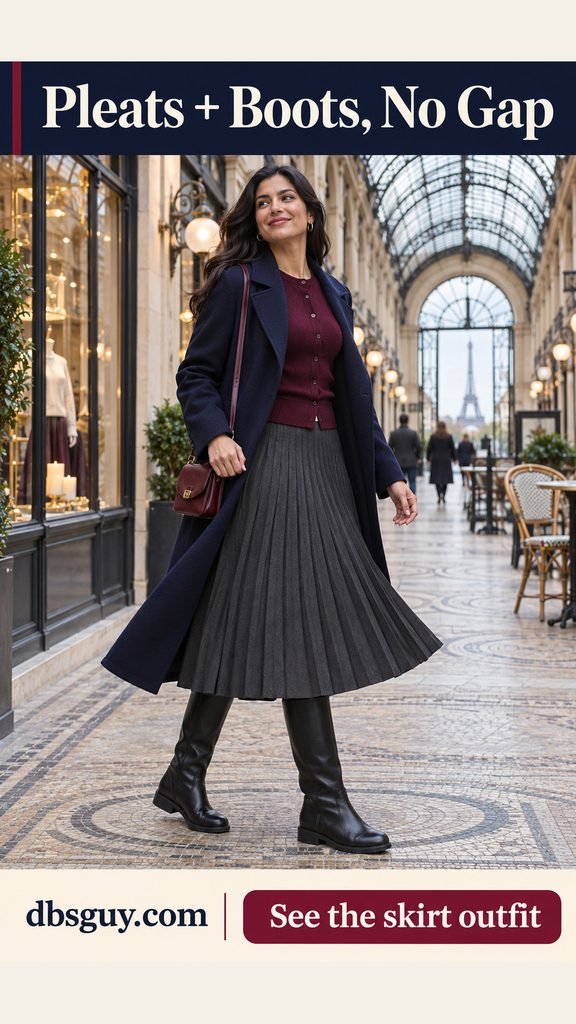
Choose boot shafts that fit beneath the skirt without grabbing the pleats. Before leaving, sit down to check that the hem still gives you the coverage you want. If the cardigan gaps between buttons, add a thin matching top underneath or use a pullover in the same burgundy shade.
11. A Charcoal Mini Skirt With Opaque Tights
A charcoal wool A-line mini skirt gives black lace-up ankle boots a different proportion. Wear it with a gray fitted knit, fully opaque tights, and a long black tailored coat. A gray scarf and small crossbody keep the neckline and hands free of extra accessories.
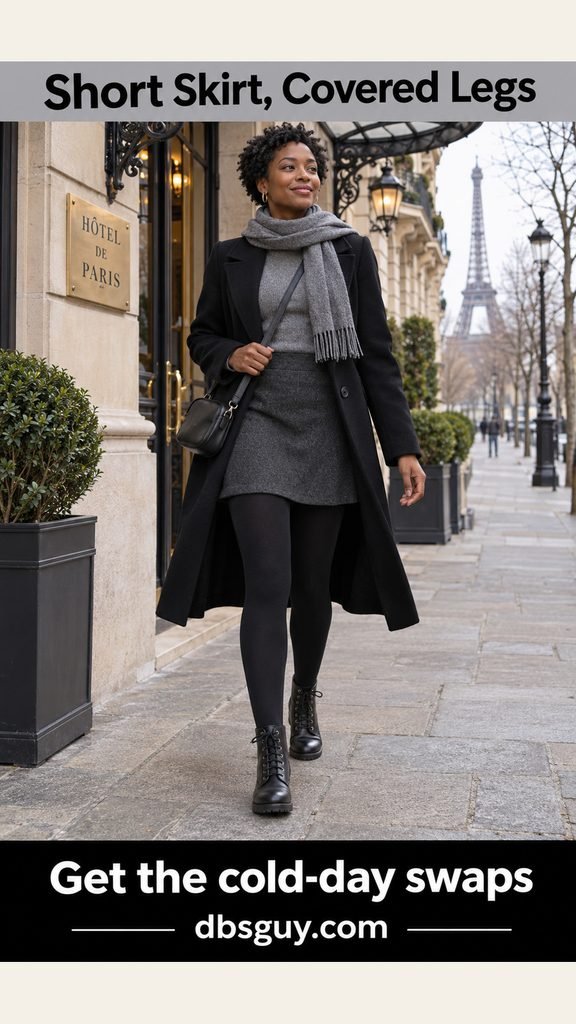
This is a better choice for a day with plenty of indoor time than for hours of standing outside. Use thermal tights if needed, then assess the actual forecast and your own comfort. If the outfit still feels cold, change to trousers or the midi skirt in look 10; thicker tights do not make every short-skirt outfit warm enough.
12. Gray Coat, Green Knit, and Lug-Sole Chelsea Boots
A forest-green sweater brings color to a gray coat and black straight jeans. Black Chelsea boots with a moderate lug sole make this a useful starting point for a walking-heavy day, including a hilly route. A charcoal beanie, gloves, and a crossbody complete the outdoor layers.
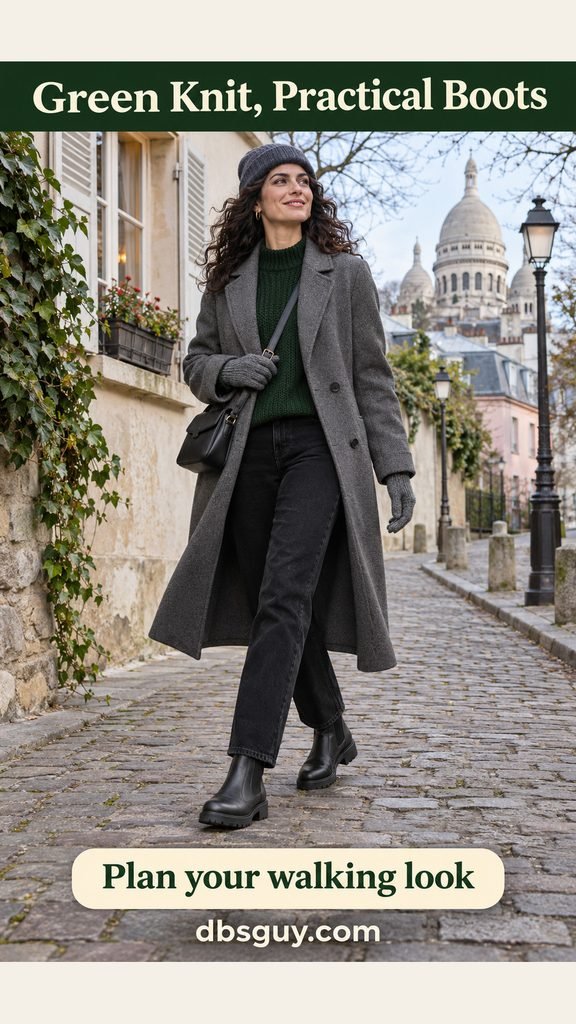
Check that the boot feels secure going downhill, not only on flat ground. An oversized, heavy sole can feel cumbersome even when it looks practical. Choose the tread and weight you can walk naturally in, and adjust your route when surfaces are slippery. The coat also needs enough stride room when buttoned.
13. A Camel Coat Over a Navy Blazer
For a meeting or a more structured day out, wear a navy blazer and white shirt with straight black trousers and black zip ankle boots. Add a camel coat over the blazer. The two sets of lapels make the outfit feel finished when the coat is open, while the boots avoid a separate dress shoe.

Try both jackets together before choosing the outfit. If the blazer sleeves twist or the coat pulls across your upper back, use a less structured blazer or replace it with a fine cardigan. Simply sizing up does not always fix an uncomfortable shoulder shape. Keep the shirt cuffs short enough to stay manageable under both sleeves.
14. Burgundy Statement Coat With Black Wide-Leg Trousers
A burgundy tailored coat turns a black turtleneck and fluid black trousers into an evening outfit. Rounded-toe black ankle boots with a low block heel carry the dark line down to the ground. A small bag and simple gold earrings leave the coat as the main detail.
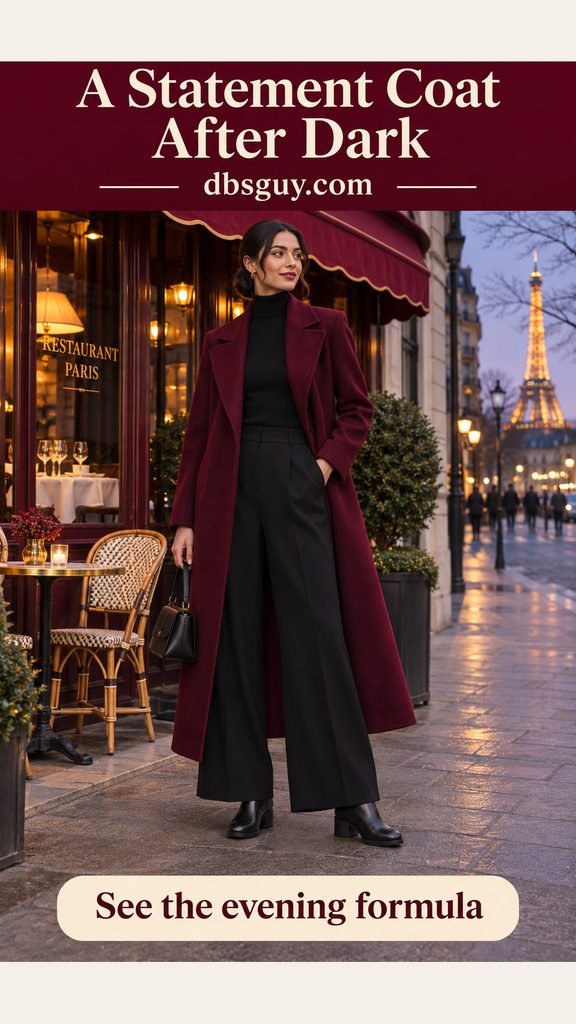
Hem the trousers for these low boots instead of relying on a pair tailored for taller heels. Check that the toe and a little of the boot remain visible as you walk. If you are packing only a neutral coat, use a burgundy scarf with the same black base to borrow the color idea.
15. A Tailored Car Coat for Travel Day
A mid-thigh charcoal car coat keeps the outline structured over a thin moss-green hoodie and navy tapered ponte pants. Black lace-up ankle boots and a gray scarf finish a relaxed train-day combination. The shorter coat leaves less fabric to arrange around a seat or suitcase.
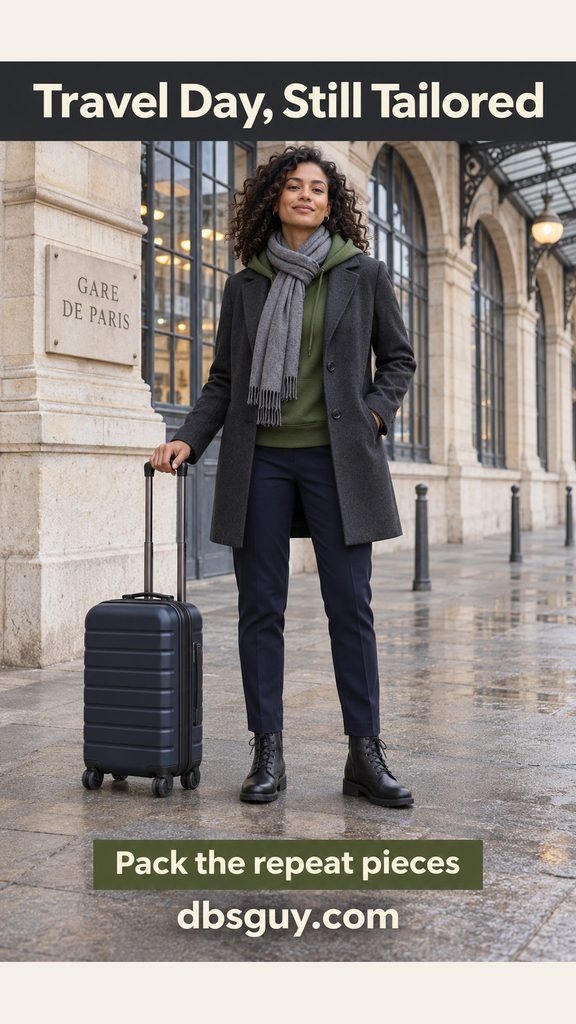
Let the hood lie flat outside the coat collar, and test the pants while seated so the waistband and knees feel comfortable. This shorter coat gives less leg coverage than the long versions; add an underlayer or choose the longer coat when your travel day includes a cold outdoor wait. Rewear the boots and knitwear on later days.
Turn the looks into a smaller packing list
You do not need 15 coats to use these ideas. Start with the coat and boots that fit your forecast, then change the pieces visible underneath. A camel or charcoal coat, one proven pair of black ankle boots, and a few tops can carry several of the combinations.
- For daytime: pack straight dark jeans, a striped sweater, and a solid knit. Repeat looks 1 and 12 with the same coat.
- For a dressier day: use black tailored trousers with the blue shirt from look 7 or the blazer layers from look 13.
- For dinner: add the burgundy knit dress if your boots work with its hem. If you prefer pants, repeat the black trouser base from look 14.
- For weather changes: leave room for the rain protection, base layers, socks, hat, scarf, and gloves your itinerary needs.
If space permits, a second pair of comfortable shoes gives you another option when the first pair is wet or starts to rub. Choose pieces around your real walking plans before adding accessories. For more ways to vary the layers, browse our poetcore winter outfits with oversized knits.
Questions about dressing for Paris in winter
Are ankle boots or knee-high boots more useful?
Ankle boots are easy to repeat with jeans and trousers. Knee-high boots work well beneath midi skirts and dresses when the hems overlap. Pick the style that fits your clothes and your feet; a taller shaft does not automatically mean better comfort or rain protection. Check calf fit over your usual tights or socks.
Can I wear jeans in Paris in December or January?
Yes. Dark straight jeans are a simple base for a tailored coat and boots. Their warmth depends on the denim, your layers, the weather, and how long you will be outside. Avoid hems that drag, and change to a more weather-appropriate option if the forecast is very wet or cold.
Do I need heels to make these outfits look dressed up?
No. A clean boot shape, trousers hemmed for that boot, and a coat that fits over your layers do much of the styling work. Use the comfortable low heel or flat sole that suits you. A slim high heel is not necessary for any of these combinations.
How do I make a coat-and-boots outfit work for dinner?
Change one visible element: a richer knit color, a midi dress, or tailored trousers. Keep the boots if they suit the venue and the walking involved. Check any specific dress requirements before leaving, and plan a warm outer layer for the return journey.