15 Valentine’s Day Wig Hairstyles, From Sleek Bobs to Bouncy Curls

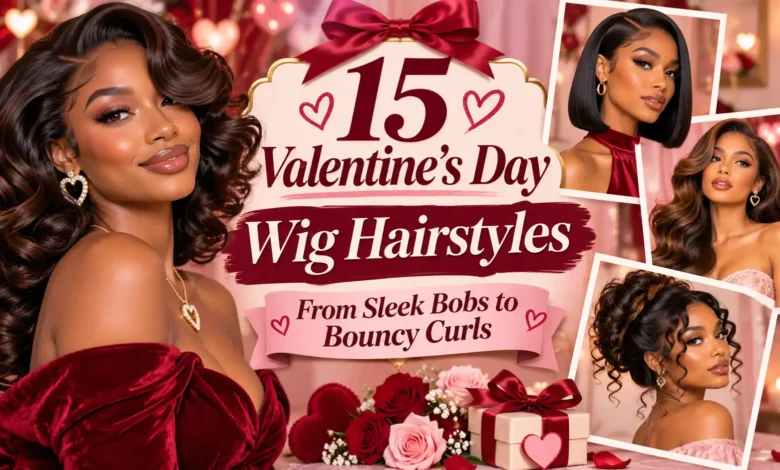
For a simple Valentine’s look, start with a ready-styled blunt bob or a curly wig whose shape you already like. If you want something dressier, try burgundy Hollywood waves, a layered blowout, or a low chignon on a cap that supports an updo. The useful question is how much of your wig you need to change to get there.
These 15 Valentine’s Day wig hairstyles range from short, precise cuts to full, bouncy curls. Each idea includes the base to look for and a detail to check before you commit, so you can choose a style that works with the wig you own.
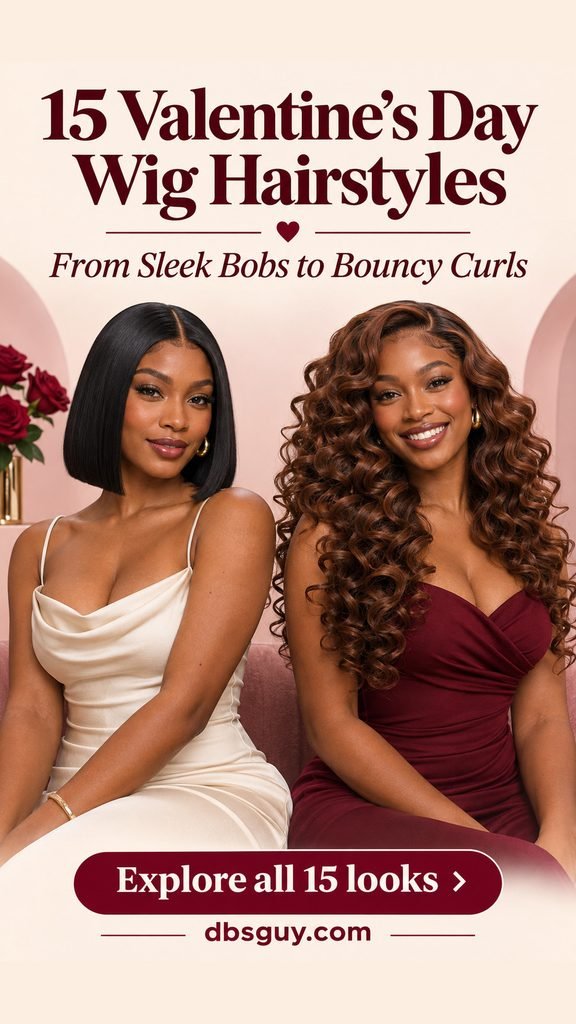
The images are AI-generated styling concepts. They illustrate the shapes and accessory placement described here; they are not photographs of tested wig installations.
Choose a Look Your Wig Can Support
Check the fiber label first. Standard synthetic wigs should not be styled with curling irons, flat irons, or other hot tools. For those wigs, choose a cut and curl pattern that already resemble your goal. Heat-friendly synthetic and human-hair wigs need their own care instructions; there is no single temperature that suits every unit. Jon Renau’s synthetic hair care guide explains why traditional synthetic and heat-friendly fibers require different treatment.
Then check the cap. A fixed part limits where you can divide the hair. A lace front can support exposed forehead styling, but it does not mean the back of the wig can be lifted into a ponytail. For looks 13 and 14, check the nape as well as the front. Full-lace or purpose-built updo constructions offer more options, but the actual unit still needs a trial.
- For minimal reshaping: try a ready-styled bob, body wave, curly bob, coily wig, or spiral-curl wig.
- For a small accessory change: look at the half-up bow or side twist, keeping enough hair over the cap.
- For a new silhouette: plan a trial with a wig stylist, especially for an angled cut, sculpted waves, or an updo.
Fit the wig comfortably before styling it. If you wear hair underneath, arrange it into a flat base without pulling it painfully tight. During the trial, turn your head, look down, and sit in your outfit. Adjust the fit if the wig shifts; tightening a ponytail is not a substitute for a secure cap.
1. Sleek Center-Part Blunt Bob
A black bob ending around the chin puts the emphasis on a clean outline. The center part and nearly level ends make this a good choice with a detailed neckline or statement earrings because the hair has very little competing decoration.
Start with a straight bob that already has the right part. Settle the cap before checking the ends: an uneven base can make one side appear longer. Smooth the lengths with the tool recommended for your fiber, keeping the slight inward curve at the tips. If the perimeter needs cutting, have it checked while the wig is fitted on you.

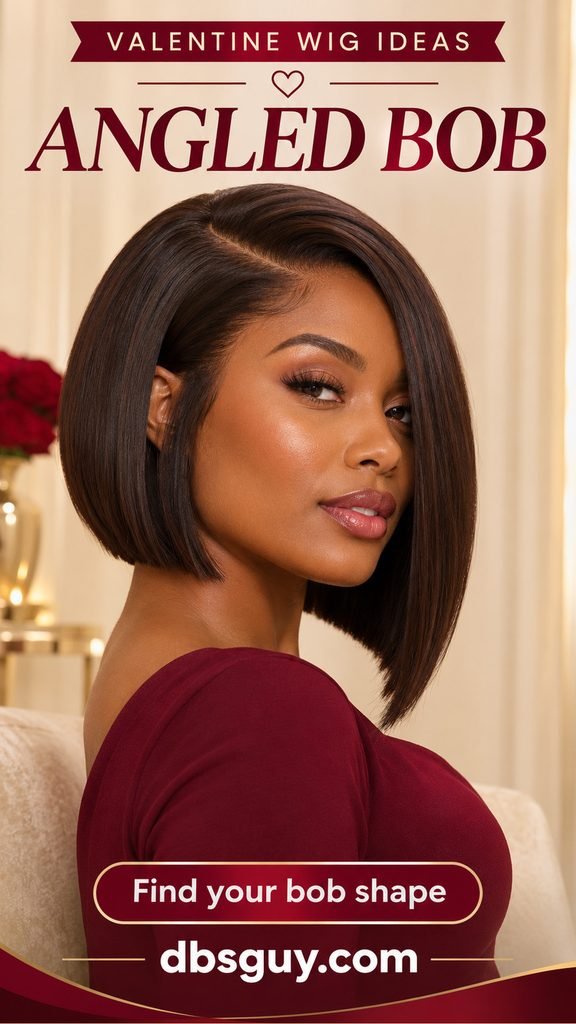
2. Deep-Side-Part Angled Bob
This espresso bob has an intentionally uneven front outline: one side skims the jaw while the longer side falls below the chin. It gives you a strong shape without long hair resting on your shoulders.
Choose a pre-cut asymmetric bob or ask a wig stylist for a longer front and a shorter back. The deep side part needs to fall within the wig’s parting area. Moving the whole cap sideways to imitate it can shift the ear tabs out of position. Keep the longer front piece loose so the angle stays visible, and check the shorter side before tucking it behind your ear.
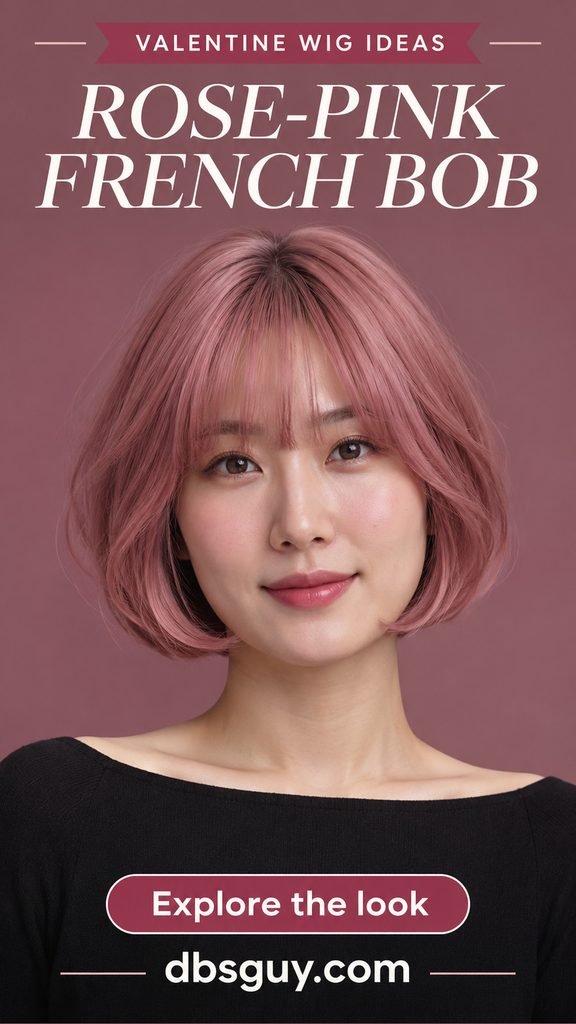
3. Rose-Pink French Bob with Bangs
A muted pink French bob makes color the Valentine detail. The jaw-length shape curves inward, while a light, eyebrow-grazing fringe leaves small gaps across the forehead. A plain black top gives the pink room to stand out.
Look for a wig made with bangs and a short rounded cut. Part the fringe gently with your fingertips rather than pressing it into one solid sheet. If it falls into your eyes, check the cap position first. Only trim after the wig sits where you will wear it; moving it backward later changes the apparent bang length.
Still deciding how short to go? Compare the outlines in Bob Haircut Ideas 2026 for Women: Short, Medium, Long, French, Italian, Angled, Stacked, Straight, then look for that silhouette in a wig.
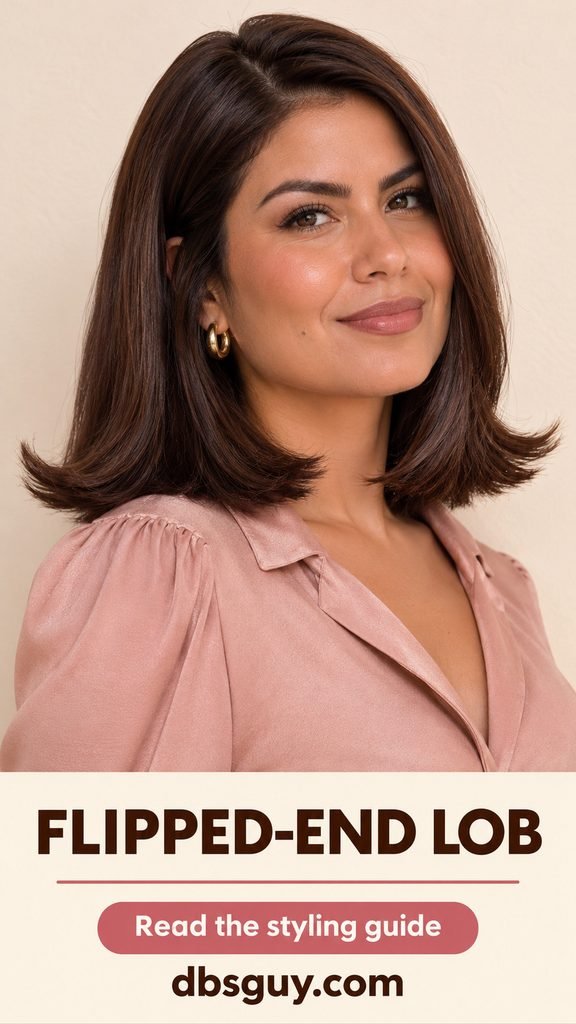
4. Chocolate Lob with Flipped Ends
A shoulder-grazing chocolate lob leaves the upper lengths smooth and puts the movement at the bottom. The outward tips give it a playful finish that works with a blouse, knit top, or simple dress.
A pre-flipped wig is the straightforward option for standard synthetic fiber. If your wig permits heat styling, work within its instructions and turn only the ends outward; curling higher up creates a different, rounder shape. Check the back with a second mirror. The flip should continue around the perimeter instead of appearing only on the two front pieces. Try it with your coat, too, since the collar can push the ends in another direction.
5. Burgundy Hollywood Waves
Deep burgundy and a side sweep make this the dressiest loose-hair option in the lineup. The defining feature is a connected series of S-shaped waves over one shoulder. Separate ringlets will give you a different finish.
Choose a pre-waved unit or ask a wig stylist for a coordinated wave set. On a heat-compatible wig, setting sections in the same direction gives the waves a shared pattern; let them cool fully before shaping them together with a fiber-appropriate tool. Keep the smaller side softly tucked only if the hairline coverage allows it. Before adding hold, check that the large front wave clears your eye.

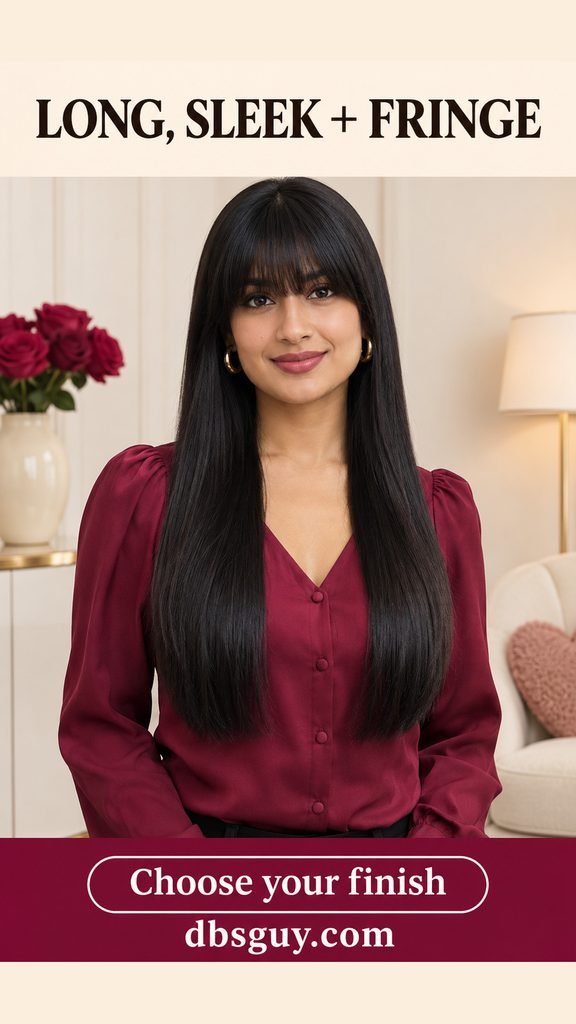
6. Long Sleek Hair with a Full Fringe
Long black lengths and a full fringe create a strong frame around the face. This look suits someone who wants length without curls to separate or a swept-back hairline to arrange.
Begin with a straight wig that already includes bangs. Keep the fringe soft enough to move and the lengths falling freely over the shoulders. Detangle in small sections from the ends upward, following the wig’s care directions rather than dragging a brush through a knot. Put on your necklace before making the final adjustment; clasps and raised settings can catch longer strands. Check where the fringe sits with your glasses if you wear them.
7. Honey-Blonde Layered Blowout
Honey-blonde layers with darker roots make the curved shape easy to see. Long curtain pieces sweep away from the cheeks, while the lower layers turn into broad bends. This is a full, feathered outline rather than a uniform set of curls.
Look for a layered blowout wig with the front pieces already cut to frame your face. Trying to create the same outline from a dense, one-length unit may require cutting as well as styling. On a compatible wig, shape the front away from your face and let each section cool before loosening it. Keep finishing product light so the shorter layers can lift away from the lengths.

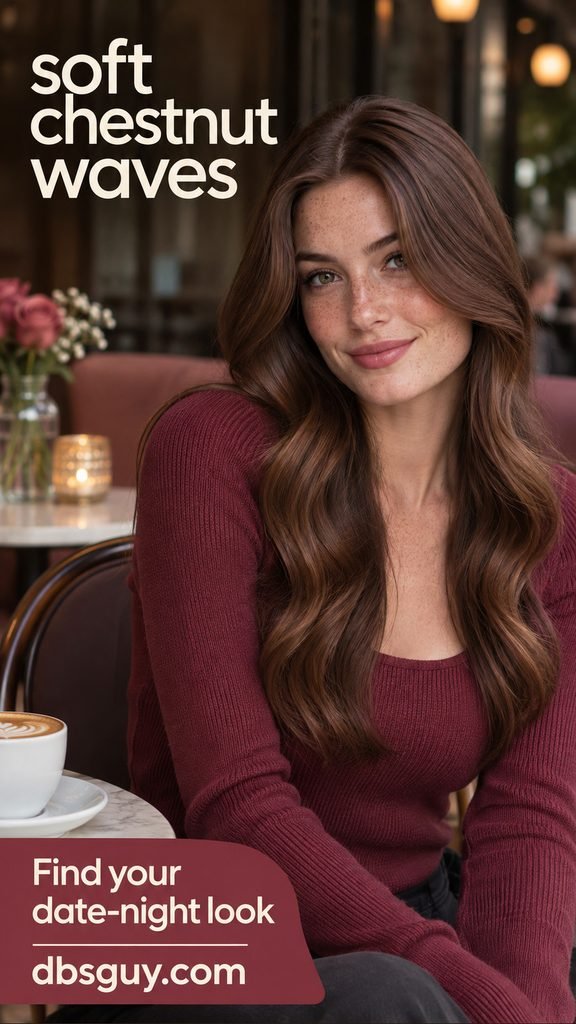
8. Soft Chestnut Body Waves
Chestnut body waves suit a dinner where you want to leave your hair down without a large set or elaborate accessory. A middle part keeps the top simple, and broad bends begin below the cheekbones.
Start with a body-wave wig whose existing pattern is close to the picture. Arrange the two front sections so they fall outside your face, then separate only the waves that need it. Avoid repeatedly combing a defined synthetic pattern into a looser one; follow its care guide and stop when the shape looks right. Leave the ends relaxed. The softer finish is what separates this option from the sculpted burgundy waves and the spirals below.
9. Copper Curly Bob
A copper curly bob combines a short outline with clearly visible ringlets. The finished length sits around the chin and upper neck, so the curls have room to form without falling far down the shoulders.
Choose the wig by its dry, curled length rather than a stretched measurement alone. Those measurements can describe very different silhouettes. Start with the curl pattern intact and use your fingers to place the outer ringlets. Work through any tangles according to the manufacturer’s directions instead of brushing the entire bob for extra volume. If you need a shorter fringe or a rounder perimeter, ask a wig stylist to assess it in its worn, dry shape.

10. Rounded Coily Wig with a Curly Fringe
A rounded black coily wig gives you fullness all around the face, with a soft fringe continuing the texture across the forehead. There is no sharp part or separate smooth bang section.
Pick a unit with the overall outline you want, then use your fingertips to settle the surface coils. Pulling every coil apart will change the texture and volume, so make small adjustments and step back between them. Check that the fringe leaves your eyes clear without stretching it downward. A simple neckline keeps the rounded shape visible. If the sides feel wider than you want, compare a smaller silhouette before attempting to thin the wig yourself.

11. Half-Up Curls with a Burgundy Bow
A narrow half-up section lets you add a bow while leaving most of a curly wig loose. Here, a burgundy velvet ribbon sits at the back of the head, with long curls falling below it.
Take only enough upper hair to form a small gathering, leaving the lower lengths and side coverage in place. Secure it with a suitable soft tie, then add the ribbon around that tie. The bow decorates the gathering; it should not have to hold the entire style. Check the back and both sides before tightening anything. If lifting the section reveals tracks, lower or narrow the gathering until the loose hair covers them.

12. Side Twist with Pearl Details
A small twist above one ear adds detail to long dark waves without collecting the whole top section. A pearl barrette marks the end of the twist, so the accessory placement is part of the look.
On the smaller side of the part, divide a narrow temple section into two pieces and loosely twist them together toward the ear. Secure behind the ear with a lightweight barrette, leaving surrounding hair over the cap. Keep the twist relaxed enough that it does not pull the hairline backward. If the clip slips, use a smaller section or a lighter clip instead of forcing its teeth through the lace.

13. Low Curly Ponytail
A low ponytail keeps the front quiet and gathers the curls at the nape. A black satin scrunchie blends into the dark hair, making the curled tail the focus.
This needs a cap whose nape can remain covered when the hair is gathered. A full-lace or updo-ready wig is a useful starting point; a lace front with a wefted back may still reveal its construction. Gather loosely at the nape, then check underneath the tie while turning your head. Let the side hair drape rather than pulling it flat. If the cap shows, return to a loose style or the half-up option instead of tightening the ponytail.

14. Soft Low Chignon
A compact chignon clears the shoulders for a high neckline or earrings. The chestnut version shown here sits low, with softly draped sides and slim curled pieces beside the face.
Use a wig suited to an updo and leave the face-framing sections out before gathering the rest at the nape. Loosely turn the gathered lengths into a small bun and secure within the hair, following the cap maker’s guidance. Keep pins away from exposed lace and your scalp. Check the nape, side panels, and weight of the bun while wearing it. If the wig shifts as you pin, undo the bun and reassess the fit before continuing.

15. Long Bouncy Spiral Curls
For the fullest loose style here, choose long brunette spirals with subtle chestnut highlights. The curls begin around cheek level and keep their individual shape through the lengths. The highlights help the curves show against darker clothing.
A pre-curled wig saves you from building every spiral from straight hair. Arrange the front curls individually and leave the rest of the pattern alone unless it needs detangling. If reshaping a heat-compatible unit, let each curl cool completely before separating it. Try your bag and coat on during the trial; shoulder straps can trap the ends, and a bulky collar can crowd the curls around your neck.

Make the Final Choice with Your Outfit On
If your neckline has ruffles, embellishment, or a high collar, try the bob or low chignon first and see whether you prefer the clearer space around it. With a plain blouse or dress, the blowout, coily shape, or spiral curls can supply the main detail. These are styling starting points, so use your own reflection to choose the balance you like.
For outfit combinations to try alongside the hair, see 15 Valentine’s Date Night Outfits for Women, From Cozy Knits to Satin Dresses. Do the last hair check after putting on your outerwear, and carry only the small accessory or fiber-appropriate tool you actually need for touch-ups.
Valentine’s Day Wig Hairstyle FAQs
What is a simple Valentine’s wig style for a beginner?
A ready-styled bob or a curly wig worn loose requires fewer changes than a new updo or wave set. Choose a part and fringe you already like, practice the fit, and make small finishing adjustments. You do not need an accessory to make the look feel dressed up.
Can I curl a synthetic wig for Valentine’s Day?
Use a hot tool only when the wig is explicitly labeled compatible and you can follow its specific instructions. Standard synthetic fiber should not be heat styled. If the fiber or heat limit is unclear, keep its existing pattern or ask the manufacturer before reshaping it.
Do these looks require wig glue?
No single attachment method applies to all 15 looks. Some wigs are designed for glueless wear, while others have different fitting requirements. Use the method specified for your unit. A swept-back style does not automatically require glue, and a bow or ponytail should not be used to compensate for a loose fit.
Can I put any lace-front wig into a bun?
Not necessarily. The lace front describes the front hairline, while a bun can expose the sides and nape. Check those areas in a mirror during a trial. If gathering the hair shows the cap, choose a loose look or work with a wig stylist on a style suited to that construction.