There is a good chance you have used retinol on your face. But have you ever thought about putting the same vitamin A derivative to work on your arms, your legs and the rest of your body? According to the dermatologists Byrdie spoke to, you can — and you can expect many of the same results you see on your face, from fading dark spots to encouraging cell turnover and softening fine lines and wrinkles.
If you are curious but not sure where to start, this is the place to begin. Below is everything you need to know about retinol for the body — the benefits, how to choose a product, how to use it properly, and the side effects to watch for — straight from board-certified dermatologists Vivian Chin, MD, MPH; Michael I. Jacobs, MD; and Nicole Lee, MD, MPH.
Key Takeaways
- Applying retinol on the body can improve skin texture and reduce fine lines and wrinkles over time.
- Start with a low concentration of retinol, and use moisturizer to avoid skin dryness and irritation.
- Applying sunscreen is crucial when using retinol, as it can make your skin more sensitive to sun exposure.
Meet the Experts
Vivian Chin, MD, MPH, is a board-certified dermatologist and the founder of Koru Wellness & Aesthetics. Michael I. Jacobs, MD, is a board-certified dermatologist and an associate professor of dermatology at Weill Cornell Medicine. Nicole Lee, MD, MPH, is a board-certified dermatologist and the owner of Epoch Dermatology.
Benefits of Retinol for Your Body
As Jacobs explains it, people can get the same benefits from retinol on their bodies as they can from retinol on their faces — including potentially slowing the aging process. By increasing cell turnover and stimulating collagen production, retinol can reduce fine lines and wrinkles, improve skin texture on the body, help with skin problems like keratosis pilaris, and improve the overall appearance of skin by firming and brightening it.
But that is not all. Retinol can also reduce sun damage, scarring and dark spots from acne, and it can help treat body acne. It can also stimulate collagen to firm the skin, reducing the crepey texture that tends to set in with age. As Lee points out, firmer skin also reduces the risk of bruising and tearing from mild injuries, which can happen as skin thins over time.
Choosing a Retinol Body Product
Everyone’s skin is different, so it is worth doing your research before you buy a retinol product for your body. If you are unsure what to use — or whether retinol is right for your skin at all — check in with a dermatologist first.
Chin advises looking out for the concentration first: if you are new to retinol, start with a low number, and make sure the product also has some sort of moisturizing ingredient, since retinol can be drying. If your skin is sensitive, look for a retinol body product specifically formulated for people with sensitive skin.
Keep an eye on the packaging, too. Dark, thick packaging matters, because it keeps the product from deteriorating due to sun or air exposure — the same rule that applies to retinol products for the face. And if you are not sure which products are right for your skin, check in with your dermatologist.
How to Use Retinol for Body
Here are some tips to keep in mind as you work retinol into your body care routine.
Proper Application
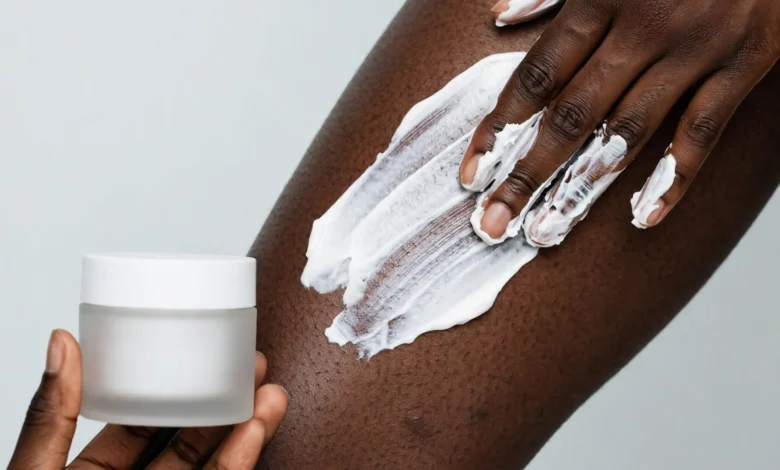
Depending on the concentration of the retinol, you can likely apply it with your hands, Chin says. If your hands are sensitive, you can wear disposable or cotton gloves instead.
Frequency, Amount, and Precautions
When you first start using retinol on your body, use the product only once or twice a week. From there, Jacobs says, you can work up to it every other day — or stick with weekly if that suits your skin better.
Using too much retinol too quickly can leave skin dry, flaky and irritated. Chin also suggests patch testing: apply some of the product on a small area first, a few times, to make sure your skin is not too sensitive to that particular product.
When to Use
Retinol should be used on your body at night. As Lee puts it, a thin layer of retinol can be applied once a day, ideally in the evening.
Layering With Other Products
If you tend to be on the dry side, Lee recommends applying another heavier emollient after your retinol. If you prefer oils, apply those before the retinol instead. You can also apply moisturizer before your retinol — Chin, for example, recommends using a hydrating body moisturizer and then applying your retinol product on top.
Do not forget that sunscreen is key when using retinol on your body. Retinol products can make your skin more sensitive to sun exposure, Jacobs says, so be extra cautious and wear an SPF 50+ on the body while you are exposed to the sun. Chin adds that you can also consider applying retinol less frequently in the summer, or skipping it for a few days before you will be out in the sun.
Potential Side Effects and Precautions
A common side effect of using retinol on the body is that it can be drying to the skin, Jacobs says — and there is also an increased risk of sun damage, so it is very important to apply and reapply sunscreen.
Some people also experience redness, dryness, irritation and peeling when they first start using retinol. Lee stresses that retinol can be just as drying on the body as it can be on the face, so be careful with how often you apply it. She advises being cautious about over-applying: it is easy to get excited about a product and use it more than you should, but more is not always better when it comes to retinol.
To keep side effects down — the drying effect in particular — Lee recommends applying moisturizer after your retinol and using retinol on your body sparingly, not every day. And if daily use is making your skin dry or irritated, steer clear of using it every day.
Chin says it is crucial to start by patch-testing the product on a small area if you have sensitive skin or a skin condition like eczema or psoriasis. Then introduce the product slowly, start with a very low concentration of retinol, and use a product specifically designed for people with sensitive skin.
The Final Takeaway
Retinol can be used on your body, and it offers many of the same benefits you see when using it on your face — fewer fine lines and wrinkles, improved skin texture, and firmer, brighter skin. If you are considering using retinol on your body, check in with a dermatologist for advice on finding a product that is right for you and learning the best way to work it into your skincare routine.