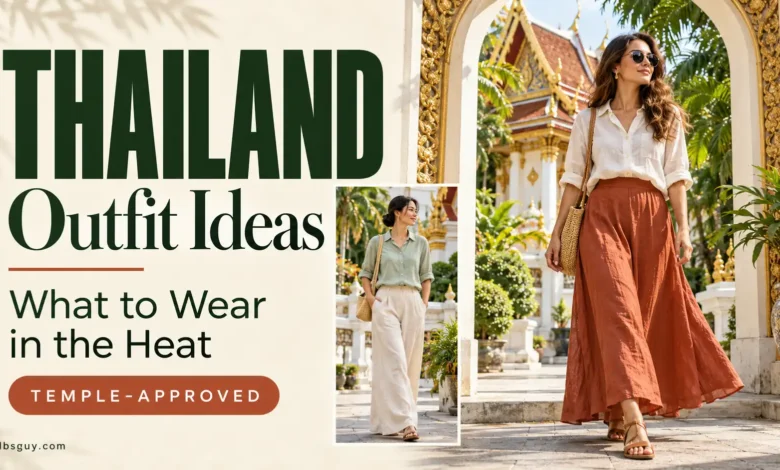
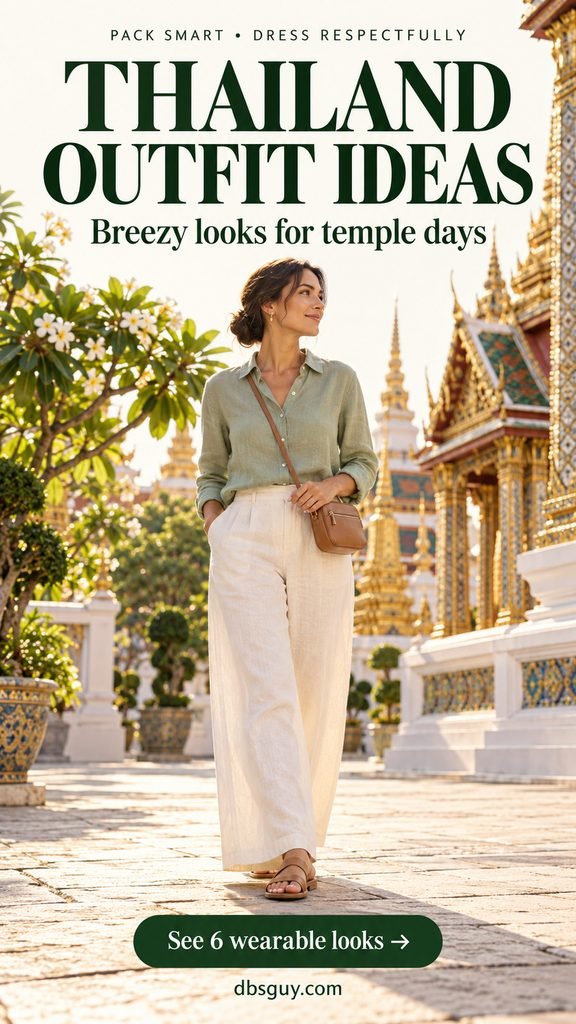
The easiest Thailand outfit formula is a loose, opaque shirt with real sleeves, full-length lightweight pants, and comfortable shoes you can remove easily. Prefer dresses? Choose a relaxed style with sleeves and a hem well below your knees. Those two formulas give you a useful starting point for hot sightseeing days that include temples.
These six Thailand outfit ideas show different ways to get there, from linen separates to a printed maxi you can wear to dinner. Each includes the small fit details that a pretty vacation photo can leave out.
The images are AI-generated styling concepts, not photographs of tested outfits or evidence of admission to a particular temple.
First, what does “temple-approved” actually mean?
Here, it means outfits planned around respectful temple coverage; it does not mean official endorsement or guaranteed entry. Individual sites and staff set the final requirements, so check notices before your visit.
For a conservative starting point, cover your shoulders, upper arms, chest, midriff, and knees. Choose full-length pants or a longer skirt that stays below your knees when you sit. A top with actual sleeves is simpler than trying to hold a scarf in place.
The Grand Palace’s official dress code specifically excludes sleeveless and see-through tops, short tops, shorts, torn or tight pants, bike pants, mini skirts, and sleepwear, among other items. Treat a Grand Palace day as a reason to dress deliberately before leaving your hotel.
- Move in it: raise your arms, take a long step, and sit down. Check that your shirt stays over your waistband and your skirt keeps your knees covered.
- Check it in daylight: pale fabric can look opaque indoors and transparent in sunlight. Avoid open crochet, gauze, and unlined sheer panels for this purpose.
- Keep coverage comfortable: a roomy cut gives you movement without needing a heavy cardigan over a revealing base outfit.
1. A white linen shirt and camel wide-leg pants
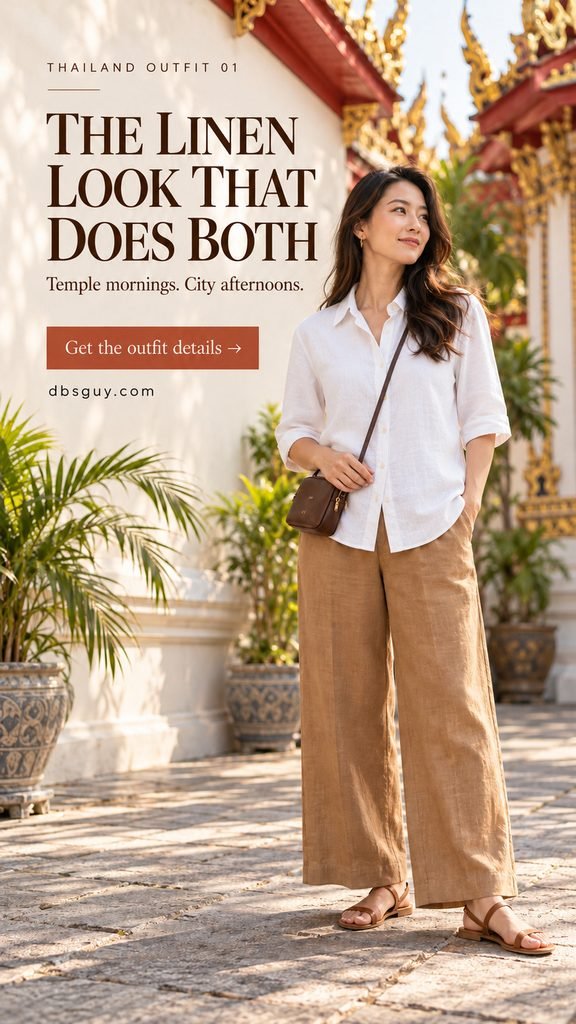
This is the most flexible starting point if you want one outfit for a temple morning, a long lunch, and an afternoon in Bangkok. The white shirt and camel pants look pulled together without requiring a belt, jewelry, or several extra layers.
Look for an opaque linen or linen-cotton shirt with room through the back and sleeves. Button it high enough that bending forward does not expose your chest. Leave the hem loose, as shown, or tuck it lightly if the waistband feels comfortable when you sit.
The pants should fall away from your thighs and finish near your ankles, clear of the ground. Very long, sweeping hems look lovely in a still image but are awkward around steps and damp sidewalks. Add a small zipped crossbody and flat walking sandals with a secure back strap.
The useful swap: if your favorite white linen shirt needs a camisole to stop it being see-through, try a more opaque shirt instead. That keeps this a simple two-piece outfit. For more combinations, explore these crisp linen outfits for summer.
2. A loose cotton midi dress with short sleeves
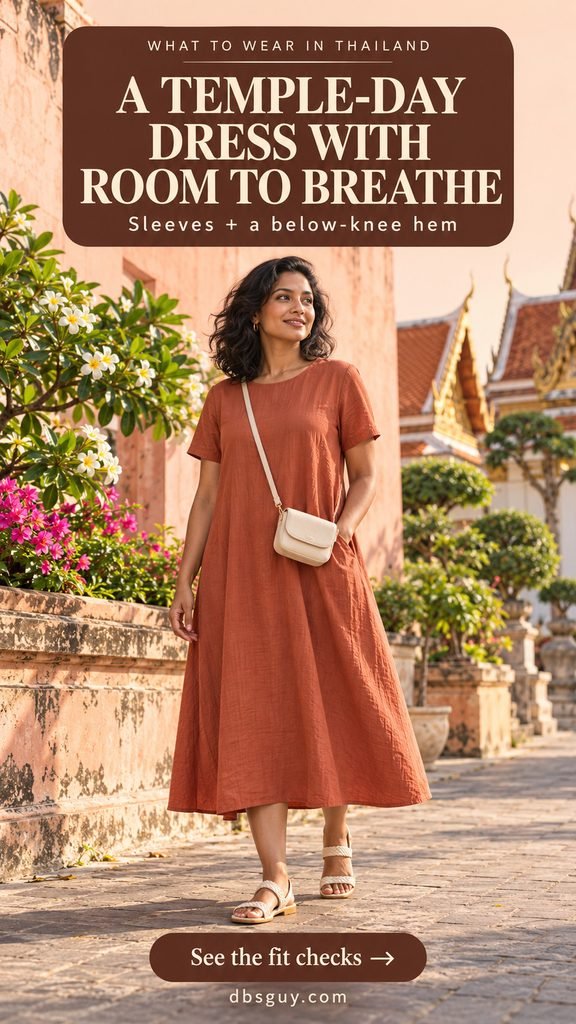
A terracotta cotton dress does most of the styling work by itself. The relaxed A-line shape leaves space around your waist and hips, while the warm color works with cream sandals and a small neutral bag.
Choose a lower-calf hem rather than relying on the word “midi” in a product listing. On a taller person, the same dress might finish much closer to the knees. Real short sleeves, a modest neckline, and a closed skirt make the coverage easier to judge.
Before packing it, sit on a chair and take a wide step. Watch for a front opening that pulls apart, a hem that rides up, or a neckline that gaps. A loose dress should let you walk and sit without constantly adjusting it.
Best for: a day when you want the fewest separate pieces. Skip a bulky waist belt; a small crossbody keeps the silhouette neat without adding another tight band around your middle.
3. A blue poplin blouse and a closed navy maxi skirt
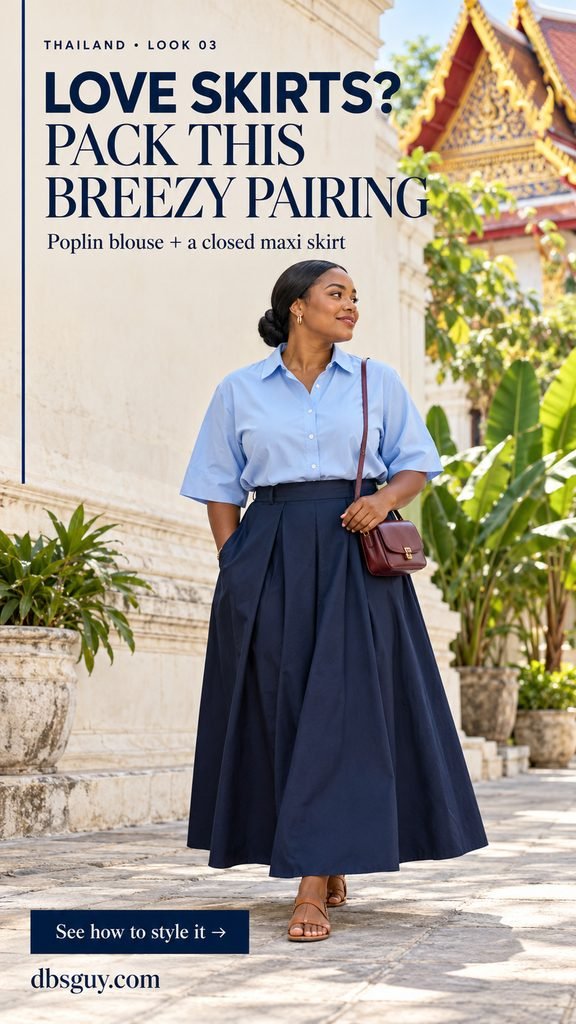
If you prefer skirts to pants, try a sky-blue blouse with a navy A-line maxi. The color contrast makes the outfit feel considered, and a skirt with generous width gives you room for a normal walking stride.
The important detail is the skirt’s construction. Choose a continuous skirt with no high slit, rather than a wrap style that can open when you climb stairs or catch a breeze. The pictured pleats add movement without requiring an opening up the leg.
A relaxed poplin blouse provides a little more structure than a clingy knit. Leave enough room at the chest that the buttons lie flat; a very tight tuck can also make the shirt pull when you reach. Wear the waistband wherever it feels comfortable instead of forcing it high for the photo.
Make it practical: hem the skirt above the ground and check that you can manage steps without grabbing a handful of fabric. Tan walking sandals and a burgundy bag add interest while keeping the outfit easy to repeat.
4. A daytime cotton seersucker matching set
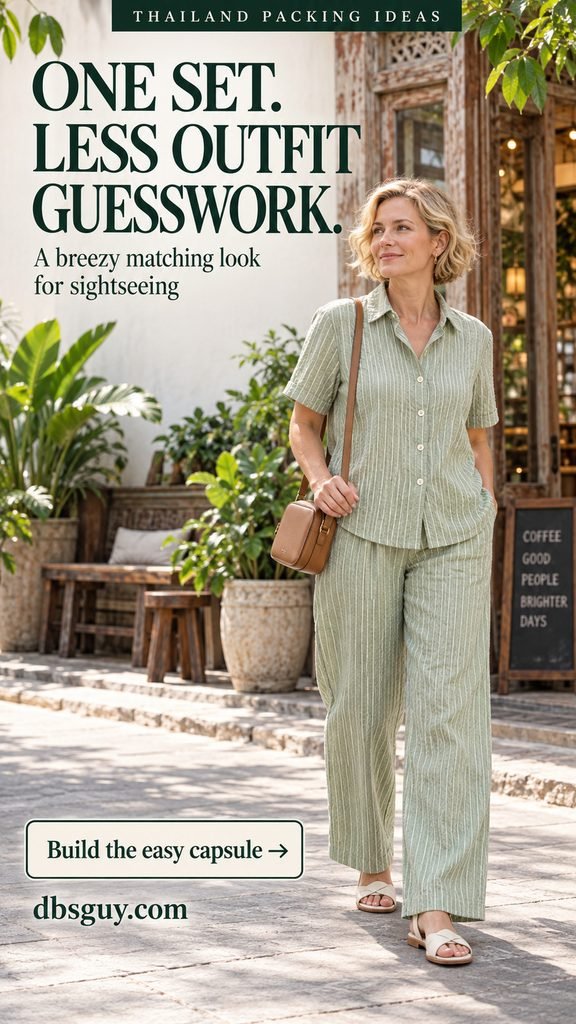
A sage striped set is useful when you want an outfit that is already coordinated. Choose a proper daytime collared shirt with short sleeves and matching long pants, rather than a satin lounge set or anything sold as sleepwear.
Look for lightweight cotton seersucker with a subtle puckered texture. The fit still matters: the fabric should hang freely at the back, seat, and thighs, and the shirt should cover your waist even when you lift your arms.
The set earns its suitcase space because you can separate it. Wear the sage shirt with the camel pants from look one, or pair the striped pants with a plain sleeved tee. You get more combinations without needing a completely different outfit for every day.
Keep the finish simple: a structured tan crossbody and cream flat sandals give the matching pieces a daytime feel. Check the waistband and seams before buying; a cute set is less useful if the pants pull when you sit.
5. A relaxed tee and woven travel pants for rainy days
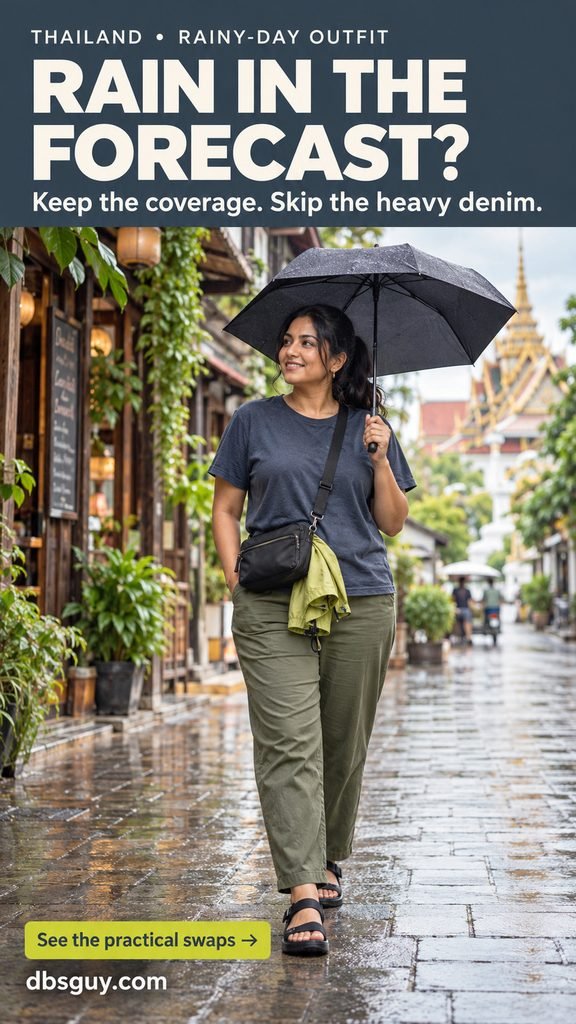
For a forecast with showers, start with a charcoal-blue crewneck tee and olive straight-leg travel pants. It is a casual combination that still gives you sleeves, a covered waist, and long bottoms without relying on heavy denim.
Choose matte woven pants with a relaxed cut. “Travel” on the label does not tell you how a garment will feel, and very shiny or close-fitting pants can look more like gym wear. If quick drying matters, check the garment’s fabric information and care instructions rather than assuming every synthetic performs the same way.
Keep the hems clear of puddles. Flat sandals with a secure back strap and a sole you already know are a practical option; no shoe is slip-proof on wet tile. A compact umbrella and a packable rain shell can go in your day bag, with the shell worn when the weather calls for it.
Before entering a temple building: close the umbrella and follow the posted shoe-removal instructions. Avoid making a dripping rain layer part of the indoor outfit.
6. A sleeved floral maxi for sightseeing and dinner
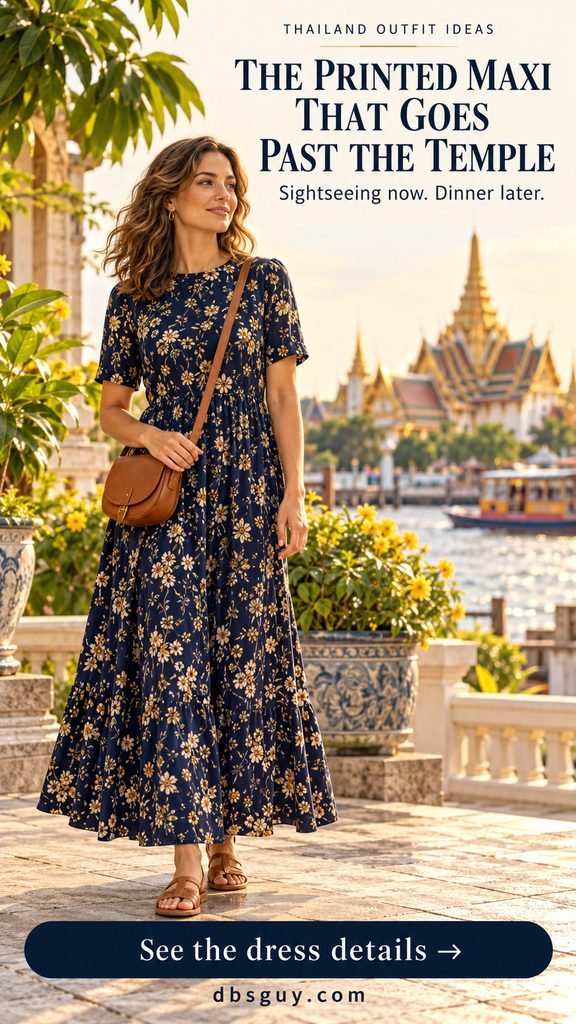
A navy maxi with small cream and marigold flowers is the dressier option here. The print supplies the detail, so you can keep the accessories to tan flat sandals and a compact crossbody.
Choose an opaque woven fabric with a gentle drape, a high neckline, and real sleeves. The pictured dress has a closed skirt and an ankle-skimming hem. Check the back, too: an open back, lace panel, or cutout can be easy to miss in a front-facing product photo.
Leave room through the waist and hips so you can sit comfortably. If you prefer a defined waist, look for light shaping rather than a tight elastic band. A shorter, properly fitted hem is more useful than a train of fabric trailing behind you.
For the evening: this works as an outfit for a casual dinner after sightseeing. If you have booked a rooftop bar or a restaurant with a dress code, check that venue’s footwear and clothing requirements separately.
Choose the fabric and fit before the accessories
You do not need an entirely new vacation wardrobe. Start by trying the pieces you own in bright light, then walk around in them long enough to notice a tight waistband, scratchy seam, or heavy lining.
- Linen and linen blends: useful for relaxed shirts and pants. Accept some wrinkles, but check pale colors carefully for transparency.
- Light cotton poplin or seersucker: good options when you want a shirt or dress with a little shape. Avoid assuming that every cotton garment is lightweight; dense fabric and full linings add bulk.
- Light woven rayon or viscose: an option for a flowing dress if you like the feel. Check opacity and the wash label; pack it only if its care requirements suit your trip.
- Technical woven fabrics: worth considering for rainy travel days. Read the actual product details, and choose a regular trouser shape rather than a skin-tight legging.
For temple-heavy days, prioritize garments that provide coverage on their own. A sheer top plus a tank plus a cardigan is more to manage than one suitable shirt.
Adjust your packing to your route and month
The Thai Meteorological Department describes the general hot season as roughly mid-February to mid-May and the rainy season as roughly mid-May to mid-October. These are broad patterns, not a forecast for your dates.
For the hotter months, give yourself spare tops and time for laundry rather than assuming one shirt will feel fresh through every activity. For wetter travel days, pay extra attention to trouser hems, rain protection, and how your shoes handle getting wet.
If you are escaping a US winter, remember that northern Thailand can have cooler mornings and evenings, especially in the hills. Southern Thailand’s east coast can remain rainy later in the year, so do not treat the whole country as having one dry-season calendar. Check the forecast for each stop before you pack.
Build a small capsule around your favorite looks
You do not need to pack all six outfits exactly as pictured. For a week with laundry available, use this as a starting point and adjust for how often you like to change:
- Three to four opaque tops with sleeves, including one button-front shirt.
- Two pairs of loose long pants; make one a practical option for wetter days if needed.
- One sleeved dress or closed maxi skirt, if you enjoy wearing them.
- Comfortable walking shoes and an easy-to-remove alternative you have already worn.
- A light layer for air-conditioning, rain protection for your route, and a zipped day bag.
- Underwear, sleepwear, and any beach or activity clothing your itinerary needs.
Keep swimwear for the beach or pool, and change into appropriate clothing before a temple visit. A beach cover-up needs the same opacity and fit checks as anything else. The same coverage principles apply to men: a regular sleeved shirt and loose long pants are an easy starting point.
Thailand outfit questions, answered
Can I wear shorts in Thailand?
Shorts are commonly worn in tourist areas and for casual activities. For a day that includes temples, choose long pants or a longer skirt instead. The Grand Palace specifically prohibits shorts, so plan that outfit before you leave your accommodation.
Are short sleeves enough, or do I need long sleeves?
A regular short-sleeved shirt that covers your shoulders and upper arms is a practical starting point; sleeveless is the problem in the Grand Palace’s published list. Follow any more specific requirements at the site you visit. You do not need to default to a heavy long-sleeved layer.
Can I cover a tank top with a scarf?
Do not make a scarf your only plan for a strict site. A proper opaque sleeved shirt, worn buttoned over the tank with your chest and waist covered, is the more dependable outfit choice. If temples are the main activity, wearing the suitable shirt from the start is simpler.
Are sandals okay for temple visits?
Comfortable sandals are a practical choice for many visits, and shoes generally come off before entering worship areas. Follow the site’s signs and choose shoes you can manage easily. A secure back strap can be helpful for the walking between stops.
Do I need elephant pants?
No. Ordinary loose long pants can do the job. If you buy patterned pants locally, inspect the fabric, seams, length, and fit rather than assuming the print makes them suitable. Avoid anything transparent or recognizably sleepwear for a strict palace visit.
Can I rent or borrow a cover-up at the entrance?
Some sites may have clothing available, but availability and arrangements vary. Pack a suitable outfit so your visit does not depend on finding a rental in your size after you arrive.