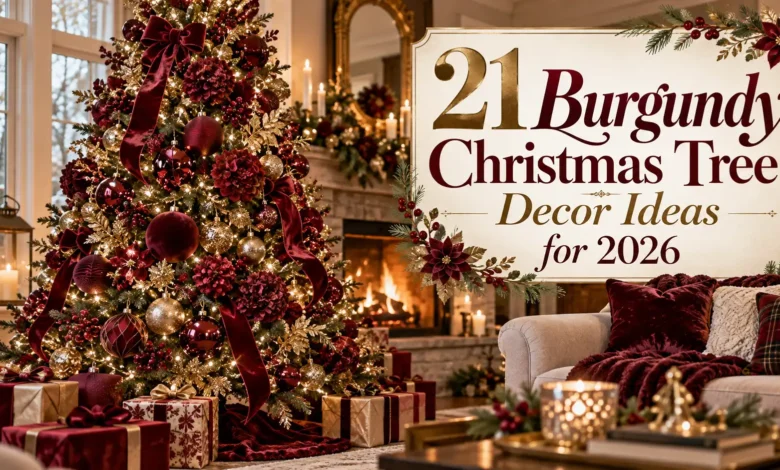
A burgundy Christmas tree can feel warm and traditional, soft and romantic, or wonderfully dramatic. The difference comes from what you put beside that deep wine red: antique gold adds warmth, ivory creates breathing room, and silver gives it a sharper finish.
The easiest place to start: keep your green tree, choose one burgundy ribbon you love, and repeat the color in a few ornaments. Then add one supporting shade already found in your room. You do not need a new tree or an entirely new ornament collection to make the look work.
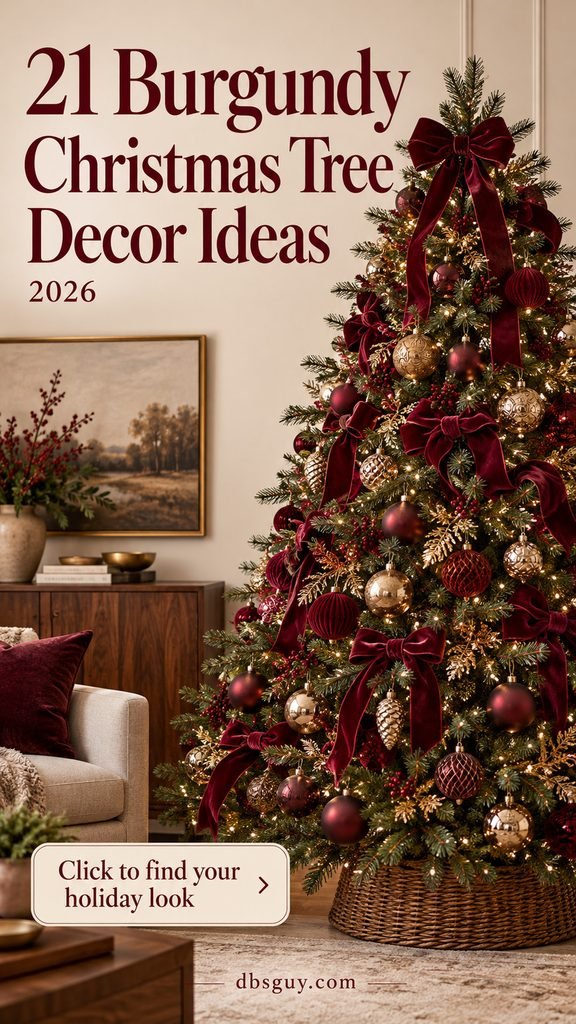
These 21 burgundy Christmas tree decor ideas for 2026 include full-room looks, ribbon techniques, handmade decorations, and options for smaller homes. Each one explains the materials, placement, and small adjustments that help turn an inspiration image into a tree you can actually decorate.
The images are AI-generated decorating concepts, created to illustrate the color combinations and arrangements described here.
1. Pair Burgundy with Antique Gold for a Warm, Traditional Tree
For a tree that feels at home beside cream upholstery and wood furniture, start with burgundy ornaments and softly aged gold. Brushed, ribbed, and embossed finishes give the metallic pieces character without making every branch look like a mirror.
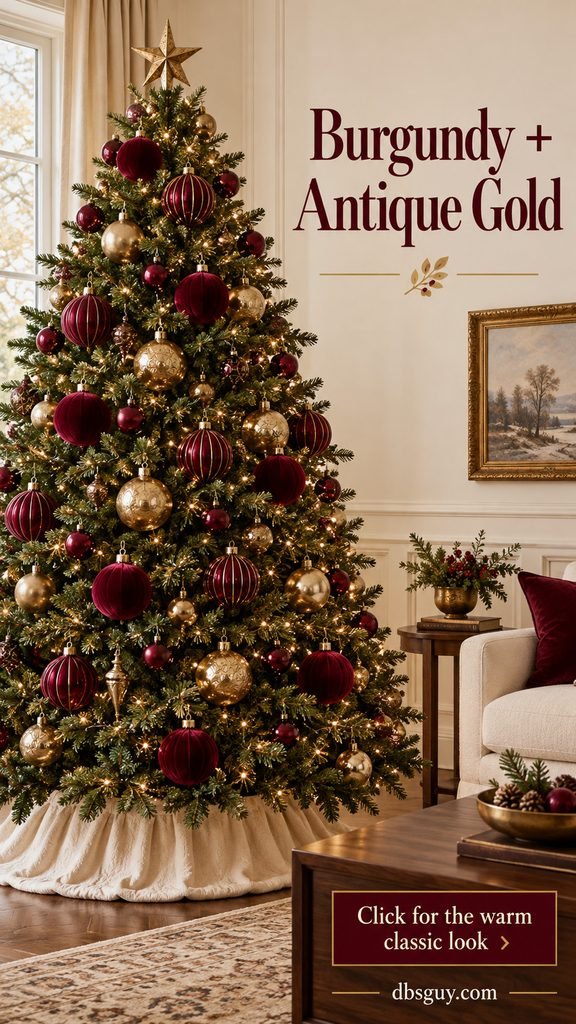
Gather wine-red baubles in two or three finishes, gold balls, a modest gold star, and a cream skirt. Place the larger ornaments on branches that can support them, a little inside the tree. Bring smaller reflective pieces closer to the outer branches so they catch the lights. The concept combines plush burgundy spheres with patterned gold ornaments; that texture is what keeps the familiar palette interesting.
If your existing gold decorations are very shiny, mix them with matte burgundy instead of buying replacements. Keep the topper quieter than the ornaments, and let some needles remain visible. A little green between the red and gold helps the tree feel layered rather than packed solid.
2. Let Ivory Ornaments Brighten a Burgundy Palette
Ivory is a useful partner when you love burgundy but want the room to stay light. On an open green spruce, pale ornaments stand out while the darker details provide definition. This suits linen seating, pale oak, and rooms with plenty of daylight.
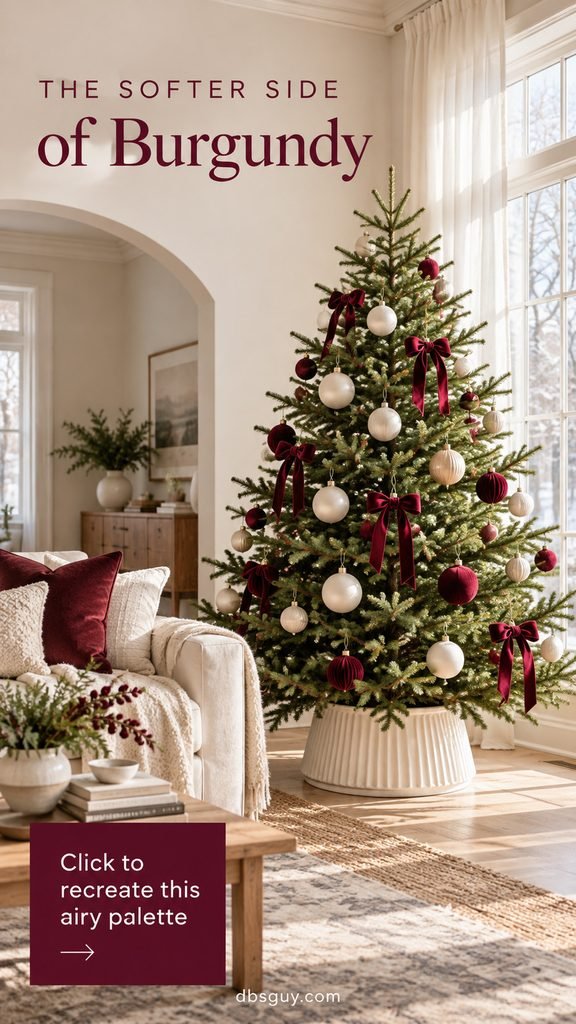
Use ivory balls as the main ornament, then tuck in burgundy spheres and small velvet or satin bows. Alternate smooth and ribbed pale finishes so the tree does not depend on extra colors for interest. In the illustrated look, a ribbed ivory collar continues the pale palette at the base.
Distribute the burgundy accents across the whole tree before adding more. If all the dark pieces sit on one side, the arrangement can look accidentally uneven. For a softer result, choose warm cream rather than bright white, and keep broad ribbon loops out of this particular design. The open spaces are part of its appeal.
3. Create a Snowy Contrast on a Flocked Tree
A flocked tree gives burgundy a brighter backdrop. Wine-red balls and velvet bows look especially distinct against white-tipped branches, while white stars add shape without introducing another major color.
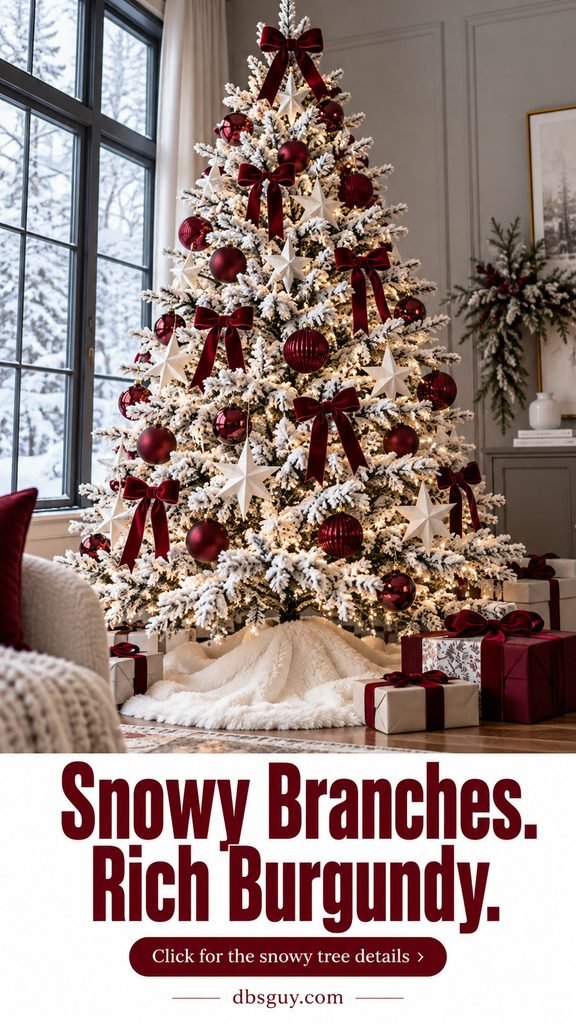
The ingredients are simple: a flocked artificial tree, burgundy baubles, narrow ribbon bows, white stars, and a white skirt. Place the darkest ornaments where the flocking is most visible, then spread the stars between them. A burgundy bow near the crown can finish the look without adding a heavy topper.
Keep the ornament mix fairly restrained; the snowy branches already contribute texture. If your flocked tree has dense white coverage, smaller dark decorations may be enough. If it has only lightly dusted tips, include a few larger burgundy pieces for contrast. Handle and shape the branches according to the tree manufacturer’s instructions rather than tugging at the flocking to make room.
4. Build a Woodland Tree with Pinecones and Burgundy Accents
This version makes burgundy feel earthy. Brown pinecones, a wooden star, and a woven collar bring in texture that works with a cabin corner, rustic furniture, or a home with warm wood trim.
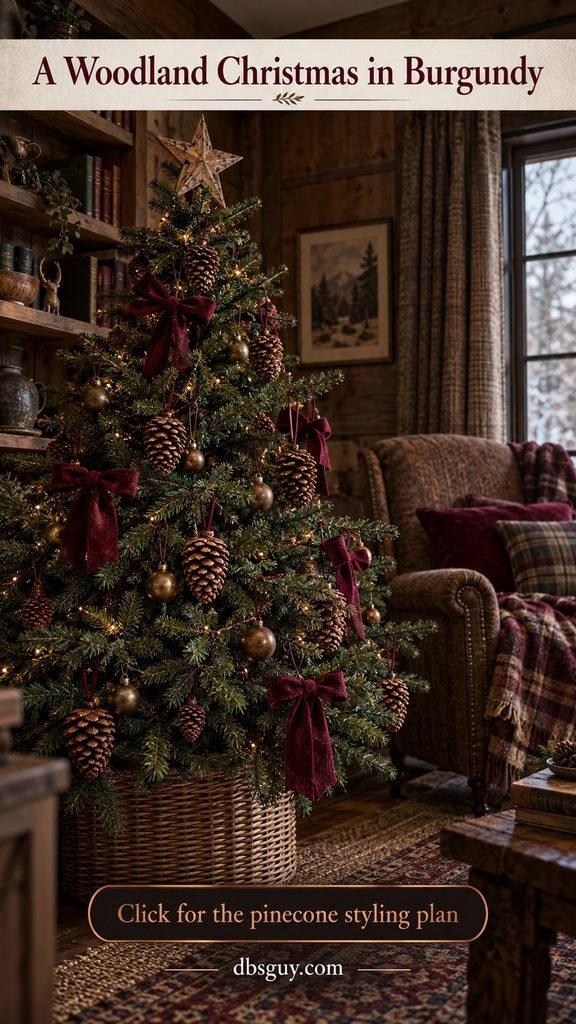
Choose clean, dry decorative pinecones with secure hangers, burgundy fabric bows, and a small selection of aged bronze ornaments. Hang the cones at different depths, with the larger ones on sturdier branches. Stagger the bows rather than arranging every one in a straight horizontal line.
Let the pinecones stay brown; painting everything red would remove the contrast that makes this tree feel natural. A basket-style collar should conceal a properly fitted stand, not replace it. If you use a real tree, leave convenient access for watering. In a dark wood room, place some bows toward the front so the wine color does not disappear into the background.
5. Soften Wine Red with Blush and Satin
Blush turns a burgundy tree toward a softer, romantic mood. The combination looks especially inviting with warm plaster walls or cream furniture, and it gives pink ornaments you already own a place in a deeper holiday palette.
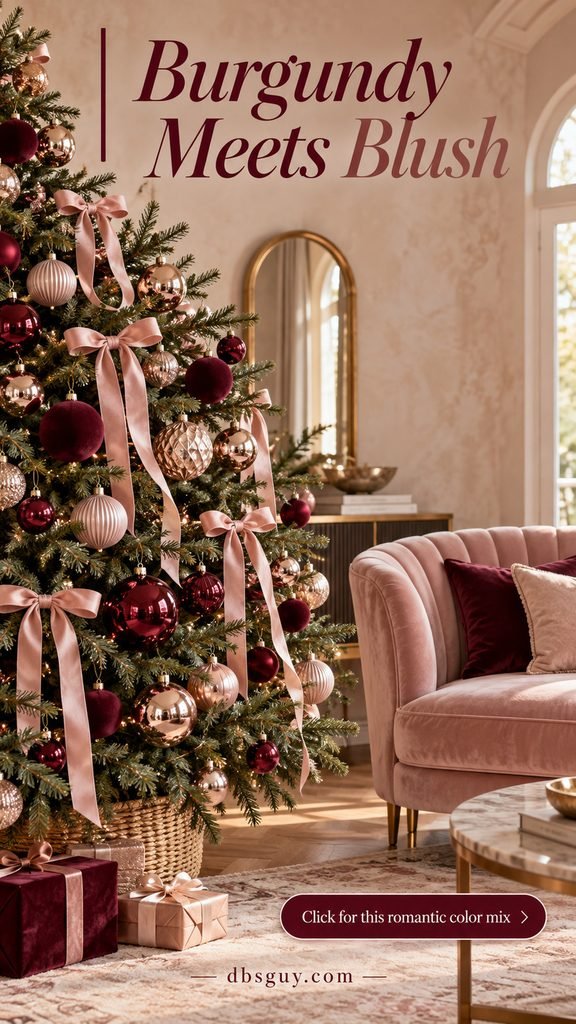
Pair deep burgundy balls with dusty blush baubles and blush satin bows. A few rose-gold pieces can connect the two shades. Keep the pink muted: a pale, slightly brownish blush usually creates a gentler effect than a vivid candy pink. The concept uses ribbed ornaments and long, softly hanging satin tails.
Tie one sample bow before cutting the whole roll. Check whether its loops hold the shape you want and whether the tails hide nearby ornaments. Place the heavier-looking burgundy pieces across the tree first, then use blush to soften the spaces between them. If the tree starts feeling mostly pink, bring a few wine-red ornaments farther forward.
6. Give Burgundy a Modern Edge with Pewter and Silver
If your room has gray upholstery, black window frames, or brushed metal details, pewter and silver can connect the tree to its surroundings. Burgundy supplies the warmth, while the metallic ornaments give the arrangement a crisp outline.

Mix matte pewter spheres, silver teardrops or faceted shapes, and burgundy balls. Narrow velvet bows soften the harder surfaces. A brushed-silver collar keeps the base consistent with the ornament palette. Try to include both dull and reflective silver finishes so the tree is interesting in daylight as well as after the lights come on.
Hang long teardrops where they can fall freely rather than resting on the branch below. If the reflective pieces dominate, remove a few before adding more burgundy. You can use warm-white lights here too; you do not need blue-toned lighting to make silver feel modern.
7. Layer Burgundy, Plum, and Emerald for a Jewel-Tone Tree
For a richer, more decorative tree, combine burgundy with plum and emerald. Their close intensity makes the colors feel related, while different ornament shapes keep them from merging into one dark mass.

Choose burgundy glass balls, emerald faceted ornaments, plum onion shapes, and small gold stars. A few burgundy tassels introduce a different silhouette. This is a good direction for a dining room or a space with bold artwork, where a pale tree scheme might feel disconnected.
Build the colors in small groups, but repeat each group in more than one part of the tree. Add gold sparingly between the darker ornaments to create small bright breaks. Look at the tree with the lights off before finishing: if it reads as nearly black, move reflective ornaments outward or reduce some of the dense clusters. The goal is visible jewel colors, not simply more decorations.
8. Bring in Navy and Burgundy Plaid for a Library-Inspired Look
Plaid gives burgundy a cozy, tailored character. Navy and cream threads in the ribbon can tie the tree to bookshelves, leather seating, or traditional furniture without relying on a bright red-and-green scheme.

Use one burgundy-and-navy tartan ribbon, plain baubles in those two colors, and a few brass bells. Wired ribbon is helpful for loose loops because you can shape the edges. A width around 2.5 inches is a practical starting point for a medium-to-large tree, though the branch spacing matters more than a fixed rule.
Test the plaid beside your burgundy ornaments before committing. Some tartans contain a much brighter red, which changes the overall effect. Keep most of the ornaments plain so the fabric pattern remains readable. For a smaller room, use shorter ribbon sections with fewer loops instead of wrapping broad bands all the way around the tree.
9. Try a Bows-Only Tree with Plenty of Breathing Room
A bows-only tree is the simplest option in this collection. Green branches, warm-white lights, and burgundy velvet do all the work. It is particularly appealing on an open spruce where you can see the individual branch layers.
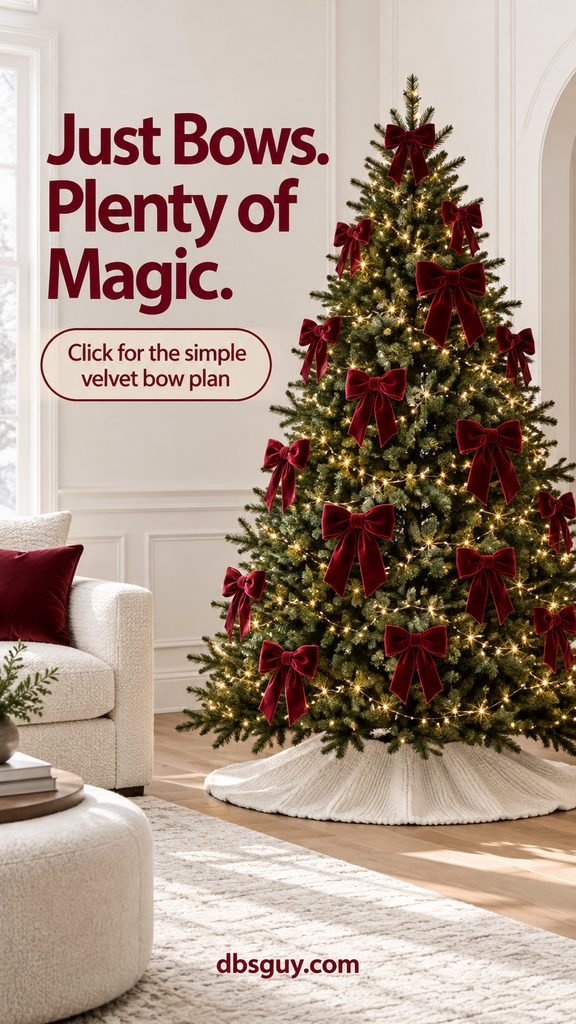
Start with a small batch of bows made from ribbon about 1 to 1.5 inches wide. Make the first few before estimating the rest. Tie or securely attach them near selected branch tips, moving in a loose staggered pattern from top to bottom. Keep the crown simple and leave the baubles in storage for this look.
From across the room, check whether the bows have a similar visual size. Their tails can vary a little, but one enormous bow in the middle will pull attention away from the tree’s shape. Add only where an area feels empty; repeating a bow on every branch would take away the easy, airy quality.
10. Make One Oversized Burgundy Bow the Focal Point
One generous bow can give a fairly plain tree a clear focal point. Here, the drama belongs at the crown: structured velvet loops, long tails, and a restrained set of champagne-gold ornaments underneath.
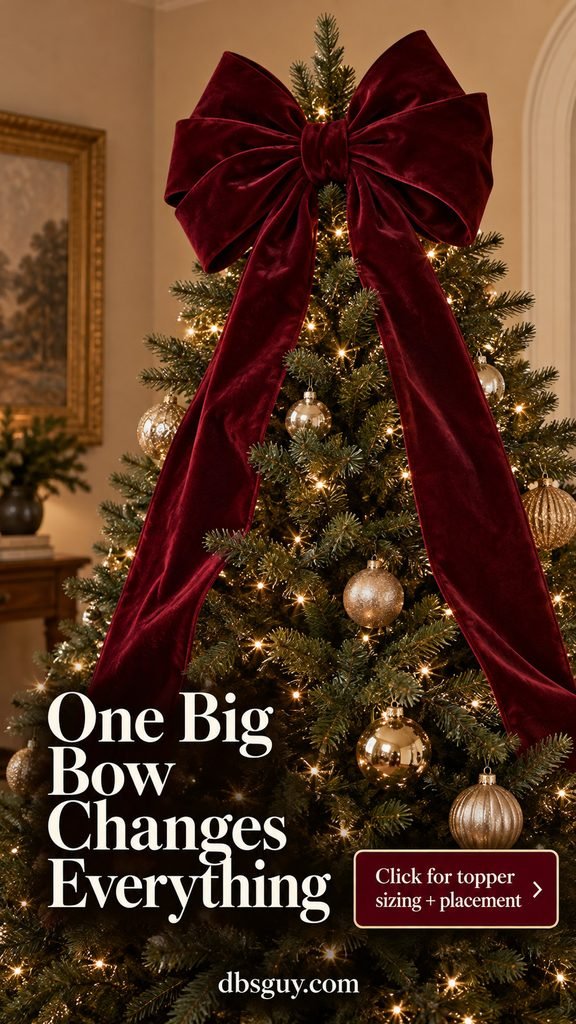
Before making or buying the bow, measure the available space above the tree and consider its width. For a roughly 7-foot tree, a bow around 12 to 16 inches across can be a starting point to test, not a universal sizing rule. A narrow tree may need less, while a broad tree can carry more.
Use wired velvet for loops that need shaping. Mount the bow securely to a sturdy support using the attachment method appropriate for your tree and topper. Let two tails fall into the branches rather than stretching them into straight lines. Trim them clear of the floor. If the crown bends under the bow, reduce the weight or choose a smaller topper instead of forcing the top branch upright.
11. Shape Burgundy Ribbon into Vertical Cascades
Vertical ribbon adds movement and can help connect the upper and lower parts of a tree. Unlike the long tails of a single topper bow, this design uses several separate tracks, each forming soft loops down the branches.
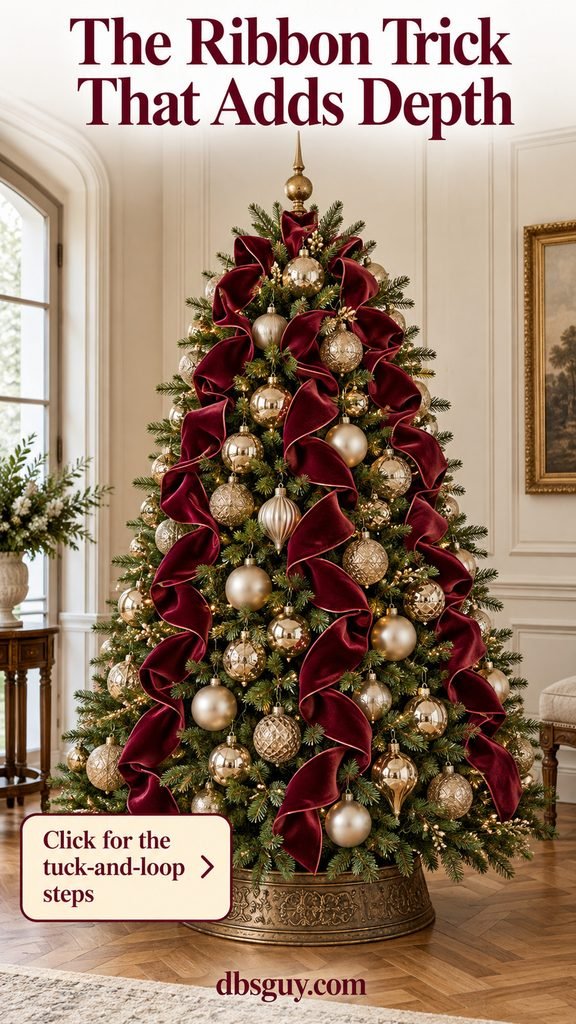
Choose burgundy wired ribbon, usually around 2.5 inches wide for a noticeable but manageable effect. Begin with one section about 30 to 36 inches long. Secure its upper end inside the foliage, bring a loose loop forward, and tuck the ribbon back into another branch junction. Make a second loop, then conceal the end. Test that section before cutting more.
Continue with staggered sections that suggest a flowing vertical line rather than a perfectly straight stripe. On the illustrated tree, three visible cascades leave room for champagne ornaments between them. Add more around the back only where the tree will be seen. Balsam Hill’s ribbon guide explains how wired edges and tucked cascades help create shape.
12. Use Burgundy Poinsettias and Berry Picks as Statement Decorations
Artificial poinsettias offer a bigger shape than a round bauble. Burgundy velvet petals and small berry sprigs can create a botanical tree with fewer individual statement pieces.
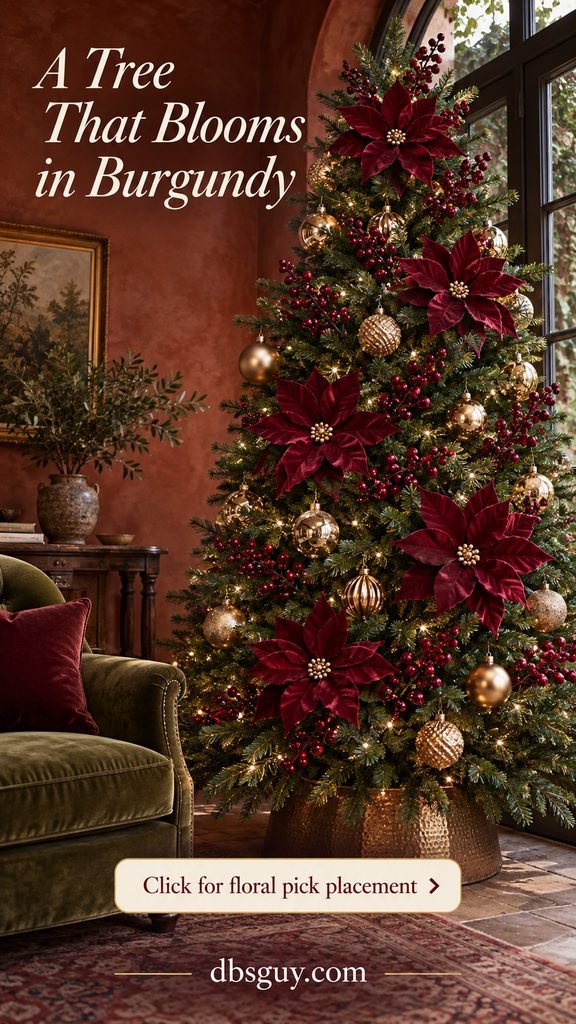
Choose faux flowers in a genuinely wine-red shade, plus burgundy berry picks and a few gold balls. Test a loose diagonal of flowers across the front, then add smaller sprigs nearby. The concept uses blooms with gold centers, which connect naturally to the metallic ornaments.
Insert stems far enough into the foliage to make the flowers feel part of the tree, while keeping the attachment secure and clear of light wiring. Avoid loading every flower onto the tips; wide blooms can hide the branch structure. If a stem is too long or stiff for your tree, use a shorter decoration made for that purpose. A little greenery between the flowers helps this read as a Christmas tree rather than one large floral arrangement.
13. Give Vintage Glass Ornaments a Burgundy Backdrop
You can build this look around ornaments with history: silver finials, gold reflector balls, and glass drops. Burgundy ties and a few wine-red pieces bring the varied shapes into one palette without asking them to match perfectly.
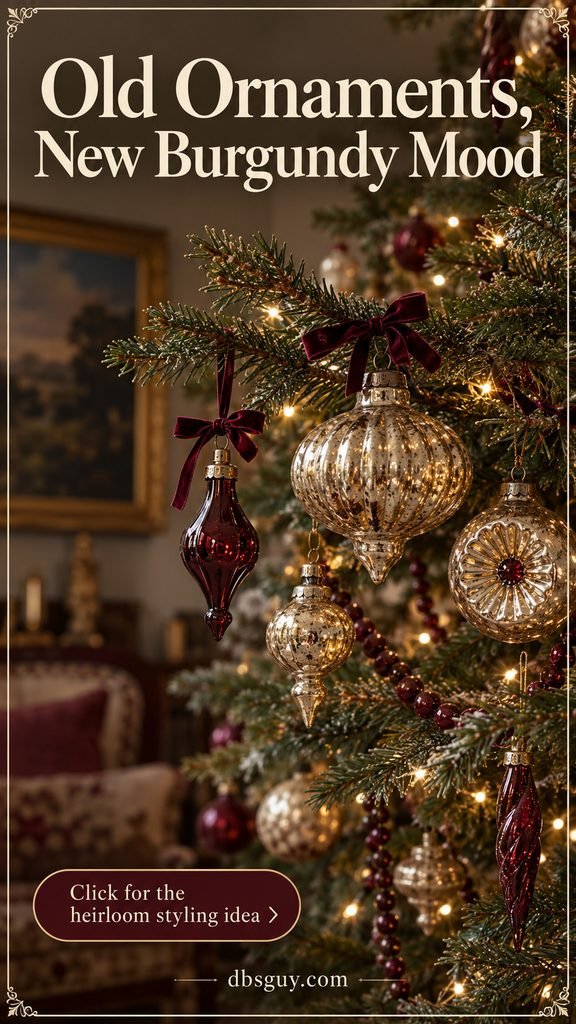
Lay the collection out before decorating. Separate the most fragile pieces, choose secure hangers, and place them on sturdy branches where they will not bump against one another. Long finials need space underneath. Small velvet bows beside existing hangers can introduce burgundy while keeping the ornament’s original attachment intact.
Decorate with the special pieces first, then fill only the obvious gaps with plain burgundy balls. A uniform new set can overwhelm a small heirloom collection, so use it sparingly. If your household includes pets or young children, display fragile favorites out of reach or somewhere separate from the tree. Height alone does not make them safe if the tree can be pulled or knocked.
14. Make Burgundy and Cream Paper Rosettes the Main Decoration
Paper decorations bring a different kind of richness: deep color, crisp folds, and light weight. Burgundy rosettes with cream honeycomb balls suit a craft-focused Christmas or a tree with branches that cannot support heavy ornaments.
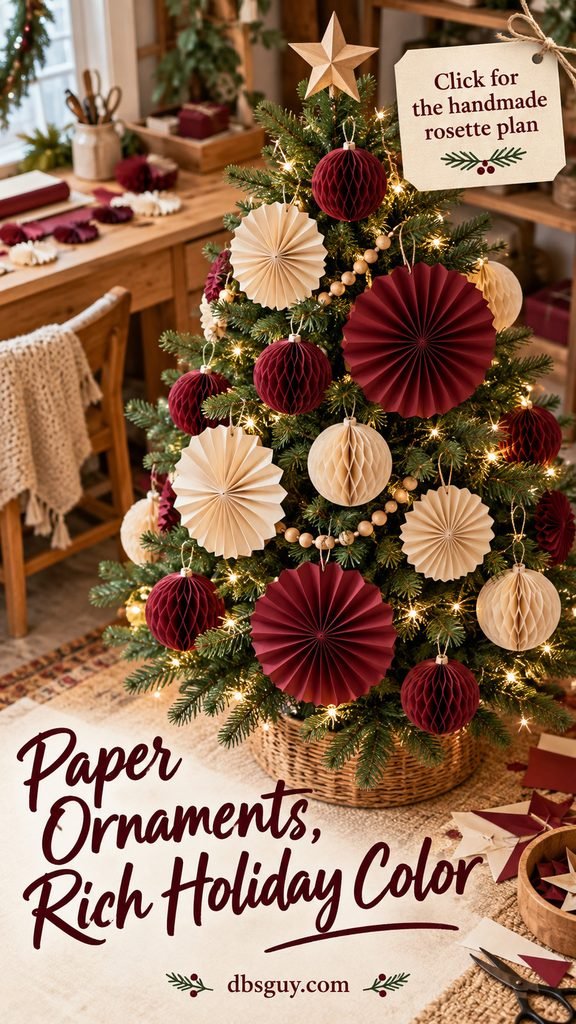
For a simple rosette, accordion-fold two matching paper rectangles, fold each fan in half, and join the short edges to form a circle. Secure the joins, let the adhesive dry, and add a lightweight hanging loop. Start with one sample; paper thickness and fold width change the final size and how easily it opens.
Try a mix of roughly 3- to 5-inch rosettes rather than making every decoration identical. Burgundy on the outer branches and cream a little farther inside creates visible layers. Keep paper clear of bulbs and heat sources, and use lighting appropriate for the tree. Store flat-folding decorations gently after the season so the folds do not become crushed under heavier ornaments.
15. Weave a Faux-Cranberry and Wood-Bead Garland Through the Branches
A bead garland adds a line through the tree, linking separate decorations together. Burgundy faux-cranberry beads and pale wood beads create a homespun look without the brighter shine of metallic tinsel.
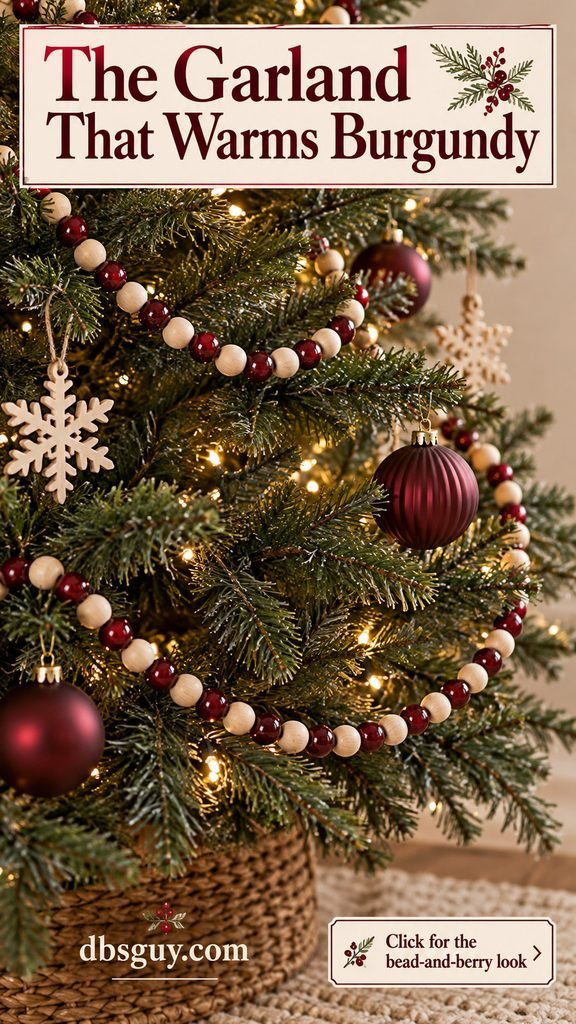
Choose a ready-made decorative garland, or securely string suitable craft beads onto a strong cord. Drape it in shallow scallops, supporting it at multiple branch points so one branch does not carry the whole length. Add a few burgundy balls and light wooden snowflakes, then stop before the garland gets hidden.
The wood beads should remain easy to see against the green needles. If the dark beads disappear, move the garland toward the visible branch layers. Avoid deep, heavy swags that pull the tips down. Faux berries are decorations, not food; keep loose beads and small parts away from children and pets. For this look, the connected garland is the feature, so broad ribbon would compete with it.
16. Lighten the Tree with Champagne Ribbon and Clear Glass
Clear ornaments and sheer champagne ribbon give burgundy a lighter setting. This works well near a window, where transparent pieces can catch daylight without adding another strong color.
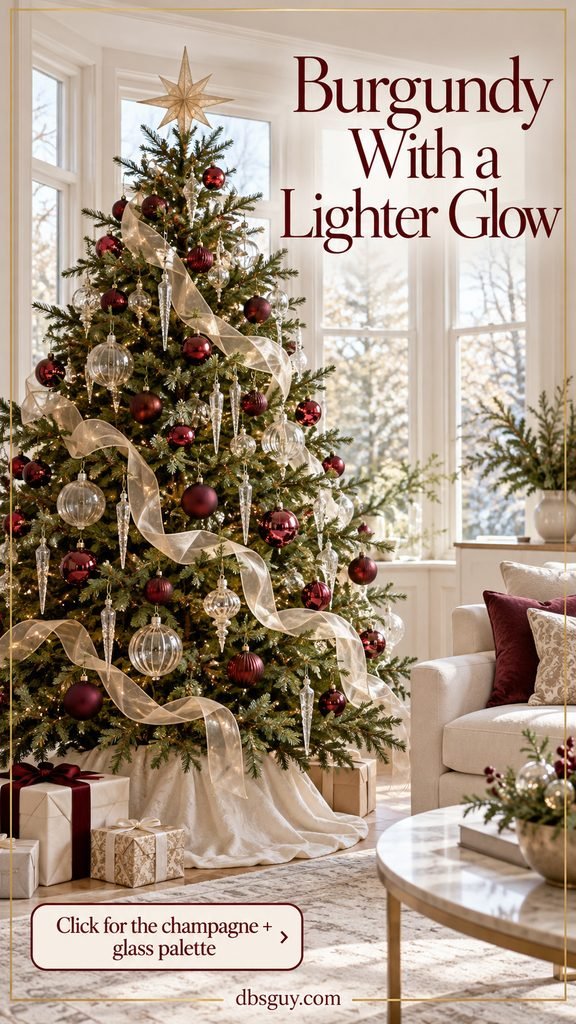
Use small burgundy balls, champagne organza ribbon, and clear or clear-look orbs and icicles. Place transparent ornaments on outer branches with room around them. The wine-red pieces provide contrast; the sheer ribbon loosely connects the arrangement without becoming a solid band.
Organza does not behave like thick velvet, so let it drape gently rather than trying to make stiff sculptural loops. If you want more structure, choose a wired version. Keep the base pale with an ivory skirt or collar. For a household where glass is impractical, use clear shatter-resistant decorations, checking the product description rather than assuming an ornament is plastic because it looks lightweight.
17. Mix Burgundy with Chocolate Brown and Copper
Chocolate brown and copper bring burgundy into a warm, earthy palette. Beside walnut furniture or a caramel chair, the tree can feel connected to the room even without a lot of extra holiday accessories.
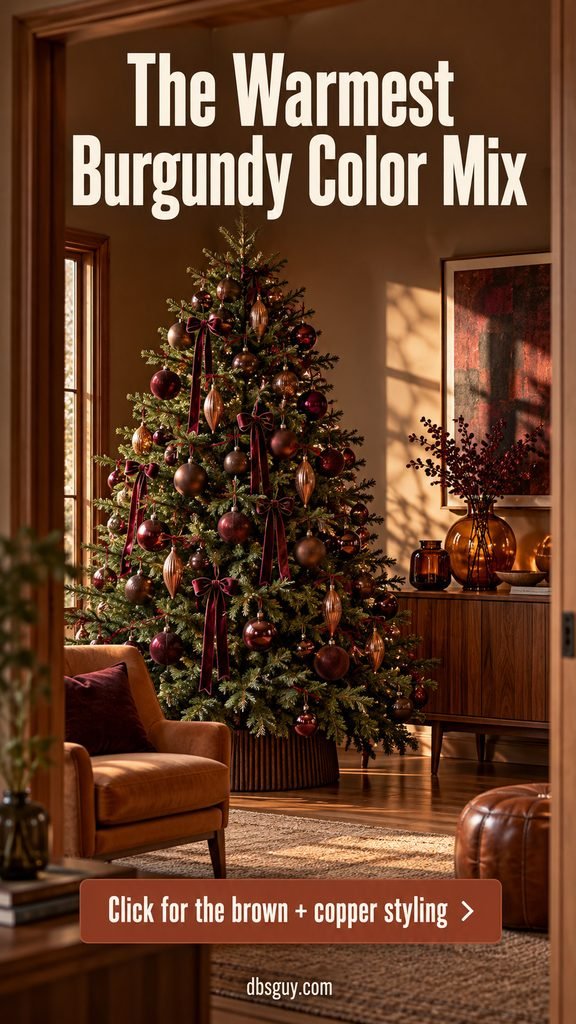
Choose matte brown ornaments, burgundy baubles, and burnished copper drops. Narrow wine ribbon adds a soft note, while the copper creates small points of brightness. A brown or woven base works here better than introducing a bright new metallic finish just at the bottom.
Check the brown ornaments with the lights off. If they blend into the tree, move them nearer a lighter decoration or onto a more open branch. Spread copper across the height rather than keeping all the shine at the top. You do not need to add gold and silver as well; keeping the metallic family focused helps the subtle brown-and-burgundy combination remain clear.
18. Style a Slim Tree for a Small Apartment
A pencil tree can deliver the burgundy look with a smaller footprint. Its narrow shape needs scaled-down ornaments and ribbon, especially when it sits beside furniture or near a walkway.
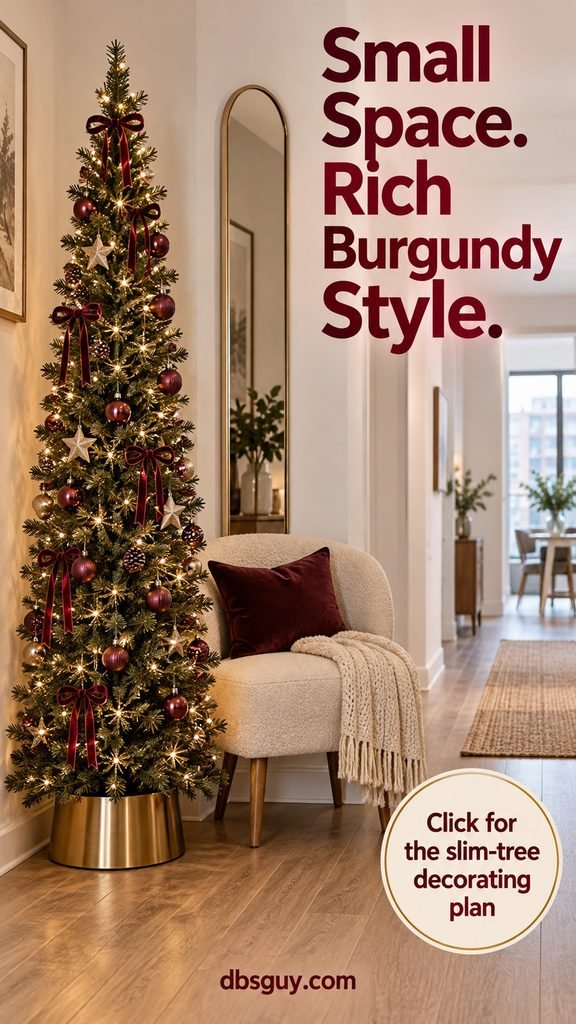
Measure the tree’s listed maximum diameter, the stand, and the space available before buying. A tree around 24 inches wide might suit some compact corners, but the actual fit depends on your room. Use small burgundy baubles, thin bows, and a handful of champagne stars. A narrow collar keeps the base from expanding into the walking area.
Stagger the dark ornaments down the tree instead of placing dense clusters around its narrow middle. Skip very wide ribbon and giant topper tails, which can hide the slim silhouette. Leave space to walk comfortably and keep exits clear. If you decorate mainly the front, still check the side view; that is often what you see first when entering a small room.
19. Create a Tabletop Burgundy Tree for a Console or Sideboard
A tabletop tree is a complete decorating choice in its own right. One small tree on a sideboard can bring wine-red color into a dining room, studio apartment, or entry area without taking over the floor.
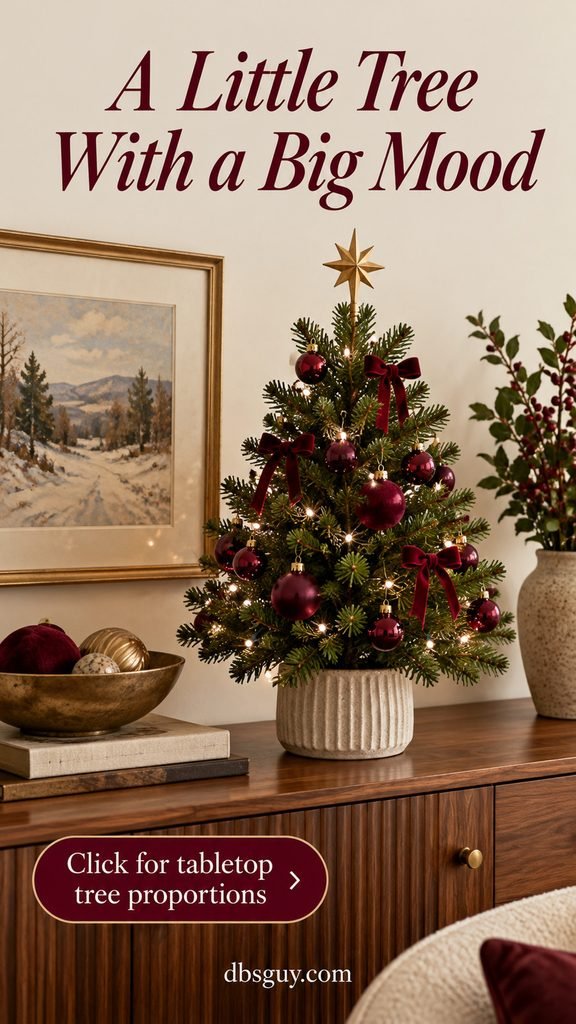
For a tree around 2 feet tall, try miniature ornaments, ribbon about half an inch wide, and a small topper. The concept combines burgundy balls and bows with a ribbed stoneware container. Keep the tree in its proper stand; a decorative container should only conceal it unless it is specifically designed to hold the tree securely.
Set it on a stable surface with enough clearance around the branches. Arrange the light cord so it cannot hang into a walking area or become an easy pull point. Leave some empty tabletop nearby to show the tree’s scale. Adding lots of equally tall accessories can make a small display feel crowded instead of intentional.
20. Go Bold with a Burgundy-Colored Artificial Tree
Here, burgundy is the foliage itself. A wine-colored artificial tree makes a much stronger statement than a green tree with red decorations, so it benefits from a quieter ornament collection.
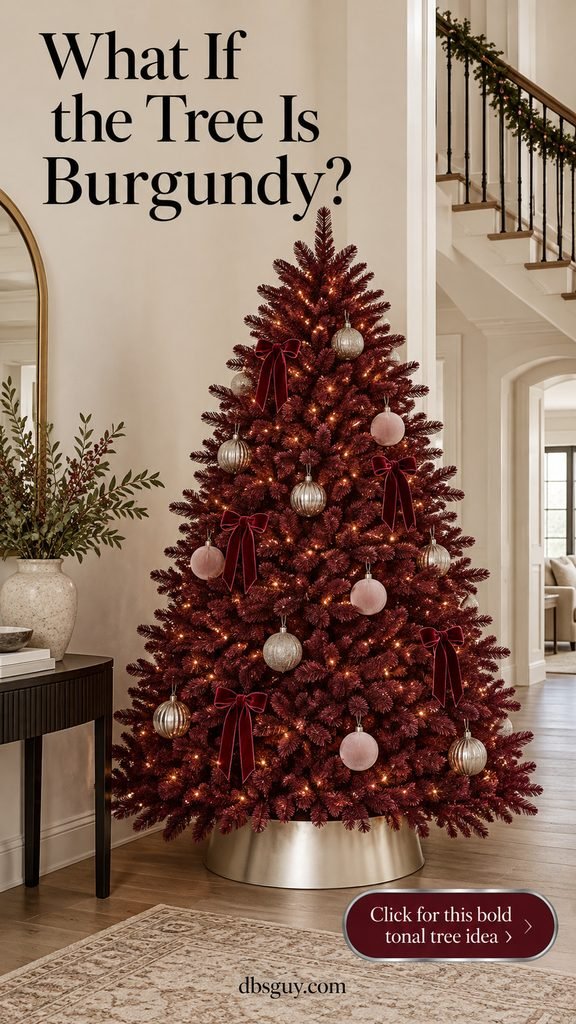
Choose a tree whose product photos and description show the shade you want; a bright red tree will create a different effect. Add a limited mix of blush and brushed-silver balls, a few small wine ties, and warm-white lights. A pale collar gives the dark silhouette a clean base.
Shape the tree before adding anything, then pause after the first small batch of ornaments. The colored branches already provide much of the visual interest. Keep it against a pale wall if you want the outline to stand out, and avoid assuming every burgundy decoration will match the foliage. If you are unsure about committing to the color, test the mood with burgundy ribbon on your existing green tree first.
21. Finish with Burgundy Felt Ornaments and Family Keepsakes
A burgundy palette can still feel personal and relaxed. Felt hearts, stitched stars, cream mittens, and wooden keepsakes create a softer tree that makes room for favorite decorations rather than turning them into visual clutter.
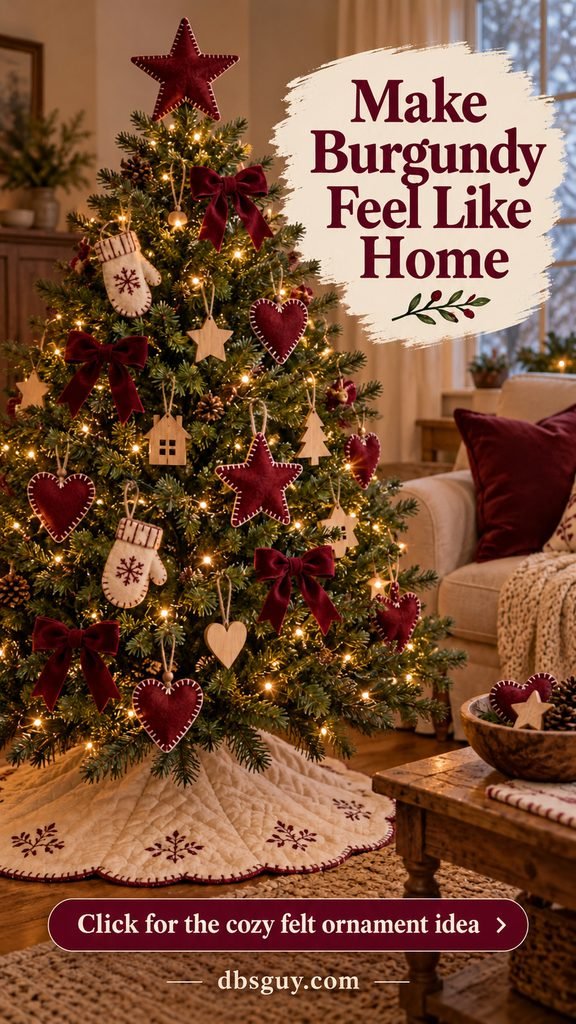
Choose two or three simple felt shapes and repeat them in burgundy and cream. For a handmade ornament, stitch two matching cutouts together with a small amount of stuffing and attach a secure fabric hanging loop. Plain wooden shapes and a few burgundy bows can sit alongside the felt pieces.
A quilted cream skirt completes the cozy mood. If you want to include a colorful keepsake, place it deliberately instead of hiding it behind the tree; the surrounding repeated colors can help it belong. Felt is less fragile than glass, but the ornaments, threads, stuffing, and hangers still need appropriate placement around children and pets. Skip detachable beads or buttons on decorations within their reach.
How to Bring Your Chosen Burgundy Look Together
Check the color in your own room
Before ordering a full collection, compare a ribbon sample and one ornament in daylight and with your tree lights on. Burgundy products can lean brown, purple, or red, even when their labels sound similar. A small variation can look beautiful; the useful question is whether the pieces work together beside your furniture.
Pick one direction from the ideas above and carry its main materials through the topper and base. You can combine a color palette with a ribbon technique—for example, antique gold with vertical burgundy cascades—but avoid adding every accent you like at once. The tree should have an obvious focal point when viewed from the doorway.
Decorate in an order that leaves room to adjust
Balsam Hill’s decorating sequence puts shaping and lights before ribbon and ornaments. That order makes it easier to work inside the branches without knocking finished decorations off.
- Set up and shape. Assemble the tree and stand according to the manufacturer’s directions. Separate artificial branch tips where instructed, and check the tree’s stability.
- Check the lights. Inspect and test them before adding decorations. Follow the instructions for placement, intended use, and connections.
- Add the main structure. Place ribbon or garland, and plan space for the topper. Test one section before repeating the treatment.
- Place the ornaments. Work from larger supported pieces to smaller accents, using both inner and outer branches. Step back from the doorway, adjust uneven areas, and finish the base.
If you have a particularly fragile topper, leave its final placement until you have finished working nearby. The sequence is there to reduce awkward reaching, not to prevent sensible adjustments.
Estimate ribbon from a sample, not just the tree’s height
The amount of ribbon changes with tree width, how much of it is visible, bow size, and loop depth. A bows-only tree and a ribbon-heavy tree can use very different amounts even when both are 7 feet tall.
For bows, measure the ribbon used by one finished sample and multiply by your planned bow count. For tucked sections, measure one completed section and multiply by the number of sections you expect to use. Add enough for a topper, trimming, and a few corrections. These are planning estimates; you can reduce the design if the ribbon you already have is limited.
Use the base to finish the tree without hiding access
A pale skirt softens a traditional tree, a woven collar suits woodland textures, and a metal collar supports a cleaner modern look. Check the collar’s opening and height against the actual stand before buying. For a real tree, make sure you can still reach the water reservoir.
Repeat burgundy in one or two nearby details if you want the room to feel connected: a cushion, a gift ribbon, or a bowl of matching ornaments may be enough. The tree does not need a matching decoration on every surface.
A Few Safety Details Worth Getting Right
The U.S. Fire Administration’s holiday guidance recommends keeping trees at least 3 feet from heat sources and clear of exits, watering real Christmas trees every day, inspecting light strands for damage, and following the manufacturer’s limits for connections. Remove a real tree after Christmas or when it becomes dry.
Use flameless decorations if you want a candle-like effect; do not attach burning candles to the tree. Keep paper, fabric, and foliage away from heat, and avoid covering electrical connections with decorative material. NFPA’s Christmas tree safety guidance also calls for turning off tree lights before sleeping or leaving home.
Use a stand made for the tree’s size, and consider suitable anchoring if children or pets could pull it over. Soft or shatter-resistant ornaments still have small parts and hangers, so placement matters as much as the material.
Questions About Burgundy Christmas Tree Decor
What colors go best with burgundy on a Christmas tree?
Antique gold is a warm, traditional option; ivory is softer and brighter; pewter and silver feel more modern. Blush, plum, emerald, navy, chocolate brown, and copper can also work when they relate to the room. Start with one supporting color, then add a small accent only if the tree needs it.
Can I use burgundy on a tree with multicolored lights?
Yes. Try a few burgundy ornaments under the existing lights first, because colored bulbs will change how the wine shade appears. Keep the ribbon plain and the ornament palette fairly simple if the lights already provide plenty of color. You do not need to replace a light set you enjoy just to follow a decorating scheme.
How do I stop a burgundy tree from looking too dark?
Add pale, transparent, or reflective decorations between dark ones, and leave visible greenery. Bring some burgundy pieces toward outer branches rather than putting them all deep inside. Check the result in daylight too; extra lights will not solve an arrangement that looks overly dense when they are off.
Should I use velvet or satin ribbon?
Velvet creates a plush, less reflective look, while satin is smoother and catches more light. Wired edges help with shaped loops; unwired ribbon can suit soft hanging bows. Choose for the technique you want, then make one sample before cutting the rest.
How can I create this look with decorations I already own?
Sort out the gold, silver, ivory, wood, or pink ornaments that could support burgundy. Add wine ribbon as the repeated element, and use your best existing pieces first. You can move a few favorite ornaments to the front and decorate the less visible areas more lightly. Buy only after you can see what the arrangement is missing.
A tree feels finished when its color, texture, and shape work together. Choose the burgundy look that fits your room, test one small section, and let that guide the rest. There is plenty of room for personal ornaments inside a thoughtful palette.