Online shopping won the convenience war. So why are Americans—especially people who grew up with a store in their pocket—still driving somewhere just to walk around, buy a drink, open a blind box and maybe leave with a pair of jeans?
For years, the American shopping mall had one of the easiest obituary stories in business.
Amazon was faster.
Department stores were shrinking.
Retailers were closing locations.
Teenagers had phones.
Adults had two-day shipping.
The giant enclosed building with a fountain, a pretzel smell and twelve versions of the same hoodie looked like an artifact from a world before the “Buy Now” button.
Then the story got complicated.
Recent foot-traffic data from Placer.ai show visits rising again across major U.S. shopping-center formats. In its latest mall index, indoor malls posted their strongest year-over-year traffic gain of the year at 5.0%, while open-air centers rose 6.6%. Average visit duration also increased. Earlier data had already shown that more than 40% of mall visits in one spring analysis still lasted over an hour—a reminder that these places are not functioning only as quick pickup points. Placer.ai.
Commercial real estate has noticed too. Green Street data reported by The Wall Street Journal showed U.S. mall property values rising about 13% over the prior year, making malls one of the strongest-performing property sectors in that comparison. Owners are reinvesting in better-performing properties, and high-quality malls have been filling space with restaurants, entertainment, luxury retail and newer specialty concepts. The Wall Street Journal.
But “malls are back” is still too simple.
Some are thriving.
Some are limping along.
Some have become ghostly shells with one surviving anchor and a heroic nail salon.
The recovery is uneven because the mall that is working now is often not the mall people remember.
It is less dependent on one giant department store.
It is more likely to contain restaurants, games, fitness, collectibles, beauty services, pop-ups, viral food, immersive attractions and brands the shopper discovered online first.
And the generation helping drive that shift is not the one mall skeptics expected.
Circana data cited by Axios found shoppers ages 18 to 24 make more than 60% of their general-merchandise purchases in physical stores. PwC’s recent U.S. consumer survey found 71% of Gen Z said they enjoy browsing in person, while 81% said they were prioritizing offline, in-person activities. Axios; PwC.
That does not mean Gen Z suddenly hates online shopping.
It means online shopping solved the transaction so well that the physical store had to find a different job.
The strongest malls are learning to sell something a delivery box cannot:
a place to be.
Reality check: This article is about the malls and shopping centers currently gaining traffic or reinventing successfully—not a claim that every U.S. mall is recovering. Performance differs dramatically by property quality, location, local income, tenant mix, ownership and access. Current community discussions reflect exactly that split: some Americans describe packed malls full of teenagers and families, while others still live near mostly empty centers. The interesting story is not “dead malls magically revived.” It is why certain malls are working again.
Here are 25 things helping make that happen.
Part I — Americans Still Want Somewhere To Go
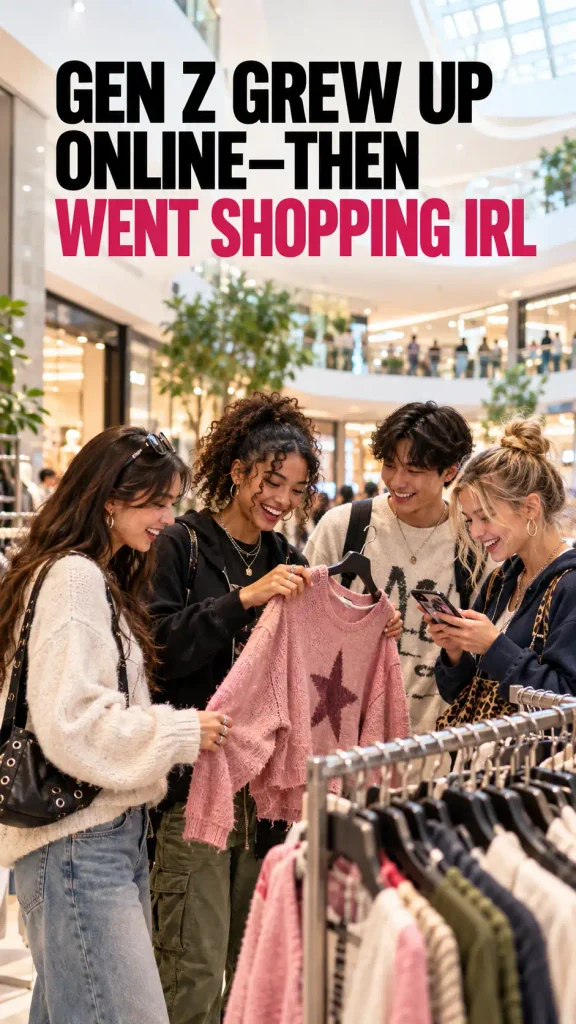
1. Gen Z Grew Up Online—So In-Person Shopping Feels Different
For older shoppers, online retail was the novelty.
For Gen Z, it is plumbing.
You search. You tap. A package appears.
There is nothing particularly magical about that anymore.
Physical retail offers the novelty that e-commerce once did: touching the fabric, smelling the perfume, trying the strange drink, seeing what your friend thinks, finding something you were not searching for.
PwC found 71% of Gen Z respondents enjoyed browsing in person, and Axios reported Circana data showing 18-to-24-year-olds making more than 60% of general-merchandise purchases in stores.
That is not a rejection of digital life. It is omnichannel behavior from people who do not see “online” and “real life” as rival countries.
What changed: e-commerce became normal; physical shopping became experiential again.
Why malls benefit: many categories can be touched, tried and discovered in one trip.
Important nuance: younger shoppers still use phones heavily before, during and after the store visit.
2. The Mall Is Trying To Become A “Third Place” Again
Home is one place.
Work or school is another.
Then there is the place where you can exist around other people without inviting them into your living room.
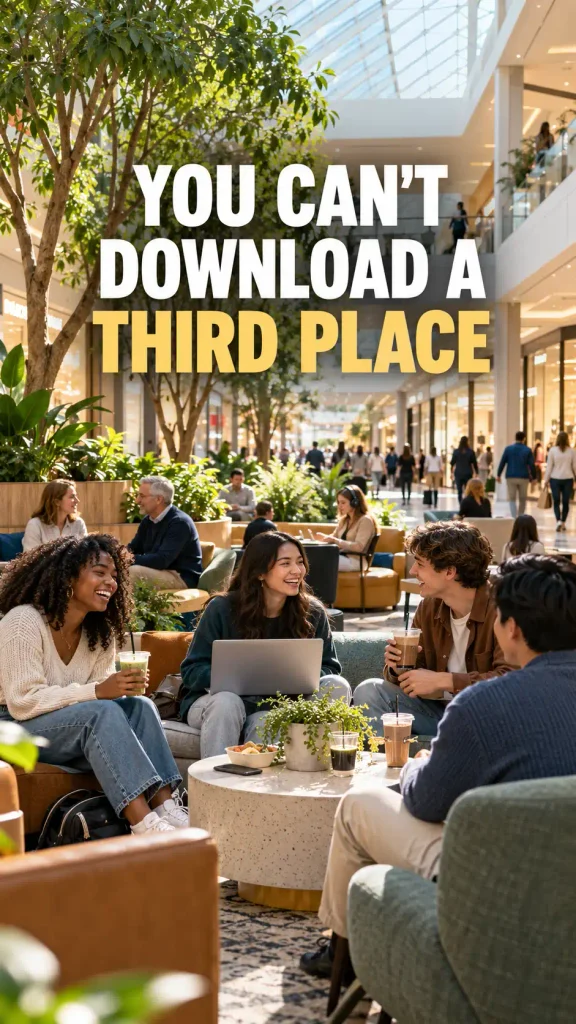
Sociologists often call that a “third place.” Cafés can do it. Libraries can do it. Parks can do it. Malls have always done it imperfectly, because they are private commercial spaces rather than truly public ones—but generations of teenagers still used them that way.
Current mall-industry research is explicitly leaning back into that role. Placer.ai describes successful indoor malls as climate-controlled experiential third places. ICSC likewise points to live entertainment, pop-ups, food and hands-on activities as part of the modern social-center model.
The internet can connect you to everyone. It still cannot give you somewhere to meet them.
Why it matters: a mall visit can be social even when little is purchased.
The tension: landlords need spending, while third-place value partly comes from allowing people to linger.
What successful centers need: a reason to stay that is bigger than a transaction.
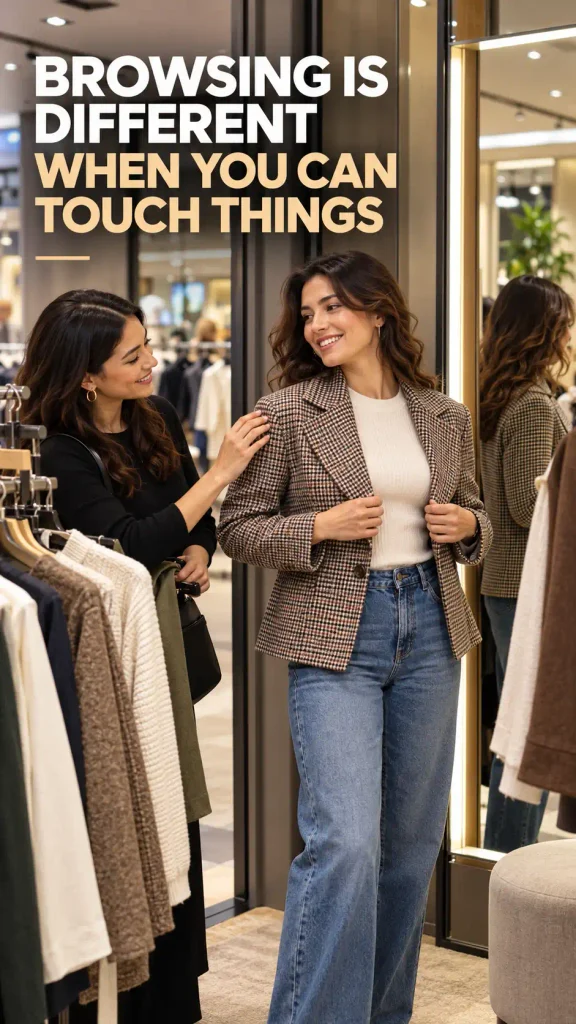
3. Browsing Is A Feature, Not An Inefficient Search Function
Online shopping is brilliant when you know what you want.
Size 9 black running shoe. Specific charger. Exact book title.
Physical shopping becomes more useful when you do not know.
You see the jacket on a mannequin. You feel the towel. You discover the weird store next door. You smell the candle you absolutely should not have trusted based on its name alone.
ICSC’s recent U.S. convenience survey found online shoppers still value physical stores for immediate product access, the ability to see and try products, discovery and easier returns. Specifically, 61% cited seeing or trying products and 50% cited browsing and discovery as benefits of store access.
The store is no longer competing only on inventory. It is competing on uncertainty reduction.
What stores do well: touch, fit, comparison and accidental discovery.
What online does better: search, selection and often price comparison.
The modern shopper: happily uses both.
4. The Store Also Became The Internet’s Return Desk
One of the weirdest victories for physical retail came from online shopping itself.
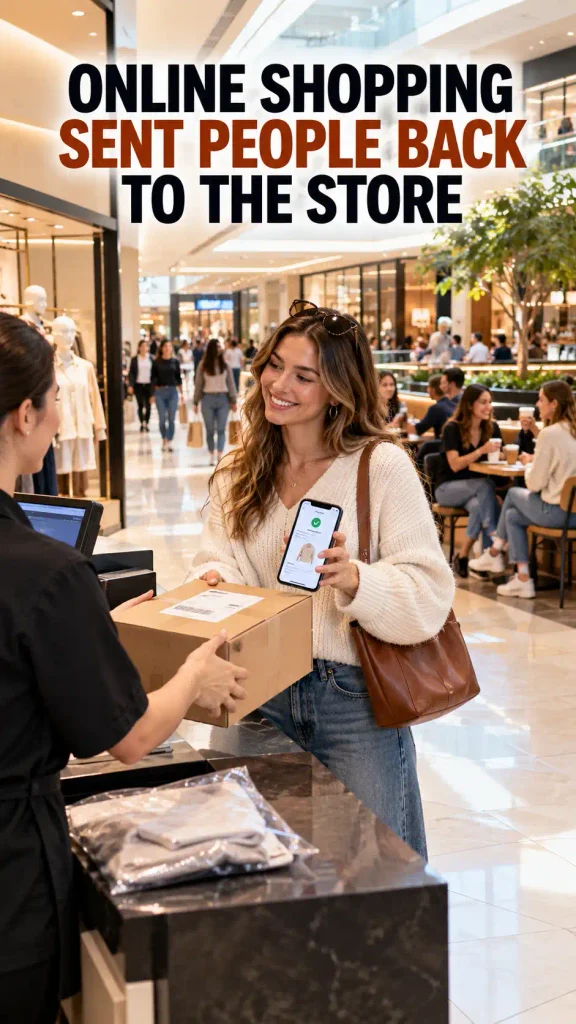
People like ordering online. They do not particularly enjoy printing a return label, finding tape, locating a shipping counter and wondering when the refund will appear.
ICSC’s U.S. survey found 42% of respondents preferred returning purchases in a store, while only 7% said they typically preferred mail returns. Shoppers also valued stores for pickup, immediate access, avoiding shipping waits and easier returns.
That means the store is not simply the opposite of e-commerce. It can be infrastructure for e-commerce.
A person who arrives to return one sweater is now standing twenty feet from coffee, beauty, shoes and a food court.
The return may be transactional. The trip does not have to remain that way.
Why it matters: stores reduce friction for online customers too.
Retail opportunity: a return trip can become browsing, pickup or another purchase.
Consumer benefit: more choice over how to receive and return items.
5. Air Conditioning Is An Underrated Social Technology
There is a practical reason enclosed malls became powerful American gathering places: weather.
Heat. Cold. Rain. Wind. Bad air days.
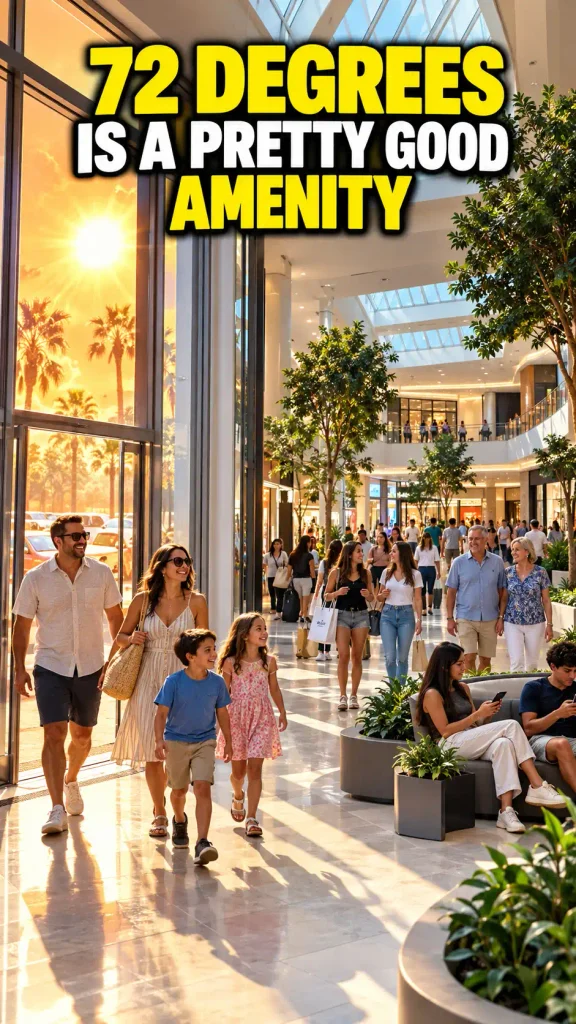
A mall offers a large, walkable, climate-controlled environment where a teenager, older adult, parent with a stroller or group of friends can spend time without planning around the forecast.
Placer.ai’s research specifically describes indoor malls as climate-controlled third places, while open-air centers are succeeding with a different value proposition: easier access, routine errands and outdoor lifestyle design.
Both formats can work. But an enclosed mall has one advantage the internet cannot reproduce: 72 degrees and somewhere to walk.
Why it matters: comfort expands the number of days and people a space can serve.
Who benefits: families, teens, older adults and anyone looking for indoor walking/social space.
Tradeoff: large enclosed properties also carry significant operating and energy costs.
Part II — The Tenant Mix Started Looking More Like The Internet
6. TikTok-Viral Brands Are Becoming Physical Stores
Social media used to send shoppers from the mall to a website.
Now it can send them back.
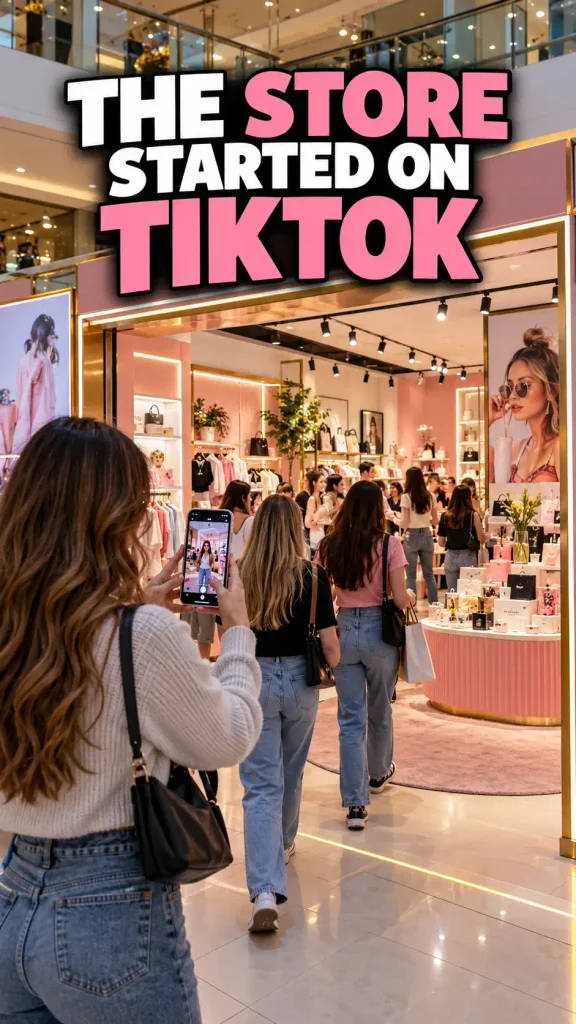
Mall of America has been deliberately adding concepts with strong TikTok or online discovery, including collectible retail, viral desserts and internet-popular apparel.
That makes sense for digitally native brands too.
A physical store answers questions a social ad cannot: Is the quality real? Does the clothing fit? Does this viral dessert actually taste good? Is the brand a real company or just an aggressively optimized landing page?
Physical retail can become proof.
Why brands do it: trust, fitting, content creation and discovery beyond the feed.
Why malls want it: online relevance becomes offline foot traffic.
New loop: TikTok creates curiosity → mall creates experience → customer posts it back to TikTok.
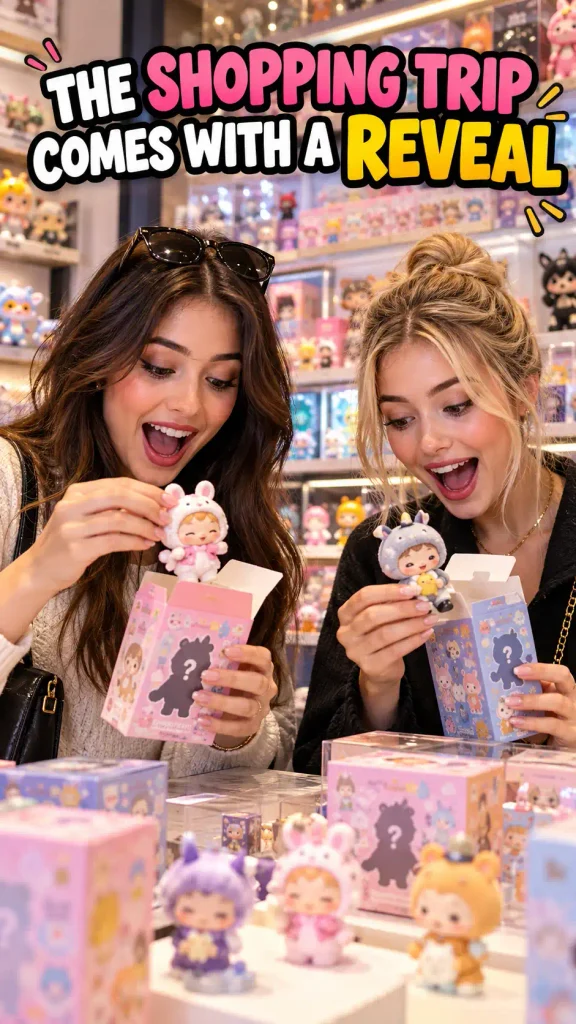
7. Blind Boxes Turn Shopping Into A Reveal
Collectible stores do something ordinary apparel cannot: they make the purchase itself part of the entertainment.
You pick a box. You open it. You discover which character you got. You compare it with your friend’s. You trade. You photograph it.
Mall of America’s current Gen Z strategy includes collectible-heavy retailers such as Pop Mart and Miniso, a sign that mall leasing is increasingly interested in stores built around fandom, repeat visits and social-media-friendly reveals.
The retailer is selling an object. But it is also selling a tiny event.
That is much harder for a delivery box to replicate socially, even if the exact product can be bought online.
Why it works in malls: purchase, reveal and social reaction happen in the same place.
Why it drives repeats: collections are designed around multiple characters or variants.
Spending caution: randomized “rare” items can encourage chasing; set a budget before opening becomes a loop.
8. The Arcade Is Becoming An Anchor Again
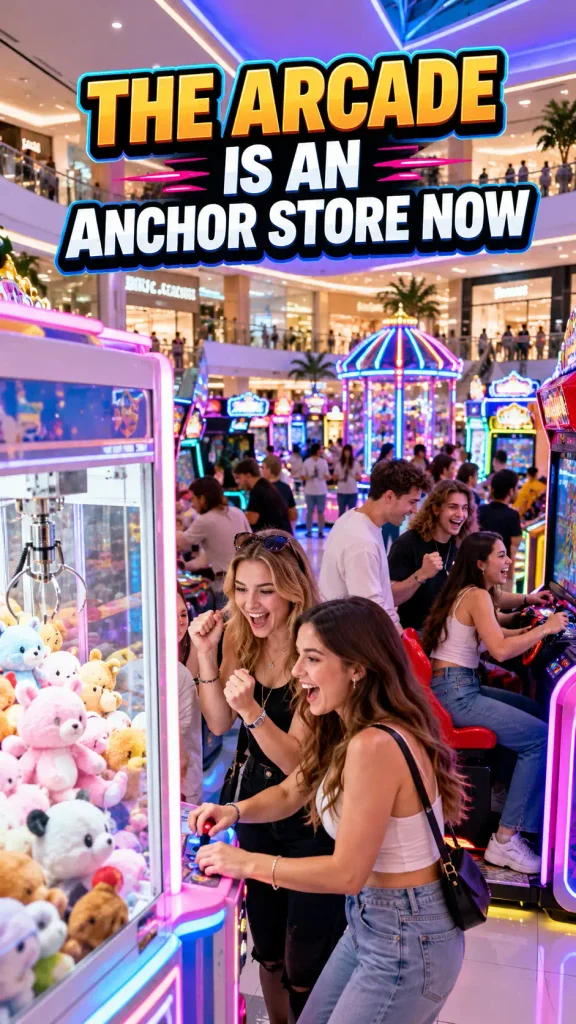
Once, the arcade was a side attraction near the food court.
Now entertainment can occupy tens of thousands of square feet.
JLL tracks 721 planned or announced location-based entertainment venues representing 16.5 million square feet of demand across the U.S. and Canada. Its research shows malls, lifestyle centers and power centers hosting trampoline parks, challenge rooms, bowling, escape games, interactive game-show concepts and immersive attractions.
At Mall of America, a claw-machine arcade is part of the Gen Z tenant strategy.
This matters because an arcade has a different relationship with e-commerce than a shoe store does.
Amazon can ship the prize. It cannot ship the moment your friend misses the claw by half an inch for the seventh consecutive time.
Why it matters: entertainment is resistant to direct online substitution.
Landlord benefit: attractions can increase dwell time and group visits.
Consumer reality: “experience” can still be expensive, so price matters.
9. Viral Food Gives People A Reason To Make The Trip
A standard lunch can be delivered.
A food people want to film often becomes a destination.
Tanghulu. Overstuffed cookies. Mac-and-cheese concepts. Specialty drinks. Regional restaurants. Food halls.
Mall operators increasingly treat dining as traffic generation rather than a service that merely keeps shoppers from leaving.
JLL’s retail research describes food and beverage as a powerful modern anchor because the atmosphere and location are part of the product. Mall of America’s current leasing strategy similarly includes TikTok-popular food concepts.
If the shopping trip becomes dinner plus dessert plus “let’s look around,” food is no longer supporting retail. Retail is supporting the outing.
Why food matters: people eat repeatedly even when they do not need another shirt.
Why local/viral concepts help: they can create destination traffic rather than generic convenience.
Best mall food: something worth leaving the house for.

10. Beauty Works Better When You Can Test, Smell And Ask
Beauty is one of the strongest arguments for physical retail because screens are terrible at smell.
They are not much better at foundation matching, lip texture, perfume dry-down, hair consultations or deciding whether a “glowy” product makes you look radiant or medically reflective.
Beauty stores also turn retail into service: testing, advice, makeovers, piercing, brow services and product pickup.
Placer.ai’s recent retail data has shown resilience in beauty-store traffic even in a cautious consumer environment, while JLL identifies cosmetics among active store categories.
Why it works physically: sensory testing and human assistance reduce uncertainty.
Why malls like it: beauty visits can be frequent, not once-a-year purchases.
Best omnichannel use: research online, test in person, buy through whichever channel offers the best fit.

Part III — The Old Anchor Store Is Being Replaced By Reasons To Stay
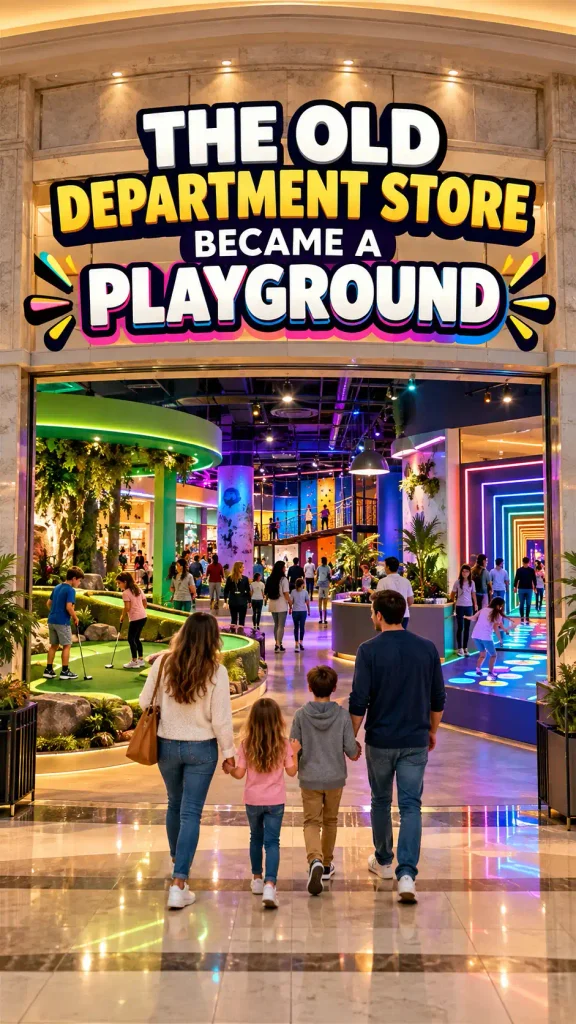
11. A Vacant Department Store Can Become A Playground
Department-store boxes used to be a mall’s gravitational center.
When those stores closed, the empty square footage looked like a catastrophe.
Now large-format entertainment is giving some of those boxes a second life.
JLL points to former anchors and theaters being converted into immersive entertainment. Netflix House, for example, has occupied former department-store space at major malls with experiences tied to entertainment franchises, games, dining and rotating attractions.
This is a different kind of anchor.
A department store tried to sell you many things under one roof. An entertainment anchor tries to keep you under the roof longer.
What changed: anchor value is increasingly measured by visits and dwell time, not only merchandise volume.
Why big boxes work: entertainment concepts need large footprints.
Redevelopment advantage: malls already have parking, access and nearby restaurants.
12. Fitness Gives The Mall Customers Who Come Back On Tuesday
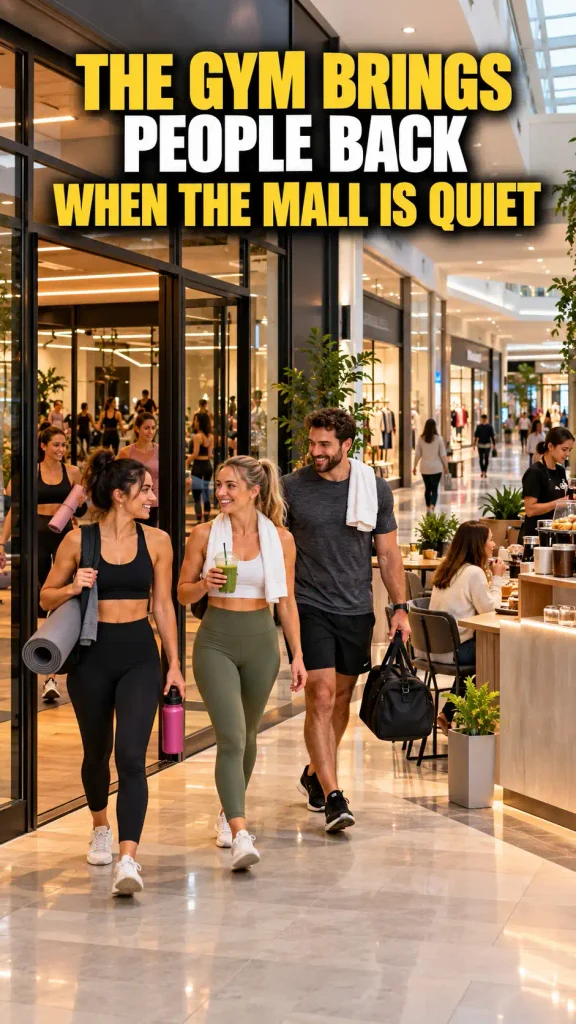
A fashion store hopes you return regularly.
A gym builds the business around it.
Fitness tenants can create something malls historically struggled with: repeat weekday traffic.
Placer.ai’s recent analysis of local and specialized tenants illustrates why landlords value high-frequency operators. Its example of a boutique strength-training studio showed a meaningful share of members visiting at least four times in a month and strong weekday daytime traffic.
That matters because the mall’s hardest hours are not necessarily Saturday afternoon. They are Tuesday at 1:40 p.m.
A gym, Pilates studio, climbing facility or wellness service can put people on-site when discretionary shopping alone might not.
Why fitness matters: memberships create repeat visits.
Landlord value: weekday and off-peak traffic can improve.
Cross-shopping opportunity: coffee, food and errands can attach themselves to a workout trip.
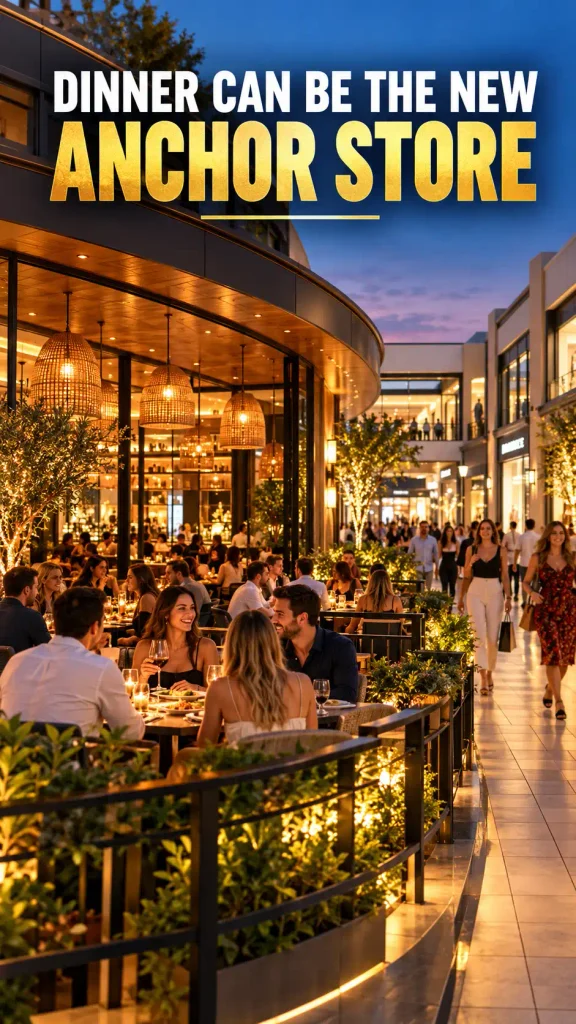
13. Restaurants Can Be Anchors Now
The word “anchor” used to imply acreage and racks of clothing.
Now a restaurant with a reservation list can pull traffic farther than a mediocre department store.
JLL describes high-impact food and beverage concepts as modern anchors in prime retail districts, and Placer.ai’s local-tenant analysis demonstrates how a strong regional restaurant can draw people from much farther away than a nearby national chain.
One example in Chula Vista showed 64.7% of visitors to a local restaurant traveling more than seven miles, compared with 24.2% for a nearby major chain during the same period.
That is destination behavior.
If someone is already driving twenty minutes for dinner, the mall has a chance to become the evening around dinner.
Modern anchor logic: draw matters more than square footage alone.
Why restaurants are powerful: meals create repeat social occasions.
Best tenant mix: food worth traveling for plus useful nearby retail/entertainment.
14. Movie Theaters Work Better When They Are Part Of A Bigger Night
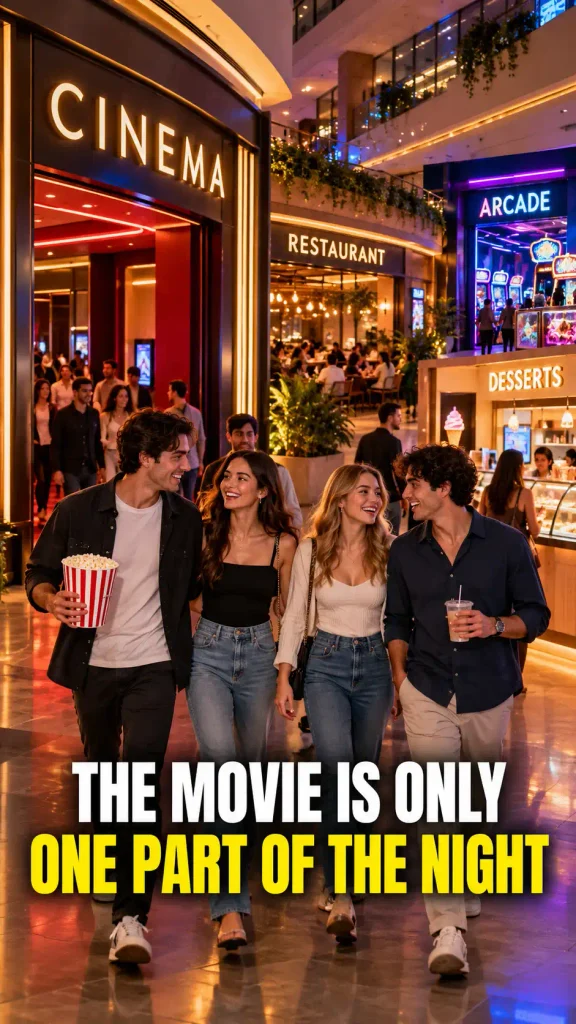
The theater survived the streaming era for the same reason the mall can survive e-commerce: going somewhere is a different product from receiving something at home.
A movie theater inside a healthy retail district can become one stage of a longer outing.
Dinner. Movie. Dessert. Walk around. Maybe a game afterward.
The cinema alone has to compete with a giant television and a couch. The full evening does not.
That is also why entertainment operators increasingly cluster near food and other experiences: one destination can create multiple reasons not to go home yet.
Why cinema still helps: it creates a scheduled social event and evening traffic.
Why the mall helps cinema: food and activities extend the outing.
Winning formula: stack experiences instead of asking one tenant to carry the night.
15. Local Businesses Can Give A Mall A Reason To Feel Local
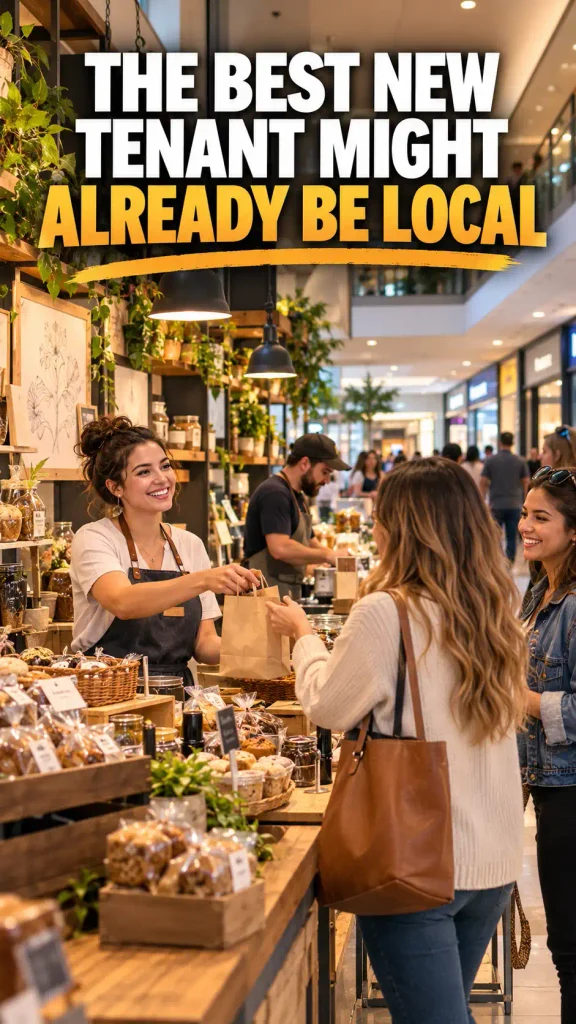
A shopping center filled entirely with the same chains as every other shopping center eventually becomes interchangeable.
Local restaurants, salons, makers and service businesses can give a property something online search cannot easily summarize into “same stores, different ZIP code.”
Placer.ai’s recent “Local Tenant Advantage” analysis argues that proven local operators can create strong loyalty and destination traffic that traditional credit metrics may undervalue.
The broader point is cultural as much as financial.
A mall works better as a community place when at least some of the businesses actually belong to the community.
Why local tenants help: differentiation, loyalty and destination value.
Why chains still matter: familiarity, credit strength and predictable demand.
The strongest mix: recognizable anchors plus reasons this specific mall cannot be copied perfectly somewhere else.
Part IV — The Mall Is Becoming An Outing Again
16. Pop-Ups Make The Mall Change Faster Than A 10-Year Lease
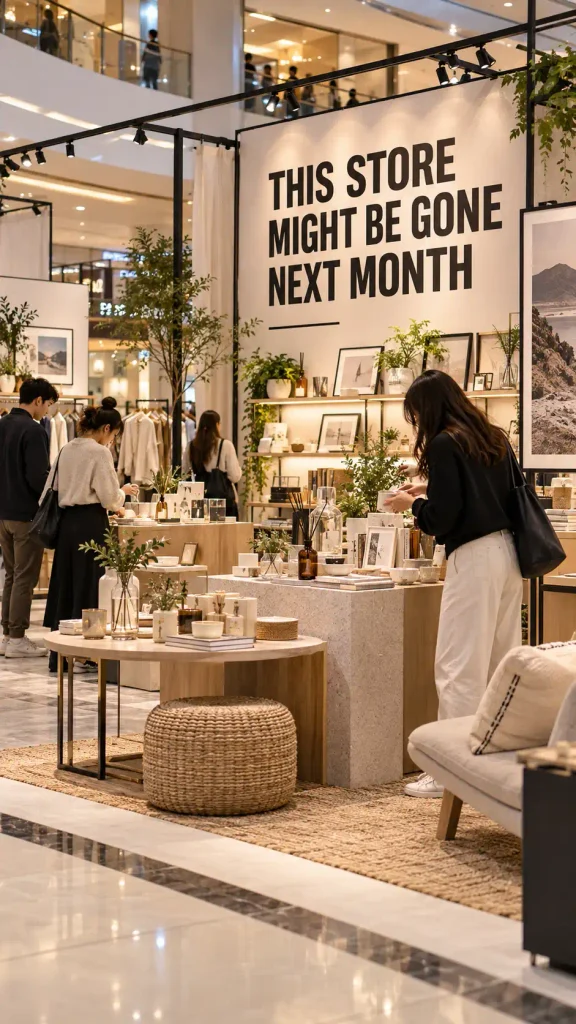
One of the old mall’s weaknesses was permanence.
A tenant mix could become stale slowly enough that nobody noticed until half the building felt frozen in another decade.
Pop-ups change the rhythm.
A social-media brand can test a market. A holiday concept can appear for six weeks. A creator can launch merchandise physically. A food concept can prove demand without signing a giant long-term commitment.
Temporary retail also gives customers a reason to return because the environment may actually be different next month.
Scarcity can be manipulative when it pressures purchases, but rotating experiences can also genuinely make a place feel alive.
Why pop-ups work: lower commitment and faster trend response.
Why shoppers care: novelty creates a reason to revisit.
Best use: test concepts and create temporary experiences—not fake urgency around ordinary inventory.
17. Holiday Décor Still Does Something A Website Cannot
A website can put snowflakes around the checkout button.
It cannot create a forty-foot tree you meet your family under.
PwC found 61% of Gen Z respondents said décor and atmosphere help make the holiday season feel real.
That is a useful reminder that retail environments are sometimes memory infrastructure.
People remember the decorations, the music, the photo, the same ornament display their parents dragged them past, and the food they buy every December even though it is objectively available other months.
Emotion is inefficient. That does not make it commercially irrelevant.
Why atmosphere matters: places attach shopping to ritual and memory.
Why younger consumers respond: nostalgia and in-person experiences can coexist with digital discovery.
Best mall strategy: create traditions, not just decoration.

18. Better Seating Is More Important Than It Sounds
If you want people to stay, at some point you have to let them sit down.
This is not glamorous leasing strategy. It is chairs.
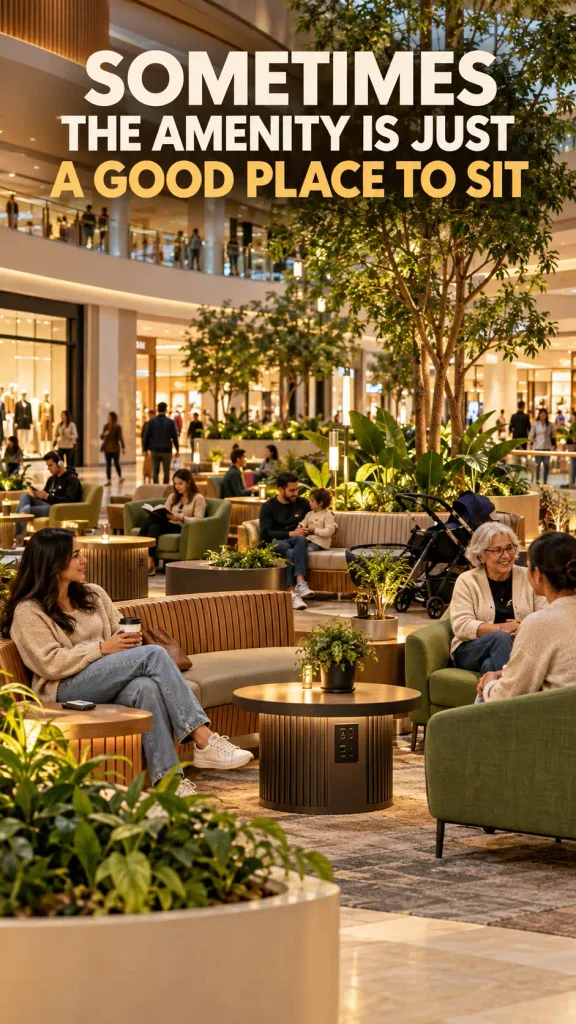
Comfortable common areas allow a parent to rest, a teenager to wait for friends, an older shopper to take a break, a remote worker to answer something, or a group to decide what happens next.
The mall stops feeling like a hallway between stores and starts behaving like a place.
Industry research increasingly talks about “placemaking,” but much of placemaking is surprisingly basic: seating, shade, charging, bathrooms, wayfinding, safety and a reason not to feel hurried.
Why it matters: lingering requires physical comfort.
Who notices first: families, older visitors, teenagers and anyone making a long visit.
Third-place rule: if every square foot demands a purchase, people eventually leave.
19. Open-Air Centers Are Winning With A Different Kind Of Mall
The mall comeback is not only enclosed.
In fact, open-air shopping centers have recently grown faster.
Placer.ai’s latest data showed open-air center visits up 6.6% year over year, versus 5.0% at indoor malls. Earlier research also found open-air centers especially strong for weekday trips and shorter visits, helped by grocery, superstores, gyms and other routine-use tenants.
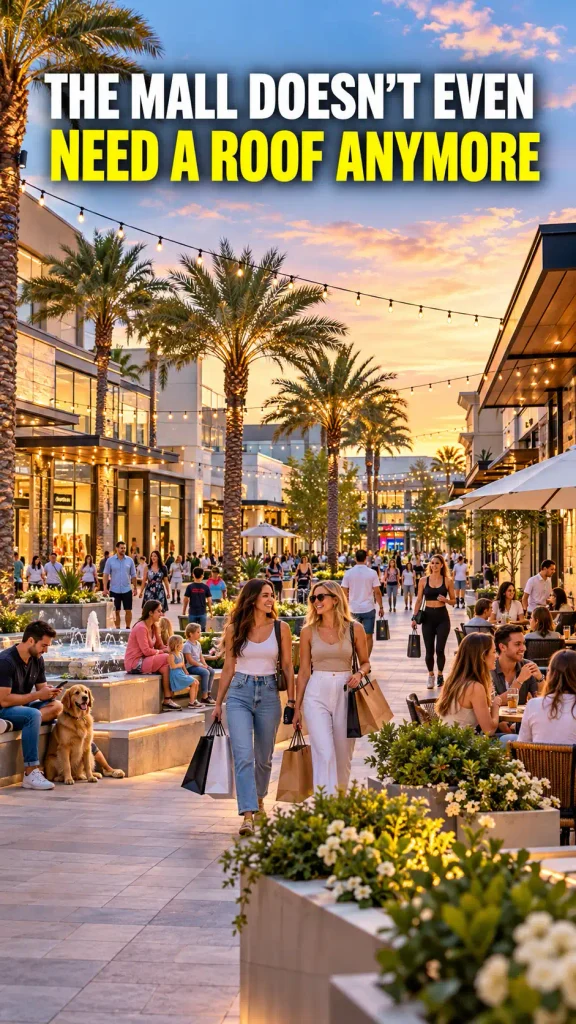
The successful open-air format often behaves less like a classic mall and more like a neighborhood main street assembled around parking.
Groceries. Coffee. Fitness. Restaurants. Beauty. Errands. Maybe a public lawn or event space.
It wins not by trapping people indoors, but by fitting into weekly life.
Indoor mall strength: longer social and experiential visits.
Open-air strength: routine convenience plus dining and experience.
Lesson: “the mall” is now multiple formats solving different jobs.
20. Mall Walking Is Still A Surprisingly Good Use Of A Mall
Not every mall visit needs a bag at the end.
For older adults especially, enclosed malls have long served as predictable walking environments: flat floors, benches, bathrooms, climate control, security and coffee when the laps are done.
The same logic now overlaps with the broader third-place conversation. A healthy retail center can host people who are there partly because movement and company are easier indoors.
This is not the sexiest possible future for commercial real estate.
It may be one of the most useful.
Why it works: flat, weather-protected walking environment.
Community value: routine visitors create life even outside peak shopping hours.
Commercial reality: walkers are not guaranteed shoppers, but frequency creates opportunities for food, services and errands.

Part V — The Comeback Is Real, But It Is Uneven
21. Luxury Brands Are Still Betting On Strong Malls
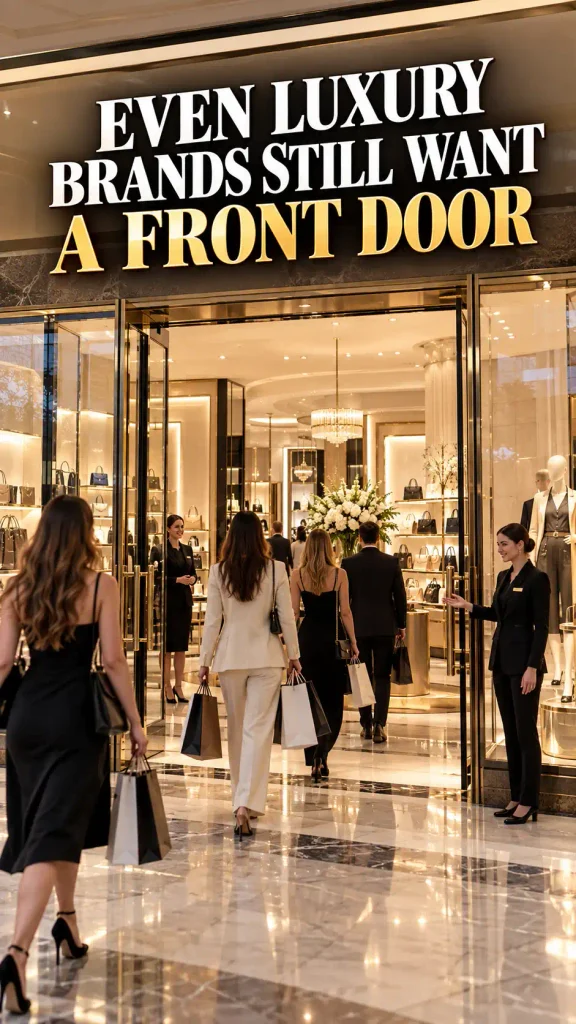
If physical retail were simply dying, luxury brands would not keep spending serious money on physical stores.
JLL’s recent U.S. luxury-retail tracking found malls accounted for just over half of tracked luxury store openings, while prime street retail captured much of the flagship activity.
The important point is not that every mall will become luxury.
It is that brands selling products people could easily order online still see value in prestige location, service, environment and physical presentation.
Luxury retail makes the same bet as experiential mall design: the store itself can be part of what the customer is buying.
Why luxury stays physical: service, trust, fitting, atmosphere and brand theater.
What this proves: high-value retail still sees strategic value in location.
What it does not prove: luxury can rescue weak malls with poor markets or access.
22. Almost Nobody Is Building New Malls—Which Helps The Survivors
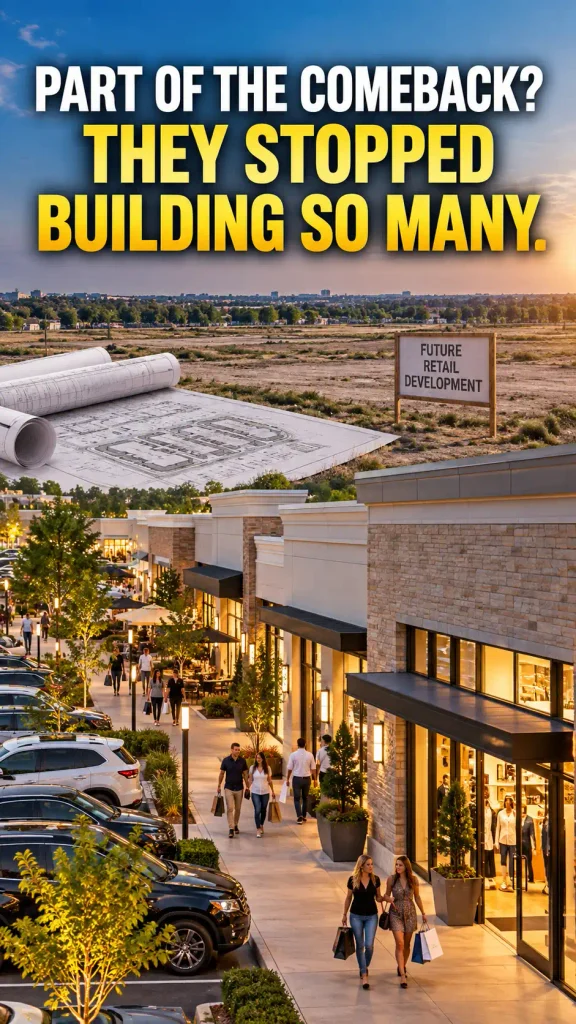
One reason existing retail property looks stronger is surprisingly simple: there is not much new supply.
Cushman & Wakefield reports U.S. shopping-center vacancy around 6.0%, still below its historical average, while new development remains extremely limited. CBRE likewise reports low retail availability and restrained construction.
That changes the economics.
If a retailer wants good space in a strong market, it cannot assume someone will build another regional mall across the highway.
The scarcity gives productive existing centers leverage.
It also means the resurgence is partly about survivors: America built a huge amount of retail space in previous decades. Some of it failed. The better-located pieces that remain are becoming more valuable.
Why supply matters: few new centers mean strong existing locations face less new competition.
Landlord advantage: low vacancy can support rents.
Important nuance: scarcity of good space does not make obsolete space automatically good.
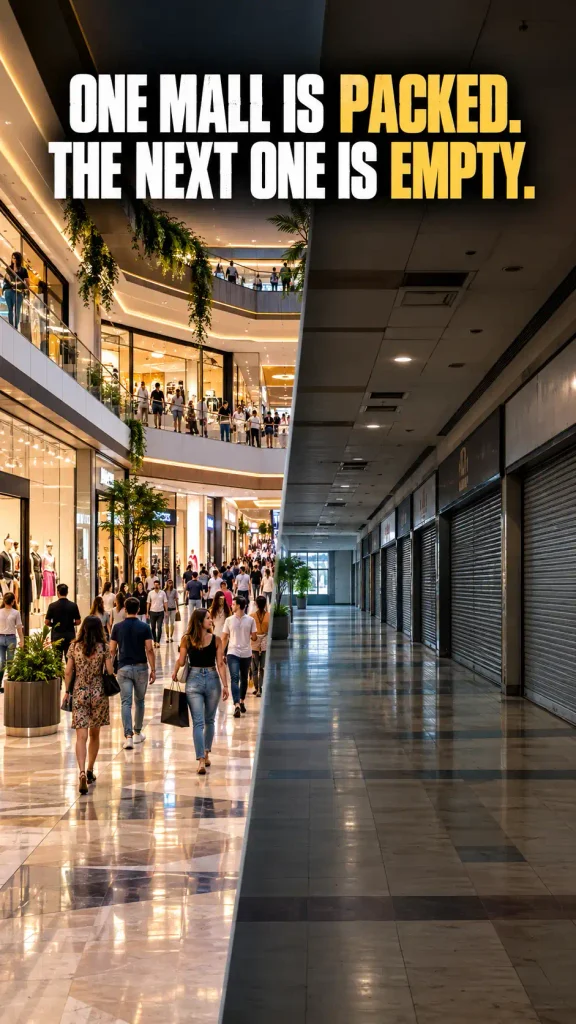
23. The Strong Mall And The Dead Mall Can Exist In The Same Country
This is the sentence every mall comeback story needs:
performance is diverging.
Top properties in strong trade areas can have healthy traffic, luxury openings, entertainment tenants and rising values.
A weaker mall twenty miles away can still be half-empty.
Current community discussions about mall culture read like people describing two different Americas. One person says the local mall is packed with teenagers every weekend. Another says theirs is a ghost building with one department store and a gym.
Both can be telling the truth.
The U.S. has too many markets, too many properties and too much legacy retail square footage for one headline to describe all of it.
The comeback belongs disproportionately to centers with the location, ownership and capital to change.
Do not generalize: national averages hide enormous local differences.
What separates winners: trade area, access, tenant mix, upkeep, investment and experience.
Best headline correction: not “malls are back,” but “the surviving malls are evolving.”
24. The “Third Place” Only Works If People Can Afford To Be There
This is the uncomfortable part of the comeback.
People want somewhere to go.
Businesses need people to spend.
Those goals do not always align.
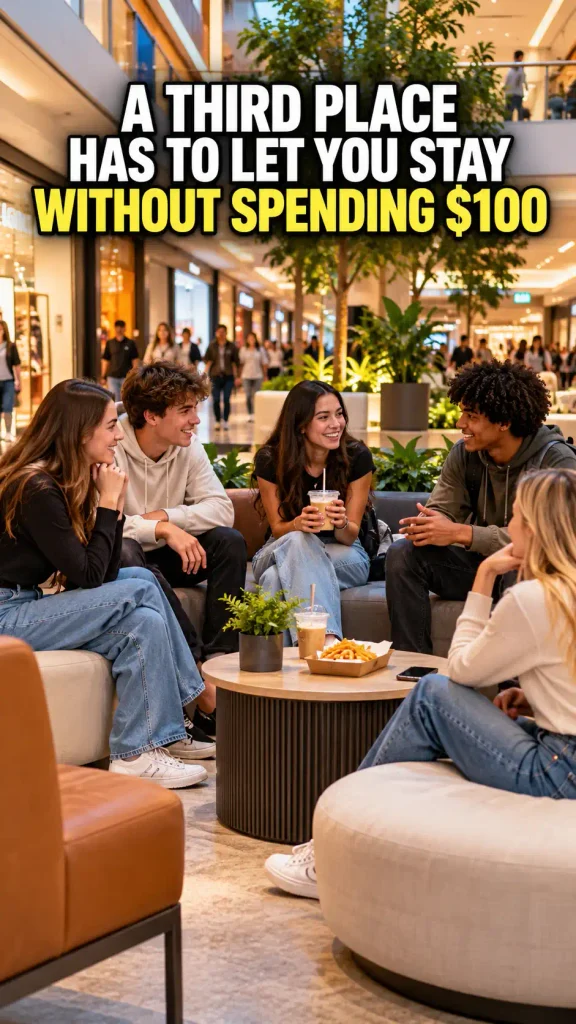
In a recent Reddit discussion about reviving malls, hundreds of commenters returned to affordability: gaming spaces, cheap food, places to sit and things to do without spending heavily.
Another highly upvoted Gen Z discussion made the same complaint more bluntly: third places are difficult to sustain when young people have limited disposable income and ordinary outings feel expensive.
A mall that only works if every visitor buys a $17 snack and a $90 shirt is not functioning like the old “hang out all afternoon” mall.
The strongest properties need premium tenants. They also need some low-cost ways to belong.
The tension: community space costs money to operate.
What helps: free seating and events, affordable food, window-shopping, walking and mixed price points.
Why it matters: young visitors can become future customers only if they are allowed to exist before they are affluent.
25. The New Mall Is Selling Something Amazon Cannot Put In A Box
This may be the simplest explanation for the whole comeback.
If the mall tries to beat e-commerce at price, selection, search and doorstep convenience, it loses constantly.
So the better mall stopped playing only that game.
It sells a Saturday afternoon, a place to meet, a dinner, a workout, a movie, a surprise collectible, a holiday tradition, a fitting room, a live reaction from a friend and occasionally a ridiculous claw-machine defeat everyone will bring up for months.
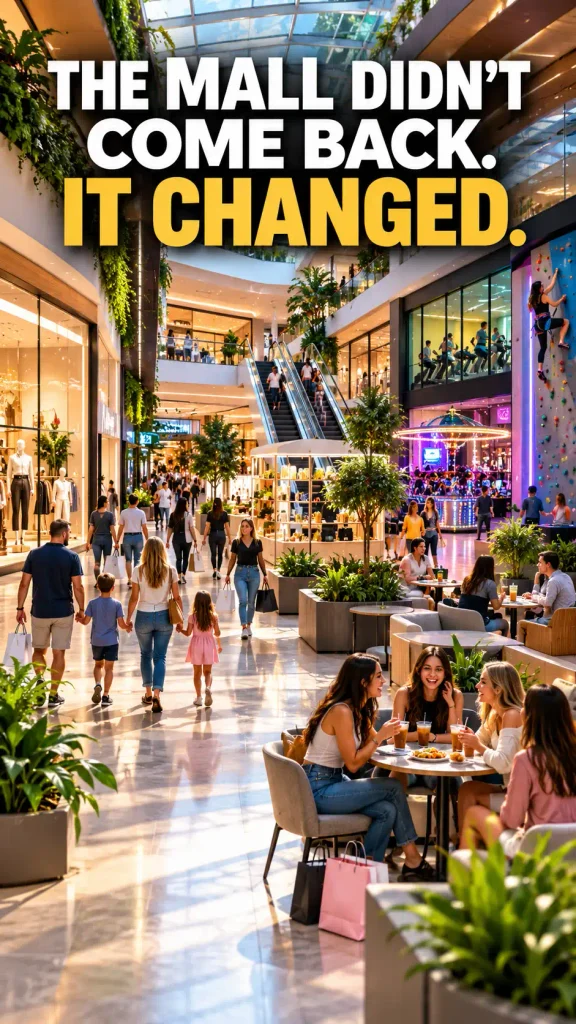
That is why the mall is not really “coming back” in its old form.
The department store is no longer guaranteed to be king.
The food court may be a destination.
The arcade may be the anchor.
The store may have started on TikTok.
The person who arrives for a return may stay for dinner.
And the shopper may leave without buying much at all—but still decide to come back.
The winning mall is becoming less like a warehouse of stores and more like a piece of the city that happens to have stores inside it.
The strategic shift: from transaction center to multi-purpose destination.
What e-commerce keeps: convenience and endless selection.
What physical retail can own: presence, discovery, service, socializing and shared experience.
The mall obituary was not completely wrong.
A lot of malls did die.
Some are still dying.
The department-store model really did weaken.
E-commerce really did make a huge portion of retail more convenient.
And no amount of neon signage can make an irrelevant property relevant if the local market no longer supports it.
But the obituary confused one thing:
shopping becoming digital did not make physical places unnecessary.
It made them prove why they deserved the trip.
The malls doing that successfully are filling the answer with food, games, services, fitness, collectible culture, viral brands, events, local businesses, returns, movies and ordinary social space.
The strangest part may be that the generation helping rediscover the mall never needed it for shopping in the first place.
They already had shopping on their phones.
What they needed was somewhere to go with the people on those phones.
Maybe the mall was never really competing with Amazon.
Maybe it was competing with staying home.
Is the mall near you actually busy again—or is it still a ghost mall?
Sources & Further Reading
- Placer.ai — August Mall Index: Indoor Malls Post Their Strongest Annual Gain of the Year
- Placer.ai — July Mall Index: Traffic and Dwell Time
- Placer.ai — First-Half Mall Traffic and Broader Customer Base
- Placer.ai — Mission-Driven Trips and Longer Experiential Visits
- Placer.ai — Convenience vs. Experience and Indoor Malls as Third Places
- The Wall Street Journal — U.S. Mall Property Values and the Retail Real-Estate Recovery
- Axios — Mall of America Courts Gen Z With Viral and Experiential Concepts
- PwC — U.S. Consumer Survey on Gen Z In-Person Browsing, Offline Activities and Physical Stores
- JLL — Location-Based Entertainment’s Retail Pipeline
- JLL — Dining, Entertainment, Fitness and Experience-Based Retail Expansion
- JLL — U.S. Luxury Store Openings by Property Type
- JLL — U.S. Retail Market Dynamics
- Cushman & Wakefield — U.S. Shopping Center Vacancy, Supply and Rent Trends
- CBRE — U.S. Retail Availability, Construction and Rents
- ICSC — U.S. Survey on Physical Stores, Returns, Product Inspection and Omnichannel Convenience
- ICSC — From Southdale Center to Gen Z
- ICSC — Shopping Centers as Third Places
- Placer.ai — The Local Tenant Advantage
- Placer.ai — Rethinking Mall Anchors Around Visits and Experience
- Reddit — Current Community Discussion on Malls and Third Places
- Reddit r/GenZ — Current Discussion of Gen Z, Malls and Community Space
- Reddit r/GenZ — Why Mall Experiences Differ Sharply by Location