Decluttering was never hard for me because I loved my things too much. It was hard because I was scared.
Scared that the minute I let something go, I’d need it again. Scared I’d be standing in a store a few weeks later, buying the very thing I’d just given away, feeling like a fool. So I kept things. Not because they meant anything to me, but because letting them go felt too risky.
Here’s how silly it got.
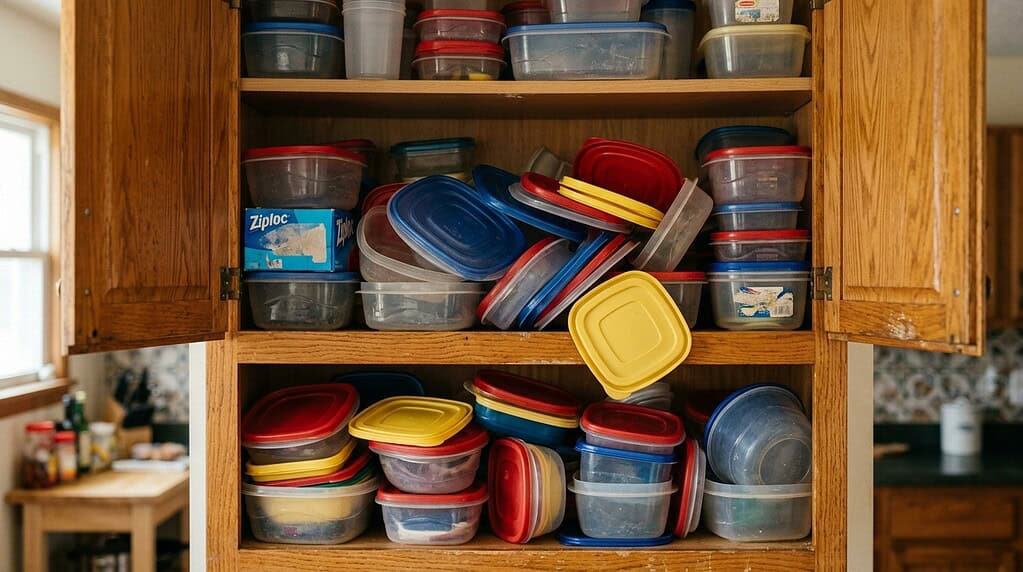
One time I stood over a trash bag for ten whole minutes, holding a plastic container with no matching lid. There was no lid anywhere in the house. I had looked. The container was scratched and a little warped from the dishwasher, and it was no good to anyone without a top. Plain and simple, it was trash.
But I still couldn’t drop it in the bag.
Because the same old worry started up in my head. What if you find the lid next week? What if you need this exact size for something? What if you throw it out and then wish you hadn’t?
So I put it back in the cupboard. A lidless container I would never use, saved from the trash by a fear I couldn’t even name.
Maybe you know that feeling too. It shows up the second you try to let something go, and it doesn’t even need a good reason. Just a what-if. Just the small chance that you’ll be sorry later.
For a long time, that fear won almost every time. It’s a big part of why my cupboards, closets, and drawers stayed full of things I didn’t use and didn’t love. The fear of decluttering isn’t really about the stuff. It’s about worrying that we’ll make the wrong choice and have no way to take it back.
So I want to talk about that fear honestly, because more of us feel it than let on. And I want to share what finally helped me set things down without that knot in my stomach. Not by being brave. Just by learning to talk back to that worry.
It’s Not the Thing You’re Afraid Of. It’s Being Wrong
Here’s something that took me years to see.
When I froze over that container, I wasn’t really afraid of losing a scratched piece of plastic. I was afraid of being wrong. Of making a choice I couldn’t take back.
That’s the real fear.
Think about it. When you keep something you don’t need, nothing happens. It just sits there. But when you throw something out and then need it later, you feel that mistake. You remember it. It stings.
So your mind decides that keeping is safe and letting go is risky. It would rather you hang onto a hundred useless things than feel wrong about tossing one.
The trouble is, that math is off.
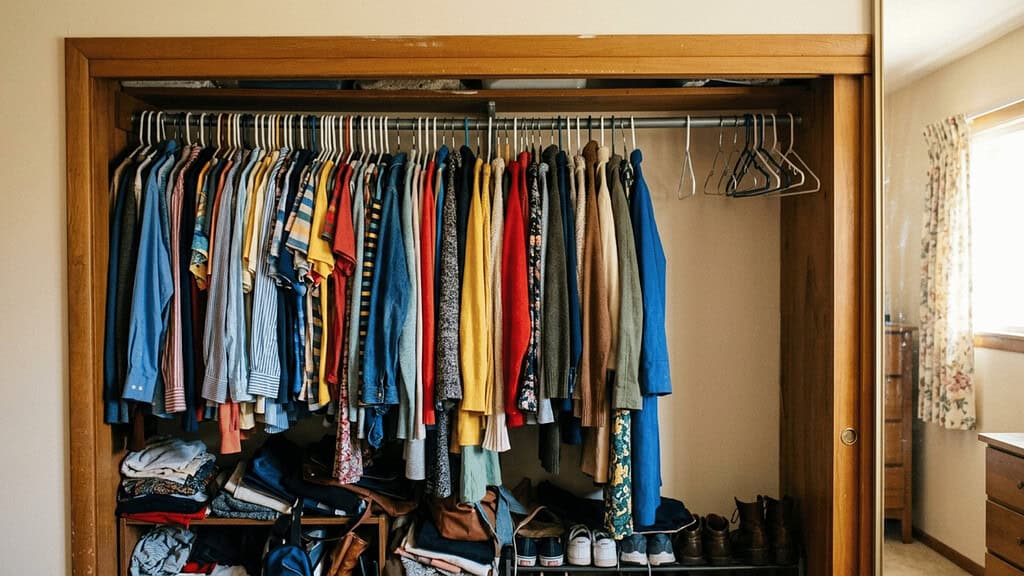
Keeping everything has a cost too. You just don’t feel it in one sharp moment, so it’s easy to miss. It’s the full closet you can’t find anything in. The drawer that won’t shut. The room you keep the door closed on. That cost is real, even when it’s quiet.
I’m not saying the fear is foolish. It makes sense. Our minds are built to protect us from mistakes we’ll notice. But once you can see what the fear is actually about, you can start to answer it. And that changes everything.
How I Talk Myself Through the Fear Now
I didn’t get past this by becoming a different person. I got past it by asking myself a few honest questions before anything goes in the bag.
These are the ones that help me most.
Ask How Often You’ve Actually Missed Something You Let Go
This one stopped me in my tracks the first time.
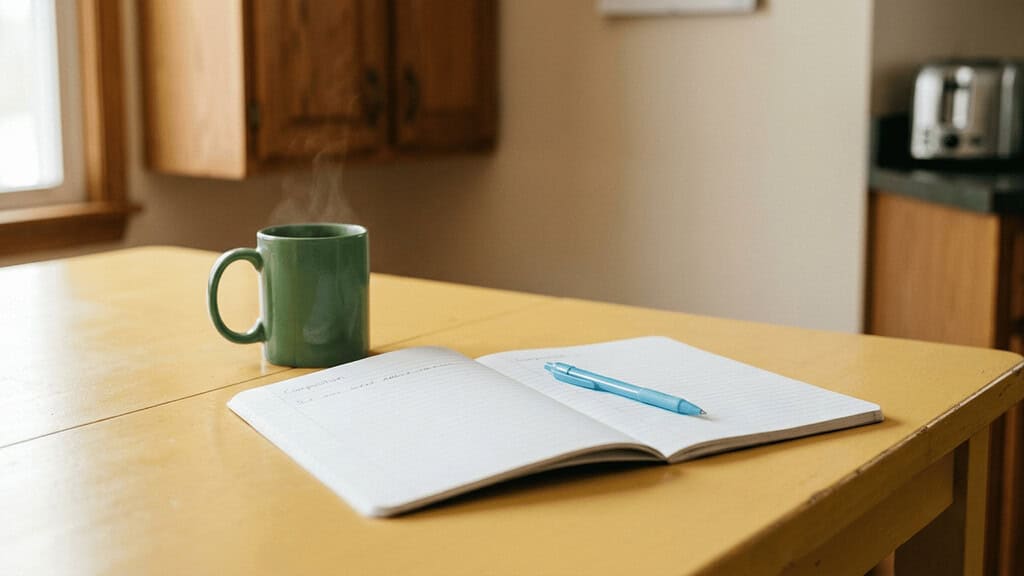
I tried to remember all the things I’d given away or thrown out over the years and truly missed later. Things I had to run out and buy again.
I could think of maybe two.
Two. In a whole lifetime of letting things go, I could only name a couple I ever regretted. But I could name dozens of things I’d kept out of fear and never touched again.
Try it yourself. Really think back. Most of us find that the thing we’re so scared of, needing it again after it’s gone, almost never actually happens. The fear talks big. The record tells a different story.
Notice the Difference Between “I’ll Use It” and “I Might Need It”
These two sound alike, but they’re miles apart.
“I’ll use it” means you have a real plan. The soup pot you cook with every winter. The good scissors. Things that earn their spot.
“I might need it” is different. That’s the fear talking. It has no plan, just a what-if. It’s the extra cords in the junk drawer that go to nothing you own anymore. The size-eight pants you’re saving for a someday that keeps not coming.
When I catch myself thinking “I might need it,” I’ve learned to pause. That phrase is almost always the fear, dressed up to sound sensible. Most of what I keep out of “might” I never end up needing at all. Some of it is the same old “just in case” habit that kept my cupboards full for years.
Take a Photo Before It Goes
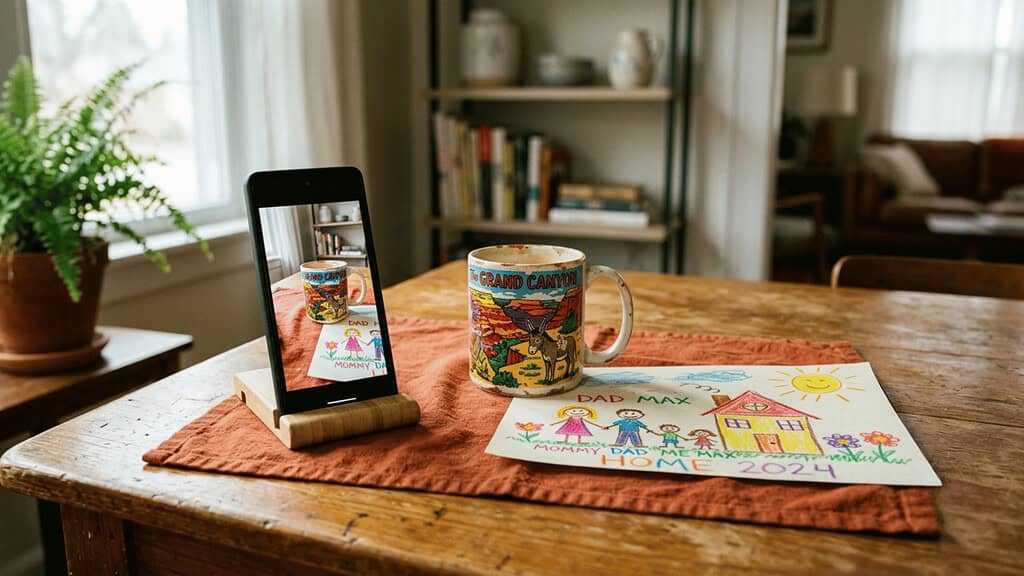
Some things are hard to let go of because of the memory attached, not because you’ll use them. The mug from a trip. The kids’ old artwork. A dish that was your mother’s.
For those, I take a picture first.
It sounds almost too simple. But the photo keeps the memory without keeping the clutter. I can look back anytime and remember, without the shelf space and the dusting.
The truth is, the memory was never really in the object. It’s in you. The picture is just a little reminder, and it fits in your pocket instead of your closet. This one small trick has helped me let go of sentimental things that I’d have kept forever otherwise.
Give It a Waiting Spot Instead of a Forever Spot
Sometimes I’m just not ready. The fear is too loud and I can’t quite make the call. And that’s okay.
So instead of forcing it, I made a rule that took the pressure off.
I put the maybe-things in a box. I tape it shut, write the date on it, and set it in the closet or the garage. If I don’t open that box to get something out in six months, I know I didn’t need any of it. Then it goes, and I never even look inside.
This little step is what freed me up.
I didn’t have to be sure right away anymore. The box gave the fear a place to sit and cool off, and nearly every time, six months later, I’m ready to let the whole thing go without a second thought.
Count the Cost of Keeping, Not Just the Cost of Losing
The fear only ever shows you one side. What you might lose if you let go.
It never shows you the other side. What it costs to keep.
So now I make myself look at both. Yes, there’s a small chance I’ll want this someday. But what am I paying to hold onto it in the meantime? The space it takes up. The time I spend moving it around and cleaning under it. The heavy feeling of a home that’s too full.
When I add up the real cost of keeping, the scale usually tips. A tiny maybe on one side, and my everyday peace on the other. Once I started seeing the quiet reasons I held onto things, that choice got a whole lot clearer.
Remember You Can Almost Always Get Another One
This is the one I say to myself the most.
For nearly everything I’m scared to let go of, the truth is simple. If I’m ever really wrong, I can get another one. Most of it is easy to replace, and usually for just a few dollars.
I once read a good rule for this. If you can replace it for under twenty dollars and it would take less than twenty minutes to go get, you’re safe to let it go.
Most of what we cling to fits that rule.
That plastic container? I could buy a whole set of them for a few dollars at any store in town. I was guarding it like it was irreplaceable. It never was. And once I understood that, downsizing without the fear of regret finally felt possible.
What You Will Gain Is Bigger Than What You Will Lose
Let me tell you what happened after I started letting go.
I did not spend my days sad about the things I gave away. I barely thought about them at all. That worry that had me so frozen, the fear of missing this or needing that, mostly just faded once the stuff was gone.
What I noticed instead was the space.
The cupboard I could actually find a lid in. The closet with room to breathe. The drawer that finally slid shut. Every empty spot felt like a little weight lifted off me.
That’s the trade nobody warns you about.
You spend so long protecting yourself from one small chance of regret that you never see the bigger thing you’re giving up. A calmer home. A clearer head. The good feeling of walking into a room that doesn’t ask anything of you.
Will you ever let go of something and wish you hadn’t? Maybe. Once in a great while. But you can get another one, and that small risk is nothing next to what you get back.
You have made good choices your whole life. You can trust yourself with this one too.
The fear will still speak up. That’s fine. Now you know how to answer it.
Ready to Let Go Without the Guilt?

If that fear has kept your home fuller than you want it to be, I made something to help you start.
It’s my free Declutter for Self Care Checklist. It walks you through letting go in small, gentle steps, the kind that don’t send that worry into a panic. No pressure to be sure about everything at once. Just an easy way to begin, one calm choice at a time.
You have carried that knot in your stomach long enough. This is a soft place to set it down.
FAQ
How do I stop being afraid to throw things away?
Start by looking at your own track record. Try to remember how many things you’ve actually let go of and truly missed later. For most of us, it’s only one or two in a whole lifetime. Then compare that to all the things you’ve kept out of fear and never touched again. Once you see that the thing you dread almost never happens, the fear loses a lot of its power. It also helps to remind yourself that most items can be replaced if you’re ever really wrong.
What if I declutter something and need it later?
It’s possible, but it happens far less than the fear makes you believe. And when it does, most things can be replaced easily and cheaply. A good rule is this: if you could buy it again for under twenty dollars and grab it in under twenty minutes, you’re safe to let it go. For the rare item you truly can’t replace, keep it. For everything else, the small risk is worth the space and peace you get back.
How do I let go of things with sentimental value?
Take a photo before it goes. The memory was never really in the object, it’s in you, and a picture lets you keep that memory without keeping the clutter. You can look back anytime without giving up the shelf space. Keep the few pieces that mean the very most, and let a photo hold the rest. This makes it much easier to part with things you’d otherwise hang onto forever.
Is it normal to feel anxious while decluttering?
Yes, and more people feel it than admit it. That anxious, frozen feeling usually isn’t about the object at all. It’s the fear of making a choice you can’t take back. Knowing that can help. Go slowly, ask yourself a few honest questions before you decide, and give yourself permission to use a waiting box for the things you’re not ready to release. The nervous feeling eases the more you practice.
What is the 20/20 rule for decluttering?
It’s a simple way to quiet the fear of letting go. The idea is that if you can replace an item for less than twenty dollars and in less than twenty minutes, you don’t need to keep it “just in case.” Most of the things we cling to out of worry fit this rule easily. It reminds you that letting go isn’t as risky as it feels, because the truly irreplaceable things are far rarer than we think.
Follow me elsewhere!