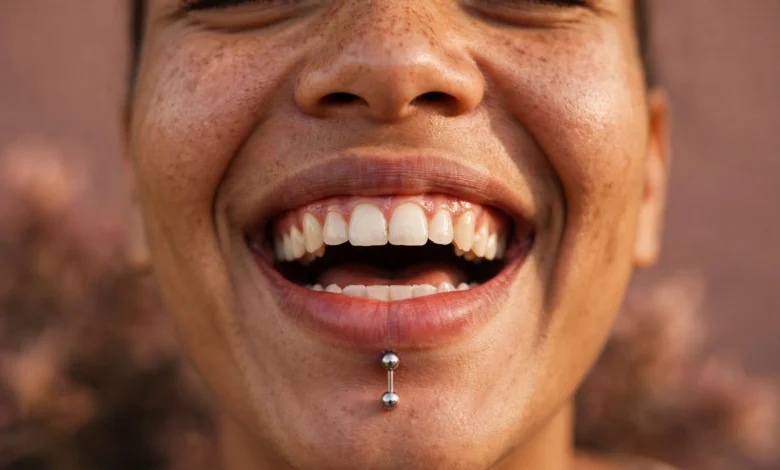
Smile lines show up on almost everyone eventually, and that is not a flaw in your skin — it is what happens when a face has spent years smiling, laughing and talking. The skin makes less collagen than it used to, so it loses plumpness and starts to sag, it gets thinner and less elastic, and it picks up age spots along the way. Getting older is a luxury, and the lines it leaves behind are, honestly, badges of honor. But if your smile lines bother you, there are real ways to soften them. What follows is what Byrdie writer Erin Jahns learned from two board-certified dermatologists, an esthetician and a plastic surgeon: Dr. Kavita Mariwalla and Dr. Anna Guanche, celebrity esthetician Renée Rouleau, and plastic surgeon Dr. Alexis Parcells. The piece was medically reviewed by Blair Murphy-Rose, MD, FAAD, and fact checked by Anna Harris.
The short version first. Smile lines — the folds running from the sides of the nose to the corners of the mouth, known as nasolabial folds — appear naturally as facial volume drops and skin loses elasticity. Hyaluronic acid fillers can soften them by plumping the skin, with a fairly immediate, natural-looking result. And daily SPF matters more than it sounds like it should: sun damage deepens these lines over time, and protecting against it keeps them from getting worse.
The four experts behind the advice are Dr. Kavita Mariwalla, a board-certified dermatologist in West Islip, New York, who specializes in facial reconstruction, skin cancer detection and cosmetic dermatology; Dr. Anna Guanche, a board-certified dermatologist, celebrity beauty expert and founder of Bella Skin Institute; Renée Rouleau, a celebrity esthetician and founder of her own skincare brand; and Dr. Alexis Parcells, a board-certified plastic surgeon, owner of Parcells Plastic Surgery and founder of SUNNIE Wrinkle Reducing Studio.
What Are Smile Lines?
Smile lines are the everyday, non-scientific name for nasolabial folds — the vertical lines that run from the sides of the nose and curve around the mouth. They are a natural part of aging, which is exactly why they can be stubborn: as Dr. Mariwalla puts it, they are tricky to treat unless you are willing to consider a cosmetic procedure. That does not mean nothing else helps, only that the deeper the fold, the more it takes to soften it.
What Are Smile Lines Caused By?
The main cause is volume loss. As Dr. Mariwalla explains, smile lines occur due to the natural loss of volume that happens in the face with age — the cheek has seven fat pads, and as they descend and shift over time, the lines become more prominent. On top of that, the skin loses collagen and elastin, grows thinner, and the underlying bone structure changes, while years of smiling, laughing and talking keep folding the same skin in the same place. Certain things make it worse: sun damage, smoking, sudden drastic weight loss, and diet. In short, smile lines are basically inevitable — a normal part of getting older, not a sign that you did something wrong.
How to Treat Smile Lines
There is no single magic fix for smile lines. The honest picture is a range: topical skincare on one end, in-office treatments on the other, and the right choice depends on how deep your lines are and how far you want to go. Here are the ten approaches the experts talked through, in the order the article presents them.
1. Get Fillers on Your Smile Lines
If your smile lines bother you, Dr. Mariwalla suggests starting with injectables. Fillers containing hyaluronic acid can be injected to improve how these lines look, and she typically recommends this kind of injection first because the result tends to look natural and show up right away. After that, she suggests a good skincare routine to maintain the result and help prevent the lines from deepening. Hyaluronic acid itself is a naturally occurring polysaccharide found in the human body, and it works as a cushioning and lubricating agent for our joints, nerves, hair, skin and eyes — which is why it sits so naturally in the skin when it is used as a filler.
2. Try PDO Threads
Dr. Guanche puts fillers first, but if you are looking at other options, she also suggests PDO threads. PDO — short for polydioxanone — threads are medical-grade threads, thinner than a hair and made of protein. A mini PDO thread lift can ease the volume in the lower face that makes smile lines look more intense, by pulling the skin up and back. Placed strategically, the protein threads pull the volume sitting in the nasolabial folds upward and backward, which helps correct the lines, and because the threads are dissolvable sutures, they lift and tighten skin that has lost elasticity. Mono threads can also be laid across the nasolabial folds, and as they dissolve, they are replaced by collagen — which fills out the area from within.
3. Get Radiofrequency Microneedling
Dr. Guanche also recommends radiofrequency microneedling as another non-invasive option. The procedure pairs microneedling with energy delivered into the dermis, so you get collagen stimulation from the needles and skin tightening from the radiofrequency at the same time. That dual action tightens the skin, stimulates collagen, reduces pore size, and improves overall skin texture and elasticity — all while keeping a natural appearance. The firming and collagen-building effects are what help the smile lines look softer.
4. Experiment with Fraxel Laser
Fraxel is a skin-resurfacing treatment that uses a fractional laser, and it can be used on smile lines too. Dr. Guanche points to the Fraxel 1550 in particular: its microscopic laser columns reach deep into the skin and help the body remodel its own collagen, which is how it reduces the lines. The treatment works by resurfacing the skin, stimulating collagen and prompting the growth of healthy new skin cells — and when the laser creates a tiny micro-injury, the body responds by making more collagen to repair it, which leaves the skin looking more youthful.
5. Adopt a Skincare Routine
Skincare will not erase a deep line, but it can slow the lines from forming and soften how they look. Look for products with retinol, or others rich in peptides and collagen-building ingredients, which can improve skin elasticity and help slow the formation of smile lines and other wrinkles. Renée Rouleau explains that topical products can work as a strategic preventative step against smile lines forming — they just cannot completely erase lines that are already there — and starting early with a proper routine can hold lines and wrinkles off for longer. Dr. Parcells adds that it is possible to reduce the appearance of laugh lines through your skincare routine: look for ingredients like retinol or vitamin C, which promote collagen production and improve skin elasticity.
6. Prioritize SPF
Applying SPF every day can make a huge difference to how your skin looks over time. Sunscreen will not get rid of smile lines, but it can prevent the sun damage that may be causing them in the first place — and if you already have smile lines and do not want them to get deeper, daily SPF should be a priority. It is the simplest step on this list, and the one that protects everything else you do.
7. Apply Silicone Patches
Got a big night coming up and want to look super snatched? Silicone patches are a great option for temporarily treating smile lines. They work by forming an occlusive barrier on the skin that traps moisture and hydration, which plumps the skin and temporarily reduces fine lines and wrinkles. For the best results, leave them on overnight — or at least eight hours — so the skin has time to drink in the moisture.
8. Practice Facial Massages
Gentle facial massages stimulate blood flow to the area and plump up fine smile lines. The results are more temporary than what you would get from something like filler, but doing consistent massages can help retrain the muscles and keep them taut. Think of it as maintenance rather than a fix: a small, regular habit that keeps the area looking a little fuller and more awake.
9. Invest in an LED Mask
If you have been scrolling social media and noticed more and more people wearing LED masks, they are popular for a reason — and they are not just a fad. Studies have shown that red LED light can both lift and tighten skin, and that includes smile lines. The reason they work is that they may boost collagen production and increase circulation, making the skin plump and firm. And if a full mask is not your thing, LED wands, like the Solawave ones, are also super popular.
10. Get a Tretinoin Prescription
Dr. Guanche notes that regular, consistent use of topical tretinoin can help improve the quality of collagen in the skin, leading to a smoother appearance — and consistently moisturizing the skin can also help keep smile lines at bay. Tretinoin, which also goes by retinoic acid and Retin-A, can be anywhere from 10 to 100 times more powerful than an over-the-counter retinol, so it boosts collagen and stimulates skin cell turnover far faster and more effectively than anything you can pick up at your local drugstore. That strength is also why it is a prescription product, not a casual add-on.
FAQ
What causes smile lines? Smile lines are unavoidable and a normal part of life as we get older. We lose volume in our face as we age, and the skin becomes thinner and less elastic — and every time we smile and laugh, our mouth and eyes are animated, so creases form over time in the same places.
Why is SPF important for avoiding wrinkles? Wrinkles and fine lines are a natural part of aging, but sun damage speeds the process up considerably. Using SPF helps protect your skin from damaging UVA rays that cause premature aging.
How does retinol help with wrinkles and smile lines? Retinol helps encourage skin cell turnover and increases collagen production. The more collagen we have, the more plump and firm our skin looks.
Why do I have smile lines at 15? Genetics can play a big role in the formation of smile lines, not just aging. If you get them at a young age, that is likely why. Embrace them — they are a sign of your joy.
Smile lines are not a problem to be solved so much as a record of a face that has been used well. If they bother you, the experts’ message is consistent: protect the skin you have with daily SPF and a solid skincare routine, consider in-office options like fillers, threads, radiofrequency microneedling or Fraxel if you want a bigger change, and remember that the lines themselves are simply part of how a face ages.