Valentine Bedroom Decor for Couples That Celebrates Your Favorite Shared Memories


Start with a memory you both recognize: the coffee shop where you first talked for hours, a handwritten note, or a photo from an ordinary Sunday. Give it a clear place on the dresser or beside the bed, then pull one color from it into the room. That is enough to make Valentine bedroom decor for couples feel personal.
The seven ideas below turn different kinds of memories into displays you can actually live with. Choose one main arrangement and, if you have room, one smaller detail. You do not need to fit your whole relationship onto the bedroom walls.
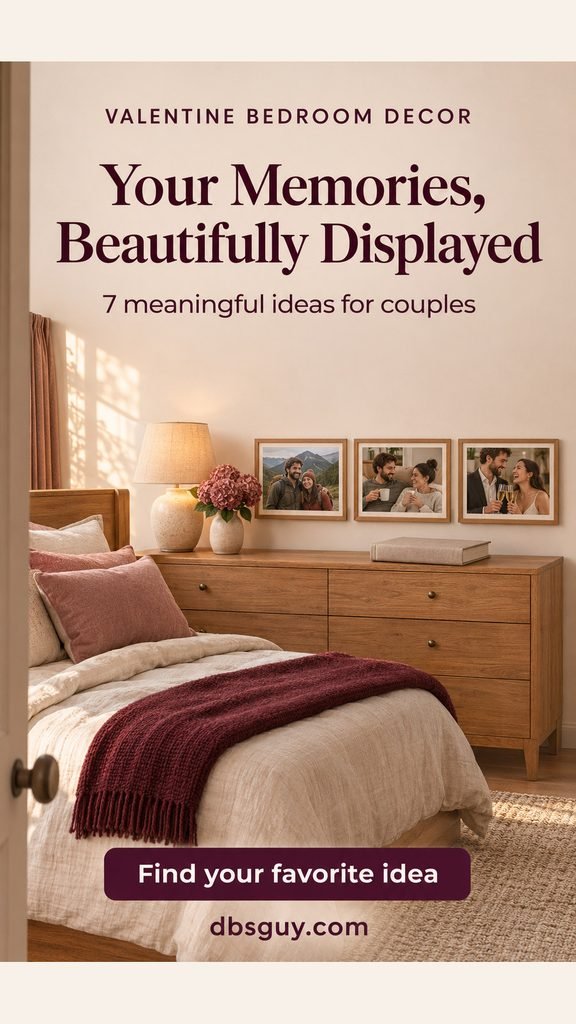
The visuals are AI-generated styling concepts. The people, photographs, notes, and keepsakes shown are illustrative examples, not records of a real couple or completed decorating projects.
Choose the Memory Before the Decoration
Each of you can pick one moment you would happily revisit. Include everyday life in the choices: a shared commute, the first meal in your apartment, or a weekend when nothing much happened. A recognizable detail gives the display its meaning, even when the photograph is a little imperfect.
Then choose the spot. A dresser can hold a small collection; a nightstand usually needs just one frame. Leave room for the lamp switch, water glass, drawers, and whatever normally lives there. Check the arrangement from the bed as well as the doorway.
Use fresh prints or scans for decorating, especially when an original is irreplaceable. The Library of Congress recommends displaying a copy of a valuable photograph, because light can cause irreversible damage even behind UV-filtering glass. It also recommends a mat or spacers to keep a photograph from touching the glazing. A decorative display is a good home for a reproduction; it is not a reason to risk your only original.
1. Tell Your Story With a Three-Photo Timeline

Pick three pictures that do different jobs: one from the beginning, one from everyday life, and one from a later milestone. The middle picture matters. It makes the arrangement about the life you share, rather than a row of special occasions.
Use matching frames and broad mats so the photos can vary without making the wall feel scattered. Choose prints sized for the mat openings you have, then crop copies rather than cutting originals. Before printing, check that each crop keeps the detail that makes the memory recognizable. If a group picture becomes too crowded in a small opening, choose a closer view or use larger frames for the whole row.
Lay the frames out on a table, then transfer the arrangement to the wall above a dresser. A gap of about 2 to 3 inches is a useful styling starting point; adjust it to the actual outside dimensions of your frames. Follow the hardware instructions for the wall and frame weight. Small labels such as “Then,” “Everyday,” and “Now” can provide order without requiring exact dates.
Keep the dresser beneath the timeline fairly open. The photo row already gives that part of the room something to look at.
Also Read: 25 Valentine Decor Ideas From Heart Garlands to Flower-Filled Tables
2. Frame the Place Where Your Story Began
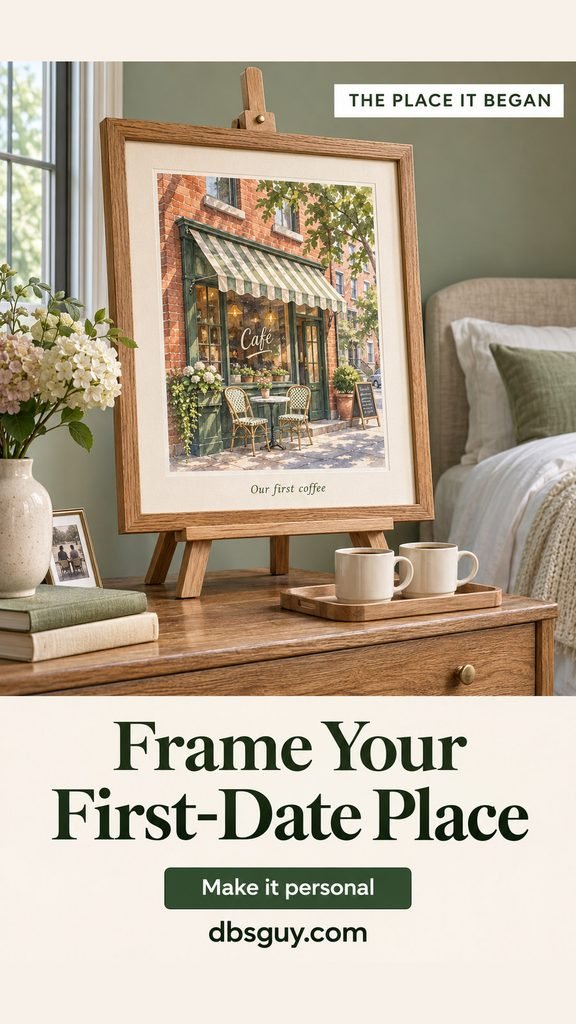
A picture of your first-date spot works even if you never took a photo together that day. Use your own photograph of the café, park entrance, or other place you remember, or commission an illustration from a reference you have permission to use. You are choosing a place from your story; it does not have to be a famous landmark.
For a café print like the concept shown, keep the entrance and awning recognizable and simplify the surrounding street. Add a short dedication beneath it, such as “Our first coffee.” If you cannot remember the exact date, leave it off. A guessed anniversary adds nothing to the picture.
Set the framed print on a stable tabletop easel on a dresser deep enough to support it. A pair of cups can echo the memory if there is room, but the print should stand on its own. In a small bedroom, skip the cups and give the artwork the available surface.
If the location is a private home, a drawing of the doorway can carry the memory without displaying an address. Think about what will be visible if you later share room photos online.
3. Make One Line of Their Handwriting the Focal Point
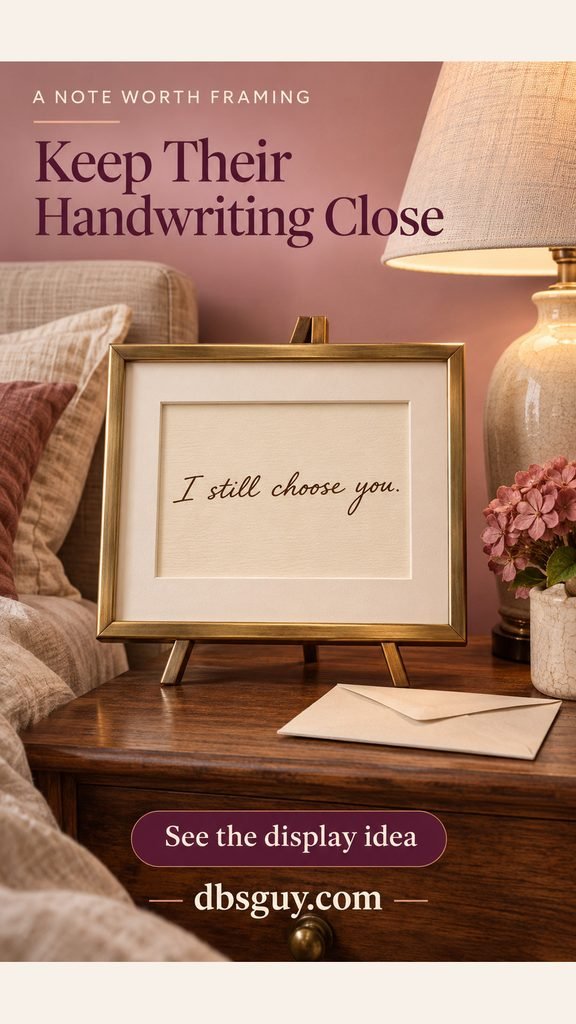
Look for a note whose handwriting you would recognize immediately. A sentence from an old card, a lunchbox message, or a margin note can be more distinctive than a store-bought quote. Choose a line that is comfortable for both of you to have on display; keep the rest of a private letter private.
Scan or photograph the note square-on in even light. Crop a copy around the sentence and make a trial print before choosing the frame. Enlarging it slightly can make the pen strokes easier to appreciate from the bed, but check that the letters still look clear.
A wide mat gives a short sentence enough presence for a small nightstand. The concept uses the illustrative line “I still choose you.” Your own words might be funny, practical, or affectionate. Keep the original spelling and little quirks that make it theirs.
Place the frame where it leaves the lamp controls and charging space reachable. Store the original note separately rather than trimming or gluing it into the arrangement.
Also Read: 21 Valentine Card Ideas That Make a Simple Message Feel Personal
4. Give One Shared Trip a Small Keepsake Display
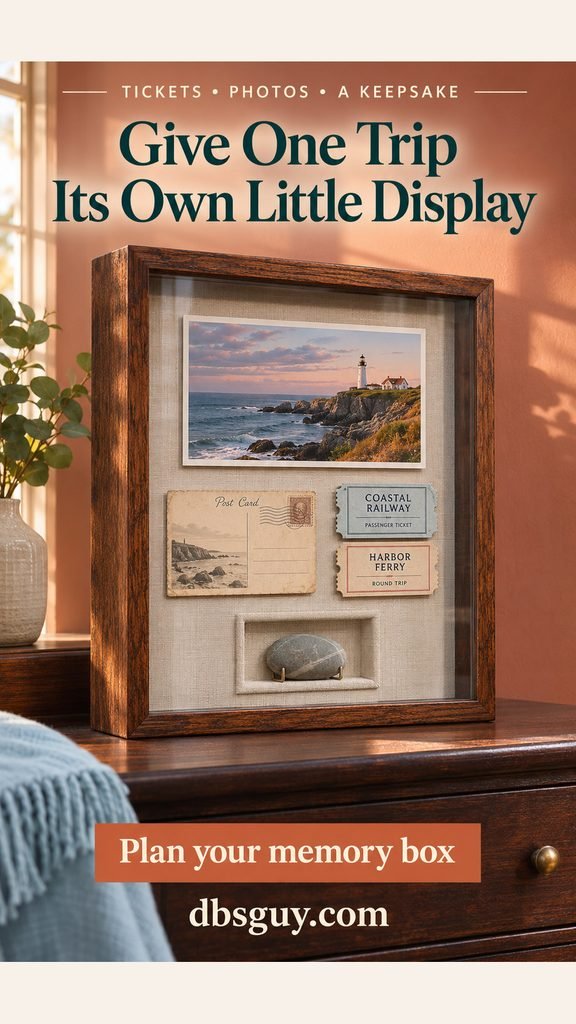
Choose one trip for a shadow box, then give each item a reason to be there. In this coastal example, a landscape print supplies the setting, a postcard and ticket copies add context, and a small pebble brings in a different texture. Four kinds of objects are enough to tell this particular story.
Arrange everything on a paper template cut to the box’s interior dimensions before mounting anything. Let the photograph take the largest area. Place the flat pieces beside it rather than covering the scene, and leave a separate supported space at the bottom for the three-dimensional item.
Check usable interior depth, including the mount, before buying a box. The keepsake should not press against the glazing or rattle around when the box moves. A fitted recess can support a small object; if the mounting method is unclear or the object is valuable, ask a framer how to secure it. Use copies of tickets and postcards in any arrangement that requires adhesive.
Stand the finished box on a stable dresser using the support specified for that frame. Keep it away from the bed edge and direct sunlight. If you did not save souvenirs, use a new print of a photo from the trip and a sentence about what you remember; a purchased trinket is optional.
5. Let a Shared Song Anchor a Listening Corner

Some memories are easier to hear than to photograph. Choose the song from a first drive, a kitchen dance, or a concert you still talk about. Print the song title and artist on a small card, then add one sentence explaining the connection. You do not need lyrics for the card to make sense.
The concept’s card says “The song from our first drive” to show where your own title would go. Set the frame beside a small speaker on an existing side table. Keep it separate from a vase or drinking glass, and route any charging cable where it will not cross the path around the bed.
Queue a short playlist on your usual device before the evening begins. Start with the song on the card and add a few tracks you associate with the same time in your lives. Keep the volume comfortable for conversation and agree on when the music goes off.
A shaded lamp can define this corner without adding another decoration. If you want a candle-like glow, choose flameless candles for the bedroom; NFPA advises avoiding open-flame candles in rooms where people may fall asleep.
Also Read: 14 Romantic Valentine’s Day Date Ideas at Home
6. Use a Meaningful Textile to Bring the Memory Onto the Bed

A quilt made by someone you love, a throw you bought together, or a blanket from your first home can carry a memory without adding another wall display. Start with a textile you already own and want to use. You do not need to buy something personalized.
Let its colors guide one small part of the room. The concept pairs a blue, sand, and ivory quilt with a coastal photo on a nearby table. You could make that connection with an existing throw whose colors remind you of a shared place. The connection can be quiet; a photo does not need to match the fabric exactly.
Fold the textile so the meaningful pattern or stitching is visible across a bench or at the foot of the bed. Keep the rest of the bedding simple enough to let that detail show. If the piece is fragile or its care needs are uncertain, do not make it an everyday bedcover; check its condition and care guidance before using it.
For a one-evening setup, a clean, sturdy throw is easy to move when you turn down the bed. That is useful when you want the room to feel different for Valentine’s Day without changing the bedding you sleep best in.
7. Put an Album Where You Will Open It Together
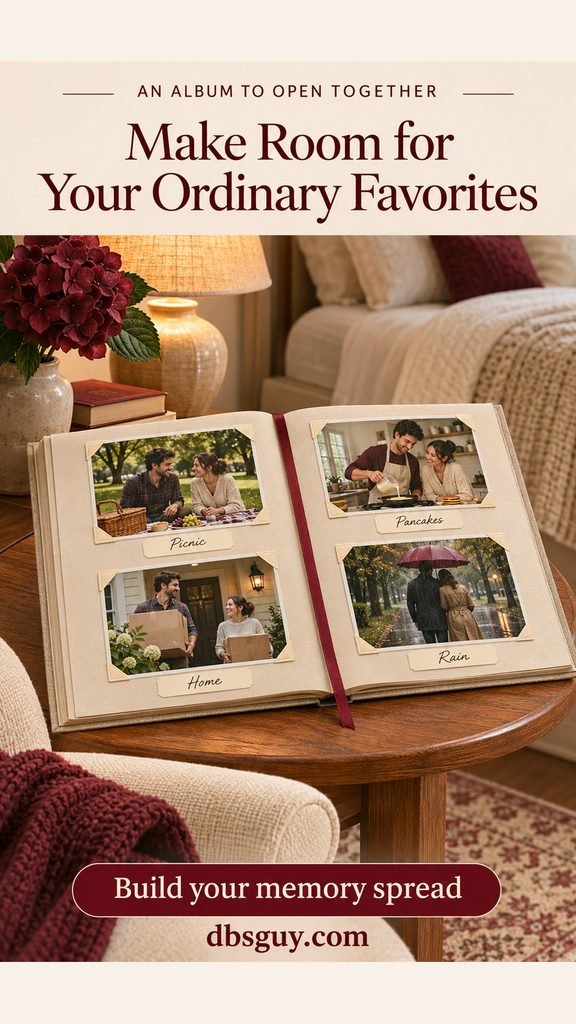
An album gives you room for memories that do not belong on a wall. Include the blurry pancake photo, the moving boxes, and the rainy walk alongside the pictures where you both look your best. Choose a small set you would enjoy talking through, rather than trying to finish your entire photo archive.
For a manageable start, make one spread with four prints: two on each page. Leave space beneath them for separate caption slips. Write what the image cannot explain, such as “The morning we finally found the missing coffee mugs,” instead of repeating what is already visible.
Use an album designed for photographs. Photo corners or suitable sleeves let you hold prints without gluing their surfaces; for valuable originals, choose storage materials that pass the Photographic Activity Test. Copies are still the simpler choice for an album you plan to handle often.
Open it on a solid side table beside a chair while you look through it, then close it and return it to a shelf or drawer afterward. Keep drinks on another surface. If the room has no sitting corner, bring the closed album to bed when you want it and put it away before sleeping.
Make the Displays Work Together
Let the available space decide how many ideas to use. A three-photo timeline above the dresser and a closed album nearby can be a complete setup. In a room with little wall space, a handwriting frame and a meaningful throw may fit better. Repeat a wood finish or one color between the pieces to connect them.
Before adding anything else, turn on the lamps, open the drawers, and walk around both sides of the bed. Move anything that gets in the way. Keep heavy frames and keepsake boxes on properly supported surfaces, and use flameless lighting near paper and textiles.
When February 14 is over, decide together what stays. A place print or a useful quilt can remain part of the room. Put seasonal display copies away with their captions so next year’s setup does not start with another search through your phone.
Questions About Decorating With Shared Memories
How can we do this without spending much?
Choose one frame you already own and print one photo or a copy of a note to fit it. Move an existing lamp beside it and use a throw from another room. Start with the memory and available space before buying a collection of matching accessories.
What if we do not have many photos together?
Use the place print, handwriting, or song idea. A photo of the view from a trip can also work without either of you in it. Add a sentence that explains why the place matters, and let that carry the story.
Can we decorate a rental without hanging frames?
Use a tabletop frame with a stable easel back, a freestanding keepsake box, or an album. Measure the usable surface and check that the support fits completely on it. If you choose wall hardware or adhesive products, check your lease and the product’s surface and weight instructions; do not assume every removable hanger suits your paint.
How do we keep a surprise personal without exposing private things?
Choose a memory you already know your partner enjoys revisiting. Save intimate letters, sensitive dates, and anything involving other people’s private information for an album or closed storage. If you are unsure about displaying something, ask before framing it. You can still surprise them with the arrangement.
Also Read: 17 Valentine Flower Ideas for a Bouquet That Feels Personal