18 New Year’s Eve Dinner Ideas, From Cozy Pasta to Special-Occasion Mains


For a quiet New Year’s Eve, a bowl of mushroom pasta or a pan of baked rigatoni can be the whole point of staying home. If you want a more formal dinner, try roast beef tenderloin, rosemary lamb chops, or short ribs you can cook before guests arrive. The best choice depends on how much cooking you want to do once the evening starts.
These 18 New Year’s Eve dinner ideas include quantities for four, practical cooking directions, and a suggestion for completing the meal. Choose one main; the list is a menu of possibilities, not a shopping list for one party.
Recipe note: These original recipe guides have not been kitchen-tested. Times are estimates; use the doneness checks, your equipment, and package directions where specified. Oven temperatures are for a conventional oven. The visuals are AI-generated serving concepts, not photographs of tested dishes; plating and portions shown may vary.

Choose the Dinner That Fits Your Evening
- A cozy dinner for two: Halve the mushroom tagliatelle, shrimp linguine, or Dijon chicken.
- A family-style table: Choose baked rigatoni, turkey meatballs, or lentil shepherd’s pie.
- Most of the work done ahead: Make the chickpea stew, short ribs, or shepherd’s pie earlier, then cool and refrigerate promptly.
- A special centerpiece: Consider beef tenderloin, lamb chops, or a lemon-herb salmon platter.
- A vegan main: Choose the chickpea stew, quinoa-stuffed squash, or lentil shepherd’s pie, checking broth and other packaged ingredients.
For two servings, halve the ingredients and use a smaller pan where appropriate. Keep the oven temperature the same; thickness and doneness determine cooking time. For eight, double the ingredients but use two pans when needed. Crowding a skillet changes how food browns.
1. Creamy Mushroom Tagliatelle
This is a good dinner for an evening built around the sofa, a movie, and one properly satisfying bowl of pasta. Brown the mushrooms in batches so their flavor carries the sauce; cream alone should not have to do all the work.
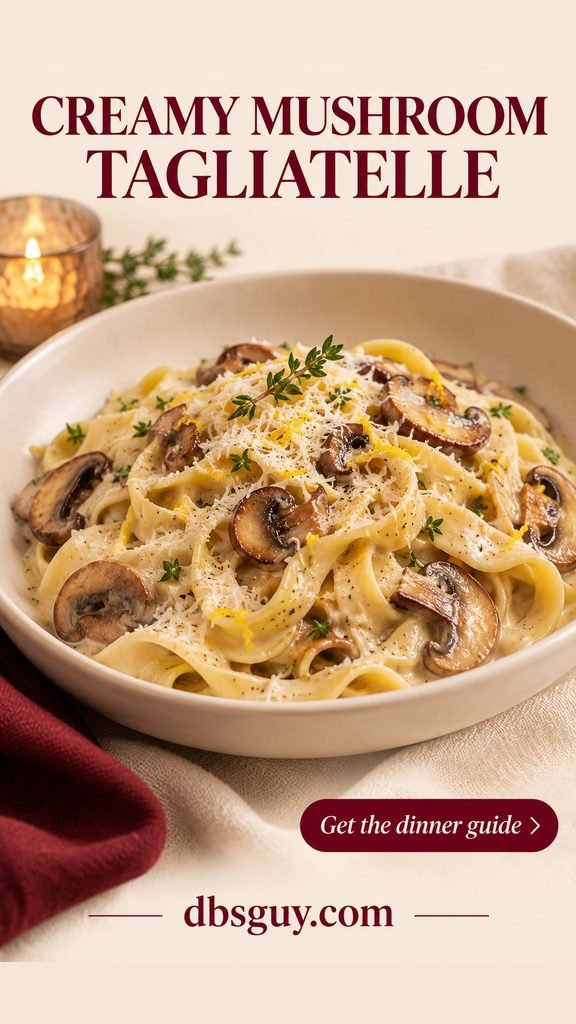
Plan: Four servings; about 35 minutes; stovetop only.
Ingredients: 12 ounces dried tagliatelle; 1 pound sliced cremini mushrooms; 2 tablespoons olive oil; 1 tablespoon butter; 1 finely chopped shallot; 3 minced garlic cloves; 1 teaspoon fresh thyme leaves; ¾ cup heavy cream; ½ cup finely grated Parmesan; 1 teaspoon lemon zest; salt and black pepper; optional chopped parsley for serving. Reserve 1 cup pasta cooking water.
- Cook the pasta in salted water according to its package. Before draining, save the cooking water.
- Meanwhile, heat the oil in a large skillet over medium-high heat. Brown the mushrooms in two batches, about 5–7 minutes per batch, leaving them undisturbed between stirs. Return them all to the skillet.
- Lower the heat to medium. Add butter and shallot; cook for 2–3 minutes. Stir in garlic and thyme for 30 seconds, then add cream and simmer gently for 2 minutes.
- Add the drained pasta and ¼ cup pasta water. Take off the heat and toss with Parmesan and lemon zest. Add more pasta water a little at a time until the sauce coats the noodles. Season to taste.
Serve with a lemon-dressed arugula salad. Slice the mushrooms earlier and refrigerate them, but finish the pasta when you are ready to eat; it becomes thicker as it stands.
2. Baked Spinach and Ricotta Rigatoni
A bubbling pasta bake suits a family dinner when you want everyone served from one dish. Small spoonfuls of ricotta leave creamy pockets between the tubes instead of disappearing into the tomato sauce.

Plan: Four generous servings; about 55 minutes; one 9-by-13-inch baking dish.
Ingredients: 12 ounces rigatoni; 24 ounces marinara sauce; ½ cup water; 10 ounces frozen chopped spinach, thawed and squeezed very dry; 15 ounces ricotta; 1½ cups shredded mozzarella, divided; ¼ cup grated Parmesan; 1 teaspoon dried oregano; 1 tablespoon olive oil; salt and pepper; optional chopped parsley for serving.
- Heat the oven to 375°F. Oil the baking dish. Boil the rigatoni for 2 minutes less than the package’s al dente time, then drain.
- Mix ricotta, spinach, oregano, Parmesan, and ½ cup mozzarella. Season lightly. Separately combine the marinara and water, then stir in the pasta.
- Spread half the pasta in the dish. Add half the ricotta mixture in small dollops. Repeat and scatter over the remaining mozzarella.
- Cover with foil and bake for 20 minutes. Uncover and bake for about 10–15 minutes more, until the center reaches 165°F. Let stand for 10 minutes before serving.
A crunchy romaine salad is enough alongside this. For advance prep, assemble up to a day ahead and refrigerate covered; a cold bake needs extra time. Follow your baking dish’s guidance about temperature changes, and check the center rather than relying on the fresh-assembly timing.
3. Lemon-Garlic Shrimp Linguine
Shrimp gives pasta a special-occasion feel without a long oven schedule. Have the lemon, garlic, and parsley ready before the shrimp goes into the pan; the finishing steps move quickly.

Plan: Four servings; about 30 minutes; serve immediately.
Ingredients: 12 ounces linguine; 1½ pounds raw peeled, deveined large shrimp, thawed if frozen; 2 tablespoons olive oil; 3 tablespoons butter; 4 thinly sliced garlic cloves; ½ cup low-sodium broth; zest of 1 lemon; 2 tablespoons lemon juice; ¼ cup chopped parsley; optional pinch of red pepper flakes; salt and pepper. Reserve 1 cup pasta water.
- Cook linguine according to the package, reserving the water before draining. Pat the shrimp dry and season lightly.
- Heat the oil in a wide skillet over medium-high heat. Cook shrimp in batches, about 1–2 minutes per side depending on size, until pearly and opaque throughout. Transfer to a clean plate.
- Reduce heat to medium-low. Add butter, garlic, and optional pepper flakes; cook for about 30 seconds without browning the garlic. Add broth and simmer for 2 minutes.
- Toss in pasta, lemon zest, lemon juice, parsley, and enough reserved water to loosen the sauce. Return shrimp just long enough to warm through.
Pair with steamed green beans or a cucumber salad. This is a sit-down dinner, rather than a dish to leave on a buffet while everyone waits for midnight.
4. Sausage and Kale Orecchiette
Little pasta cups catch crumbled sausage and greens, making this a hearty option for guests who prefer savory food to a rich cream sauce. Mild Italian sausage keeps it approachable; put red pepper flakes on the table for anyone who wants heat.

Plan: Four servings; about 35 minutes; no oven.
Ingredients: 12 ounces orecchiette; 1 pound raw pork Italian sausage, casings removed; 1 tablespoon olive oil; 3 minced garlic cloves; 6 ounces kale, stems removed and leaves chopped; ¾ cup low-sodium chicken broth; ⅓ cup grated Parmesan; 1 tablespoon lemon juice; black pepper. Reserve 1 cup pasta water.
- Boil the pasta according to the package. Reserve the water, then drain.
- Heat oil in a large skillet over medium heat. Add sausage and break it into small pieces. Cook for about 8–10 minutes, stirring, until browned and fully cooked to 160°F.
- Add garlic for 30 seconds, then stir in kale and broth. Cover for 3–5 minutes, until the greens are tender. Uncover and let excess liquid reduce.
- Add pasta and a splash of pasta water. Remove from the heat and toss with Parmesan, lemon juice, and pepper. Taste before adding salt.
Shaved fennel with orange segments gives the meal a cool, crisp side. If you use raw chicken or turkey sausage instead, cook it to 165°F.
5. Roasted Butternut Squash Gnocchi with Sage Butter
Roasted squash adds sweet, browned edges to soft potato gnocchi. The contrast is more interesting than mashing everything into a sauce, and a modest amount of sage butter ties the plate together.

Plan: Four servings; about 45 minutes.
Ingredients: 1½ pounds peeled butternut squash in ½-inch cubes; 1 tablespoon olive oil; 24 ounces packaged potato gnocchi; 4 tablespoons butter; 10 fresh sage leaves; ¼ cup chopped walnuts; 1 tablespoon lemon juice; ⅓ cup grated Parmesan; salt and pepper.
- Heat the oven to 425°F. Toss squash with oil, ½ teaspoon fine salt, and pepper. Spread on a rimmed sheet and roast for about 25–30 minutes, turning once, until tender and browned.
- Near the end of roasting, cook gnocchi according to its package. Reserve ½ cup cooking water, then drain.
- Melt butter in a large skillet over medium-low heat. Add sage and walnuts; cook, stirring, until the sage is crisp and the butter smells nutty, about 3–5 minutes. Watch closely and lower the heat if it darkens quickly.
- Add gnocchi and squash. Toss gently with lemon juice and a splash of cooking water, then finish with Parmesan.
Serve with bitter greens in a mustard vinaigrette. For guests avoiding nuts, leave out the walnuts and protect their serving from cross-contact. Use vegetarian-rennet Parmesan-style cheese if needed.
6. Tomato, Chickpea, and Sweet Potato Stew
This is the choice when you want dinner waiting for you rather than the other way around. Chickpeas, sweet potato, and a spiced tomato broth make a complete main with bread, and the pot is easy to portion for a small gathering.

Plan: Four servings; about 50 minutes; vegan with suitable broth and bread.
Ingredients: 2 tablespoons olive oil; 1 diced onion; 3 minced garlic cloves; 2 teaspoons ground cumin; 1 teaspoon ground coriander; 1 tablespoon tomato paste; one 28-ounce can crushed tomatoes; two 15-ounce cans chickpeas, drained and rinsed; 1 pound peeled sweet potato in ½-inch cubes; 2 cups vegetable broth; 3 ounces baby spinach; 1 tablespoon lemon juice; salt and pepper; bread for serving.
- Heat oil in a Dutch oven over medium heat. Soften onion for 6–8 minutes. Add garlic, spices, and tomato paste; stir for 1 minute.
- Add tomatoes, chickpeas, sweet potato, and broth. Bring to a simmer, cover loosely, and cook for about 25–30 minutes, stirring occasionally, until the sweet potato is tender.
- Add spinach and cook for 2 minutes. Stir in lemon juice and season. Add water if the stew has become too thick.
Make it a day ahead, cool in shallow containers, and refrigerate promptly. Reheat the portion you need to 165°F, stirring so the center heats evenly. Serve with warm bread and a spoonful of plain dairy-free yogurt if you like a cool finish.
7. Mushroom and Pea Risotto
Risotto makes sense for a small dinner where you are happy to spend the last half hour near the stove. Keep its texture loose enough to spread gently in the bowl; a stiff mound will thicken further on the way to the table.

Plan: Four main-course servings; about 45–50 minutes.
Ingredients: 1 pound sliced mushrooms; 2 tablespoons olive oil; 2 tablespoons butter, divided; 1 small finely diced onion; 2 minced garlic cloves; 1½ cups Arborio rice; 5–6 cups low-sodium vegetable broth, kept hot; 1 cup frozen peas; ½ cup grated Parmesan; 1 teaspoon lemon zest; salt and pepper.
- Brown mushrooms in oil in a wide saucepan over medium-high heat, working in batches if needed. Transfer to a bowl.
- Reduce heat to medium. Add 1 tablespoon butter and onion; soften for 5 minutes. Add garlic and rice, stirring for 1–2 minutes.
- Add hot broth about ½ cup at a time, stirring frequently. Add the next portion when the previous one is mostly absorbed. Start tasting after 18 minutes; continue until the rice is tender with a slight bite, usually 20–30 minutes.
- Stir in peas and mushrooms for the last 3 minutes. Remove from the heat and add remaining butter, Parmesan, and zest. Loosen with more hot broth and season.
A radicchio salad provides a sharp contrast. Set the table and prep the salad before you begin cooking; this is not the dish to finish while also carving a roast.
8. Lemon-Herb Salmon with Broccolini and Couscous
A salmon platter looks generous without requiring a large roast. Individual portions also make it easier to finish each piece according to its thickness.

Plan: Four servings; about 35 minutes.
Ingredients: Four 6-ounce salmon fillets; 12 ounces trimmed broccolini; 2 tablespoons olive oil, divided; 2 minced garlic cloves; 1 teaspoon dried oregano; 1 lemon; 1 cup dry regular couscous; water or broth as directed on the couscous package; 2 tablespoons chopped dill; salt and pepper.
- Heat the oven to 425°F. Toss broccolini with 1 tablespoon oil, salt, and pepper on a rimmed sheet. Roast for 8 minutes.
- Push the broccolini to the sides. Put salmon in the center and brush with remaining oil, garlic, oregano, and 1 teaspoon lemon zest. Season lightly.
- Roast for about 10–15 minutes more, checking early for thin pieces. Salmon should reach 145°F in the thickest part. Remove broccolini earlier if it is ready.
- Meanwhile, prepare couscous according to the package. Fluff with dill and lemon juice to taste, then serve beneath or beside the fish.
For an occasion-worthy finish, bring the salmon to the table on a warm platter with lemon wedges. Use regular couscous here; pearl couscous has a different cooking method and needs its own package directions.
9. Tomato-Olive Baked Cod with White Beans
Cod is mild enough to let tomatoes, olives, and lemon provide the flavor. White beans turn the baking dish into a substantial dinner, leaving only a crisp salad to prepare.
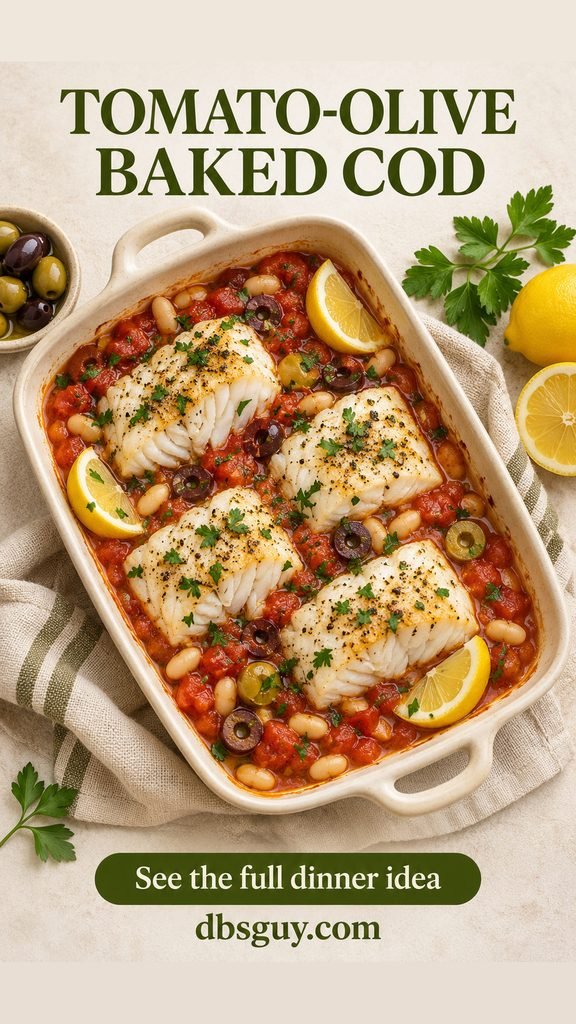
Plan: Four servings; about 40 minutes.
Ingredients: Four 6-ounce thick cod fillets; 2 tablespoons olive oil; 1 thinly sliced small onion; 3 sliced garlic cloves; one 14½-ounce can diced tomatoes with juices; two 15-ounce cans cannellini beans, drained and rinsed; ⅓ cup pitted sliced olives; ½ teaspoon dried oregano; ¼ cup water; 2 tablespoons chopped parsley; lemon wedges; salt and pepper.
- Heat the oven to 400°F. In an oven-safe wide skillet, soften onion in oil over medium heat for 5–7 minutes. Add garlic for 30 seconds.
- Add tomatoes, beans, olives, oregano, and water. Simmer for 8–10 minutes, stirring. Taste before adding salt.
- Nestle the cod into the hot mixture. Season the fish lightly and transfer the skillet to the oven. Bake for about 12–18 minutes, depending on thickness, until the fish reaches 145°F.
- Finish with parsley and lemon. Use an oven mitt for the skillet handle even after it returns to the stove.
Keep the bean mixture gently saucy before adding the cod; an overly dry base can catch around the edges. If your skillet cannot go in the oven, transfer the hot sauce to a suitable baking dish first.
10. Skillet Dijon Chicken with Mashed Potatoes
A mustard cream sauce makes chicken breasts feel like a dinner-party main. Thin, evenly sized cutlets matter more than elaborate seasoning: they cook through before the outside becomes dry.

Plan: Four servings; about 40 minutes.
Ingredients: 1½ pounds boneless skinless chicken breasts, cut horizontally into four similarly sized cutlets about ½ inch thick; 1 tablespoon olive oil; 1 tablespoon butter; 1 minced shallot; ½ cup low-sodium chicken broth; ½ cup heavy cream; 1½ tablespoons Dijon mustard; 1 teaspoon thyme leaves; salt and pepper. For mash: 1½ pounds peeled potatoes in chunks, 2 tablespoons butter, and about ⅓ cup milk.
- Cover potatoes with water and simmer until tender, about 15–20 minutes. Drain and mash with butter and enough milk for your preferred texture. Season.
- Meanwhile, season chicken. Heat oil in a large skillet over medium-high heat. Cook cutlets for about 4–6 minutes per side, adjusting heat as needed, until the centers reach 165°F. Transfer to a clean plate.
- Lower heat to medium. Add butter and shallot for 2 minutes. Add broth, scraping up browned bits, then stir in cream, mustard, and thyme. Simmer gently for 3–4 minutes.
- Return chicken and its juices to the pan to warm through. Serve over mash.
Add steamed broccoli or green beans for color and crunch. Taste the sauce before salting; both mustard and broth contribute seasoning.
11. Crispy Chicken Thighs with Carrots and Shallots
Bone-in chicken thighs give you crisp skin and roast-dinner flavor with little carving. Arrange them skin-side up with vegetables around them so the surface can brown.

Plan: Four servings; about 60 minutes.
Ingredients: Eight small bone-in, skin-on chicken thighs, about 3–3½ pounds total; 1 pound carrots cut into ½-inch-thick sticks; 4 peeled and halved shallots; 1 pound baby potatoes, halved or quartered to 1-inch pieces; 2 tablespoons olive oil; 1½ teaspoons chopped rosemary; 1 teaspoon garlic powder; 1 teaspoon fine salt, divided; black pepper; 1 lemon.
- Heat the oven to 425°F. Pat chicken dry without rinsing it. Toss vegetables with 1 tablespoon oil, half the salt, and some pepper on a large rimmed sheet.
- Rub chicken with remaining oil, salt, rosemary, garlic powder, and pepper. Set among the vegetables, leaving the skin exposed. Use two sheets if everything is crowded.
- Roast for about 40–50 minutes, turning vegetables halfway through. Check each thigh in its thickest part, away from bone, for at least 165°F. Vegetables should be tender; give them extra time if necessary.
- Rest chicken for 5 minutes and squeeze a little lemon over the vegetables before serving.
Skip another hot side; a bowl of lightly dressed greens is plenty. If you use larger thighs, plan for more cooking time rather than increasing the oven temperature.
12. Pork Tenderloin with Apples and Mustard Pan Sauce
Apple wedges and a sharp mustard sauce give pork tenderloin a winter dinner feel. Check the label carefully: tenderloin is a narrow cut, while pork loin is much larger and will not follow the same schedule.

Plan: Four servings; about 45–50 minutes.
Ingredients: One 1½-pound pork tenderloin, silverskin removed; 1 tablespoon olive oil; 1 tablespoon butter; 2 firm apples, cored and cut into wedges; 1 sliced shallot; ¾ cup low-sodium chicken broth; 1 tablespoon Dijon mustard; 1 teaspoon chopped thyme; salt and pepper.
- Heat the oven to 400°F. Pat pork dry and season. In an oven-safe skillet, heat oil over medium-high heat and brown the pork on all sides, about 5–7 minutes total.
- Transfer the skillet to the oven. Roast for roughly 12–20 minutes, checking early, until the center reaches 145°F. Move pork to a clean board and rest at least 3 minutes before slicing.
- Set the skillet over medium heat, remembering its handle is hot. Add butter, apples, and shallot. Cook for 6–8 minutes, turning the apples, until tender but still holding their shape.
- Add broth, mustard, and thyme. Scrape the pan and simmer for 3–5 minutes to reduce slightly. Serve around the sliced pork.
Pair with mashed sweet potatoes and a cabbage slaw. Prepare the slaw earlier so the pork and sauce have your attention at the end.
13. Roast Beef Tenderloin with Mushroom-Shallot Sauce
Tenderloin is a splurge that suits a small, seated dinner. A uniformly thick, trimmed center-cut piece is easier to portion and cook evenly than a roast with a very narrow tail.
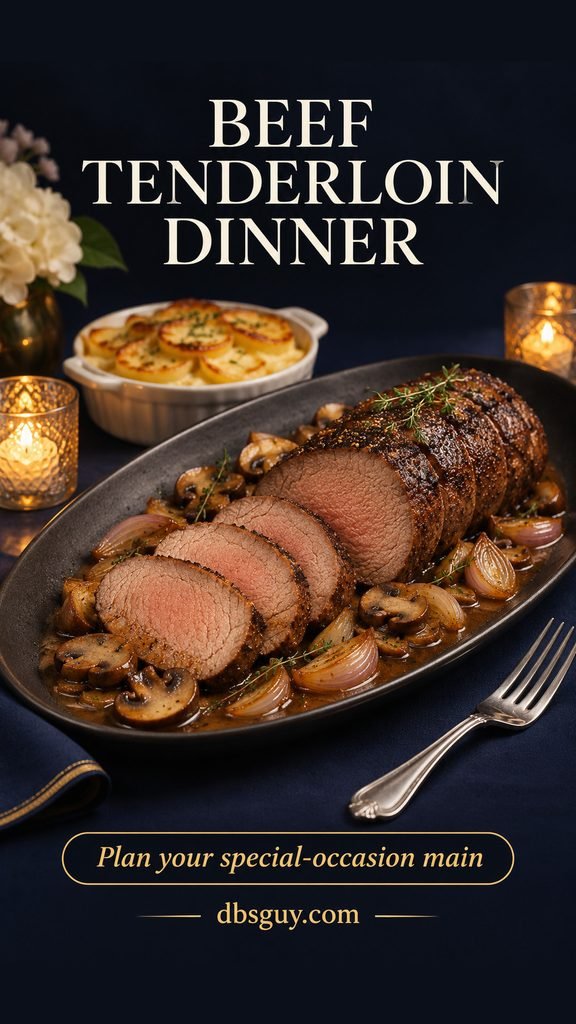
Plan: Four generous servings; about 60–75 minutes, depending on the roast.
Ingredients: One 2-pound trimmed beef tenderloin roast, tied to an even shape; 1 tablespoon olive oil; 1 teaspoon fine salt; black pepper; 2 tablespoons butter; 12 ounces sliced mushrooms; 2 minced shallots; 1 teaspoon thyme leaves; 1 cup low-sodium beef broth; 1 teaspoon Dijon mustard; 1 teaspoon cornstarch mixed with 1 tablespoon cold water.
- Heat the oven to 400°F. Pat beef dry, rub with oil, and season. Sear in an oven-safe skillet over medium-high heat, about 6–8 minutes total, turning to brown the sides.
- Roast for approximately 25–40 minutes, beginning thermometer checks early. For the food-safety standard used here, reach 145°F in the center, then rest at least 3 minutes; a 10-minute rest gives you time to finish the sauce.
- While the beef roasts, melt butter in a separate skillet. Brown mushrooms for 8–10 minutes. Add shallots and thyme for 2 minutes.
- Add broth and mustard; simmer for 5 minutes. Stir the cornstarch mixture again, add it, and simmer for 1–2 minutes until lightly thickened. Slice beef and serve sauce alongside.
Serve with potato gratin baked on its own schedule and a simple green vegetable. Do not plan a rare center from this guide; roast shape and thermometer readings matter more than a photo’s color.
14. Slow-Braised Short Ribs with Creamy Polenta
Short ribs are the dinner to choose when you can give the oven several hours earlier in the day. The sauce and meat reheat together, which makes them more forgiving for hosting than a platter of individually seared steaks.

Plan: Four servings; about 3½–4 hours, mostly braising.
Ingredients: 3½ pounds bone-in beef short ribs; 1 tablespoon olive oil; 1 diced onion; 2 diced carrots; 3 smashed garlic cloves; 2 tablespoons tomato paste; 3 cups low-sodium beef broth, plus more if needed; 1 tablespoon balsamic vinegar; 2 thyme sprigs; 1 bay leaf; salt and pepper. For serving: 1 cup dry polenta, cooking liquid in the amount directed on its package, and 2 tablespoons butter.
- Heat the oven to 325°F. Season ribs and brown in oil in a Dutch oven over medium-high heat, in batches. Transfer to a plate.
- Soften onion and carrots in the pot for 6–8 minutes. Add garlic and tomato paste for 1 minute. Add broth and vinegar, scraping up browned bits.
- Return ribs and add herbs. Liquid should come roughly halfway to two-thirds up the meat; adjust for your pot. Bring to a simmer, cover, and braise for about 2½–3½ hours, until fork-tender. Check the liquid occasionally.
- Remove ribs, discard herbs, and skim excess fat. Simmer sauce uncovered if it needs reducing. Cook polenta according to its package and finish with butter.
For next-day serving, divide ribs and sauce into shallow containers and refrigerate promptly. Reheat covered with sauce to 165°F. Make polenta fresh and add a sharp parsley-and-lemon salad.
15. Rosemary Lamb Chops with Mint Couscous
Lamb chops offer individual portions with a more formal feel than a skillet supper. A minty couscous and tomato-cucumber salad keep the plate fresh rather than adding another heavy side.

Plan: Four servings; about 35–45 minutes.
Ingredients: Eight lamb loin chops, about 1 inch thick and 2½ pounds total; 2 tablespoons olive oil, divided; 2 minced garlic cloves; 1 tablespoon chopped rosemary; 1 teaspoon fine salt; black pepper; 1 cup dry regular couscous; water or broth as directed on the package; ¼ cup chopped mint; 1 lemon.
- Pat chops dry. Rub with 1 tablespoon oil, garlic, rosemary, salt, and pepper.
- Heat remaining oil in a heavy skillet over medium-high heat. Sear chops in batches for about 3–5 minutes per side, adjusting heat to avoid scorching garlic. Cook to 145°F in the thickest part, away from bone.
- Rest for at least 3 minutes. If thick chops brown before the center is ready, finish in an oven-safe skillet in a 400°F oven, checking frequently.
- Prepare couscous according to the package. Fluff with mint, lemon zest, and lemon juice to taste.
Do not crowd all eight chops into a small pan. For a larger guest list, a roast is easier to serve at one time than several batches of chops.
Also Read: 15 Small Christmas Dinner Ideas for Two to Four for more ways to size a festive dinner to a small table.
16. Quinoa-Stuffed Acorn Squash with Cranberries and Pecans
Four squash halves make four clear dinner portions, each with a colorful filling. Chickpeas add substance so the main does not depend on a garnish of nuts alone.

Plan: Four servings; about 65 minutes; vegan with suitable broth.
Ingredients: Two medium acorn squash, about 1½ pounds each; 2 tablespoons olive oil, divided; ¾ cup dry quinoa, rinsed; 1½ cups vegetable broth or the quinoa package’s specified amount; 1 finely diced small onion; one 15-ounce can chickpeas, drained and rinsed; 3 ounces chopped spinach; ⅓ cup dried cranberries; ⅓ cup chopped pecans; 1 teaspoon orange zest; 1 tablespoon orange juice; salt and pepper.
- Heat the oven to 400°F. On a stable cutting board, carefully halve each squash and scoop out seeds. Rub cut sides with 1 tablespoon oil and season. Roast cut-side down on a lined sheet for about 35–45 minutes, until tender.
- Meanwhile, cook quinoa in broth according to its package, then fluff.
- Soften onion in remaining oil in a skillet for 5–7 minutes. Add chickpeas and spinach, stirring until spinach wilts and chickpeas are hot.
- Stir in quinoa, cranberries, pecans, orange zest, and juice. Season. Turn squash upright, fill generously, and return to the oven for about 10 minutes, until the filled centers reach 165°F.
Serve with a simple bitter-leaf salad. If the halves rock on the platter, support them in a snug serving dish rather than cutting through the shell and making a hole in the base.
17. Turkey Meatballs over Parmesan Polenta
A bowl of meatballs and soft polenta feels generous without needing a large cut of meat. The sauce can be kept separate from the polenta until plating, so each bowl gets a clean spoonful of both.

Plan: Four servings; about 45 minutes; roughly 16 meatballs.
Ingredients: 1¼ pounds raw ground turkey; ½ cup plain breadcrumbs; 1 egg; 2 tablespoons milk; ¼ cup grated Parmesan; 2 minced garlic cloves; 1 teaspoon dried Italian seasoning; ½ teaspoon fine salt; black pepper; 24 ounces marinara sauce; optional chopped parsley for serving. For polenta: 1 cup dry polenta, liquid as directed on its package, 1 tablespoon butter, and ¼ cup grated Parmesan.
- Heat the oven to 400°F and line a rimmed sheet. Mix breadcrumbs, egg, milk, Parmesan, garlic, seasoning, salt, and pepper. Fold in turkey without overworking it.
- With clean hands, form about 16 evenly sized balls and arrange with space between them. Bake for approximately 18–23 minutes, until the centers reach 165°F.
- Warm marinara in a wide saucepan. Add cooked meatballs and simmer gently for 3–5 minutes.
- Cook polenta according to its package; stir in butter and Parmesan. Divide among bowls and spoon over meatballs and sauce.
Roasted zucchini or a chopped salad rounds out dinner. Cook the meatballs ahead if useful, refrigerate promptly, and reheat in sauce to 165°F; make the polenta close to serving so it stays spoonable.
18. Lentil and Mushroom Shepherd’s Pie
A potato-topped lentil pie is a substantial meatless centerpiece with a useful make-ahead advantage. Cook the filling until thick enough to support the mash, rather than leaving broth to pool around the edges.

Plan: Four servings; about 75 minutes; one deep 2½- to 3-quart baking dish.
Ingredients: 1½ pounds peeled potatoes in chunks; optional chopped parsley for garnish; 3 tablespoons olive oil, divided; ⅓–½ cup unsweetened plain plant milk; 1 diced onion; 2 finely diced carrots; 8 ounces chopped mushrooms; 2 minced garlic cloves; 2 tablespoons tomato paste; 1 tablespoon all-purpose flour; 1 teaspoon dried thyme; two 15-ounce cans cooked lentils, drained and rinsed; 1 cup vegetable broth; 1 cup frozen peas; salt and pepper.
- Heat the oven to 400°F. Simmer potatoes in water for about 15–20 minutes until tender. Drain and mash with 2 tablespoons oil and enough plant milk for a spreadable topping. Season.
- Meanwhile, soften onion and carrots in remaining oil in a large skillet for 8 minutes. Add mushrooms and cook for 6–8 minutes, until their moisture mostly evaporates.
- Add garlic, tomato paste, flour, and thyme; stir for 1 minute. Add lentils, broth, and peas. Simmer for 5–8 minutes until thick, stirring. Season and transfer to the baking dish.
- Spoon mash over the filling, spread to the edges, and roughen the surface with a fork. Set on a rimmed sheet and bake for about 25–30 minutes, until bubbling and 165°F in the center. Stand for 10 minutes before serving.
For advance prep, cool filling and mash separately in shallow containers and refrigerate promptly. Assemble and bake the next day, allowing extra time for the cold center to reach 165°F. Use a dairy-free, unsweetened milk you would enjoy in savory food; choose an unflavored variety so the topping stays savory.
Put the Rest of the Menu on a Simple Schedule
A rich main usually benefits from a crisp or acidic side. Serve a green salad with creamy pasta, slaw with pork, or lemony vegetables with beef. Pasta, polenta bowls, stuffed squash, and shepherd’s pie already provide a starch, so another potato dish is optional.
For a relaxed 7 p.m. dinner, set the table and prepare salad components earlier. Start a braise early enough to allow for meat that needs extra tenderizing. Put a chilled casserole in the oven with additional heating time built in. For quick pasta or shrimp, measure ingredients first and begin the final cooking shortly before you want to sit down.
If guests will snack until midnight, serve a fresh, smaller round later rather than leaving dinner out all evening. Refrigerate perishable food within 2 hours, or within 1 hour above 90°F. Keep intentionally hot-held food at 140°F or above and cold food at 40°F or below. Divide leftovers into shallow containers for prompt cooling.
Use a thermometer and the FoodSafety.gov safe minimum temperature chart when checking meat, seafood, casseroles, and reheated food. A cooking-time estimate is a planning aid, not a substitute for the stated doneness check.
Also Read: 31 Christmas Appetizer Ideas for a Crowd if you want a small starter before dinner; the simple dips and savory bites can also work for New Year’s Eve.
New Year’s Eve Dinner Questions
What can I make ahead for New Year’s Eve dinner?
The chickpea stew, braised short ribs, and lentil shepherd’s pie offer the clearest head start here. Follow their cooling and reheating notes. Prep salads without dressing them, and leave quick-cooking pasta, risotto, and shrimp for the final stretch.
What should I cook for New Year’s Eve for two?
Halve the mushroom tagliatelle or shrimp linguine for a complete pasta dinner. Two salmon portions or two chicken cutlets also scale easily. A whole beef tenderloin roast makes more sense if you specifically want leftovers.
Which dinner is easiest to serve to a larger group?
Baked rigatoni and shepherd’s pie can be divided between two dishes, while stew or short ribs can be portioned from a pot. Plan oven and refrigerator space before doubling. Risotto and individually seared chops demand more attention just before serving.
Do I need appetizers and dessert?
Neither needs to become another cooking project. A small dish of olives or a prepared dip can give guests something to nibble, while purchased sorbet or a dessert made earlier keeps the last hour focused on dinner. If you choose a substantial pasta bake, keep the starter small.
Also Read: 21 Christmas Dinner Menus & Showstopper Main Dishes for additional main-and-side combinations you can adapt to another winter celebration.